Table of Contents >> Show >> Hide
- Start With the Truth: “Undecided” Is Not a Personality Trait
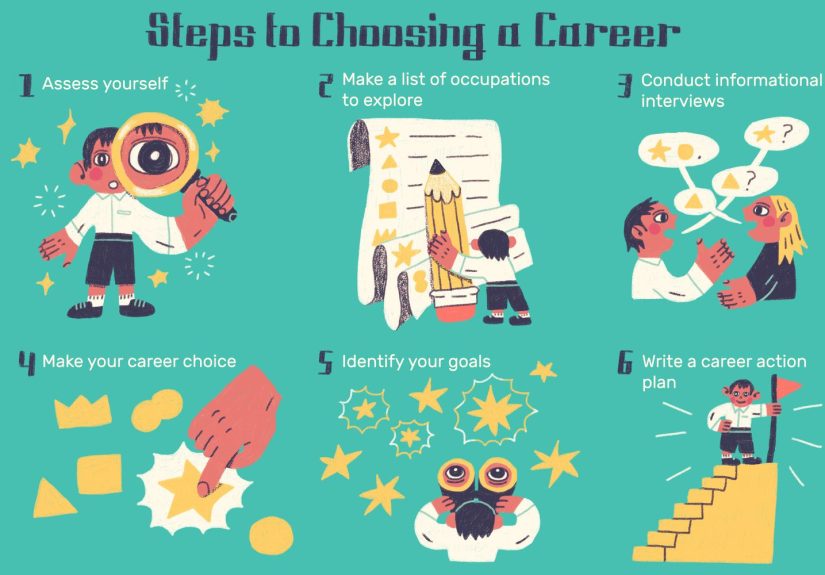
- Step 1: Run a Quick Self-Audit (No Crystal Ball Required)
- Step 2: Pick 3–5 “Career Hypotheses” (Not One Forever Choice)
- Step 3: Research Like a Detective (Not Like a Doom-Scroller)
- Step 4: Talk to Humans (Informational Interviews That Don’t Feel Awkward)
- Step 5: Run Small Experiments (Because Your Brain Loves Evidence)
- Step 6: Use a Decision Scorecard (So Feelings Don’t Hijack the Wheel)
- Step 7: Choose a Direction, Then Commit to a 6–12 Month Plan
- Common Traps (And How to Escape Them)
- Conclusion: The Best Career Choice Is the One You Can Test and Grow
- Experiences That Make This Easier ( of Real-World Perspective)
If you’re trying to make a career choice when you are undecided, welcome to the most human club on Earth. You’re not “behind.”
You’re not “broken.” You’re just standing in front of a giant career buffet while your brain whispers, “What if I pick the wrong entrée and ruin my entire life?”
(Rude, brain.)
The good news: you don’t need a lightning-bolt calling. You need a processone that turns “I have no idea” into a short list of solid options,
tested in real life, with enough evidence to choose a direction confidently. This guide will walk you through practical, research-backed ways to choose a career
when you’re uncertainwithout spiraling, overthinking, or trying to “find your passion” by Tuesday.
Start With the Truth: “Undecided” Is Not a Personality Trait
Being undecided usually means one (or more) of these is true:
- You don’t have enough information yet (about yourself or careers).
- You have too many good options and no decision system.
- You’re afraid of choosing wrong, so you choose “not choosing.”
- You’re trying to pick a forever career instead of a next career.
Your goal isn’t to find the single perfect job. Your goal is to pick a path that fits well enough, builds useful skills, and leaves you with better options later.
Think “navigation,” not “destiny.”
Step 1: Run a Quick Self-Audit (No Crystal Ball Required)
Before you research jobs, collect data about you. The fastest way to reduce indecision is to get specific about what you want your days to look like.
1) Interests: What Do You Actually Like Doing?
Interests aren’t just hobbies. They’re the kinds of problems, topics, and activities that keep you engaged. If you’re stuck, try structured interest tools
(and yes, government career tools can be surprisingly helpful).
- Interest themes: Do you like building, persuading, analyzing, helping, organizing, designing, teaching, troubleshooting?
- Energy check: What makes you lose track of time (in a good way)?
- Curiosity trail: What do you Google when nobody is grading you?
2) Skills: What Can You Do (and What Could You Learn Fast)?
Many people confuse “skills” with “job titles.” Skills are the building blocks. Titles come later. Split your skills into:
- Transferable skills: writing, presenting, organizing projects, analyzing data, customer service, problem-solving.
- Technical skills: Excel, CAD, SQL, bookkeeping, medical billing, Adobe tools, coding, lab techniques.
- People skills: coaching, negotiating, resolving conflict, teamwork, leadership.
Pro tip: if you’re early-career, you’re not “unqualified.” You’re “in progress.” Employers expect growthespecially if you can show initiative and a learning plan.
3) Values: What Must Be True for You to Feel Okay (and Not Rage-Quit)?
Values are your non-negotiables. They’re also why “good jobs” can feel terrible for the wrong person. Consider:
- Lifestyle: schedule, flexibility, remote/hybrid, travel, predictability.
- Security: stable income, benefits, clear advancement.
- Meaning: helping others, mission-driven work, creativity, impact.
- Environment: teamwork vs. solo, structured vs. flexible, fast-paced vs. steady.
Step 2: Pick 3–5 “Career Hypotheses” (Not One Forever Choice)
If you’re trying to choose between 50 possible careers, your brain will buffer like bad Wi-Fi. Narrow your options into a small set of “hypotheses” to test.
How to generate hypotheses
- Start from skills: “I like organizing chaos → operations, project coordination, supply chain.”
- Start from interests: “I’m obsessed with health topics → healthcare admin, public health, patient education.”
- Start from values: “I need flexibility → roles common in remote/hybrid setups.”
- Start from problems you’d enjoy solving: “I like making systems smoother → process improvement, QA, business analysis.”
Your goal is not “the one true calling.” Your goal is a shortlist that you can research and try out. Career decisions get easier when they’re evidence-based.
Step 3: Research Like a Detective (Not Like a Doom-Scroller)
Career research should answer three questions: What is the work really like? How do you get in? Is it viable where you live?
Use reliable occupational data
- Day-to-day tasks: What people actually do all day (not just what a job ad claims).
- Education/training requirements: Certificates, degrees, apprenticeships, licensure.
- Pay range and job outlook: Look for typical pay, growth projections, and common entry routes.
Keep it simple: pick two or three reputable sources for job outlook and role descriptions, then cross-check with real people (we’ll do that next).
Watch for “title inflation”
A “Coordinator” at one company might do the work of a “Manager” somewhere else. Instead of obsessing over titles, focus on responsibilities and skill requirements.
Step 4: Talk to Humans (Informational Interviews That Don’t Feel Awkward)
Informational interviews are short conversations with someone in a role or industry you’re curious about. The point is to learn, not to ask for a job.
(Although learning often leads to opportunitieslike a plot twist, but in a good way.)
How to ask without feeling like a spam robot
Send a message that’s brief, specific, and respectful:
- Who you are (one line).
- Why you chose them (one linebe genuine).
- What you’re asking for (15–20 minutes to learn about their work).
- Give easy scheduling options.
Questions that get real answers
- What does a typical week look like in your role?
- What surprised you when you started?
- What skills make someone great at this job?
- What would you avoid if you were starting over?
- What entry-level roles lead here?
- If I had 3 months to prepare, what would you suggest I learn or do?
After the call, send a thank-you message and note one useful insight you’re acting on. That’s how you build a real network: with follow-through, not vibes.
Step 5: Run Small Experiments (Because Your Brain Loves Evidence)
The fastest way to make a career decision is to try pieces of it. You don’t need a dramatic leap. You need low-risk tests that reveal whether
the work fits your interests, strengths, and lifestyle.
Low-risk career experiments you can do in 2–4 weeks
- Job shadowing: Observe someone’s day (in person or virtually).
- Micro-projects: Build a small portfolio piece (a budget dashboard, a design mockup, a lesson plan, a script, a sample analysis).
- Volunteer or part-time work: Test a field without committing full-time.
- Short courses: Learn the basics of a skill and see if you enjoy practicing it.
- Freelance trials: Offer a small service to a friend or community group (with clear boundaries).
Experiments answer what personality quizzes can’t: Do I like the work when it’s real, on a Tuesday, with deadlines?
Step 6: Use a Decision Scorecard (So Feelings Don’t Hijack the Wheel)
When you’re undecided, your brain tends to overvalue the loudest fear. A scorecard helps you decide with clarity.
Create your scorecard in 10 minutes
- List your top 3–5 career hypotheses in a column.
- Pick 6–10 criteria that matter to you.
- Weight each criterion (1–5) based on importance.
- Score each career option (1–5) based on what you’ve learned.
- Add notes: “What evidence do I have?” and “What do I still need to test?”
Example criteria
- Interest fit (Would I enjoy the main tasks?)
- Strength fit (Do my skills match, or can I build them?)
- Training time/cost
- Income needs (now and later)
- Job availability in my area (or remote potential)
- Work-life fit
- Growth paths (What could this lead to?)
The scorecard won’t “choose for you.” It will reveal which option has the most supportand which fear is just being dramatic.
Step 7: Choose a Direction, Then Commit to a 6–12 Month Plan
Once you pick an option, the next step is to stop treating it like a fragile egg. Commit long enough to build momentum. You can pivot later with better data.
Build a simple career action plan
- Skill plan: 2–3 skills to build (and how you’ll practice them weekly).
- Proof plan: 1–3 portfolio items, projects, or achievements you can show.
- People plan: 2 informational interviews per month for 3 months.
- Application plan: Target roles, tailor your resume, apply consistently.
If you’re switching fields, translate your past work into transferable skills. Hiring managers don’t need your life storythey need to understand your value in
their language.
Common Traps (And How to Escape Them)
Trap 1: “I need to be 100% sure.”
You won’t be. Careers are learned by doing. Aim for “confident enough,” then validate with experience.
Trap 2: “Everyone else has it figured out.”
Many people look certain from the outside and feel uncertain on the inside. Social media is a highlight reel, not a résumé.
Trap 3: “If I pick wrong, I’m stuck.”
Most careers are not one-way doors. Skills transfer. Industries overlap. People pivot. The goal is progress, not perfection.
Trap 4: “I’ll just wait until I feel inspired.”
Inspiration is great, but it’s not a strategy. Action produces clarity faster than contemplation.
Conclusion: The Best Career Choice Is the One You Can Test and Grow
If you’re trying to make a career choice when you are undecided, remember this: you’re not choosing a single job for the rest of your life.
You’re choosing a direction to explore with intention. Start with self-knowledge (interests, skills, values), narrow to a few hypotheses, research the reality,
talk to people doing the work, and run small experiments. Then pick the best-supported option and commit to a short, focused plan.
Clarity isn’t something you find under a rock. It’s something you buildone useful step at a time.
Experiences That Make This Easier ( of Real-World Perspective)
To make this feel less like a textbook and more like real life, here are a few composite experiencesbased on common patterns career counselors, recruiters,
and mentors regularly describe. Details are blended and anonymized, but the lessons are very real.
Experience 1: “I kept picking careers that sounded impressive.”
One common story: someone chooses a path because it looks prestigious on papermaybe it’s a “smart” major, a high-status industry, or a job their family loves.
But once they get closer, the daily work feels draining. The turning point usually comes when they stop chasing an image and start asking,
“What tasks do I actually want to do most days?” They do two informational interviews, realize the role is heavy on networking and sales (which they hate),
and pivot toward a track that uses their strengths (like analysis, operations, or design). The lesson: admiration isn’t the same as fit.
Experience 2: “I thought passion was supposed to arrive fully formed.”
Another frequent experience: someone waits for a “calling” and feels stuck for months. What changes everything is treating the decision like a science project:
they pick three career hypotheses, run two small experiments, and compare results. For example, they take a short course in data analysis, volunteer to build
a simple dashboard for a community group, and shadow a friend in healthcare administration. They don’t fall in love with any of it instantlybut they notice
where they feel curious, where they learn quickly, and what kind of problems they enjoy solving. In many cases, “passion” grows after competence shows up.
The lesson: motivation often follows progress, not the other way around.
Experience 3: “I was scared to start over, so I stayed undecided.”
People switching careers often fear that any change means losing time, status, or identity. The successful pivots usually happen when they stop thinking
“start over” and start thinking “carry forward.” A teacher moving into corporate training isn’t abandoning teaching; they’re exporting their skills.
A retail manager moving into project coordination isn’t losing leadership experience; they’re relabeling it in a new context.
Once they map transferable skills and gather a few proof points (a portfolio item, a certification, a project story), the transition feels less like a cliff
and more like a bridge. The lesson: you rarely start from zeroyou start from experience.
Experience 4: “I chose the option that gave me better options later.”
Sometimes the best choice isn’t the one that feels most excitingit’s the one that expands future flexibility. Many people pick an entry role that teaches
broadly useful skills (communication, analysis, project execution, stakeholder management), even if it’s not their “dream.” Within a year, they’re more
confident, more employable, and more informed about what they want next. That’s a win. The lesson: a smart “next step” can be more valuable than an
imaginary “perfect step.”
If you take only one thing from these experiences, let it be this: indecision shrinks when you trade guessing for testing. Careers become clearer when you
collect evidenceabout your preferences, your strengths, and the real day-to-day work. You don’t need to predict the rest of your life. You just need to
choose a direction worth exploring and take the next honest step.