Table of Contents >> Show >> Hide
- Why Silk Sheets Need Special Care
- Before You Wash Silk Sheets
- The Best Way to Wash Silk Sheets by Hand
- How to Machine Wash Silk Sheets Safely
- How to Remove Stains from Silk Sheets
- How to Dry Silk Sheets
- How Often Should You Wash Silk Sheets?
- Mistakes to Avoid When Washing Silk Sheets
- How to Keep Silk Sheets Looking Luxurious Longer
- Common Experiences People Have with Washing Silk Sheets
- Final Thoughts
Silk sheets are the overachievers of the bedding world. They look elegant, feel cool and smooth, and make an ordinary bed feel like it suddenly got promoted. But silk also has a reputation for being fussy. The moment people hear “silk,” they picture dramatic laundry disasters, expensive mistakes, and a grown adult standing in front of a washing machine whispering, “Please don’t ruin my life.”
The good news is that washable silk sheets are not impossible to care for. They simply need a gentler approach than cotton or microfiber. If you use the right detergent, the right water temperature, and the right drying method, your silk bedding can stay soft, glossy, and beautiful for a long time. The trick is knowing what to do and, just as importantly, what not to do.
This guide walks through exactly how to wash silk sheets, whether you prefer hand-washing or using a machine. It also covers stain removal, drying, storage, common mistakes, and real-world experiences people have after living with silk bedding. If you want your sheets to stay luxurious instead of turning into a sad, wrinkled science project, you are in the right place.
Why Silk Sheets Need Special Care
Silk is a natural protein fiber, which is one reason it feels so smooth and temperature-regulating. That same delicate structure is also why harsh products and rough washing can damage it faster than you might expect. Hot water, aggressive spin cycles, strong detergents, bleach, and direct heat can weaken the fibers, dull the finish, and shorten the life of the fabric.
In plain English, silk does not enjoy chaos. It prefers cool water, gentle handling, and a detergent that behaves itself. Treat it well and it will reward you with softness and shine. Treat it like an old gym towel and it will absolutely remember.
Before You Wash Silk Sheets
1. Read the Care Label First
Before you do anything else, check the manufacturer’s care instructions. Some silk sheets are machine washable, while others are meant to be hand-washed or professionally cleaned. Even if silk sheets look similar, the finish, weave, and dye process can vary from brand to brand. The care label is not decorative. It is the difference between smart laundry and expensive regret.
2. Separate Silk from Rough Fabrics
Do not wash silk sheets with jeans, towels, heavy blankets, or anything with zippers and hooks. Silk can snag, stretch, and rub against rougher textiles. If you machine wash silk, keep the load small and wash silk with silk or other very lightweight delicates only.
3. Check for Stains Before Washing
Look for makeup marks, body oil, sweat spots, or mystery stains that seem to appear from nowhere. It is easier to treat stains before the full wash than after heat or friction helps them settle in. Spot cleaning is usually the better move than attacking the whole sheet like it owes you money.
The Best Way to Wash Silk Sheets by Hand
Hand-washing is often the safest method for silk sheets, especially if you want maximum control. It takes a little more effort, but it is still simple once you know the rhythm.
Step 1: Fill a Clean Tub or Basin with Cool Water
Use cool or cold water, not warm or hot. Silk responds best to lower temperatures, which help protect the fibers and reduce the chance of fading, shrinking, or weakening the fabric.
Step 2: Add a Gentle Silk-Safe Detergent
Choose a mild liquid detergent designed for silk, wool, or delicate fabrics. Avoid bleach, fabric softener, and harsh stain-fighting formulas. In general, heavily fragranced or enzyme-heavy detergents are not ideal for silk. Less drama in the detergent bottle usually means less drama in the laundry room.
Step 3: Gently Swish the Sheets
Submerge the sheets and gently move them through the water with your hands. Do not scrub, twist, or knead the fabric. Think “gentle spa treatment,” not “I am trying to wash mud out of a football uniform.” Let the sheets soak for several minutes if needed, especially if they have body oils or light residue.
Step 4: Rinse Thoroughly
Drain the soapy water and rinse the sheets with cool clean water until detergent is gone. Residue left behind can make silk feel stiff or dull, so take your time with this part.
Step 5: Press Out Water Carefully
Never wring silk sheets. Wringing can distort the fabric and stress the fibers. Instead, gently press the water out with your hands. Then lay the sheet flat on a clean white towel, roll it up, and press lightly to absorb extra moisture.
How to Machine Wash Silk Sheets Safely
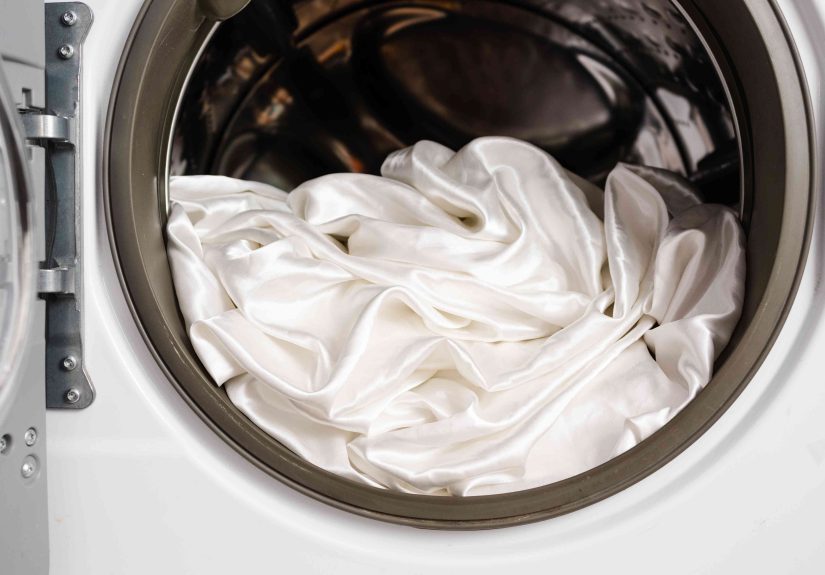
If the care label says your silk sheets are machine washable, you can absolutely use a washing machine. You just need to make the machine behave itself.
Use a Mesh Laundry Bag
Place the sheets in a large mesh laundry bag if possible. This adds a layer of protection against friction, snags, and tangling. It is a small step that can make a big difference.
Choose the Right Settings
Set the washer to the delicate, gentle, or hand-wash cycle. Use cold water and, if your machine allows it, choose the slowest or lowest spin speed. High agitation is not your friend here.
Use Only a Small Amount of Detergent
A little detergent goes a long way with silk. Too much soap can leave residue that makes the fabric feel less smooth. Use a silk-safe liquid detergent and skip bleach, brighteners, and fabric softener.
Wash the Sheets Alone or with Similar Delicates
Do not overload the machine. Silk sheets need room to move gently in the water. A stuffed washer is great for efficiency and terrible for delicate bedding.
How to Remove Stains from Silk Sheets
Silk and stains have a tense relationship. The secret is to treat stains gently and quickly.
For Fresh Stains
Blot the stain with a clean white cloth or towel. Do not rub. Rubbing spreads the stain and roughs up the fabric. If needed, dab the area with cool water and a tiny amount of gentle detergent.
For Sweat, Makeup, or Light Oil Marks
Apply a very small amount of silk-safe detergent to the area using your fingers. Gently work it in without scrubbing. Let it sit for a few minutes, then rinse with cool water before washing the full sheet.
What to Avoid
Do not attack silk with chlorine bleach, harsh stain sticks, or rough brushes. Avoid anything that promises to “obliterate” stains. Silk is not looking for obliteration. It is looking for respectful problem-solving.
How to Dry Silk Sheets
Drying is where many silk sheet tragedies happen. Washing usually gets all the attention, but the dryer is where good intentions go to die.
Air-Drying Is Best
Lay silk sheets flat on a drying rack or hang them indoors in a well-ventilated area. Keep them away from direct sunlight, which can fade color and stress the fibers. If you hang them outside, choose shade, not blazing afternoon sun.
If You Must Use a Dryer
Only use the air setting or the lowest possible heat, and only if the care label allows it. Remove the sheets while they are still slightly damp and let them finish drying naturally. Silk dries quickly, so this is not the place for a long hot cycle.
Do Not Wring or Twist
It is worth repeating because this mistake is so common. Wringing silk damages the fibers and can leave the fabric misshapen. Press, blot, and air-dry instead.
How Often Should You Wash Silk Sheets?
A good rule of thumb is about once a week, or a little less often if the bed is used lightly and you shower before sleeping. If you sweat heavily, sleep with pets, use a lot of nighttime skincare, or live in a hot climate, you may want to wash them more often. Silk feels glamorous, but it still collects body oil, sweat, and everyday life just like any other bedding.
If washing weekly feels like a lot, keep two sets in rotation. That move makes life easier, helps reduce panic laundry, and gives each set a little more recovery time between washes.
Mistakes to Avoid When Washing Silk Sheets
- Using hot water: Heat can weaken silk fibers and damage the finish.
- Choosing a heavy-duty cycle: High agitation is too rough for silk bedding.
- Using bleach or fabric softener: Both can harm the fabric and reduce its natural beauty.
- Overloading the washer: Silk needs space, not a full-contact sport with the rest of your laundry.
- Drying in direct sun or high heat: That is a fast route to fading and fiber stress.
- Ignoring the care label: The label knows your sheets better than internet bravado does.
How to Keep Silk Sheets Looking Luxurious Longer
Wash silk sheets gently and regularly rather than waiting until they look obviously dirty. Rotate between at least two sets if you can. Store clean silk bedding in a cool, dry place away from direct sunlight. Avoid plastic containers that trap moisture. If wrinkles bother you, a steamer is often gentler than a hot iron, though some silk bedding can be pressed on the lowest setting if the label allows it.
Another helpful habit is washing off heavy lotions, oils, and sleep masks before bed. Silk is beautiful, but it does not need a front-row seat to every overnight skincare experiment.
Common Experiences People Have with Washing Silk Sheets
One of the most common experiences people report with silk sheets is surprise. They expect silk to be impossibly delicate, then realize that washable silk is manageable once they stop treating it like either a museum artifact or a regular cotton sheet. The first successful wash usually feels like a small personal victory. You read the label, use cool water, choose a gentle detergent, let the sheets air-dry, and then stand back thinking, “That was it? That was the terrifying process?”
Another common experience is learning the hard way that less detergent is better. Many people use too much the first time because that is what they do with regular laundry. The result is often silk that feels slightly filmy or not quite as slippery-soft as expected. After one or two washes, most people figure out that silk does not need a mountain of soap. It wants a little, not a lava flow.
There is also the very relatable moment when someone ignores the mesh bag and regrets it. Maybe the sheets wrap around other items. Maybe they rub against a zipper. Maybe a fitted sheet turns into a fabric octopus inside the washer. Nothing catastrophic happens, but the person suddenly becomes the world’s biggest fan of laundry bags. It is amazing how quickly a small accessory becomes a household hero once silk is involved.
Drying is another area where experience teaches fast lessons. Many silk sheet owners notice that air-drying sounds inconvenient in theory but is surprisingly easy in practice because silk dries quickly. What feels annoying at first often becomes routine. A lot of people also discover that direct sunlight is not the best idea after noticing slight fading or a less vibrant finish. Shade and airflow usually win.
Then there is the fitted-sheet wrestling match. Silk is slippery by nature, which is wonderful at bedtime and mildly hilarious during laundry. Folding silk sheets can feel like trying to negotiate with a very elegant eel. Most people eventually stop aiming for department-store-perfect folds and settle for “clean, smooth enough, and not living in a heap on the chair.” That is a healthy emotional compromise.
People who sleep hot often say the effort is worth it. They like the cool-to-the-touch feeling and say the sheets still feel special months later if they wash them correctly. Others love how silk feels on skin and hair, especially compared with rougher fabrics. The biggest pattern in these experiences is this: people start out nervous, make a few small adjustments, and then realize silk care is more about consistency than difficulty. Gentle detergent, gentle cycle, gentle drying, repeat. No magic. No secret handshake. Just good habits.
Final Thoughts
Learning how to wash silk sheets is mostly about respecting the fabric. Keep the water cool, choose a detergent that is actually gentle, skip the harsh extras, and let air do most of the drying work. Whether you hand-wash or machine wash, the goal is the same: clean the sheets without roughing them up.
Silk bedding may be luxurious, but caring for it does not have to feel intimidating. Once you build a simple routine, it becomes just another part of keeping your bed fresh and comfortable. A slightly fancier part, sure, but still manageable. And when you climb into a clean bed that feels smooth, cool, and expensive in the best possible way, the extra care feels very worth it.