Table of Contents >> Show >> Hide
- The IPO Dream: “We’re All Going To Be Rich”
- What Employees Actually Owned: Equity Isn’t One Thing
- The $45 Problem: A Big Number That Became A Reference Point
- Why “Getting Rich” Didn’t Happen For Many Employees
- Who Did Well? (Because Someone Always Does)
- The Bigger Lesson: IPOs Don’t Magically Turn Equity Into Cash
- Practical Takeaways (Without The Magical Thinking)
- What It Felt Like: Of Real-World Employee Experience
- Conclusion: Uber’s IPO Was A Reality Check, Not A Riches Machine
The Uber IPO was supposed to be the Silicon Valley fairytale ending: years of late nights, frantic launches, and
“we’re definitely changing the world” Slack messages culminating in a single glorious moment when employees
refreshed their brokerage accounts and saw a number big enough to make their student loans flinch.
Instead, for a lot of Uber employees, the IPO felt less like winning the lottery and more like finding out you
won a cruise… that departs on the same day your passport expires… and the boat is already pulling away.
This isn’t a dunk on the company or the people who worked there. It’s a look at how IPO mechanics, equity
design, taxes, timing, and stock performance can turn “paper wealth” into “paperwork.” In Uber’s case, the
combination was potent: a $45 IPO price, a choppy debut, a meaningful slide during the lockup period, and a
set of equity realities that hit different depending on when you joined, what you were granted, and what you
thought “liquid” meant.
The IPO Dream: “We’re All Going To Be Rich”
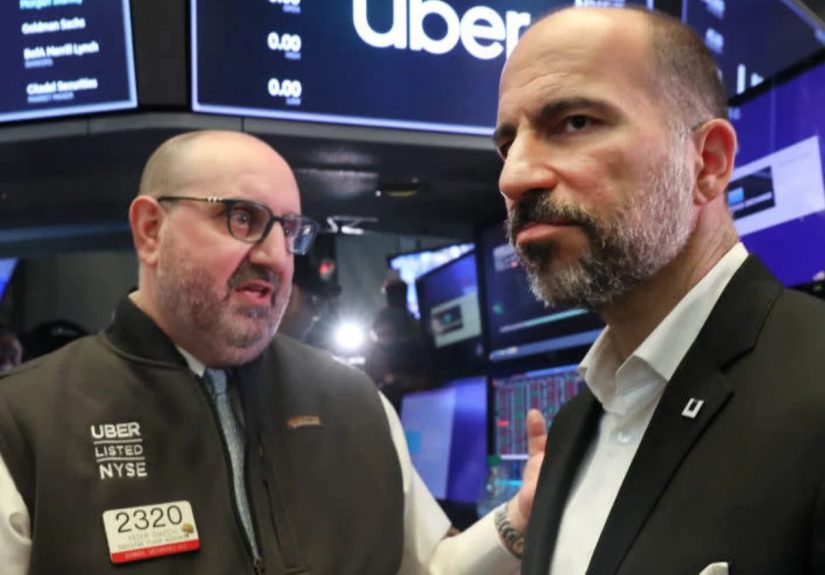
Uber priced its initial public offering at $45 per share in May 2019, and the shares began trading on the NYSE
the next day. That price point helped frame the employee narrative: “This is it. This is the number.”
But the market doesn’t care about your narrative. On day one, Uber’s shares opened below the IPO price and
finished the session down from $45hardly the champagne-pop many employees imagined.
That first-day wobble matters because IPOs aren’t just a financial event; they’re an emotional milestone.
Employees had spent years treating equity like a second paycheckone paid in hopeand many had already
mentally spent it: a down payment, a family safety net, a “finally I can breathe” fund. When the stock doesn’t
cooperate early, the gap between expectations and reality gets loud.
What Employees Actually Owned: Equity Isn’t One Thing
In startup land, people say “equity” like it’s a single magical object. In reality, “equity” is a category with
subplots. At large late-stage tech companies like Uber, employees might receive:
- RSUs (Restricted Stock Units): shares delivered upon vesting/settlement, typically taxed as ordinary income when they become yours.
- Stock options: the right to buy shares at a “strike price,” which only has value if the stock trades above that strike.
- Refresh grants: additional equity given over time, often intended to retain employees and re-align incentives.
Those differences are everything. An employee with RSUs can still be “up” even if the stock underperformsbecause
receiving shares at any value is still value. An employee heavy on options, especially with a high strike price,
can be “underwater” for a long time, meaning their options are basically motivational posters with a vesting schedule.
Timing Changed The Math
Joining Uber in the early growth years was not the same as joining later. Early employees often received equity when
the company’s private valuation was far lower. Later employees frequently received smaller grants (relative to the
company’s size) andcruciallygrants priced off a much higher valuation. That meant less upside left to capture,
and less buffer if public markets weren’t impressed.
This is the quiet truth of late-stage hiring: companies are less “startup” and more “brand,” so compensation shifts
toward cash and stability. Equity is still meaningful, but it’s less likely to be life-changing for the median employee.
The $45 Problem: A Big Number That Became A Reference Point
Uber’s IPO price anchored expectations. Even if you knew, intellectually, that IPO pricing is just a starting point,
$45 quickly became “the fair value” in employee minds. That anchoring created a psychological trap: if the stock
trades at $40, it feels like a loss, even though it might still represent substantial value compared to what the shares
were worth when granted.
But employees didn’t experience the IPO as a long-term investment thesis. They experienced it as a liquidity event.
When the market treated it like a risky growth stock with profitability questions, employees felt the mismatch
immediately.
The Lockup: The “Congrats, You Can’t Sell” Phase
IPOs almost always come with a lockup periodoften around 180 daysduring which insiders (employees, executives,
early investors) are restricted from selling shares. Uber’s S-1 described a 180-day lockup framework, with certain
conditions and exceptions typical to major offerings.
The lockup is designed to prevent a sudden flood of insider selling that could crater the stock. From a market
standpoint, it’s about stability. From an employee standpoint, it can feel like standing outside a bakery holding a
cake you’re not allowed to eat while someone livestreams the price of flour.
When Uber’s lockup period ended in early November 2019, the timing was brutal for employees who had been waiting
to sell. Reports described the stock falling sharply as selling restrictions lifted, with Uber shares touching
new lows around that period. Some coverage specifically noted that, on the first day many employees could sell,
the stock sank toward the mid-$20sfar below the IPO price.
Why “Getting Rich” Didn’t Happen For Many Employees
There wasn’t one single reason. There were several reasons that stacked on top of each other like an unfortunate
Jenga tower.
1) The Stock Didn’t Behave Like A Victory Lap
Uber’s IPO was large and highly anticipated, but the stock’s early trading didn’t deliver a sustained post-IPO pop.
It opened below the IPO price and finished day one below $45, and the following months featured significant volatility.
By the time lockup restrictions eased for many insiders, the stock had fallen well below the IPO level.
When employees finally gained the ability to sell, many were staring at a price that turned “retire early” fantasies
into “maybe I can replace my car without financing” realities. Not nothingjust not the mythology.
2) Options Became Underwater Faster Than People Expected
Employees with stock options had a specific vulnerability: strike prices. If you joined late-stage and received options
with strike prices in the $30s or $40s, the stock didn’t have to drop much for your equity story to turn into a waiting
game. Contemporary reporting around Uber’s IPO era highlighted how easily options could end up underwater if the stock
declined from the IPO neighborhood.
Underwater options aren’t just “worth less.” They can feel like a broken promiseespecially when you accepted a lower
salary because equity was part of the pitch. And even when companies issue refresh grants to re-motivate teams, the
emotional damage isn’t fully reversible.
3) RSU Taxes Can Create “Phantom Wealth”
RSUs are often viewed as “safer” than options because they retain some value even if the stock drops. But RSUs carry a
different risk: taxes. When RSUs vest and settle (meaning shares are delivered), the value is typically treated as
ordinary income. That means you can owe taxes based on the market value at the time of settlementeven if you don’t sell.
In Uber’s case, a major controversy centered on timing and taxes. Reporting and legal-claim summaries described a situation
in which some employees argued they were taxed based on the IPO-era value of shares while being restricted from selling
during the lockup periodonly to watch the stock price fall by the time selling was permitted. The pain point wasn’t
“the stock went down” (stocks do that). The pain point was “I got taxed as if I received a higher value than I could
actually realize when I was finally allowed to sell.”
Think of it like being told your paycheck is based on the price of gold on paydaybut you can’t cash it until six months
later, after the price changes. The IRS doesn’t do refunds for bad timing.
4) Liquidity Was Not A Single Moment (And Not Everyone Had The Same Window)
Even after lockup expiration, employees still faced practical constraints:
- Trading windows and blackout periods tied to earnings and insider-trading policies.
- Brokerage logistics (share releases, account setup, compliance steps) that can delay selling.
- Emotional whiplash: sell now and lock in disappointment, or hold and hope for a rebound.
Liquidity isn’t just “the lockup ends.” It’s a process with rules, timing, and a lot of second-guessing.
5) The “Median Employee” Wasn’t Sitting On A Mountain Of Stock
Headlines often blur the difference between early executives, early engineers, and the broad employee base.
Yes, some insiders can do extremely wellespecially founders and very early hires. But the typical employee’s
equity grant is sized for retention and incentive alignment, not instant generational wealth.
For many employees, the IPO outcome wasn’t “I didn’t get rich.” It was “I got something valuable, but it didn’t
transform my life the way the hype suggested it might.”
Who Did Well? (Because Someone Always Does)
It’s important to keep the story honest: not every Uber employee “failed to get rich.” Some did very well, especially:
- Early employees whose grants were priced at much lower valuations and who stayed long enough to vest meaningfully.
- Employees with large RSU packages who could withstand volatility and hold longer-term.
- Insiders with different liquidity options such as pre-IPO tender offers or earlier partial liquidity (when available).
The more accurate headline is: many employees didn’t get rich the way the public imagined they would.
And for a subset, the combination of lockup timing and taxation made the experience feel especially punishing.
The Bigger Lesson: IPOs Don’t Magically Turn Equity Into Cash
Uber’s IPO is a useful case study because it highlights a truth that applies far beyond one company:
an IPO is not a guarantee of employee wealth. It’s an event that changes the rules of the game.
Public markets bring:
- Price discovery that can be harsher than private valuations.
- Volatility that doesn’t care about your vesting schedule.
- Liquidity constraints that arrive exactly when you want liquidity most.
- Taxes that can be due before you ever touch a dollar of cash.
If you want a mental model, here it is: equity compensation is a risk-sharing agreement. You share the upside,
but you also share the timing risk, market risk, and tax risk. Uber employees didn’t “fail” because they were naïve
or undeserving. Many ran into the realities baked into the structure.
Practical Takeaways (Without The Magical Thinking)
Equity Is A Compensation Ingredient, Not A Lottery Ticket
When evaluating an offer, treat equity like a variable component of payone that can be meaningful, but shouldn’t be
required to make your financial life work.
Understand What You’re Granted
RSUs and options behave differently. Strike prices, vesting schedules, and settlement triggers matter. “I have equity”
is not a plan. It’s a sentence starter.
Expect Lockups And Plan For Illiquidity
Assume you cannot sell immediately at IPO. Assume the stock will move. Assume you might feel regret no matter what you do.
That’s not pessimism; it’s realism.
Taxes Can Hit Before Cash Does
Equity taxes are complicated and fact-specific. If a large portion of your net worth is tied to company stock,
professional tax advice isn’t a luxuryit’s risk management.
What It Felt Like: Of Real-World Employee Experience
If you want to understand why the Uber IPO didn’t make everyone rich, you have to zoom in on the day-to-day experience,
not just the charts.
For many employees, the IPO countdown felt like living next to an airport: constant noise, constant anticipation,
and the strange belief that once the big plane lands, everything in your life becomes easier. People talked in milestones:
“after the S-1,” “after the roadshow,” “after pricing,” “after lockup.” You could almost hear the calendar pages turning.
Then pricing happens. You see $45 and your brain does what brains do: it multiplies. You don’t just compute your shares;
you compute your future. A bigger apartment. A house that doesn’t require a coin toss to decide whether the shower works.
A moment where you can stop saying, “We’ll travel next year.”
Day one arrives and the stock opens below IPO price. That’s not catastrophic, but it is deflatinglike blowing out candles
and realizing the cake is gluten-free when you didn’t ask for that. In the office (or in group chats), people start
rationalizing. “It’s just the market.” “Lyft had it worse.” “Facebook dropped after its IPO too.” The comparisons are
comforting, but they also quietly admit the truth: you are no longer in control of the story.
The lockup period becomes its own psychological season. You watch the stock move and you can’t act. On green days,
you feel briefly brilliant. On red days, you feel personally insulted by an algorithm. You stop checking the price
every five minutes and start checking it every hour, which is what passes for personal growth in finance anxiety land.
Meanwhile, life keeps happening. Rent is still due. Kids still need braces. Your car still makes a noise that sounds
like regret. And if RSUs are involved, you start hearing tax words“withholding,” “ordinary income,” “settlement”
words that make your stomach tighten because they sound expensive.
When the lockup finally ends, it isn’t a gold rush for everyone; it’s a decision day. Some employees sell immediately
because they can’t take the stress anymore. They’d rather lock in “less than hoped” than gamble on “maybe it comes back.”
Others hold because selling at a low feels like admitting defeat. A few are genuinely bullish and treat the early dip as
noise. And some are stuck in the most frustrating category: people who need to sell for practical reasons, but find that
trading windows, compliance rules, or account logistics slow everything down.
The hardest part is that, emotionally, it can feel unfair even when it’s not unusual. Lockups are standard. Volatility
is normal. Taxes are taxes. But when you’ve spent years working toward the IPO finish line, “standard” and “normal”
are not the words you want to hear. You wanted a reward. What you got was a lessonone written in stock prices and
tax forms.
Conclusion: Uber’s IPO Was A Reality Check, Not A Riches Machine
Uber’s IPO didn’t “fail” employees in one dramatic moment. It disappointed many of them through a sequence of normal
market mechanics that felt abnormal when paired with huge expectations: an IPO price that became an anchor, a stock that
dropped during the lockup, equity that wasn’t evenly distributed across hiring eras, and tax timing thatat least
according to public reporting and legal claimsleft some employees feeling like they paid for value they couldn’t realize.
The bigger takeaway is simple and useful: equity can be meaningful compensation, but it’s not a guaranteed shortcut to
wealth. Sometimes it’s a bonus. Sometimes it’s a burden. And sometimes it’s both, on the same day, in the same brokerage
account, right next to the “Sell” button you’re not allowed to press yet.