Table of Contents >> Show >> Hide
- Why this collaboration matters
- What is limewash and why designers love it?
- How the Hoxton neighborhoods translated into colour
- Application: what to expect (and how to avoid rookie mistakes)
- Styling ideas: how to use the Hoxton x Bauwerk shades in real rooms
- Sustainability, story, and the modern market
- Where to buy and what to budget for
- Five quick pros & cons
- Conclusion
- On the ground: experiences, trials, and real-world notes (≈)
Short take: The Hoxton hotel group and Bauwerk Colour teamed up to bottle neighbourhood vibes nine earthy, zero-VOC limewash shades inspired by Hoxton’s outposts in Berlin, Edinburgh, Amsterdam, and Barcelona. It’s a paint collection that reads like a mini travel guide for your walls: textural, breathable, and quietly worldly.
Why this collaboration matters
If the last decade taught designers anything, it’s that materials with provenance and personality win. The Hoxton x Bauwerk Neighbourhood Collection isn’t just another celebrity palette; it’s the result of The Hoxton’s in-house design thinking meeting Bauwerk’s modern mineral limewash technique. The collaboration was developed by AIME Studios with input from The Hoxton’s design teams, translating neighbourhood photography and atmospheres into nine distinct tones that evoke specific European locales.
What’s in the box (or tin)
The collection launches with nine colours think pebble-pink Charlottenburg, the sun-bleached Casa from Barcelona, deep Kino sage for Berlin, and Haymarket’s weathered sandstone nod to Edinburgh. Each is formulated as a traditional limewash: a mineral-based finish that absorbs into masonry and plaster rather than sitting on top like a plastic film. That approach produces a cloud-like, tactile surface where brush marks and micro-variations are part of the charm.
What is limewash and why designers love it?
Limewash is an ancient mineral coating made from slaked lime (calcium hydroxide) and water, often enriched with natural pigments and minerals. Unlike standard emulsion paints, limewash cures by absorbing carbon dioxide from the air and forming a crystalline calcium carbonate matrix. The result is a breathable, low-film, softly matte finish with subtle tonal depth. Because it is mineral-based and typically solvent-free, contemporary formulations like Bauwerk’s are marketed as zero-VOC and free from biocides and formaldehydes.
Performance perks
- Breathability: Limewash allows moisture vapor to pass through walls, reducing trapped damp and helping preserve masonry.
- Natural antimicrobial qualities: The high pH of lime can discourage mold and some microbes, making limewash a good choice for humid areas when applied appropriately.
- Low environmental impact: Modern limewash recipes are typically solvent-free and contain few to no VOCs, aligning with sustainable interior strategies.
How the Hoxton neighborhoods translated into colour
The design brief for the collection began with neighbourhood photography. The Hoxton design team and Bauwerk dug into the local palettes facade stones, worn plaster, shopfronts, street tiles, and the weathered patina that time gifts to a place. From that research came shades like Moss (a muted green with a historic patina), Poblenou (a Mediterranean blue-leaning wash), and House (a softhouse grey that nods to the brand’s humble origin story). The palette aims to feel lived-in rather than stage-set an aesthetic central to The Hoxton hotels.
Design tip:
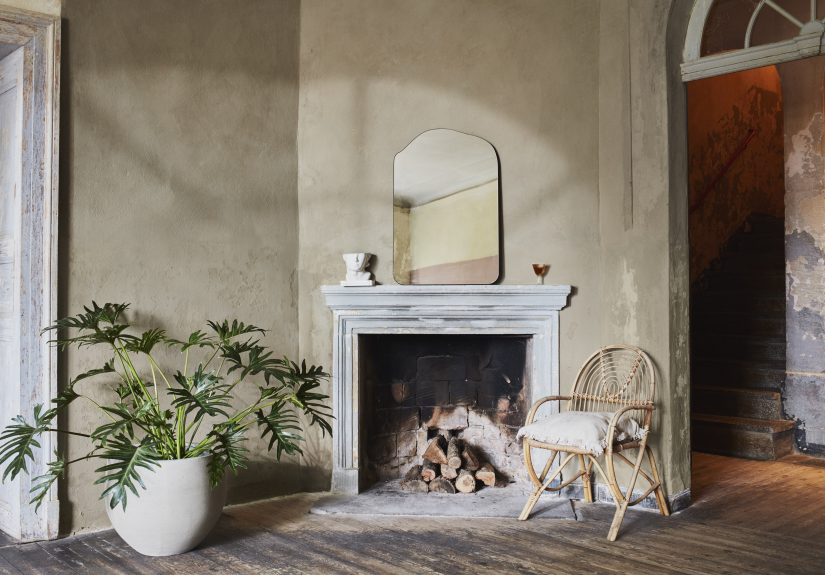
Use the stronger, more chromatic shades as feature walls or alcoves, and balance them with softer neutrals (House, Bone) for trim and ceilings. Limewash plays beautifully with natural materials riven stone, raw timber, plastered fireplaces so let texture do half the talking.
Application: what to expect (and how to avoid rookie mistakes)
Painting with limewash is more like decorating with an artisanal glaze than rolling on modern acrylic latex. Bauwerk and experienced applicators recommend thin, cross-hatched layers applied with a traditional masonry brush or soft-bristled roller, keeping a wet edge to blend strokes into a cloudlike patina. The paint appears darker when wet and lightens considerably as it cures; patience is your friend. Avoid sealing limewash with modern topcoats that removes breathability and changes the finish.
Practicalities
Start with a sample pot and paint a test area light and substrate drastically affect final colour. Bauwerk sells colour cards and sample sizes so you can trial shades before committing to a full tin. For exterior use, proper substrate preparation is crucial: remove loose material, ensure the surface can absorb the limewash, and remember limewash won’t cure well on non-absorbent glossy surfaces.
Styling ideas: how to use the Hoxton x Bauwerk shades in real rooms
Bedroom sanctuary: A muted shade like House or Bone creates a soft, restful cocoon when paired with linen bedding and warm brass accents. Designers often use limewash in bedrooms for its depth without the glare of a flat latex.
Kitchen backsplash or alcove: Use a deeper shade such as Kino behind open shelving to give kitchenware and plants a moody backdrop. Because limewash stains can be harder to clean than modern enamels, protect splash zones with glass panels rather than high-solids topcoats.
Exterior façades: Limewash’s breathability makes it historically appropriate for lime-rendered façades and older brickwork it gives a building patina without trapping moisture. Consider a toned limewash for cast-iron terraces or stucco cottages to emphasize age and texture.
Sustainability, story, and the modern market
Limewash’s eco credentials matter: low or zero VOCs, mineral based pigments, and often simpler ingredient lists make it appealing to homeowners looking to reduce indoor pollutants. Brands like Bauwerk position their products as modern interpretations of a traditional finish sustainable, durable (if maintained), and visually rich. The Hoxton collaboration leverages this by pairing the material story with a narrative: each shade is a curated memory of place.
Where to buy and what to budget for
The collection is available through Bauwerk’s channels and select retailer partners; The Hoxton also sells curated items through its shop pages. Limewash typically costs more per litre than mass-market emulsion paints because of pigment load, packaging sizes, and its niche formulation think premium paint pricing, with sample pots available for modest cost. In press coverage the collaboration was noted as launching with nine shades and with pricing consistent with Bauwerk’s other designer collections.
Five quick pros & cons
- Pro: Unique, tactile finish full of character.
- Pro: Breathable and typically low-VOC.
- Con: Requires careful application and often a specialist hand.
- Con: Less scuff resistant than acrylics plan placements accordingly.
- Pro: Beautiful with natural materials and historically sympathetic façades.
Conclusion
The Hoxton x Bauwerk Neighbourhood Collection brings together place-based design storytelling and a revival material with authentic performance benefits. If you love paint that looks like it has a memory layered, worn, and full of depth and you don’t mind (or enjoy) the ritual of artisanal application, these shades are worth a look. Whether you’re after a Barcelona-washed pink or an Edinburgh sandstone grey, the Neighbourhood Collection reads like a passport on your walls.
Publication assets (for SEO & meta)
sapo: The Hoxton and Bauwerk have teamed up to release a nine-shade limewash collection inspired by four European neighbourhoods Berlin, Edinburgh, Amsterdam, and Barcelona. Formulated as zero-VOC, mineral-based limewashes, the shades (from sun-bleached Casa to weathered Haymarket) celebrate texture, breathable performance, and a lived-in aesthetic. This article walks through what limewash is, how the collection translates city palettes into paint, practical application tips, styling suggestions, and why designers are embracing mineral finishes as a sustainable, soulful alternative to modern emulsions.
On the ground: experiences, trials, and real-world notes (≈)
Designers and DIYers who’ve worked with Bauwerk limewash and specifically with the Hoxton x Bauwerk shades describe the process as a mix of planning, patience, and small triumphs. In Instagram posts and designer writeups, you’ll see rooms that read like softly photographed travel memories: a kitchen alcove in Poblenou blue that makes white plates sing, a bedroom washed in House grey that reads like a luxury guestroom, and an exterior rendered in Haymarket that looks immediately older (in the best way) and more settled than the building’s actual years.
From a practical standpoint, installers often recommend a “dress rehearsal”: paint a 1-square-metre card or a small wall sample and live with it for a few days in different lighting. Limewash shifts dramatically with light it’s darker when wet and subtly breaks into warmer or cooler tones depending on sun exposure and neighboring materials. One New York designer who used Bauwerk on a client’s lounge noted that the final tone felt greener at dusk than on a midday swatch, leading to a quick second pass to balance adjacent wood tones. This sort of iterative approach is common and encouraged.
For hands-on DIYers, the texture is addictive. The work feels slower and more deliberate than plastering or rolling latex. Many describe the painting ritual as almost meditative cross-hatching strokes, assessing the clouding effect, and stepping back to see how the surface breathes. But with that magic comes responsibility: limewash is more sensitive to scrubby cleaning and heavy wear. Families with small children or high-traffic hallways often reserve limewash for bedrooms, dining rooms, or external façades where its historical appropriateness shines.
Retailers and trade professionals also remind customers that limewash maintenance is different: rather than aggressive spot-cleaning, owners often touch up with a fresh thin glaze from the original tin to blend new patina into old. This reframes “maintenance” as cyclical decorating rather than remedial work something many owners find appealing because it keeps interiors feeling curated and evolving.
Finally, the Hoxton x Bauwerk release has been embraced by boutique hoteliers and indie shop fit-outs for the same reason anyone falls for limewash: authenticity. A small café owner repainted their back wall in Charlottenburg and reported customers commenting on how the space “felt calmer” and how pastries “looked better” against the rosy backdrop. That’s the very human metric designers love color that doesn’t just look good in a photographer’s lightbox but changes how people inhabit a space.
Bottom line: if you’re buying into Hoxton x Bauwerk, you’re buying more than paint. You’re buying a finish that carries craft, a palette that carries place, and an application process that asks you to slow down and enjoy the making.