Table of Contents >> Show >> Hide
- Why Scientists Are Looking at Fish Gills to Understand Human Limbs
- The Old Theory That Refused to Stay Buried
- Meet Sonic Hedgehog, the Gene With a Cartoon Name and a Big Job
- What the Skate Experiments Actually Showed
- Does This Mean Human Arms Evolved Directly From Fish Gills?
- The 2026 Update: Shared Competence Adds a New Layer
- Why This Matters for Understanding Evolution
- Deep Homology: The Hidden Family Resemblance
- What This Research Does Not Say
- Why the Story Is So Exciting
- Experience Section: Seeing Your Hands Like an Evolutionary Biologist
- Conclusion
- SEO Tags
Could the story of your hands begin with ancient fish gills? It sounds like the kind of sentence that escapes from a science-fiction script after drinking too much aquarium water. Yet evolutionary biology has a habit of making the impossible sound embarrassingly reasonable. Recent and long-running research suggests that a crucial genetic program involved in building human arms, legs, fingers, and toes may have deep connections to the structures that shaped gills in ancient fish.
The star of this story is a gene with one of the strangest names in science: Sonic hedgehog, often shortened to Shh. Despite sounding like a lost arcade character, Sonic hedgehog is serious biological business. It helps guide embryonic development, telling growing tissues where to form, how to expand, and what shape to take. In mammals, it helps organize the limb from the thumb side to the pinky side. In certain cartilaginous fish, including skates, related Shh signaling helps pattern finger-like supports in the gill region called branchial rays.
That does not mean your arm is secretly a gill wearing a sweater. Evolution is more clever, and frankly weirder, than that. The idea is that ancient developmental instructions may have been reused, modified, and redeployed over hundreds of millions of years. In other words, nature may be the original master of recycling.
Why Scientists Are Looking at Fish Gills to Understand Human Limbs
Human limbs and fish gills seem like they belong in completely different chapters of biology. One helps us grab coffee, type emails, wave awkwardly across parking lots, and open stubborn pickle jars. The other helps fish breathe underwater. But evolutionary development, often called evo-devo, looks beyond obvious adult shapes and asks a deeper question: How were these structures built in the embryo?
This is where the mystery gets interesting. All vertebrates develop through coordinated genetic signals. These signals do not act like blueprints in the simple sense of “put bone here, add skin there, install elbow by Tuesday.” Instead, genes behave more like managers in a massive construction project, sending signals that influence cell growth, position, identity, and timing.
For decades, scientists have known that limbs in mammals, birds, reptiles, and amphibians share a deep evolutionary relationship. The bones of a human arm, bat wing, whale flipper, and lizard forelimb may look different on the outside, but they follow a recognizable pattern. This is called homology: similarity inherited from a common ancestor.
The more surprising question is whether the genetic program behind limbs may reach even deeper into vertebrate history, possibly connecting to structures that existed before paired fins and limbs fully evolved. That is why researchers have returned to a once-controversial idea from the nineteenth century: maybe paired fins, and eventually limbs, share an evolutionary relationship with ancient gill arch structures.
The Old Theory That Refused to Stay Buried
In 1878, German anatomist Karl Gegenbaur proposed that paired fins may have evolved from gill arch structures in ancient fish. At the time, this was a bold idea. It was also difficult to prove. Fossils did not provide a clean step-by-step sequence showing gill supports transforming into fins. Without that fossil evidence, the theory was pushed aside for many years.
But science is not a graveyard for rejected ideas. Sometimes an old theory comes back wearing a lab coat and carrying better tools. Modern developmental biology has given researchers new ways to test evolutionary relationships, not only through fossils but also through embryos, genes, and cell behavior.
Cartilaginous fish such as sharks, rays, and skates became especially useful in this investigation. Unlike many bony fish, these animals have gill arch appendages known as branchial rays. These rays extend from the gill arches in a way that caught the attention of anatomists because they resemble small repeating supports, almost like a row of tiny skeletal fingers along the gill region.
That visual similarity alone is not enough to prove anything. Biology is full of look-alikes that are not closely related in origin. But when scientists examined the genes involved in building these gill structures, the old idea began to look less dusty and more intriguing.
Meet Sonic Hedgehog, the Gene With a Cartoon Name and a Big Job
The Sonic hedgehog gene plays a major role in animal development. In vertebrate limbs, Shh signaling helps establish the limb’s front-to-back axis. In a human hand, that axis is roughly the difference between the thumb side and the pinky side. During embryonic growth, cells need positional information so they do not build five thumbs, one confused wrist, and a tiny biological disaster.
Shh is produced in a signaling region of the limb bud known as the zone of polarizing activity. This region helps guide the identity and growth of developing digits. The timing, strength, and location of Shh signaling all matter. Too much, too little, too early, or too late can change how limb structures form.
That is already fascinating. But researchers found that Shh signaling also appears in the developing gill arches of little skates. In these embryos, Shh is involved in organizing branchial rays, the cartilage-supported appendages associated with the gills. This was the biological equivalent of finding the same odd tool in two very different workshops.
In experiments on skate embryos, scientists interrupted Shh signaling at different points in development. When Shh was disrupted early, branchial rays formed in abnormal positions. When it was disrupted later, fewer rays formed, although those that did develop appeared in the proper location. This pattern strongly resembled the two-part role Shh plays in limb development: first helping set up the body plan, then helping maintain growth.
What the Skate Experiments Actually Showed
The little skate, Leucoraja erinacea, may not look like an obvious hero of human evolutionary history. It glides across the ocean floor with the calm confidence of a pancake that learned ballet. But in the laboratory, skate embryos have become powerful models for studying early vertebrate development.
Researchers studying skate embryos found that the gill arch region uses a Shh-signaling center that functions in ways similar to the limb bud’s zone of polarizing activity. That does not mean gills and limbs are identical. They are not. A gill arch is not a hand, and a hand is terrible at extracting oxygen from seawater. Please do not test this.
What the research shows is subtler and more important: the same developmental logic may pattern different structures. The Shh pathway helps organize the growth and orientation of skeletal appendages in both contexts. In skates, it helps shape branchial rays. In tetrapods, the group that includes amphibians, reptiles, birds, and mammals, it helps shape limbs.
This supports the possibility that ancient vertebrates already had a genetic toolkit for making projecting skeletal structures before true paired fins and limbs appeared in their familiar forms. Evolution may have taken that toolkit and reused it in new anatomical neighborhoods. If nature had a junk drawer, it would be full of ancient genes repurposed for spectacular new jobs.
Does This Mean Human Arms Evolved Directly From Fish Gills?
Here is where responsible science has to tap the brakes. The phrase “human limbs evolved from fish gills” is catchy, but it can be misleading if taken too literally. Evolution rarely works like a cartoon transformation where a gill arch stretches, waves goodbye to the ocean, and becomes an arm.
The better interpretation is that human limbs, fish fins, and certain fish gill structures may share ancient developmental programs. These programs could reflect a deep evolutionary relationship, or they could show that evolution reused the same powerful genetic tools independently in different structures.
Scientists are still investigating which explanation is more accurate. One possibility is serial homology, where repeated body structures share a common developmental basis. Think of vertebrae in the spine: cervical, thoracic, and lumbar vertebrae are different, but they are variations on a repeated theme. Fingers and toes are another familiar example. They are not identical copies, but they arise from related developmental patterning.
Recent work has added an important twist. Instead of imagining that one body part simply transformed into another, researchers are studying whether the cells that make different structures may have shared developmental competence. In other words, early embryonic cells may be able to respond to local instructions in similar ways, even if they later form different adult structures.
The 2026 Update: Shared Competence Adds a New Layer
A newer line of research on little skates suggests that the story is not only about one gene. It is also about how cells respond to their environment. Scientists found evidence that different embryonic cell populations involved in forming gill arches and paired fins may share the ability to build similar skeletal structures under the right conditions.
This idea is called shared competence. It means that cells from different embryonic origins may still be capable of responding to similar developmental signals. In experimental work, cells that would normally contribute to one structure were transplanted into another region and could incorporate into that new developing structure. That is a big deal because it suggests that the similarity between gill arches and fins may come not from a simple one-to-one transformation, but from deeper developmental flexibility.
Think of it like this: the same skilled craftsperson can build a chair or a table depending on the instructions, materials, and location. The craftsperson is not “a chair” or “a table.” The outcome depends on the context. In embryos, cells can behave in surprisingly flexible ways when placed in different signaling environments.
This does not erase the importance of Sonic hedgehog. Instead, it places Shh inside a larger network of developmental signals, including pathways such as retinoic acid, Fgf, Wnt, and Hox-related patterning systems. Evolution does not usually rely on one magic switch. It works through networks, timing, location, and repeated use of old biological tools in new arrangements.
Why This Matters for Understanding Evolution
The connection between limbs and gill structures matters because it changes how we think about major evolutionary innovations. We often imagine evolution as inventing brand-new organs from scratch, like a nervous inventor locked in a garage with lightning, coffee, and questionable safety goggles. But many evolutionary breakthroughs seem to happen when existing developmental systems are reused in new ways.
The transition from fins to limbs is one of the most famous examples. Fossils such as Tiktaalik roseae, a 375-million-year-old fish-like animal with features associated with early tetrapods, show that the move from water to land involved gradual anatomical changes. Fins became stronger, shoulders changed, necks became more mobile, and skeletons adapted to shallow-water and eventually land-based movement.
Genes help explain the invisible side of that story. Fossils show shape. Embryos show process. Genes show the instructions and signals that make process possible. When those three lines of evidence come together, scientists can better understand not only what changed, but how change became biologically possible.
The Shh-gill-limb connection suggests that the roots of appendage development may be older than limbs themselves. That is a profound idea. It means parts of the genetic machinery that helped shape your fingers may have been active in ancient aquatic animals long before any creature used a limb to scratch its head, climb a bank, or accidentally knock a phone off a desk.
Deep Homology: The Hidden Family Resemblance
One useful concept here is deep homology. This refers to cases where very different structures are built using ancient, conserved genetic programs. The structures may not look alike as adults, but they share developmental ingredients inherited from distant ancestors.
Deep homology helps explain why evolution can produce dramatic variety without starting from zero every time. Wings, fins, limbs, jaws, gill supports, and digits may look wildly different, but their development can involve overlapping genes and signaling pathways. Evolution modifies when and where these genes act, how strongly they are expressed, and what tissues respond to them.
This is why the Sonic hedgehog story is so compelling. It shows that a gene famous for organizing limbs also has a role in patterning gill arch appendages in cartilaginous fish. The similarity is not just superficial. It appears in developmental function.
Still, deep homology must be handled carefully. Shared genes do not automatically prove that two structures evolved from the same ancestral structure. Many genes are used repeatedly across the body. Shh, for example, is involved in several developmental processes beyond limbs. The challenge is to determine whether shared gene use reflects shared ancestry, repeated reuse, or both.
What This Research Does Not Say
Good science is as much about limits as discoveries. The research does not say that modern human limbs came directly from modern fish gills. Humans did not evolve from living skates, sharks, or rays. Instead, humans and cartilaginous fish share ancient vertebrate ancestors. Modern skates preserve useful developmental features that can help scientists infer what early vertebrate biology may have been like.
The research also does not reduce limb evolution to a single gene. Sonic hedgehog is crucial, but limb development involves many interacting signals. Genes such as Hox genes, Fgf signaling, Wnt pathways, and other regulatory systems contribute to the growth and identity of appendages. A hand is not built by one gene any more than a skyscraper is built by one hammer.
Finally, the research does not settle every debate about the origin of paired fins. Fossil evidence for the earliest stages of paired appendage evolution remains incomplete. Developmental biology provides powerful clues, but scientists continue to compare embryos, genomes, fossils, and anatomy to test competing ideas.
Why the Story Is So Exciting
The idea that human limbs and fish gill structures may trace back to shared genetic programs is exciting because it makes evolution feel both grand and intimate. Grand, because it reaches across hundreds of millions of years of vertebrate history. Intimate, because the evidence is written into the way our own bodies formed before birth.
Your fingers are everyday tools, but they are also evolutionary documents. They carry traces of developmental systems older than humanity, older than mammals, older than reptiles, and older than the first animals that fully walked on land. The same can be said for many body parts we take for granted. Our anatomy is not a brand-new design. It is a revised edition of a very old manuscript.
This does not make humans less remarkable. If anything, it makes life more astonishing. We are not separate from the history of animals. We are built from it. Every hand, every wrist, every elbow is part of a long biological conversation that began in ancient seas.
Experience Section: Seeing Your Hands Like an Evolutionary Biologist
One of the best ways to understand this topic is to stop thinking of evolution as a dusty museum timeline and start noticing it in ordinary experiences. Hold up your hand. Spread your fingers. Bend each one slowly. That simple motion depends on bones, tendons, muscles, nerves, blood vessels, and developmental instructions that formed long before you were born. Now imagine a skate embryo developing branchial rays along its gill arches. The structures are not the same, but the shared developmental theme makes the comparison surprisingly powerful.
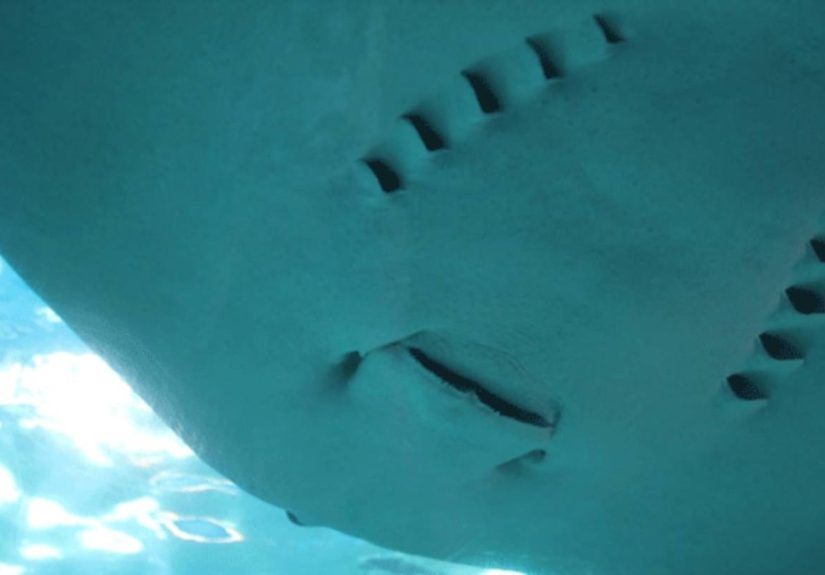
At an aquarium, this idea becomes even easier to appreciate. Watch a ray glide through the water. Its body seems almost alien at first, all smooth motion and quiet control. Then look closer at the gill region and the broad paired fins. The animal is not a primitive version of us; it is a living branch of vertebrate history with its own elegant design. But it can still teach us about the ancient genetic systems that helped shape appendages across vertebrates.
In a classroom or science museum, this topic often creates a wonderful “wait, what?” moment. Students may expect evolution to be mainly about bones turning into other bones. Fossils are easier to picture than genes. But when they learn that embryos can reveal hidden relationships between body parts, the story becomes richer. A fossil can show that an ancient fish had limb-like fins. An embryo can show how tissues receive instructions. A gene can show how those instructions may have been reused in different animals.
For writers, teachers, and curious readers, the Shh story is also a reminder to be careful with catchy science headlines. “Human limbs came from fish gills” is dramatic, but the truth is more interesting. The better lesson is that evolution often works by modifying old systems rather than inventing entirely new ones. A gene involved in organizing a hand may also help pattern a fish’s gill supports. That is not a gimmick. That is the deep logic of life.
You can even feel the concept in daily life. When you grip a mug, tie your shoes, chop vegetables, or scroll through your phone, your hand is doing something modern with ancient biological machinery. Of course, no Devonian fish was checking notifications in a swamp. But the developmental roots that made flexible appendages possible belong to a much older world. Your fingers are not fossils, but they are built by evolutionary history.
That is what makes this research so memorable. It connects laboratory experiments on skate embryos with the human body in a way that is both scientifically careful and wonderfully humbling. The next time you look at your hand, you might see more than knuckles and fingernails. You might see an echo of ancient seas, a genetic toolkit passed forward through time, and a reminder that evolution is not just behind us. It is literally under our skin.