Table of Contents >> Show >> Hide
- Why Jim Shoenbill’s Single-Panel Comics Feel Like a Tiny Vacation for Your Brain
- Who Is Jim Shoenbill?
- The Magic of Single-Panel Comics
- What Makes Jim Shoenbill’s Humor Feel Positive?
- Common Themes in Jim Shoenbill’s Comics
- Why These Comics Can Brighten Your Day
- Why a 50-Picture Collection Works So Well
- What Writers, Artists, and Marketers Can Learn From Shoenbill’s Style
- How to Enjoy Jim Shoenbill’s Comics Like a Professional Laugher
- Experience: What Reading Positive Single-Panel Comics Feels Like in Real Life
- Conclusion: A Small Comic Can Do a Surprisingly Big Job
- SEO Tags
Some comics need an entire universe, a dramatic backstory, and a dragon with unresolved childhood issues. Jim Shoenbill often needs one panel, one perfectly strange idea, and just enough absurdity to make your coffee feel underqualified.
Why Jim Shoenbill’s Single-Panel Comics Feel Like a Tiny Vacation for Your Brain
Jim Shoenbill’s cartoons live in that wonderful pocket of comedy where everyday life takes one polite step sideways and suddenly becomes hilarious. His work is often described as witty, lighthearted, weird, and refreshingly positivean appealing mix in a digital world that sometimes feels like it was designed by a committee of tired raccoons.
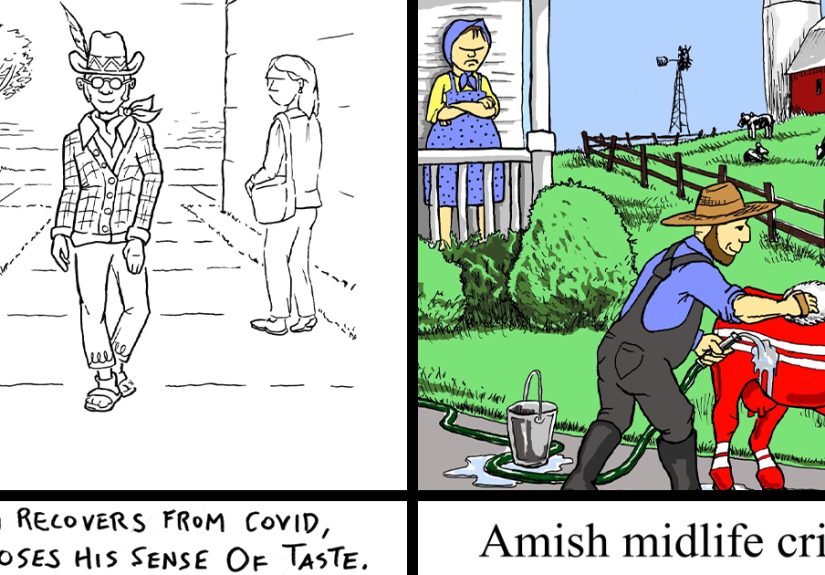
The title “Humorous And Positive Single-Panel Comics By Jim Shoenbill That Will Hopefully Brighten Up Your Day (50 Pics)” captures the charm perfectly. These are not long comic strips that require a reader to follow three characters, two timelines, and a running joke from 2017. Instead, Shoenbill’s single-panel comics deliver fast, clean bursts of humor. You look. You pause. Your brain goes, “Wait a second.” Then the punchline lands like a pillow thrown by a very polite clown.
That single-panel format is deceptively difficult. A cartoonist must build a scene, set expectations, introduce the joke, and deliver the twist in a tiny visual space. No warm-up act. No chapter two. No “previously on this comic.” It is one drawing with one comic idea, and if it works, the reader gets an instant mood lift.
Who Is Jim Shoenbill?
Jim Shoenbill is a cartoonist, illustrator, humor writer, and designer known for channeling odd thoughts into cheerful, clever cartoons. His own public profiles describe his mission as brightening people’s days with positive humor. That mission shows up clearly in his work: the jokes are silly without being mean, surreal without being confusing, and upbeat without feeling like a motivational poster wearing a fake mustache.
Shoenbill’s cartoons and humor writing have appeared across a range of publications and platforms, including humor outlets, magazines, greeting cards, and cartoon licensing sites. His creative world includes cartoons, writing, shirts, mugs, stickers, and other designs. In other words, his imagination is not just living rent-free in his headit has opened a small gift shop.
What makes his voice stand out is the combination of friendliness and surprise. Many modern comics lean into dark humor, shock value, or online cynicism. Shoenbill often goes in another direction. He gives readers oddball situations, talking objects, animals with human problems, and jokes that feel playful rather than prickly.
The Magic of Single-Panel Comics
One Image, One Joke, One Tiny Explosion
Single-panel comics have a long tradition in print and digital humor. They are built around compression. The best ones give readers just enough information to understand the world of the joke, then flip that world with one unexpected detail. Jim Shoenbill’s comics fit naturally into this tradition while adding his own warm, slightly absurd personality.
In a Shoenbill-style universe, the ordinary becomes suspiciously entertaining. A deer might have a career in stand-up comedy. Beverages may have opinions. A familiar religious or cultural figure may be placed in a completely unexpected job. The humor comes from the gap between what we expect and what the panel quietly presents as normal.
That is the beauty of positive absurdity: it does not ask the reader to be angry, cynical, or cruel. It asks the reader to play along for a few seconds. And honestly, most of us could use a few more seconds of play that do not involve losing a phone charger or arguing with a printer.
Why the Format Works So Well Online
Single-panel comics are perfect for the way people read today. They load quickly, make sense fast, and deliver a reward almost immediately. On social media, humor has to compete with news alerts, group chats, short videos, and the eternal mystery of why everyone suddenly owns an air fryer. A strong one-panel comic can cut through all of that noise.
Jim Shoenbill’s cartoons are also highly shareable because they are easy to explain without overexplaining. You do not need to send your friend a 400-word summary. You can simply say, “This is ridiculous, and I love it.” That is a powerful advantage in digital humor.
What Makes Jim Shoenbill’s Humor Feel Positive?
It Laughs With the World, Not Just at It
Positive humor is not the same as harmless fluff. Good positive humor still needs tension, surprise, and a point of view. The difference is that it does not depend on humiliation or cruelty. Shoenbill’s comics often find comedy in misunderstandings, strange logic, and unexpected role reversals. The joke is usually the situation, not a person being crushed by it.
That makes the comics feel welcoming. Readers do not need to prepare themselves for a harsh punchline. Instead, they get a small, odd scene that invites them to relax. The result is humor that feels friendly enough to share with coworkers, parents, friends, or that one person who says they “do not really like comics” and then secretly laughs at every panel.
The Absurdity Is Clear, Not Random
Absurd humor can fail when it becomes too random. If anything can happen for no reason, the joke loses its shape. Shoenbill’s best single-panel comics tend to have a clear internal logic. The premise may be strange, but once you see it, it makes a ridiculous kind of sense.
That clarity matters. A reader should not need a decoder ring, a literature degree, and three cups of espresso to understand a one-panel gag. Shoenbill’s work often gives the reader the pleasure of recognition: “Oh, I see what he did there.” That tiny moment of discovery is where the laugh lives.
Common Themes in Jim Shoenbill’s Comics
Everyday Life Turned Slightly Sideways
One recurring pleasure in Shoenbill’s work is how familiar settings become strange. Offices, homes, restaurants, doctors’ rooms, family life, hobbies, pets, and ordinary conversations can all become comic launchpads. The world still looks recognizable, but the rules have changed just enough to be funny.
This is why the comics feel accessible. Readers do not need to know a niche fandom or follow a complicated storyline. The setup often begins with something universal: work, family, health, food, exercise, aging, technology, or social habits. Then the cartoon bends the scene into something unexpected.
Animals Acting a Little Too Human
Animals have always been comedy gold because they let cartoonists exaggerate human behavior without pointing directly at humans. A deer, dog, bird, or other creature can say something deeply human, and the reader instantly gets the joke. It is funny because it is impossible, but also because it feels weirdly accurate.
In Shoenbill’s world, animals are not just cute decorations. They can be performers, critics, professionals, or confused participants in human-style problems. That blend of animal imagery and human anxiety creates a soft, funny contrast.
Objects With Personalities
Another enjoyable thread in Shoenbill’s humor is the idea that ordinary objects may have thoughts, feelings, and surprisingly specific complaints. Talking beverages, expressive household items, or inanimate things behaving like people can turn a simple image into a miniature comedy scene.
This kind of personification is effective because it gives readers a new way to look at familiar stuff. After enough cartoons like this, even a coffee mug can start to look like it has weekend plans.
Gentle Twists on Big Ideas
Shoenbill sometimes plays with recognizable cultural or religious references, but the tone is generally more whimsical than aggressive. A familiar figure placed in an unexpected modern role can create a clean, surprising gag. The humor comes from contrast: grand expectations meeting everyday practicality.
Why These Comics Can Brighten Your Day
There is real value in small moments of laughter. Humor can help people reset emotionally, reduce tension, and create a little distance from daily stress. A comic does not have to solve your problems to improve your afternoon. Sometimes it just needs to interrupt the spiral long enough for your brain to breathe.
That is where Jim Shoenbill’s work shines. His single-panel comics are short enough for a quick break but clever enough to feel satisfying. You can read one between emails, while waiting for coffee, or during that mysterious 11-minute gap when you meant to be productive but somehow started staring at a wall.
Positive comics also offer a gentle form of connection. When you send someone a funny panel, you are not just sharing an image. You are sending a tiny message that says, “I thought this might make you smile.” That matters. Shared laughter can make daily life feel a little less heavy and a little more human.
Why a 50-Picture Collection Works So Well
It Creates a Mood, Not Just a List
A collection of 50 single-panel comics gives readers more than one quick laugh. It creates a rhythm. Some jokes land instantly. Some take an extra second. Some make readers laugh because the premise is clever, while others work because the drawing and caption cooperate in a wonderfully strange way.
That variety keeps the experience fresh. A strong gallery of Shoenbill’s cartoons can move from animal humor to everyday absurdity to visual wordplay to gentle satire. The reader never knows exactly what kind of joke is coming next, which is part of the fun.
It Rewards Slow Scrolling
The internet often encourages people to skim, swipe, and move on. But a good single-panel comic rewards a slower look. The expression on a character’s face, the small detail in the corner, the exact wording of the captionall of it can change the joke.
That is why a 50-picture comic collection can feel surprisingly relaxing. It invites readers to pause fifty times. Not for homework. Not for a form. Not for a pop-up asking whether they accept cookies, emotional baggage, and twelve tracking partners. Just for a small joke.
What Writers, Artists, and Marketers Can Learn From Shoenbill’s Style
Start With a Familiar Situation
Many of the best jokes begin with something ordinary. If the reader recognizes the setting, the twist becomes stronger. A doctor’s office, a kitchen table, a workplace meeting, or a family conversation can become funny because the audience already understands the normal version.
Add One Impossible Thing
Shoenbill-style humor often works by adding one impossible or unexpected element to an otherwise familiar world. Not ten impossible things. Not a galaxy war involving a sandwich committee. One strong twist is usually enough.
Keep the Tone Light
Positive humor does not mean every joke must be sweet. It means the overall experience should leave the reader feeling better, not bruised. Shoenbill’s cartoons show that clean, clever, and upbeat humor can still be sharp. A joke does not need to bite someone’s ankle to be funny.
Respect the Reader’s Intelligence
A good single-panel comic trusts the reader to connect the dots. It gives enough context to understand the gag but does not explain the joke into a coma. Shoenbill’s cartoons often leave just the right amount of space for the reader to experience the “click.”
How to Enjoy Jim Shoenbill’s Comics Like a Professional Laugher
First, do not rush. A one-panel comic may look simple, but the best ones have layers. Look at the characters, the expressions, the setting, and the caption. Sometimes the funniest part is not the main idea but a tiny visual decision that makes the scene feel complete.
Second, notice the structure. What did you expect when you first saw the image? What changed when you read the caption? Where did the surprise happen? This is a great way to appreciate the craft behind a quick laugh.
Third, share your favorites. Comics are social objects. They are made to travel from one person’s bad day to another person’s slightly improved day. Sending a funny cartoon to a friend is one of the cheapest forms of emotional support available, and it does not require assembly, batteries, or a monthly subscription.
Experience: What Reading Positive Single-Panel Comics Feels Like in Real Life
There is a particular kind of relief that comes from finding a funny single-panel comic at exactly the right moment. Maybe you are stuck in a long day, your inbox has multiplied like wet gremlins, and your lunch was less “balanced meal” and more “whatever was closest to the keyboard.” Then a comic appears. It is small. It is silly. It does not demand anything from you. For ten seconds, the day changes shape.
That is the experience Jim Shoenbill’s positive comics can create. They do not shout for attention. They tap you on the shoulder with a rubber chicken and say, “Consider this ridiculous possibility.” One panel later, your mood has shifted. Not dramatically. The sky does not open. A choir does not descend. Your laundry does not fold itself, because apparently science is still wasting time on space exploration instead of the real issues. But something softens.
As a reader, I think the best part of these comics is their generosity. The humor feels like it is offering a laugh rather than demanding one. Some comedy tries to prove it is smarter than the audience. Shoenbill’s style feels more like a friendly person telling you, “I had a weird thought, and I brought enough for everyone.” That quality makes the work easy to return to, especially when you want humor that is clever but not exhausting.
The single-panel format also fits real life beautifully. You do not always have time to read a long story or watch a full comedy special. But you can make time for one comic. You can sneak a laugh between tasks. You can read a few panels before bed instead of doom-scrolling until your brain starts making dial-up noises. You can send a favorite to a friend and instantly create a tiny shared moment.
Another enjoyable experience is noticing how Shoenbill’s jokes change the way you look at ordinary objects. After reading cartoons where animals, drinks, or everyday items seem to have opinions, the world becomes a little more animated. A mug is no longer just a mug. It might be judging your coffee choices. A deer is not merely a woodland creature. It may be workshopping new material. A household object could be having a quiet crisis, and frankly, who among us is not?
That is the hidden gift of positive absurd humor: it makes normal life feel less flat. It reminds readers that imagination is not only for children, artists, or people who own suspiciously many notebooks. Imagination can be a practical mood tool. It can turn a boring afternoon into a place where strange, harmless possibilities are allowed to exist.
For anyone building a 50-picture gallery around Jim Shoenbill’s comics, the best reading experience would be relaxed and unhurried. Let each panel breathe. Give readers room to enjoy the surprise. Avoid crowding the page with too much commentary between images. The cartoons should be the main event; the article should be the helpful friend holding the door open.
In a noisy online world, positive single-panel comics feel almost radical. They are short but thoughtful, silly but crafted, gentle but memorable. Jim Shoenbill’s work proves that humor does not have to be loud to be effective. Sometimes the brightest joke is the one that quietly sneaks up, makes your day a little lighter, and leaves before asking you to sign up for anything.
Conclusion: A Small Comic Can Do a Surprisingly Big Job
Jim Shoenbill’s humorous and positive single-panel comics are a reminder that joy does not always arrive in grand gestures. Sometimes it shows up as a strange little drawing, a clean punchline, or a talking object with better timing than most humans. His cartoons brighten the day because they understand a simple truth: life is already odd. Comedy just helps us notice it with a grin.
Whether you are a longtime cartoon fan or someone who only clicks because “50 Pics” sounds like a safe amount of happiness, Shoenbill’s work offers a refreshing break from the heavy, hectic, and overly serious corners of the internet. These comics are clever, quick, warm, and wonderfully weirdthe kind of humor that makes the world feel a little more bearable and a lot more fun.