Table of Contents >> Show >> Hide
- Why Mexico’s Cenotes Feel Like Mermaid Territory
- The First Sighting: When Performance Meets Place
- Cenotes Are Beautiful, But Their Story Runs Deep
- What Makes Cenotes So Photogenic?
- The Science Under the Magic
- Why the Mermaid Idea Works So Well Here
- The Part Nobody Should Skip: Cenotes Need Protection
- Conclusion: I Discovered Two Mermaids, But the Cenote Was the Real Star
- Extended Experience: What It Actually Feels Like to Chase a Mermaid Moment in a Cenote
- SEO Tags
There are a few sentences a person gets to say only once in life. “I think I left my dignity in a kayak” is one. “I appear to have discovered two mermaids in a sacred Mexican sinkhole” is another. The second one is a lot more fun.
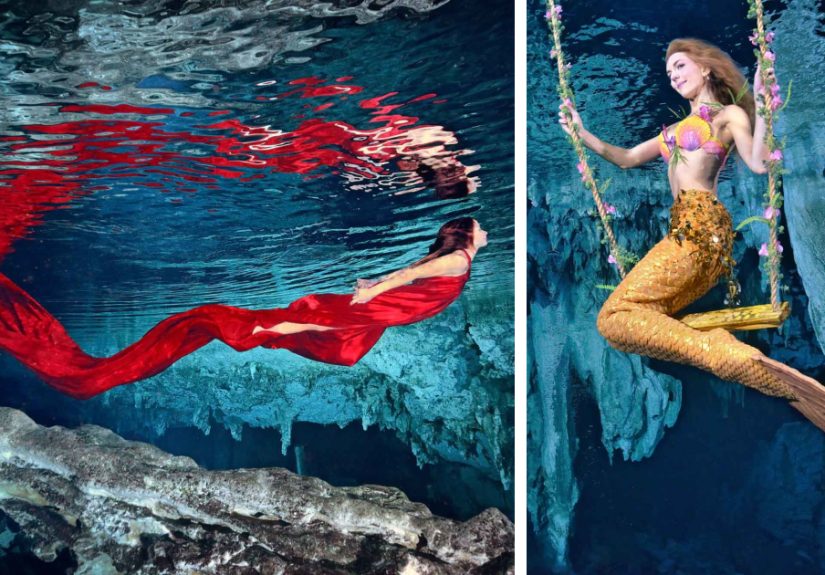
No, this is not a breaking-news report from a marine biology lab. I did not stumble upon a new species with perfect cheekbones and shell-level confidence. What I found in Mexico’s cenotes felt even better for a storyteller: two underwater performers gliding through ancient freshwater chambers so gracefully that the boundary between geology, mythology, photography, and pure cinematic nonsense completely dissolved.
And honestly, that is what cenotes do best. They make reality look suspiciously enchanted.
Why Mexico’s Cenotes Feel Like Mermaid Territory
If you have never visited a cenote, imagine a natural limestone opening that reveals groundwater below. Now add jungle vines, cathedral-like stone walls, shafts of sunlight, silence so dramatic it deserves its own soundtrack, and water clear enough to make you question every hotel pool you have ever defended. Suddenly, two mermaids do not feel ridiculous. They feel overdue.
The Yucatán Peninsula is famous for these natural wells and flooded cave systems. They formed over vast stretches of limestone, where water slowly dissolved rock and, in some places, caused ceilings to collapse. The result is a landscape with sinkholes, caverns, and underwater passages instead of the big surface rivers people often expect. In other words, the Yucatán does not merely have cenotes. It practically specializes in them.
That geological backstory matters, because it explains why the experience feels so strange and beautiful. You are not swimming in a decorative pond that someone gave a mystical marketing budget. You are stepping into the exposed roofline of an ancient water system, one that has shaped life, culture, ritual, and survival in the region for centuries.
That is the first trick of the cenote: before any “mermaid” enters the frame, the setting already looks like fantasy with excellent limestone management.
The First Sighting: When Performance Meets Place
I first saw them as flashes of color against blue-green water: two figures in mermaid tails moving with deliberate, almost eerie calm. In a swimming pool, that might have looked theatrical. In a cenote, it looked like local folklore had briefly decided to cooperate with the camera.
The water changed everything. Cenotes soften motion and magnify light. Hair becomes sea grass. A slow turn of the shoulders becomes choreography. Tiny air bubbles behave like impatient little stars. Even a pause looks meaningful. Put two skilled underwater performers in that environment and you do not get costume play. You get something closer to visual mythmaking.
And yes, the setting does most of the heavy lifting. Mermaids are already a global storytelling obsession because they sit perfectly between worlds: human and animal, land and water, beauty and danger, reality and invention. Cenotes happen to be another in-between place. They are freshwater openings connected to subterranean passages. They are sacred to some, recreational to others, and scientifically fascinating to everyone who enjoys caves, aquifers, fossils, or a healthy fear of bad footing.
So when two mermaids appear in a cenote, the brain does not reject the image. It shrugs and says, “Sure. That tracks.”
Cenotes Are Beautiful, But Their Story Runs Deep
The fun part of this story is obvious: shimmer, mystery, impossible photos, and a title that makes your relatives think you have finally lost it. The serious part is that cenotes are not random tourist novelties. They have long been essential to the Yucatán because they provided freshwater in a region with few surface rivers. For ancient Maya communities, they were life-giving places, and many were also sacred.
That sacred status was not decorative. Cenotes were associated with spiritual power and were widely understood as gateways to the underworld, often linked to Xibalba in Maya belief. Archaeology has repeatedly reinforced their cultural importance. Researchers have found artifacts, offerings, human remains, and even a preserved Maya canoe in cave and cenote systems. These sites are not just pretty. They are memory banks with water in them.
That is partly why the atmosphere feels so intense. Even without knowing the full history, most visitors sense that a cenote is not an ordinary swim spot. The acoustics are strange. The light behaves theatrically. The stone seems older than your best adjectives. The place feels inhabited by story, even when empty.
So when I say I discovered two mermaids in Mexico’s cenotes, what I really mean is that I encountered two human performers inside a landscape that has always invited myth. The joke lands because the place has already done the mythmaking for centuries.
What Makes Cenotes So Photogenic?
1. Light That Knows How to Make an Entrance
Sunbeams in cenotes are not subtle. When light drops through an opening overhead and hits clear water, it creates visible columns that look staged by an overachieving cinematographer. Underwater photographers adore this because it gives shape to space. Suddenly, you are not just photographing a swimmer. You are photographing a figure passing through liquid architecture.
2. Water Clarity That Feels Almost Unreal
Many cenotes are famous for remarkable visibility. That clarity makes details pop: hands, tails, fabric, bubbles, roots, rocks, expressions. It also adds the kind of depth that makes viewers stop scrolling and wonder whether the image is real or digital trickery. Spoiler: when the setting is a cenote, reality usually looks guilty of overperforming.
3. Haloclines, Shadows, and Optical Weirdness
Some cenote systems contain a halocline, where freshwater and saltwater meet in shifting layers. Divers describe it as visually surreal, like swimming through heat waves underwater. Even without entering technical dive territory, the visual behavior of water in these cave systems can create a dreamy, distorted quality that feels tailor-made for mermaid imagery.
4. Natural Drama Without Fake Props
Most photographers spend a fortune trying to manufacture atmosphere. Cenotes casually provide hanging roots, textured rock walls, mirrored surfaces, cavern mouths, and the occasional mood of “ancient portal, proceed respectfully.” When your backdrop looks like a fantasy film location and a geology lecture had a glamorous child, you do not need much else.
The Science Under the Magic
Here is where things get delightfully unfair. Cenotes are not only gorgeous; they are scientifically fascinating. The Yucatán hosts enormous connected cave systems, including underwater networks stretching hundreds of miles. One of the most famous, Sistema Ox Bel Ha, is recognized as the world’s longest underwater cave system. These caves are part of a massive aquifer that supplies the region’s freshwater.
Below the postcard beauty, the underground world is complicated. Freshwater and saltwater can meet in layered boundaries. Cave ecosystems can depend on unusual chemistry, including methane-fueled microbial food webs. Scientists and explorers have documented rare life, karst formations, fossils, and signs of ancient human activity. In short, the cenote is not just a nice place to float for social media. It is a living archive with science, history, and ecological stakes attached.
That matters because it changes how you look at the “mermaid” moment. The image may be whimsical, but the place is real, fragile, and important. The fantasy works best when it respects the fact that the water is not a prop. It is part of a groundwater system people depend on.
Why the Mermaid Idea Works So Well Here
Mermaids have always thrived in the space between fear and fascination. Across cultures, they can be alluring, dangerous, mournful, protective, or simply mysterious. They survive as symbols because water itself behaves that way. It gives life, hides depth, reflects beauty, and occasionally reminds you that human beings are not in charge of everything.
Cenotes amplify all of that symbolism. They are freshwater, yet cave-like. Open, yet concealed. Inviting, yet humbling. For centuries, people have projected story onto powerful water places, and cenotes practically ask for it. The ancient Maya treated many of them as sacred openings into another realm. Modern photographers and performers, in a completely different register, still respond to that same threshold feeling.
So the sight of two mermaids underwater does not just work because the tails are pretty. It works because the setting already carries the emotional vocabulary of myth: descent, silence, light, danger, awe, beauty, and the possibility that you are not seeing the whole picture.
The Part Nobody Should Skip: Cenotes Need Protection
Now for the grown-up paragraph wearing muddy boots. Cenotes are vulnerable. Because karst systems are porous and connected, pollution can move into groundwater with alarming ease. Researchers have warned about contamination from tourism pressure, urban growth, sewage, agricultural runoff, and other human activity. In some studies, scientists have found fecal indicator bacteria, nutrients, metals, and other contaminants in Yucatán cenote systems.
That fragility changes the ethics of the experience. Swim, photograph, admire, free-dive where appropriate, and enjoy the magic, but do not treat cenotes like disposable content factories. The sunscreen on your skin, the trash in a parking area, the wastewater from nearby development, and the collective pressure of mass tourism all have consequences. Local Indigenous advocates and researchers have been sounding the alarm because these waters are not only cultural landmarks. They are part of the region’s drinking-water future.
So yes, meet the mermaids. Just do not poison their house.
Conclusion: I Discovered Two Mermaids, But the Cenote Was the Real Star
The headline promises mermaids, and technically it delivers. Two of them, in fact. But the real revelation was the setting that made the moment possible. Mexico’s cenotes are places where science and myth stop pretending they are strangers. They are limestone windows into groundwater, sacred landscapes layered with history, and some of the most visually arresting natural spaces on Earth.
That is why the memory lingers. Not because I saw something biologically impossible, but because I saw a place so extraordinary it made the impossible feel briefly reasonable. Two underwater performers in shimmering tails became more than a photo opportunity. They became a perfect translation of what cenotes already are: mysterious, ancient, theatrical, and a little bit dangerous to anyone who thinks wonder has gone out of style.
In other words, I did discover two mermaids in Mexico’s cenotes. But only because the cenotes had been preparing for that reveal for thousands of years.
Extended Experience: What It Actually Feels Like to Chase a Mermaid Moment in a Cenote
The strange thing about a cenote is that the experience begins before you see the water. It starts on the path in. The jungle is warm, noisy, and alive, and then, almost without warning, the air changes. It cools. Sound gets softer. The ground feels older. You descend a set of rough stairs or pick your way toward an opening in the rock, and the whole mood shifts from tropical afternoon to “someone absolutely buried a legend here.”
Then the water appears, and every conversation becomes slightly more reverent. Even the loudest person in the group suddenly sounds like they are entering a library run by ghosts. When I imagined finding “two mermaids,” I did not expect the place itself to be the most persuasive part of the illusion. But that is exactly what happened. Before anyone put on a tail or slipped below the surface, the cenote had already done the emotional work. It had already convinced everyone present that ordinary rules were negotiable.
Watching performers move underwater in that environment is completely different from watching them in a pool. In a pool, you notice technique. In a cenote, you notice atmosphere first. The body seems to move with the cave, not against it. A turn of the wrist catches a blade of sunlight. A flick of a tail sends silver bubbles toward the stone ceiling. Long hair lifts and coils like drifting roots. Even waiting between shots looks dramatic enough to deserve applause.
There is also a funny practical side nobody talks about in the fantasy version. Mermaid elegance is hard work. Underwater posing demands breath control, body awareness, patience, and a tolerance for repeating the same graceful motion until everyone nails it. Add cool water, slippery rock, changing light, and the fact that humans are not naturally built to look serene while half-submerged, and the whole thing becomes a heroic blend of art and athletic stubbornness.
But when it clicks, it really clicks. One moment in particular stays with me: both performers paused near a shaft of descending light, one slightly above the other, and the water turned them into silhouettes edged in gold. It lasted maybe a second. The kind of second that makes photographers forget to breathe, writers become annoying, and everyone else start using phrases like “otherworldly” without irony.
That is the real magic of Mexico’s cenotes. They turn brief moments into durable memories. They let performance feel like folklore and geology feel like set design. You leave with wet shoes, a camera full of impossible-looking images, and the deeply inconvenient realization that nature can still outdo fiction without even trying very hard.