Table of Contents >> Show >> Hide
- Why $20k MRR feels early but often isn’t
- The real job is not “more marketing” it is better revenue mechanics
- What a great early VP of Marketing actually does
- Why founders wait too long
- What to avoid when making the hire
- Founder-led marketing does not disappear after the hire
- So when is it actually too early?
- The smarter rule for startup hiring
- My take: the hire is early only if you think marketing is decoration
- Additional experience and practical lessons from the trenches
There is a special kind of startup delusion that shows up right around the moment a company starts tasting traction. Revenue is coming in. Customers are replying to emails with words like “love this.” The founder is sleeping four and a half hours a night and calling it “momentum.” And somewhere in that beautiful chaos, one dangerous thought appears:
“We’ll hire marketing later.”
That sounds disciplined. Mature, even. It sounds like the sort of thing a serious builder would say while squinting at a dashboard and pretending not to cry over CAC. But in many SaaS companies, especially B2B startups with a real deal size and a real funnel, waiting too long to hire a strong marketing leader is one of the most expensive “conservative” decisions a founder can make.
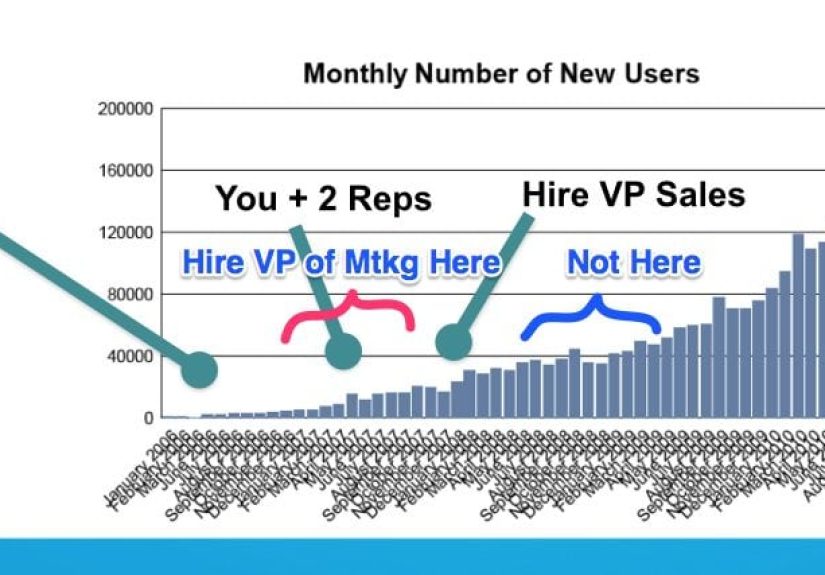
That is why the idea behind the title matters so much: hiring a VP of Marketing at $20k MRR can be early in title, but not early in impact. In fact, for the right startup, it can be exactly on time.
Why $20k MRR feels early but often isn’t
At $20k MRR, a founder usually still feels scrappy. They are still too close to the beginning to feel “ready” for senior hires. The product may still be rough around the edges. The website may look like it was built during a caffeine incident. Messaging is often trapped inside the founder’s brain, where it is brilliant, poetic, and completely unusable by everyone else.
But here is the thing: a startup does not need a huge company to justify a serious marketing hire. It needs signals. If there is already a trickle of leads, if some prospects convert, if sales conversations are revealing repeatable objections, if the founder keeps telling the same story over and over, then marketing is no longer optional window dressing. It becomes a force multiplier.
At that point, a good VP of Marketing is not arriving to “do brand” in the vague, mystical sense. They are arriving to turn scattered effort into a system. They improve lead handling, tighten positioning, create sales collateral, sharpen onboarding to the funnel, build campaigns, run webinars, support reps, and increase revenue per lead. That is not fluff. That is economics in a blazer.
The real job is not “more marketing” it is better revenue mechanics
Founders often make the mistake of thinking marketing starts with awareness and ends with vibes. But early-stage marketing, when done well, is deeply operational. It is closer to plumbing than pageantry.
A strong early marketing leader helps answer hard, practical questions:
- Who exactly is the ideal customer profile?
- What message consistently gets a prospect to lean in?
- Which channels are showing signs of life, even if small?
- Where are leads leaking out of the funnel?
- What assets do sales need to convert more efficiently?
- How do we create demand without lighting cash on fire?
That is why the phrase VP of Marketing can be misleading in startup land. At a large company, that title may imply teams, meetings, budgets, and deck-building at Olympic levels. At an early-stage company, it should mean a hands-on builder who can own a number, improve pipeline quality, and make the rest of the go-to-market machine smarter.
In other words, you are not hiring prestige. You are hiring leverage.
What a great early VP of Marketing actually does
1. Turns founder intuition into clear positioning
Many startups do not have a lead problem first. They have a clarity problem. Prospects land on the site and think, “Interesting… but what is this, exactly?” That little hesitation kills momentum.
A strong marketing leader pulls the value proposition out of the founder’s head and turns it into language the market can understand. Suddenly the homepage makes sense. The product category becomes easier to explain. Sales calls start faster because prospects arrive less confused and more ready.
2. Builds a website that sells instead of just existing
Startups love to treat their early website like a placeholder. A logo, a headline, a screenshot, and a prayer. But the site is often the first real sales rep a company has. If it cannot tell the story, collect intent, and route interest into a simple funnel, the business is wasting demand.
A strong early marketer upgrades the website from digital business card to revenue asset. Better pages. Better copy. Better calls to action. Better forms. Better attribution. Better follow-up.
The company may still be tiny, but it stops looking tiny. That matters more than founders like to admit.
3. Helps sales close more, not just talk more
One of the most underrated reasons to hire marketing early is that sales teams get better when supported by someone who understands positioning, objections, content, and air cover. Even before a company has a polished revenue organization, marketing can make each rep more effective.
A webinar that answers common objections. A case study that reduces risk. A landing page tailored to one use case. A comparison page that saves a rep twenty minutes of explanation. A lead nurture sequence that keeps deals warm. These things compound.
And when leads are still precious, compounding is not a nice bonus. It is survival.
4. Brings discipline to demand generation
At the early stage, nobody needs a marketing museum. They need pipeline. The right hire knows the difference between activity and traction. They can test channels without getting hypnotized by vanity metrics. They understand that “lots of impressions” is not the same as “booked meetings with the right buyers.”
This is why hiring the wrong type of marketer hurts. A startup that needs demand generation but hires a polished corporate brand operator may end up with refined messaging, nicer swag, and a terrifying absence of qualified leads. The logo pens will be excellent. Payroll will still be due.
Why founders wait too long
Most founders do not delay this hire because they are lazy. They delay because they are rational in the wrong direction.
They worry a senior marketer will be too expensive. They worry the company is too small. They worry they need to “earn” the right to make a real executive hire. They worry an agency can bridge the gap. They worry marketing is less urgent than product, fundraising, or sales hiring.
Each concern is understandable. None of them changes the math.
If a capable marketing leader can increase conversion, generate a handful of additional qualified opportunities, or lift revenue per lead, the hire can pay back quickly. In a recurring revenue model, that payback is even more powerful because new revenue compounds over time. A founder may stare at the salary and flinch, while ignoring the cost of muddled messaging, weak funnel management, and all the missed deals quietly slipping through the cracks.
The bigger risk is not paying too much for a great hire. It is under-hiring and calling it prudence.
What to avoid when making the hire
Do not hire ceremony when you need craftsmanship
The wrong early VP of Marketing loves strategy decks, top-line narratives, and organizational charts for teams that do not exist yet. The right one can still think strategically, but also knows how to write copy, launch pages, set up campaigns, sit on calls, and fix the handoff between marketing and sales.
Do not outsource the whole function to agencies
Agencies can be useful tools. They are not a substitute for ownership. In the earliest stages, the company needs someone who wakes up every day obsessed with its customers, funnel, message, and revenue motion. An outside firm can support execution, but it rarely replaces judgment.
Do not confuse title with stage fit
Some startups do need a seasoned VP-level operator early. Others need a sharp, hungry builder with five to eight years of experience who is still comfortable getting into the weeds. The point is not the business card. The point is whether the person can own meaningful outcomes at your exact stage.
The best early marketers are often T-shaped: broad enough to flex across positioning, demand gen, content, launches, and enablement, but deep in one area that matters most right now.
Founder-led marketing does not disappear after the hire
There is another myth worth killing: once the VP of Marketing joins, the founder gets to retire from telling the story.
Absolutely not.
In the best startups, the founder remains a source of insight, authority, and content. The difference is that now someone can turn all that raw material into a real engine. Founder-led content, customer insights, product vision, category takes, and lessons from the trenches are gold. A marketing leader helps refine, distribute, and systematize them.
That partnership matters. The founder provides conviction. The marketer provides structure. One without the other is usually either chaotic or forgettable.
So when is it actually too early?
It is too early when there is no signal at all. No usable customer insight. No repeatable pain point. No evidence that anybody cares. No funnel, even a tiny one, to improve. No willingness from the founder to collaborate on positioning, content, and market learning.
But once there is even modest traction, the better question is not, “Are we too early?” It is, “What exactly are we waiting for?”
If the founder is already doing ad hoc marketing, answering the same questions on calls, improvising sales materials, patching together campaigns, and trying to create demand between product sprints and investor updates, then congratulations: the company already has a marketing function. It is just being run badly, manually, and by someone with seventeen other jobs.
The smarter rule for startup hiring
Startups often hire reactively. They wait until pain becomes unbearable, and then they sprint toward a fix. That works for replacing broken office chairs. It is a lousy way to build a go-to-market engine.
The best hires happen a little ahead of the curve. Not recklessly early, but early enough that the person can build the system before the bottleneck becomes expensive. A strong marketing leader hired at $20k MRR is often not there to solve a giant problem you already have. They are there to prevent the even bigger one you are about to earn.
That is the hidden genius in the title. “It wasn’t a week too early” is really a founder’s confession that timing in startups is less about comfort and more about leverage. Once even a small motion exists, a good VP of Marketing can make it sharper, faster, and more scalable.
My take: the hire is early only if you think marketing is decoration
If you believe marketing is mostly social posts, slogans, and expensive experiments, then yes, hiring a VP of Marketing at $20k MRR sounds absurdly early.
But if you understand marketing as positioning, pipeline quality, funnel performance, sales support, narrative control, demand creation, and revenue acceleration, then the move starts to look less like indulgence and more like operational common sense.
In that framing, the real mistake is not hiring too early. The real mistake is waiting until revenue stalls, lead quality drops, sales starts freelancing its own message, and everyone suddenly decides “we should probably get serious about marketing.” That sentence has burned a lot of runway.
Additional experience and practical lessons from the trenches
Let me end with the founder experience side of this, because this topic is not just about org charts and hiring philosophy. It is about what life actually feels like inside an early-stage company when this hire is missing.
Before many founders hire their first real marketing leader, the company usually runs on adrenaline and improvisation. One week the founder writes website copy at midnight. The next week they are designing webinar slides, rewriting sales decks, ghostwriting nurture emails, posting on LinkedIn, and manually following up with inbound leads from a spreadsheet that probably deserves a respectful burial. Everything is technically moving, but nothing is compounding. The team is busy, yet growth still feels oddly handmade.
That is why an early VP of Marketing can feel like oxygen. Suddenly the business stops relearning the same lessons every Monday. Someone owns the story. Someone notices which channels are promising and which are just loud. Someone turns customer language into messaging. Someone makes sure leads are followed up consistently instead of emotionally. Someone asks why the homepage converts at one rate while the product demo page converts at another. Someone builds the webinar before the founder remembers it should exist.
And the emotional shift matters, too. Founders often think hiring senior marketing is about delegation. It is not. It is about relief with results attached. Instead of carrying the full go-to-market burden alone, the founder gets a partner who can challenge assumptions, identify leaks, and convert instinct into process. That frees the founder to keep doing the few things only the founder can do: talk to customers, shape product, recruit, fundraise, and make the hard calls.
Of course, the hire is not magic. A bad one creates noise, not momentum. A big-company marketer who wants a team of six before shipping anything will frustrate everyone. An agency-heavy operator who outsources thinking will not help. A branding purist with no appetite for owning pipeline will make the startup feel polished and poorer at the same time. Early-stage companies need marketers who respect revenue, love experimentation, and do not mind being gloriously overqualified for tactical work.
The founders who get this right usually discover something slightly annoying: they should have made the hire sooner. Not because the VP shows up and instantly triples revenue like a startup wizard in loafers, but because the basics start working together. Messaging clicks. Sales gets sharper. Leads get handled. Content compounds. The company sounds smarter, looks bigger, and learns faster.
And that is the real lesson. At $20k MRR, you are not hiring marketing because you have already made it. You are hiring marketing because you are finally at the point where a great operator can turn fragile traction into something repeatable. In startup terms, that is not extravagance. That is timing.