Table of Contents >> Show >> Hide
- What makes a breakfast cereal “healthy,” anyway?
- The problem with sugary, ultra-processed cereals
- The upside: cereal can actually be good for you
- How to read a cereal box like a nutrition pro
- Examples of healthier breakfast cereals
- Kids and breakfast cereal: extra reasons to read the label
- Common cereal myths and marketing traps
- Putting it all together: a quick cereal health checklist
- What happens when you actually switch cereals? Real-world experiences
- Conclusion
Stand in the cereal aisle for more than 30 seconds and you’ll start to feel like you need a PhD in label reading. Boxes shout
“whole grain,” “heart-healthy,” “no artificial colors,” and “vitamin-packed!”all wrapped around a bowl of cartoon-colored
rings. It looks healthy… but is it?
Harvard Health and other nutrition experts have been raising an eyebrow at what’s really inside those cheerful boxes.
Many popular breakfast cereals are sweet, highly processed, and surprisingly high in sugar and refined grains,
even when they’re marketed as better-for-you choices.
The good news? You don’t have to break up with cereal forever. With a little label savvy, you can turn your morning bowl
into a genuinely healthy breakfast that supports your heart, blood sugar, and long-term healthwithout giving up the
convenience you love.
What makes a breakfast cereal “healthy,” anyway?
“Healthy breakfast cereal” isn’t just about a sprinkling of vitamins on top of sugar and starch. Nutrition researchers
tend to focus on a few key factors:
- Whole grains instead of refined grains
- Plenty of fiber (especially cereal fiber)
- Limited added sugar
- Reasonable sodium
- Decent protein to keep you full
Health organizations recommend that at least half of your grains be whole grains, meaning the bran, germ, and endosperm
of the grain are still intact. In practice, that looks like oats, shredded wheat, bran flakes, or other cereals where a
whole grain is first on the ingredient list.
Why does this matter? Whole-grain and high-fiber cereals are consistently associated with lower risks of type 2 diabetes,
obesity, and cardiovascular disease.
In other words, the right cereals can actually be a health assetnot a guilty pleasure.
The problem with sugary, ultra-processed cereals
Let’s talk about the elephant (or the tiger, or the leprechaun) in the room: sugar. Many ready-to-eat cereals are closer
to dessert than breakfast. They may pack 10–18 grams of sugar per servingthat’s about 2.5–4.5 teaspoonsbefore you add
sweetened milk or fruit.
Sugar by the numbers
The American Heart Association recommends that:
- Most women keep added sugars at or below about 6 teaspoons (25 grams) per day.
- Most men keep added sugars at or below about 9 teaspoons (36 grams) per day.
Yet surveys show that the average American takes in roughly 17 teaspoons of added sugar dailythat’s almost triple what’s
recommended for women. Breakfast foods like cereal, granola, yogurt, and flavored coffee drinks are major contributors.
Regularly starting the day with a big sugar hit can contribute to:
- Blood sugar spikes and crashes (hello, mid-morning brain fog)
- Increased hunger and cravings later in the day
- Higher long-term risk of type 2 diabetes and heart disease
Combine high sugar with ultra-refined grainsgrains stripped of most fiber and nutrientsand you’ve got a fast-burning
carb bomb. These cereals are digested quickly, give you a short-lived burst of energy, and then leave you searching for a
second breakfast.
Refined grains vs. whole grains: your metabolism cares
Refined grain cereals (think puffed white rice, corn-based loops, or crisped rice) have a higher glycemic index and glycemic
load, which means they can raise blood sugar faster and higher than whole-grain options. Whole grains, especially those
rich in cereal fiber, slow digestion, improve insulin sensitivity, and help stabilize blood sugar over time.
That doesn’t mean you can never eat a fun cereal again; it just means those brightly colored boxes should be occasional
treats, not daily staplesespecially if you’re managing blood sugar, weight, or cardiovascular risk.
The upside: cereal can actually be good for you
Here’s the plot twist: when you choose wisely, breakfast cereal can be a nutrient-dense, cardiometabolic-friendly meal.
Systematic reviews of breakfast cereal consumption show that people who regularly eat high-fiber or whole-grain cereals
tend to have:
- Lower risk of type 2 diabetes
- Lower risk of coronary heart disease and cardiovascular disease
- Lower rates of obesity or healthier body weights
The biggest benefits show up with whole-grain, higher-fiber cerealsnot sugary, refined grain products.
A balanced cereal bowl can also improve your overall diet quality. Many cereal eaters get more fiber, B vitamins, iron,
and sometimes calcium (from the milk) than non-cereal eaters. If your alternative breakfast is a pastry, a giant coffee
drink, or skipping breakfast altogether, a smart cereal choice may be a big step in the right direction.
How to read a cereal box like a nutrition pro
Marketers want your eyes on the front of the box; your job is to flip it around. Here’s how to size up whether your cereal
is truly healthy.
1. Start with the ingredient list
Look at the first one or two ingredients:
- Ideally you see words like whole oats, whole wheat, whole grain corn, bulgur,
brown rice, or bran. - If sugar (or syrup, honey, cane juice, maltose, etc.) shows up near the top, that’s a red flag.
- “Multigrain” doesn’t automatically mean whole grain; it just means more than one type of grain.
2. Check the fiber
Fiber is cereal’s superpower. Aim for at least:
- 3 grams of fiber per serving (more is better5+ grams is excellent).
Cereal fiber, especially wheat bran and oat bran, is strongly linked with reduced risk of heart disease, type 2 diabetes,
and improved digestion.
3. Look at added sugar (not just total sugar)
On the Nutrition Facts label, find “Added Sugars.” This tells you how much sugar was added during processing, not what
comes naturally from dried fruit or milk.
- Ideally, choose cereals with 0–6 grams of added sugar per serving.
- If your cereal has 12–15 grams of added sugar, that’s roughly half (or more) of a woman’s recommended daily limit.
Remember: one gram of sugar equals about 4 calories, so 15 grams of sugar means 60 calories coming from sugar alone.
4. Don’t ignore protein and sodium
Protein helps your breakfast stick with you. Look for at least 4–5 grams of protein per serving,
more if possibleespecially if you’re using a low-protein plant milk.
As for sodium, many cereals sneak in surprising amounts of salt. If you’re watching blood pressure, aim for lower-sodium
options and pair your cereal with fresh fruit instead of processed toppings. Some heart-healthy cereal guides specifically
recommend low-sodium, high-fiber options to support blood pressure control.
Examples of healthier breakfast cereals
Instead of focusing on specific brands (which change constantly), think in categories:
- Plain oatmeal or oat bran – High in soluble fiber (beta-glucan), which helps lower LDL (“bad”) cholesterol and support blood pressure.
- Shredded wheat or whole wheat biscuits – One-ingredient cereals that are naturally high in fiber and low in sugar.
- High-bran cereals – Very high in fiber; just watch for added sugar in some versions.
- No-sugar-added muesli – Oats, nuts, and seeds for slow-digesting carbs, healthy fats, and some protein.
- Puffed whole grains (like puffed millet or brown rice) – Great base to mix with nuts, seeds, and fruit.
To improve blood sugar control and satiety, pair your cereal with:
- Unsweetened dairy or fortified plant milk
- Greek yogurt for extra protein
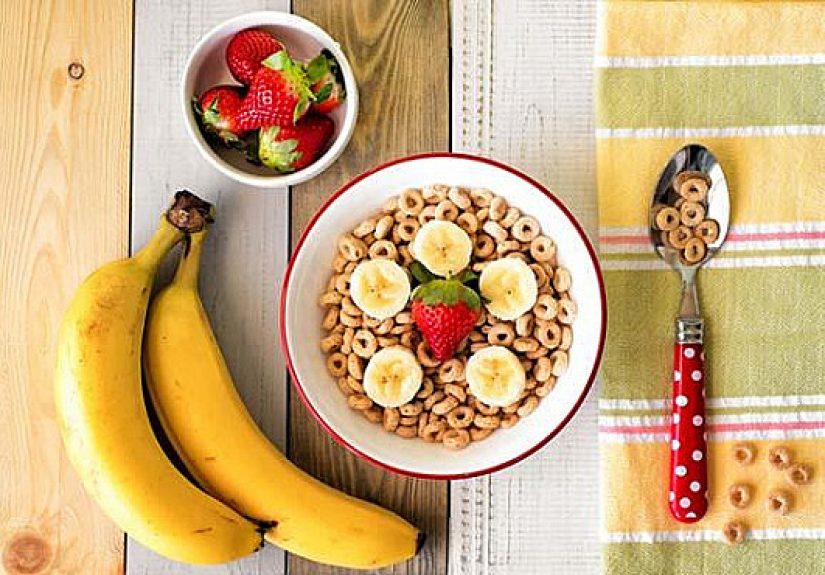
- Fresh or frozen berries, sliced banana, or chopped apple instead of extra sugar
- Nuts or seeds for healthy fats and crunch
Studies show that a fiber-rich, balanced breakfast tends to stabilize blood sugar and reduce overeating later in the day
the opposite of what happens after sugary cereal and a flavored coffee drink.
Kids and breakfast cereal: extra reasons to read the label
Kids are prime targets for the brightest boxes and flashiest mascots. But children’s cereals often have more
sugar per serving than adult cereals. Over time, that sugar adds up and can crowd out healthier foods.
For children, health experts recommend:
- Keeping added sugars as low as possible, ideally below 10% of daily calories.
- Choosing cereals where a whole grain is the first ingredient.
- Serving child-sized portionsoften half of the “serving size” listed on the box.
- Letting the “fun cereal” be a sometimes food, not a daily breakfast.
One strategy many families use: mix a small amount of a kid-friendly sugary cereal into a bowl of plain whole-grain
cereal. You get some fun, some fiber, and less sugar overall.
Common cereal myths and marketing traps
“No artificial colors or flavors” = healthy
Removing artificial colors and flavors is fine, but it doesn’t fix high sugar, low fiber, or refined grains. Don’t let
“natural” buzzwords distract you from the actual nutrition facts.
“Made with whole grain”
“Made with” can mean there is a sprinkle of whole grain in a mostly refined product. Check the ingredient list and look
for whole grains at the top, not buried in the middle.
Vitamin-fortified = nutritious
Many sugary cereals are fortified with vitamins and minerals. While that can help fill some nutrient gaps, it doesn’t undo
the metabolic effects of high sugar and refined starch. Think of fortification as a bonus on a good cereal, not a bandage
on a bad one.
Putting it all together: a quick cereal health checklist
When you’re standing in front of the cereal shelf wondering what to grab, run through this fast checklist:
- Whole grain first? “Whole oats,” “whole wheat,” or similar listed before anything else.
- Fiber: At least 3 grams per serving, more if you can get it.
- Added sugar: Ideally 0–6 grams per serving. The lower, the better.
- Protein: Aim for 4–5 grams or more, especially if you’re hungry mid-morning.
- Sodium: Choose lower-sodium options, especially if you have high blood pressure.
- Portion size: Measure your first bowl once or twiceyou might be eating double a “serving.”
Use those rules most days, and you’ve basically turned your cereal habit into a heart-and-metabolism-friendly ritual.
What happens when you actually switch cereals? Real-world experiences
It’s one thing to know the guidelines. It’s another to pour something different into your bowl at 7:00 a.m. Here are some
common real-life experiences people report when they trade sugary cereals for high-fiber, whole-grain options.
More steady energy (and fewer 10 a.m. snack emergencies)
Many people who switch from sugary flakes or colored loops to oatmeal, shredded wheat, or bran-based cereals notice
that they’re not starving by mid-morning. Instead of a quick sugar rush and crash, they feel a slower, more sustained
release of energy.
A typical story goes like this: someone used to grab two bowls of sweet, crunchy cereal and a flavored coffee drink on
the way out the door. By 10:30 a.m., they were jittery, unfocused, and prowling for a muffin. After switching to a bowl
of high-fiber cereal topped with berries and nuts and pairing it with unsweetened coffee, that mid-morning crash started
to fade. The combination of fiber, protein, and healthy fats gave their blood sugar a smoother ride.
Better digestive comfort (after an adjustment period)
Fiber changes can be… noticeable. People who jump from very low-fiber breakfasts to a big bowl of bran sometimes
experience temporary bloating or extra gas. That’s usually a sign that gut bacteria are adjusting to the new fiber
supplya good thing in the long termbut it can feel uncomfortable in the first week or two.
Easing into it helps. Some people start by mixing half of their usual cereal with a higher-fiber option, gradually
increasing the portion of the high-fiber cereal. Over time, many report fewer episodes of constipation, more regular
bowel habits, and a general feeling that their digestion “runs smoother.”
Less dependence on sugary add-ons
When your taste buds are used to very sweet cereals, unsweetened whole-grain options can initially taste bland.
People often reach for extra sugar or honey out of habit. But taste preferences can shift.
A common strategy is to rely on fruit for sweetness instead of sugar. Adding sliced banana, berries, or chopped apple
provides natural sugars along with fiber and antioxidants. Many people find that within a few weeks, their old cereal
tastes overwhelmingly sweet, and they actually prefer the subtler sweetness of fruit plus whole grains.
Helpful for blood pressure and heart health goals
People working on high blood pressure or cholesterol often find that upgrading cereal is an easy win. Swapping a
high-sugar, high-sodium cereal for a low-sugar, high-fiber option (like oats or shredded wheat) is a small change
that can be repeated every day with almost no extra effort.
Over time, small daily changes add up. Combined with other heart-healthy habitslike more fruits and vegetables,
regular movement, and less highly processed foodchoosing better cereals can support modest improvements in cholesterol
numbers, blood pressure, and weight management. It won’t replace medication when that’s needed, but it can make your
overall plan more effective.
Family negotiations and “mix and match” bowls
In households with kids (or adults who really love their childhood favorites), the shift to healthier cereal can
turn into a negotiation. One practical compromise parents often use is the “mix and match” bowl: half plain, high-fiber
cereal and half of a fun cereal.
That approach lowers sugar, raises fiber, and still feels familiar. Over time, families sometimes find the ratio
naturally sliding more toward the healthier cereal, especially as kids get used to the new taste and textures.
The bottom line: cereal can fit in a healthy lifestyle
If you love cereal, you don’t have to give it up to eat well. The real question isn’t “cereal or no cereal?” but
“which cereal, and what else is in the bowl?”
By choosing whole grains, prioritizing fiber, keeping added sugar in check, and pairing your cereal with protein
and healthy fats, you can turn a quick, convenient breakfast into something that genuinely supports your long-term
healthvery much in line with what experts at places like Harvard Health emphasize. And yes, there’s still room for
the occasional nostalgic, rainbow-colored bowl. Just treat it like a weekend guest, not a permanent roommate.
Conclusion
Breakfast cereal sits at the crossroads of health and marketing. The same aisle that sells sugary, highly processed
products also offers whole-grain, high-fiber cereals that can support heart, gut, and metabolic health. The difference
is in the labeland in your choices.
Focus on whole grains, fiber, low added sugar, and balance. Read past the front-of-box claims, build your bowl with
protein and fruit, and treat the sweetest cereals like occasional treats. With that approach, your morning ritual can
be both satisfying and genuinely good for you.