Table of Contents >> Show >> Hide
- What Exactly Is This AI-Powered Pizza Clock?
- How the Pizza Clock Works Without Dropping Its Toppings
- Why This Weird Little Gadget Works So Well
- What This Pizza Timepiece Says About AI Design
- Could This Become a Real Trend in Novelty Clocks?
- Where an AI-Powered Pizza Clock Actually Belongs
- The Real Secret: It Makes Technology Feel Friendly Again
- Extra : Experiences Inspired by the Pizza Clock
- Final Slice
- SEO Tags
Some inventions exist because humanity is chasing greatness. Others exist because someone looked at a clock, looked at a pizza, and bravely asked, “Why are these still two separate things?” The result, in this case, is a gloriously odd little invention: an AI-powered timepiece that tells time with pizza slices instead of traditional hands. It is useful, ridiculous, clever, and dangerously effective at making you hungry before noon. In other words, it is the internet at its finest.
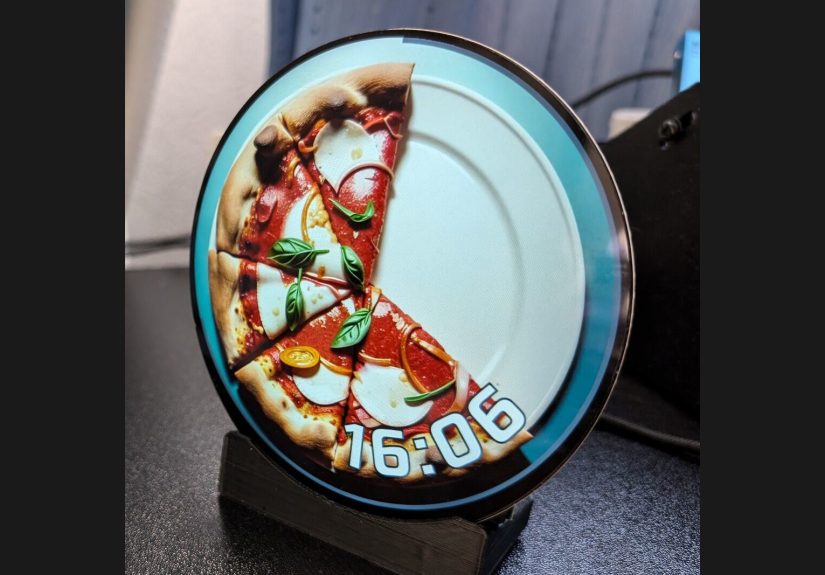
The project behind this delightfully cheesy concept is known as Pizza Clock, a maker-built desktop clock that turns time into a visual pizza metaphor. As the day moves toward noon, the pie fills in. After noon, the pizza begins to disappear again until the cycle resets at midnight. It is the kind of object that sounds like a joke, looks like a meme, and then surprises you by being a very real, thoughtfully engineered piece of design and software work.
That mix is exactly why this AI-powered timepiece deserves more than a quick laugh and a scroll-past. Beneath the pepperoni comedy is a genuinely interesting story about maker culture, generative imagery, physical computing, playful interfaces, and the way AI can make everyday objects feel weirdly alive. This is not just a novelty clock. It is a miniature manifesto for making technology more human, more visual, and yes, more delicious.
What Exactly Is This AI-Powered Pizza Clock?
At its core, the Pizza Clock is a desktop timepiece powered by a Raspberry Pi Zero 2 W and displayed on a round 4-inch screen. Instead of using hands or simple segments, it visualizes the current time with AI-generated pizza imagery. Think of it as a clock face that traded Roman numerals for mozzarella and decided that geometry tastes better with toppings.
The idea is simple enough to explain in one sentence and strange enough to earn a double take: the clock represents time using slices of pizza, with the image changing as the hours pass. But what makes the project memorable is how carefully that simplicity has been executed. The creator did not merely slap a pizza JPEG onto a round screen and call it innovation. The visuals are generated through a multi-step process designed to keep the “pizza” correctly arranged, scaled, and aligned to the current time.
That matters, because time visualization is one of those things that humans read almost instantly. A bad analog clock is annoying. A bad novelty clock is confusing. A bad pizza clock would be a culinary crime. The success of this AI-powered timepiece comes from the fact that it remains readable while still being absurd enough to make visitors stop mid-conversation and ask, “Wait… is that clock made of pizza?”
How the Pizza Clock Works Without Dropping Its Toppings
A clock face that fills toward noon
The visual logic is part of the charm. As the morning advances, more pizza appears on the round display until noon, when the pie is effectively complete. Then the process reverses, with slices disappearing as the day moves toward midnight. It is an elegant little trick because it maps the passage of time to fullness and emptiness, which the human brain reads almost automatically. We may not all be engineers, but most of us understand the emotional significance of a full pizza versus a mostly empty one.
There is also a practical layer beneath the gag. In coverage of the project, the clock includes a traditional digital time readout superimposed on the pie, so users are not forced to decode every pepperoni like a food-based cryptographer. That means the piece works both as a conversation starter and as an actual clock, which is an important distinction. Plenty of novelty objects nail the first job and completely fail the second.
The two-stage image workflow
Here is where the AI-powered part becomes more than marketing glitter. The Pizza Clock uses a two-stage workflow for image generation. First, a segmentation map helps establish the position and shape needed for the right number of slices. Then a second pass uses depth information and lighter guidance to create a more realistic final image. In plain English, the system first figures out where the pizza should be, then worries about making it look like something you might actually order.
That is a smart design decision because generative image systems are often better at “vibes” than precision. Ask for a pizza and AI might happily deliver melted surrealism, suspicious basil placement, or pepperoni that looks like it went to art school and never came back. By constraining the layout first, the project reduces visual chaos and keeps the clock usable. It is a clever example of human direction doing what human direction should do: telling the machine, “Yes, be creative, but please stay inside the pizza box.”
Why Raspberry Pi makes it possible
One reason projects like this resonate so strongly is that they sit at the sweet spot between accessibility and ambition. A Raspberry Pi Zero 2 W is small, affordable, and surprisingly capable for this kind of kiosk-style build. Pair it with a round 720×720 display and suddenly you have a platform that feels custom, polished, and far more expensive than its parts list suggests.
The software stack is equally modern and maker-friendly. The project documentation points to NixOS for the Pi image, Stable Diffusion for the image generation, and Astro plus React for the web-based clock application. That combination says a lot about the build’s personality. This is not a dusty electronics exercise held together by luck and hot glue. It is a contemporary, web-savvy, design-aware object that sits comfortably between DIY hardware and modern software craft.
Why This Weird Little Gadget Works So Well
It turns time into appetite
Most clocks make time feel abstract. Numbers tick forward. Hands rotate. Seconds vanish into the void like socks in a dryer. The Pizza Clock does something different: it makes time feel edible. It gives hours a form, a texture, and a mood. Morning becomes a pie under construction. Afternoon becomes a slow retreat of slices. Midnight becomes the tragic aftermath of a party you definitely should not have hosted on a Tuesday.
That kind of metaphor matters because good design often depends on making invisible systems feel tangible. Fitness rings do it with movement. Progress bars do it with completion. The pizza clock does it with food. It is silly, yes, but it is also surprisingly intuitive. You do not have to “learn” the joke for it to work. You see pizza appearing or disappearing, and your brain instantly understands passage, quantity, and change.
AI is the garnish, not the whole meal
One of the best things about this project is that the AI is not being asked to carry the entire concept on its back like an exhausted delivery driver. The real star is the design idea. AI simply supplies the imagery. That is a healthier and more honest use of generative technology than the endless parade of products that shout “AI!” when what they really mean is “we added a buzzword and prayed for venture funding.”
Here, the AI earns its seat at the table because it adds variety, texture, and playful unpredictability. The project even embraces the occasional weirdness of generated pizza. The slightly off-kilter toppings, the uncanny sauce patterns, the moments when the pie looks almost right but not entirely of this earth those imperfections are part of the humor. This is not a luxury watch pretending to be a serious Swiss masterpiece. It is a food clock with an imagination problem, and that makes it better.
What This Pizza Timepiece Says About AI Design
The bigger takeaway is not that everyone now needs an AI-powered pizza clock on their desk, although that would objectively improve several office environments. The real takeaway is that generative AI becomes more interesting when it escapes the browser tab and enters the physical world. Once it starts influencing objects, interfaces, and ambient devices, it stops being just a content machine and starts becoming a design material.
Maker culture has been moving in that direction for a while. Generative tools are increasingly being used not just to create standalone images, but to prototype forms, design enclosures, inspire product aesthetics, and add dynamic visual layers to physical builds. The Pizza Clock fits perfectly into that trend. It is not trying to replace craftsmanship. It is combining code, hardware, modeling, interface design, and generative visuals into a single object that feels handmade and computational at the same time.
That hybrid quality is what makes the project feel current. It reflects a broader shift in how creators think about AI: less as an oracle, more as a collaborator with questionable taste but occasional brilliance. You do not hand over the keys and take a nap. You direct, constrain, revise, and curate. The Pizza Clock succeeds because the human behind it clearly understands that point. The machine can draw the cheese, but the person still decides what “pizza time” should mean.
Could This Become a Real Trend in Novelty Clocks?
Honestly? It probably should. Not necessarily pizza clocks specifically, though the case for universal pizza adoption is compelling. But the underlying concept turning time into themed, generative, glanceable imagery has legs. Or crust. Or both. The project documentation even notes that the same workflow can be used for other circular objects, including non-food imagery. That opens the door to flower clocks, moon clocks, donut clocks, seasonal clocks, or designs that match a room’s decor without feeling boring.
This is where the idea moves from “fun hack” to “real product potential.” People already buy decorative clocks for kitchens, studios, cafes, and children’s rooms. Add generative visuals, light customization, and a strong theme, and suddenly the category gets far more interesting. A pizza-themed clock is funny. A customizable AI-powered timepiece platform is a business meeting waiting to happen.
And there is already precedent for food-themed timepieces and AI-inspired watch design in adjacent corners of the market. The broader appetite for playful horology is real. The Pizza Clock just brings that energy to the maker desktop world, where experimentation is cheaper, faster, and usually covered in more solder.
Where an AI-Powered Pizza Clock Actually Belongs
The obvious answer is the kitchen, where it can silently judge your snack schedule with every disappearing slice. But the more interesting answer is: anywhere that benefits from a bit of visual joy. A home office? Absolutely. A design studio? Perfect. A pizza shop counter? Practically destiny. A dorm room? Ideal, assuming the residents are emotionally prepared to be hungry all the time.
It would also fit nicely in classrooms and maker spaces as a playful example of multidisciplinary design. Students can see how hardware, interface thinking, visual systems, and AI generation all come together in one object. That makes the clock more than a decoration. It becomes a teaching tool disguised as a joke, which is often the best kind of teaching tool.
And let us be honest: in an era when many smart devices feel cold, over-engineered, or weirdly needy, there is something refreshing about a machine whose only real ambition is to tell time through pizza. No life coaching. No biometric guilt. No push notifications reminding you to become your best self. Just a pie, a display, and the quiet confidence that every hour can be improved with melted cheese.
The Real Secret: It Makes Technology Feel Friendly Again
That may be the biggest reason the Pizza Clock stands out. It makes advanced technology feel approachable. AI is often presented as either magical salvation or looming catastrophe, which is exhausting. The Pizza Clock offers a third lane: AI as playful utility. Not world-changing. Not civilization-ending. Just a smart, odd, charming tool that turns a familiar object into something memorable.
In that sense, this AI-powered timepiece is a small but useful reminder that not every technological leap has to arrive wearing a suit and carrying a slide deck. Sometimes progress shows up as a round screen full of uncanny pepperoni. Sometimes the best interface is the one that makes people smile before they even understand how it works. And sometimes the future is not sleek and silent. Sometimes the future looks like lunch.
Extra : Experiences Inspired by the Pizza Clock
Imagine walking into your workspace at 9:07 a.m., coffee in one hand, attention span still buffering, and spotting a half-built pizza glowing quietly from the corner of your desk. A normal clock would tell you the time and move on with its day. The Pizza Clock tells you the time while also suggesting, with absolute confidence, that life would be better with extra cheese. That changes the mood immediately. The room feels less like a productivity bunker and more like a place where ideas are allowed to have personalities.
That is the kind of experience people underestimate when they talk about gadgets. We tend to measure devices by efficiency, precision, and performance. But some of the best products also change atmosphere. A playful timepiece can soften a space, add identity, and create tiny moments of delight that stack up over time. The Pizza Clock seems built for exactly that. It is not screaming for attention, but it rewards every glance with a little visual joke. And because the image changes throughout the day, the joke does not go stale as quickly as a static novelty item would.
There is also a social experience baked into the concept. If you place this thing in a shared room, people will talk about it. Not maybe. Definitely. One person will laugh. Another will ask whether it is real pizza. A third person will immediately start pitching alternative versions: taco clock, donut clock, bagel clock, sushi clock, “please make one for my bakery,” and so on. The object becomes an invitation to imagine. That is a surprisingly powerful trait for something whose official job description is “small machine that knows what time it is.”
Then there is the late-night maker-desk version of the experience, which may be the most fitting of all. You are debugging something at 11:42 p.m. The room is lit mostly by screens. Your code is being dramatic. Your patience is on its last breadstick. You glance over and see a mostly empty pizza face fading toward midnight. Suddenly the clock feels weirdly sympathetic. It is not just measuring time anymore. It is sharing the emotional arc of the evening. The slices are disappearing, your energy is disappearing, and both of you are just trying to make it to tomorrow with dignity.
Even the imperfections would become part of the charm in everyday use. Some generated pies will look fantastic. Some will look slightly suspicious, as if the basil was applied by an alien with excellent intentions but limited access to Italian cuisine. That unpredictability adds freshness. You are not staring at one frozen design forever. You are watching a visual system reinterpret a theme over and over again. It turns routine into variation, which is one reason the clock feels more alive than a standard display ever could.
And maybe that is the best experience the Pizza Clock offers: it makes ordinary time feel less ordinary. Breakfast, deadlines, afternoon slumps, post-dinner laziness, late-night tinkering all of it gets filtered through a goofy, warm, memorable metaphor. The day does not just pass. It gets portioned. Served. Consumed. That is delightfully human. We understand time intellectually, but we feel it through rituals, meals, habits, and shared jokes. A pizza clock turns that truth into an object. Ridiculous? Absolutely. But also strangely smart.
Final Slice
It is easy to dismiss the Pizza Clock as a clever novelty, and to be fair, it absolutely is a clever novelty. But that undersells what makes it interesting. This AI-powered timepiece is a real example of modern making done well: accessible hardware, smart visual logic, thoughtful software choices, and a sense of humor strong enough to keep the whole thing from becoming self-important.
More than anything, it proves that good ideas do not always arrive in solemn packaging. Sometimes innovation shows up wearing marinara. Sometimes a Raspberry Pi, a round display, and a generative image pipeline are all it takes to transform a clock from background object into conversation piece. And sometimes the best way to think about the future of AI design is not through fear, hype, or jargon, but through a single, glorious question: what if time could be measured in pizza?