Table of Contents >> Show >> Hide
- First, a quick refresher: why are we still fighting about “GIF”?
- So what did Jif and Giphy actually do?
- Why this is (secretly) the perfect “best gif meme” formula
- The marketing genius: they didn’t pick a sidethey made a stage
- What made it feel “internet-native” (instead of “brand trying too hard”)
- What this teaches about brand collaborations in meme culture
- FAQ: The questions people ask right after they laugh
- Real-world experiences: what it feels like when the “best gif meme” shows up in your life
- Conclusion: a meme you can spread on bread
The internet loves two things: arguing about tiny details and eating snacks while arguing about tiny details.
So when Jif (the peanut butter) teamed up with Giphy (the GIF giant) to poke the world’s most stubborn
pronunciation debate, it wasn’t just a marketing stuntit was basically a meme you could put in your pantry.
If you’ve ever watched a group chat spontaneously combust over whether it’s pronounced “gif” (hard G, like “gift”)
or “jif” (soft G, like… well… Jif), you already understand the premise. Jif and Giphy took that low-stakes chaos,
wrapped it around a limited-edition peanut butter jar, and turned it into one of those rare brand moments that feels
like the internet made itnot a committee.
First, a quick refresher: why are we still fighting about “GIF”?
“GIF” stands for Graphics Interchange Format, a file format that’s been around since the early days of the internet.
Over time, “GIFs” became shorthand for those looping animated clips that communicate everything from “I’m fine”
(you’re not) to “I just saw my bank balance” (you’re definitely not).
The pronunciation debate has lasted for decades because it sits at the intersection of logic and vibes:
one side points at the word “graphics” and says, “Hard G. Case closed.”
The other side points at language quirks and says, “Soft G is totally a thing, and also the inventor said so.”
And then a third, smaller group just says “gee-eye-eff” like they’re reading a Wi-Fi password out loud.
The reason this debate survives is simple: it’s safe. Nobody’s life changes based on how you pronounce GIF.
Which makes it the perfect argument to have when you’re bored, procrastinating, or avoiding the real issuelike
your inbox.
So what did Jif and Giphy actually do?
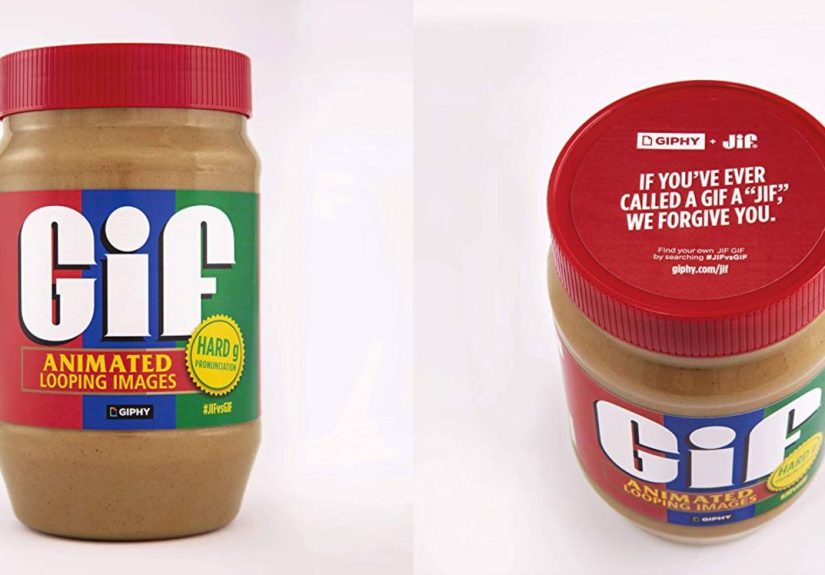
They created a limited-edition peanut butter jar that literally turns the pronunciation debate into a prop.
The jar is essentially a physical punchline: Jif’s iconic packaging, but with “Gif” printed on itplus
a label design that clarifies the difference between Jif (peanut butter) and GIF (animated images).
In other words, they didn’t “solve” the debate. They weaponized it for joy. And commerce. Mostly joy.
The meme part: a jar that acts like a caption
A good meme is instantly understood without a long explanation. This one works because the object itself
carries the joke. You see “Gif” on a peanut butter jar and your brain does the rest:
“Wait… what… oh. OH.”
The collector part: scarcity makes people feral (politely feral)
Because it was a limited run sold online, the jar became more than a snackit became a screenshot,
a social post, and a “did you get one?” conversation starter. And when something sells out quickly,
it stops being “a product” and becomes “a moment.”
The Giphy part: GIFs about GIFs
Giphy didn’t just slap a logo on a jar and call it a day. The partnership came with a themed set of reaction GIFs
designed for the exact kind of debates this campaign was riffing on. That’s important: the brand collab lived
where the argument actually happenscomments, DMs, and group chatsnot just on a press page.
Why this is (secretly) the perfect “best gif meme” formula
Let’s break down why the Jif and Giphy gif meme landed so wellbecause it’s not just funny, it’s structurally smart.
This campaign hits multiple “internet physics” rules at the same time:
- It’s built on an existing obsession. No need to teach people the contextthe internet already memorized it.
- It’s low-stakes, high-energy. People love to “have a take” when the consequences are zero.
- It’s visual. A product label is instantly shareable, even if you never touch the jar.
- It invites participation. You can argue, post, send a GIF, buy a jar, or simply watch the chaos.
- It’s pun-friendly. Peanut butter brands have been training for wordplay their whole lives.
The result: the campaign doesn’t feel like an ad trying to be a meme. It feels like a meme that happens to be an ad.
That’s a subtle differenceand it’s basically the difference between “cringe” and “share.”
The marketing genius: they didn’t pick a sidethey made a stage
The smartest thing here is that the partnership doesn’t truly “end” the pronunciation war. It doesn’t need to.
The war is the fuel.
Instead of scolding anyone’s pronunciation, the campaign frames the debate as a playful misunderstanding:
Jif is peanut butter (soft sound), GIF is animation (hard sound). That framing is disarming because it offers
everyone a win:
- If you say “gif” with a hard G, you feel validated.
- If you say “jif,” you still get peanut butterso honestly, you also win.
- If you say “gee-eye-eff,” you get to feel superior without doing any work.
Plus, the campaign solves a real-world brand problem for Giphy: people have long confused “Giphy” with “Jiffy”
(or assume it rhymes with Jif). By teaming up with the actual Jif, Giphy gets to clarify its name in a way that’s
funny instead of defensive.
What made it feel “internet-native” (instead of “brand trying too hard”)
1) The joke is short enough to fit in a scroll
If a joke needs three paragraphs of explanation, it’s not a memeit’s a homework assignment.
“Gif” on a Jif jar is a one-second comprehension hit. That’s the sweet spot.
2) The campaign had built-in remix potential
People could take photos, make their own captions, edit mock labels, or just post reaction GIFs about it.
The content invites “Yes, and…” behavior, which is how internet culture keeps things alive.
3) It tapped nostalgia without getting corny
Peanut butter is nostalgic. GIFs are nostalgic. The debate itself is nostalgic. Put them together and you get
a kind of warm, low-drama internet throwbacklike when the biggest controversy was a dress color.
What this teaches about brand collaborations in meme culture
The Jif and Giphy collaboration is a tidy case study in modern social media marketing:
brands don’t just sponsor culture anymorethey try to participate in it.
Sometimes that participation is awkward. Sometimes it’s genuinely funny. This one worked because it followed three rules:
- Start with something people already care about. Don’t manufacture a debateborrow a real one.
- Make the idea visible at a glance. If it can’t be screenshot, it’s harder to spread.
- Give people tools to respond. The GIF set matters as much as the jar.
There’s also a useful reminder here: you don’t need a massive, complicated storyline for a campaign to pop.
Sometimes the best “content strategy” is one perfect visual joke and a distribution plan that lets the internet
do what it does bestoverreact.
FAQ: The questions people ask right after they laugh
Is the “Jif vs GIF” debate actually settled now?
Absolutely not. If anything, it’s the kind of argument that will outlive us all, like pineapple on pizza
and whether you should reply-all.
Was the jar real, or just a meme image?
It was realan actual limited-edition product you could buy online, which is part of why it became such a shareable
“did you see this?” moment.
Why do people care so much about pronunciation?
Because it’s a socially acceptable way to be dramatic for five minutes. And honestly, we all deserve that.
Real-world experiences: what it feels like when the “best gif meme” shows up in your life
Here’s the funny part about a campaign like “Jif and Giphy just came up with the best gif meme”: it doesn’t stay
in an ad. It leaks into your daily life in little, oddly relatable momentsespecially if you spend any time on social media,
in group chats, or near people who have Opinions.
Experience #1: The Group Chat Detonation. Someone drops a reaction GIFmaybe a classic eye-roll, maybe
a dramatic faintthen casually types, “Best jif ever.” Within seconds, the chat splits into factions. One friend
posts “hard G, like graphics” with the confidence of a courtroom attorney. Another friend insists “soft G, because the creator said so,”
and suddenly it’s 11:47 p.m. and you’re reading linguistics takes like it’s breaking news. The Jif-and-Giphy moment works
because it gives the chat a new prop: “Okay, if the peanut butter is Jif, then the animation is GIF.” And just like that,
people argue harder, but with more laughter.
Experience #2: The Kitchen Counter Exhibit. Imagine the limited jar sitting next to a regular Jif jar.
It’s the simplest visual gagtwo nearly identical containers, two letters different, and suddenly your kitchen feels like a museum
exhibit titled “Language Is Weird.” Someone walks in, stops mid-sentence, squints, and goes, “Why does your peanut butter say GIF?”
That’s the magic: the joke is self-activating. You don’t need to explain it; people volunteer themselves into the conversation.
Experience #3: The Office Debate You Didn’t Ask For. Work chat channels are where harmless chaos goes to thrive.
Someone posts the jar image during a slow afternoon, and now your team is running an informal poll.
The designer says hard G because “graphics.” The developer says soft G because “specs matter.”
The PM says “both are valid” because that’s what PMs do, bless their neutral hearts.
Ten minutes later, someone has made a meme of your boss’s face on a peanut butter label.
Productivity dips for exactly eight minutes, morale rises for the rest of the day. Net gain.
Experience #4: The “I Bought It for the Joke” Justification. Even if you’re not a peanut butter superfan,
there’s a special thrill in buying something because it’s funny. You tell yourself it’s “for the story,” not the snack.
Then you realize the story keeps paying dividends:
a photo for Instagram, a joke for friends, a conversation starter at a party, a weird little artifact from internet history.
And if you actually eat it? Congratulationsyou’ve consumed a meme responsibly.
Experience #5: The Realization That This Is How Culture Works Now. The longer you sit with it, the more you notice
how modern brands try to join the conversation. Sometimes it’s awkward. But when it’s done welllike thiswhat you feel is less
“I’m being marketed to” and more “I’m in on the joke.” It’s the difference between a billboard yelling at you and a friend nudging you
and whispering, “Look at this ridiculous thing.”
And that’s why the Jif and Giphy gif meme stands out: it doesn’t demand your attention. It earns a chuckle, triggers a memory,
and gives you a tiny, silly reason to connect with other people. In internet terms, that’s basically the gold standard.
Conclusion: a meme you can spread on bread
“Jif and Giphy just came up with the best gif meme” isn’t hypeit’s a pretty accurate description of what happens
when two brands take a long-running internet argument and turn it into something tangible, shareable, and genuinely funny.
The limited-edition “Gif” jar worked because it respected how memes spread: fast, visual, participatory, and just self-aware enough.
Will it end the GIF pronunciation debate? Of course not. But it does something better: it makes the argument fun againand gives
everyone a snack while they shout their opinion into the void.