Table of Contents >> Show >> Hide
- What exactly is the Kiss That Frog Laguiole corkscrew?
- First, a quick reality check: what does “Laguiole” mean here?
- What makes a Laguiole-style corkscrew worth owning?
- How to use a waiter’s corkscrew like you’ve done it before
- Materials and style: what you’ll see in the Kiss That Frog “Laguiole” world
- How to tell if a Laguiole-style corkscrew is “the good kind”
- Care and feeding: keep it smooth for years
- Pairing it with the right wine moments
- How it stacks up against other wine openers
- FAQ
- Experience Notes: Life with a Kiss That Frog Laguiole Corkscrew (the extra-real 500-ish words)
- Conclusion
There are two kinds of wine nights: the kind where you glide through the opening like a sommelier in a movie,
and the kind where you wrestle the cork like it owes you money. The difference is usually not the wine.
It’s the tool.
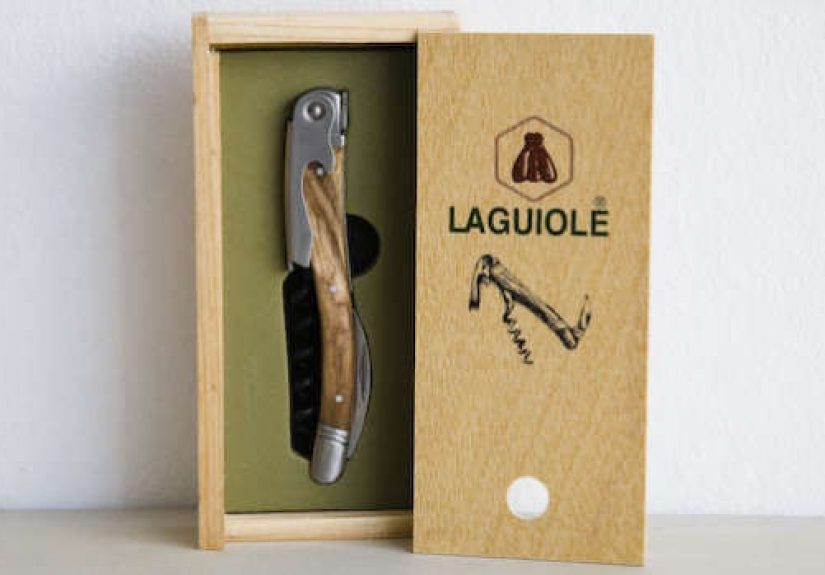
Enter the Kiss That Frog Laguiole Corkscrewa compact, giftable, “why don’t I own three of these?”
kind of waiter’s corkscrew (a.k.a. a wine key). It’s the small hero of dinner parties, picnics, and
“we’re already late but someone brought a bottle” moments. And yes, it has that classic Laguiole vibe:
handsome lines, a satisfying hinge, and enough old-world charm to make even boxed wine feel judged (politely).
What exactly is the Kiss That Frog Laguiole corkscrew?
In listings, you’ll often see it described as a Laguiole-style waiter’s corkscrew, sometimes with a model name
like “Capdenac.” It’s the foldable, pocket-friendly tool built around the three essentials:
a foil cutter, a corkscrew “worm,” and a lever that braces on the bottle to lift the cork out smoothly.
Think of it as a Swiss Army knife that took one look at wine service and said, “I can do that… but prettier.”
Kiss That Frog, based in the Bay Area for decades, built a reputation in the housewares world for
French-inspired tabletop goods and toolsexactly the sort of brand that would look at the humble wine key and say,
“Let’s make it feel like a tiny heirloom.”
First, a quick reality check: what does “Laguiole” mean here?
“Laguiole” can be confusing because it’s used in two ways:
- A place and a traditionthe village of Laguiole in France is famously tied to a style of folding knives.
-
A style labelin modern retail, “Laguiole” is commonly used to describe a recognizable look
(often including the iconic bee motif) across many cutlery and wine tools.
Here’s the important part for shoppers: “Laguiole” isn’t a single protected brand name across the board.
In practice, the label is widely used, which is why you’ll see everything from very inexpensive “Laguiole”
tools to genuinely high-end French-made pieces. That doesn’t mean you should panicit just means
you should shop with your eyes open.
The fun takeaway: you can absolutely enjoy the Laguiole aesthetic without turning this into a graduate seminar.
Just pay attention to build quality, materials, and seller transparency.
What makes a Laguiole-style corkscrew worth owning?
A great waiter’s corkscrew is a “quiet luxury” tool: it does its job so smoothly that you don’t notice it
until you use a bad one and suddenly you’re sweating in front of guests.
1) The double-hinged (two-step) lever
Many pro-favorite wine keys use a double-hinged lever, sometimes called a “two-step” system.
Translation: you lift the cork in two small, controlled moves instead of one dramatic yank.
This reduces cork breakage, helps with tight corks, and generally makes you look like you know what you’re doing.
2) A worm that bites cleanly
The “worm” (the spiral metal screw) matters more than people think. A good worm threads into cork smoothly,
doesn’t shred it into confetti, and pulls with less forceespecially helpful on older bottles where corks can be fragile.
3) A foil cutter that doesn’t feel like a butter knife
The tiny blade should cut the capsule neatly with light pressure. When it’s dull, people tend to saw harder,
slip, and invent new swear words. A sharp cutter makes opening feel clean and intentional (and keeps fingers happier).
How to use a waiter’s corkscrew like you’ve done it before
This is the part where most wine drama beginsso let’s make it boring (in the best way).
Here’s a simple, reliable method for a double-hinged wine key.
Step 1: Cut the foil below the bottle lip
Place the bottle on a steady surface. Cut around the foil below the lower lip (the ridge near the top),
then remove the top capsule. Cutting below the lip helps keep wine from contacting foil edges when you pour.
Step 2: Center the worm and start turning
Open the corkscrew into a “T” shape for stability. Place the worm tip in the center of the cork,
then twist until the worm is mostly inserted. Aim for control, not speed.
Many pros stop about one turn short of driving the worm all the way through the cork
(to reduce the chance of pushing cork crumbs into the wine).
Step 3: Use the lever in two smooth lifts
Set the first “step” of the hinge on the bottle lip and lift the handle to raise the cork partway.
Then move to the second hinge step and lift again to finish. The motion should feel like
a calm elevator ride, not a carnival strongman game.
Step 4: Finish gently
When the cork is nearly out, ease it free slowly (especially on older bottles). The goal is a quiet exit,
not a champagne impression.
Materials and style: what you’ll see in the Kiss That Frog “Laguiole” world
Kiss That Frog has been associated with a range of Laguiole-style tabletop piecesthink spreaders,
cheese tools, flatware, and wine accessoriesoften in colorful acrylic/resin handles, classic olivewood,
and sometimes natural materials like bone/horn-style looks (depending on the item).
A lot of the charm is that these pieces can feel both playful and “French-bistro” at the same time.
Some retail listings for Kiss That Frog corkscrew-style items specifically mention
gift-boxed presentation and care notes like hand-clean only and
do not soakwhich is exactly what you’d expect with natural handle materials.
(Bone and wood are beautiful. They also have opinions about dishwashers.)
How to tell if a Laguiole-style corkscrew is “the good kind”
Since “Laguiole” is used broadly, don’t judge by the word alone. Judge by the build.
Here’s what to look for when you’re considering a Kiss That Frog Laguiole corkscrewor any Laguiole-style wine key.
Build-quality checklist
- Lever stability: The hinge should feel tight, not wobbly.
- Worm alignment: When you twist, it should go in straightno drifting to the side.
- Foil cutter sharpness: A clean slice beats a jagged tear every time.
- Handle comfort: It should sit nicely in your palm without sharp edges.
- Finish details: The “bee” motif and hardware should look intentional, not stamped like an afterthought.
If you’re shopping online, look for clear product photos of the hinge area and the worm.
If you’re shopping in person, open and close it a few times. A great corkscrew feels like
a good door latch: satisfying and confidence-inspiring.
Care and feeding: keep it smooth for years
A wine key lives a tough life. It gets sticky, it gets pocket-linted, and sometimes it gets left outside
overnight after a “we’ll just have one glass” situation. Here’s how to keep a Kiss That Frog Laguiole corkscrew happy.
Cleaning
- Hand wash with mild soap and warm water after use.
- Dry immediately, especially around the hinge and worm.
- Avoid soaking, particularly if the handle is wood or bone-like material.
Maintenance
-
If the hinge feels stiff, a tiny drop of food-safe mineral oil on the pivot can help.
Wipe off excess so it doesn’t turn into a dust magnet. - Store it dry. A drawer is fine. A damp bar cart tray is not (unless you enjoy rust as a design trend).
Pairing it with the right wine moments
The best part about a good corkscrew is how often it becomes the “default” tool in your home.
Here are a few situations where a Laguiole-style waiter’s corkscrew shines:
- Dinner parties: Quiet, controlled openings keep the vibe classy (and the tablecloth unstabbed).
- Picnics: Small, portable, no bulky gadgets required.
- Host gifts: A corkscrew feels personal without being too personal. Like a candle, but more useful.
- Everyday wine nights: Because “Tuesday” also deserves competent hardware.
How it stacks up against other wine openers
There’s no single “best” corkscrew for everyonejust the best one for how you open wine.
Here’s the practical breakdown:
Waiter’s corkscrew (wine key)
- Pros: Compact, affordable, reliable, and very “restaurant-pro.”
- Cons: Requires a little technique (but you’ll learn fast).
Lever-style openers
- Pros: Extremely easy, great for frequent opening or limited hand strength.
- Cons: Bulkier; less portable.
Two-prong (Ah-So) openers
- Pros: Excellent for fragile, older corks because it grips the cork sides instead of drilling into it.
- Cons: Takes practice; not as universal for all cork types.
If your wine life is mostly “weekend reds and weekday whites,” the Kiss That Frog Laguiole corkscrew style is
the sweet spot: classy, efficient, and easy to keep nearby.
FAQ
Is the Kiss That Frog Laguiole corkscrew made in France?
“Laguiole” is often used as a style name, so origin can vary by product and supplier.
Some Kiss That Frog Laguiole tabletop items are explicitly described by retailers as made in France
(including pieces tied to the Jean Néron Laguiole line), but the best way to confirm for the corkscrew is to check
its packaging, the seller’s product description, or the brand/distributor listing.
Will it work on synthetic corks?
Yes, generallybut synthetic corks can be tighter. Use the two-step lever and pull steadily.
If you rush, you’ll get the “why is my cork squeaking?” soundtrack.
What if the cork starts to crumble?
Slow down. Keep the bottle steady, pull in small increments, and consider switching to a two-prong opener
for very old bottles. If crumbs fall in, strain the first splash through a fine mesh.
Experience Notes: Life with a Kiss That Frog Laguiole Corkscrew (the extra-real 500-ish words)
The first time you use a well-made Laguiole-style wine key, the biggest surprise is how quiet everything becomes.
No heroic tug-of-war. No cork doing that alarming half-rise, half-cave-in move. It’s just a steady sequence:
cut, twist, lever, liftdone. The whole ritual turns into something you can do while still holding a conversation,
which is the real flex at a dinner party. You’re not “opening wine.” You’re casually continuing a story about your neighbor’s
new puppy while the cork politely exits stage left.
The Kiss That Frog vibeFrench-leaning, gift-worthy, a little romanticalso shows up in the way people tend to treat it.
This is not the opener you bury under a pile of takeout menus. It’s the one that ends up living near the glasses,
because it looks like it belongs there. If yours has a natural handle (bone or wood style), you’ll probably catch yourself
wiping it off after use the way you’d wipe a good kitchen knife, not because you’re precious, but because it feels
like a small object that deserves basic respect. (Also: natural materials are gorgeous, and also they hate being soaked.
So you develop the habit quickly.)
Then there are the “real world” momentslike opening a bottle at the park when you realize the picnic basket
is missing everything except the essentials: bread, cheese, and somehow… the corkscrew. A compact waiter’s corkscrew
is basically the MVP of spontaneous wine. It’s also the tool that saves you from questionable internet hacks involving shoes,
walls, or that one friend who says, “I saw a video where you just push the cork in.” (That friend is not invited to choose
the playlist anymore.)
Another experience you’ll recognize fast: the two-step lever makes you braver about older bottles.
You know that moment when someone brings a “special” wine and the cork looks like it’s been
thinking about retirement since the early 2000s? A double-hinged wine key lets you lift the cork with less drama,
because you’re not relying on a single big pull. It’s two controlled moves, which means fewer sudden snaps.
You still go slowly, but you feel like you have optionslike the cork and you are negotiating rather than fighting.
Finally, there’s the subtle social magic: people notice a nice corkscrew. Not in a loud waymore like
“Oh, that’s a good one” energy. It becomes a small conversation piece, especially if it’s gift-boxed or has a
charming Laguiole-style silhouette. And if you give it as a host gift, it lands perfectly: it’s practical,
stylish, and it doesn’t force the recipient to find shelf space. It lives in a drawer and gets used.
Which, honestly, is the dream outcome for any present that isn’t edible.
Conclusion
The Kiss That Frog Laguiole Corkscrew sits in the best category of kitchen and bar tools:
it’s small, it’s useful, and it makes a familiar ritual feel smoother and slightly more special.
With the right technique (hello, two-step lever), it turns “opening wine” into a clean, confident motion
the kind that keeps dinner moving and keeps corks intact.
If you want a wine key that feels elevated without becoming fussy, this is the lane.
Keep it dry, treat the hinge kindly, and let it do what it does best:
make you look preparedeven when you’re absolutely improvising.