Table of Contents >> Show >> Hide
- Why This Thanksgiving Drama Feels So Familiar
- Is Bringing Your Own Thanksgiving Meal Actually Rude?
- Where the Mother-in-Law Probably Went Wrong
- What a Good Host Should Do Before Thanksgiving
- What a Good Guest Should Do If the Menu Won’t Work
- The Real Problem Usually Isn’t the Meal
- Should She Actually Uninvite Her MIL?
- How to Handle It Without Turning Thanksgiving Into a Trilogy
- What This Story Teaches About Modern Thanksgiving Etiquette
- Experiences People Have Had in Similar Thanksgiving Situations
- Conclusion
Thanksgiving is supposed to be the friendliest food fight of the year. You roast a turkey, mash potatoes until your wrist files a complaint, and pretend your family definitely knows how to discuss current events like civilized people. Then one comment lands on the table, and suddenly the stuffing is no longer the most loaded thing in the room.
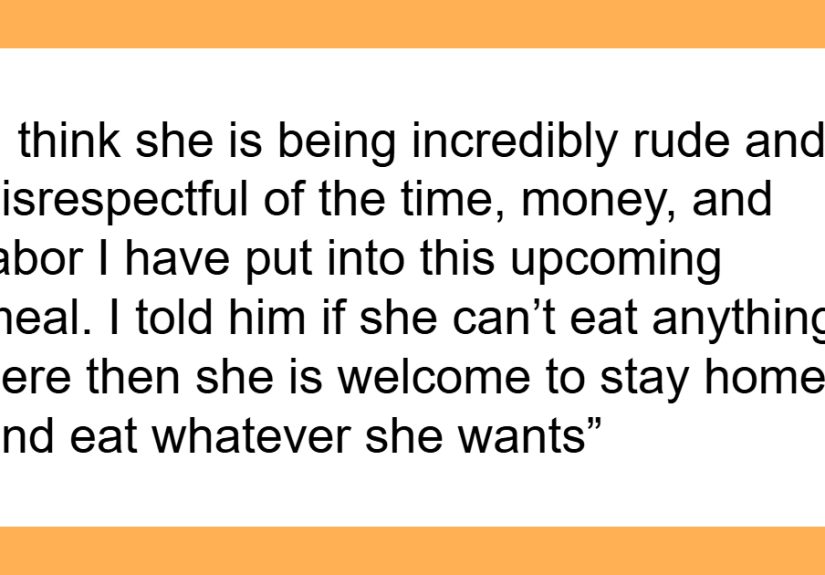
That is exactly why this headline hit such a nerve: a woman considered uninviting her mother-in-law from Thanksgiving after the MIL suggested bringing her own meal. On the surface, it sounds small. It is just one extra plate, right? But holiday meals are rarely about just one plate. They are about effort, pride, control, tradition, manners, and that ancient family art form known as passive aggression with garnish.
What makes this story so clickable is that almost everyone can see both sides for at least a second. Hosts hear, Your food won’t be good enough for me. Guests hear, I’m trying not to be a burden, and somehow I’m still the villain. Welcome to Thanksgiving, where emotions are served family-style.
So was the mother-in-law rude? Was the host overreacting? And is uninviting someone the right move, or just the fastest route to a Christmas sequel nobody asked for? Let’s talk about the etiquette, the psychology, and the real issue simmering under the gravy boat.
Why This Thanksgiving Drama Feels So Familiar
Holiday conflicts blow up because food is never just food. A Thanksgiving menu often represents care, identity, and labor. The host may have planned for days, bought ingredients, coordinated oven timing, and mentally prepared to feed a house full of opinions. So when a guest says, “I’ll just bring my own meal,” it can sound less like problem-solving and more like a Yelp review delivered in person.
But guests also bring their own baggage to the table. Some are managing allergies, intolerances, medical diets, sensory issues, faith-based food rules, or years of bad experiences with relatives who insist everything is “totally fine” right before revealing the casserole contains three mystery ingredients and one obvious lie. In that context, bringing your own meal can be practical, polite, and safer than rolling the dice on Aunt Linda’s “gluten-free-ish” stuffing.
That is why this kind of story spreads online like spilled cranberry sauce. It is not really about whether someone packs a personal meal. It is about whether the act is a health precaution, a control move, a silent insult, or a desperate attempt to avoid drama. Same container, very different contents.
Is Bringing Your Own Thanksgiving Meal Actually Rude?
Yes, it can be rude
Let’s start with the uncomfortable truth: bringing your own meal can be rude when it is framed as a judgment on the host. If a guest has no real dietary need and announces they are bringing separate food because they do not trust the cooking, dislike the menu, or want to make a point, that is not thoughtful. That is theater.
It is especially bad if the guest makes the host feel small on purpose. Saying, “I’m bringing my own food because I probably won’t like anything,” or “You never make things the right way,” is less about dinner and more about dominance. The message becomes clear: This is your house, but I’d still like everyone to know I disapprove.
Holiday hosts are not short-order cooks. They do not need to create six entirely different menus because one relative treats dinner like a courtroom cross-examination. A guest who wants to be gracious should solve problems quietly, not stage-manage their preferences like they are headlining the Macy’s parade.
No, it is not always rude
Now for the equally important truth: bringing your own meal is not automatically offensive. In many situations, it is the most sensible option. If a guest has severe allergies, celiac disease, food intolerances, religious restrictions, or a medically necessary diet, a personal meal can be the safest and least disruptive solution.
The difference is tone and intent. “I don’t want your food” is rude. “I have a dietary issue, so I’ll bring something simple for myself and won’t make it a big deal” is considerate. One insults the host. The other removes pressure from the host.
That nuance matters. Good etiquette is not about rigid rules; it is about respect. If a guest is trying to protect their health without creating extra work, the polite response is not outrage. It is relief that the issue can be handled easily.
Where the Mother-in-Law Probably Went Wrong
In this kind of Thanksgiving dispute, the rude part is often not the meal itself. It is the delivery. A mother-in-law who suggests bringing her own plate may trigger offense if she says it with a side of criticism, a history of nitpicking, or the unmistakable energy of someone who enjoys reminding the host that she once made “the real Thanksgiving dinner.”
If there is already tension in the relationship, even a practical suggestion can sound loaded. A daughter-in-law may hear not just one comment, but a whole archive of previous comments: the too-dry turkey remark, the too-salty gravy remark, the unforgettable “interesting choice” about the centerpiece. By the time the personal meal enters the chat, it is not arriving alone.
That is why context matters more than the container. In a healthy relationship, bringing a meal can be a non-event. In a strained one, it can feel like a declaration of war served in Tupperware.
What a Good Host Should Do Before Thanksgiving
A smart host does not wait until everyone is seated to discover that one guest cannot eat dairy, another is gluten-free, and a third is pretending they “don’t really do carbs anymore” but will absolutely inhale three pies later. The best move is to ask ahead of time.
That does not mean bending your whole menu around every whim. It means checking for genuine restrictions and making a reasonable effort to include at least a few safe options. A thoughtful host might say, “I’m planning the menu this week. Let me know if anyone has allergies or dietary needs so I can make sure there’s something for you.” That one sentence can prevent an astonishing amount of family nonsense.
It also helps to be realistic. If the restriction is complex, or if cross-contact is a concern, the host should not fake confidence. It is far better to say, “I want to be respectful, but I can’t guarantee this will be safe. You’re welcome to bring something for yourself if that makes things easier.” That is gracious, honest, and miles better than improvising with dangerous guesswork.
In other words, hospitality is not perfection. It is consideration. Nobody needs a flawless turkey. People do need to feel welcome.
What a Good Guest Should Do If the Menu Won’t Work
If you are the guest and you know the Thanksgiving menu may not work for you, handle it early, kindly, and privately. Do not wait until the day of. Do not announce it in the family group chat like breaking news. And definitely do not make it sound like the host’s kitchen is a public health threat unless it truly is.
A better approach sounds like this: “Thanks so much for hosting. I have some food restrictions, so to make it easy on everyone, I may bring a small meal for myself. Please don’t go out of your way on my account.” That language is respectful because it lowers the burden instead of raising the temperature.
If the host offers a dish to accommodate you, great. If not, you can still be a good guest by keeping your backup plan low-key. No dramatic unpacking. No speech. No performance. You are there for the people, not to conduct a side-by-side tasting panel.
And yes, if your only issue is that you are picky, not medically restricted, etiquette asks a little more humility from you. Eat what you can, skip what you do not like, and save the menu critique for the drive home like everyone else.
The Real Problem Usually Isn’t the Meal
Here is the part that makes these stories so messy: the separate meal is often just the symbol. The real issue is usually an older, deeper power struggle. Maybe the mother-in-law is used to being the family authority and does not like handing over the holiday spotlight. Maybe the daughter-in-law is tired of being corrected, judged, or subtly undermined. Maybe the spouse in the middle has mastered the fine art of becoming mysteriously busy whenever conflict starts.
Holiday gatherings intensify these roles because traditions come loaded with identity. Whoever hosts often feels responsible for creating “the memory.” Whoever used to host may feel displaced. Whoever is always smoothing things over may be completely exhausted. Add one loaded comment, and suddenly everyone is arguing about food while actually fighting about respect.
This is why experts so often point to boundaries and communication. A family can survive a bland green bean casserole. It has a much harder time surviving chronic disrespect dressed up as “just being honest.”
Should She Actually Uninvite Her MIL?
Uninviting a mother-in-law from Thanksgiving is the nuclear option with a gravy stain. Sometimes it is justified, but it should not be the first move just because feelings were bruised.
If the MIL simply has legitimate dietary needs and floated the idea clumsily, uninviting her would probably escalate a problem that could be solved with one grown-up conversation. In that case, the better response is clarification. Ask what she means. Ask whether this is about safety, health, or preference. Give her a chance to explain before writing the family’s next chapter in all caps.
But if this suggestion is part of a long pattern of criticism, controlling behavior, or humiliating little digs, the host is not wrong to feel fed up. At a certain point, protecting the peace of your home is not rude. It is responsible. Hospitality does not require volunteering as the emotional crash test dummy for someone who treats every holiday like an audition for Most Difficult Relative.
So should she uninvite the MIL? Maybe, but only if the issue is bigger than the meal and the disrespect is chronic, not imaginary. Boundaries should be based on behavior patterns, not one badly phrased sentence taken at maximum offense.
How to Handle It Without Turning Thanksgiving Into a Trilogy
If you are the host, try a calm, direct response: “I want everyone to feel comfortable, and I also want the tone of the day to feel respectful. If you need to bring something because of dietary reasons, that’s fine. If this is about disliking my cooking, then we should talk about that honestly now.” Clean. Clear. No dramatic garnish.
If you are the guest, try this: “I’m not trying to insult you at all. I just want to make the day easy and avoid any issues with what I can eat. I’m happy to keep it simple and low-key.” That wording reassures the host instead of baiting them.
And if you are the spouse caught between your wife and your mother, congratulations: this is your moment to be useful. Your job is not to disappear into the garage and “check on the cooler.” Your job is to help translate, set expectations, and prevent both women from fighting through you like you are a human Bluetooth speaker.
What This Story Teaches About Modern Thanksgiving Etiquette
Modern etiquette is more flexible than old-school holiday mythology suggests. The goal is not to force everyone to eat the exact same plate with a fixed smile. The goal is to create a table where people feel respected. That means hosts should ask questions instead of assuming. Guests should communicate needs without insulting the menu. Relatives should stop using “tradition” as camouflage for bad behavior. Revolutionary concept, I know.
It also means we need to separate preference from necessity. Someone with a serious intolerance is not being dramatic by bringing food. Someone who simply refuses to eat anything they did not personally supervise might be. Those are not the same situation, and treating them as identical is how family arguments become annual programming.
The healthiest Thanksgiving mindset is simple: solve the practical problem and refuse to feed the emotional one. If a separate meal keeps someone safe and peaceful, fine. If the separate meal is just a shiny new way to criticize the host, then the issue is not turkey. It is manners.
Experiences People Have Had in Similar Thanksgiving Situations
One reason this mother-in-law story resonates is that so many people have lived some version of it. Maybe not the exact same headline, but the same feeling. The same tight smile. The same moment when a holiday meal suddenly becomes a referendum on the entire relationship.
Some hosts know what it is like to cook for two straight days only to have one relative arrive with “backup food” and a suspicious attitude. It is not the casserole dish that hurts. It is the implication that your effort was never going to be enough. Even when no insult is spoken aloud, the message can feel loud enough to rattle the silverware.
On the other side, many guests have horror stories too. There are people with gluten intolerance who have been promised something was safe, only to spend the evening regretting every life decision that led them to believe “a little flour doesn’t count.” There are dairy-sensitive guests who were told, “I only used a tiny bit of butter,” as if butter becomes invisible when the holiday music starts. For them, bringing a personal meal is not rude. It is experience talking.
Then there are the family politics veterans. You know the type. The mother-in-law who comments on portion sizes. The sister-in-law who “helpfully” rearranges the kitchen. The uncle who critiques the turkey carving like he is judging a cooking competition nobody entered. In these households, the fight is never truly about one dish. The dish is just the prop.
Many couples also recognize the spouse problem at the center of these stories. When one partner refuses to speak up, holiday tension grows fast. A wife feels unsupported. A mother feels entitled. A husband insists everyone “just calm down,” which is the emotional equivalent of throwing a napkin at a grease fire. Families do better when the person in the middle acts like an adult and helps set respectful boundaries before the guests arrive.
And honestly, plenty of people have found better solutions. Some families now do potluck-style Thanksgiving so no one person carries the whole emotional and culinary load. Some designate allergen-safe dishes clearly. Some normalize guests bringing something for themselves without making it weird. Others rotate hosting so the holiday does not become a yearly throne battle with pie.
The common thread in the healthiest experiences is not perfect agreement. It is mutual respect. The host is not expected to read minds. The guest is not expected to gamble with their health. And nobody gets to use “family” as a free pass to be rude. Once that rule is clear, Thanksgiving gets a lot simpler. Not easy, exactly. This is still family. But simpler.
So if this headline made you wince in recognition, you are not alone. A surprising number of holiday arguments begin with a plate and end with a pattern. The good news is that both can be addressed. One with communication, one with boundaries, and both with a little less ego than most Thanksgiving tables are currently serving.
Conclusion
In the end, the question is not just whether a mother-in-law should bring her own meal. It is whether everyone involved knows how to show respect when expectations collide. A host deserves appreciation, not snobbery disguised as honesty. A guest deserves safety and dignity, not guilt for having real dietary needs. And a family gathering deserves better than turning every side dish into a symbol of old resentments.
If the MIL’s suggestion came from medical necessity or genuine concern, uninviting her would be too much. If it came from a long-standing pattern of criticism and control, the host is right to take the disrespect seriously. Either way, the best Thanksgiving rule is this: be clear, be kind, and do not confuse tradition with permission to act badly. The turkey has enough to deal with.