Table of Contents >> Show >> Hide
- What Is Duchenne Muscular Dystrophy?
- So, What Is the Life Expectancy in Duchenne Muscular Dystrophy?
- Why Survival Has Improved Over Time
- What Most Strongly Affects Prognosis?
- What Life Stages Often Look Like
- Can People With Duchenne Muscular Dystrophy Live Into Their 30s or 40s?
- What Families Can Do to Support a Longer, Better Life
- Life Expectancy Is Not the Same as Life Quality
- Experiences Behind the Numbers: What Living With DMD Can Feel Like
- Final Thoughts
When people search for life expectancy in Duchenne muscular dystrophy, they are usually not hunting for a cold number on a chart. They are trying to answer a much harder question: What does the future actually look like? That is completely understandable. Duchenne muscular dystrophy, or DMD, is a progressive genetic condition that affects muscles throughout the body, including the muscles used for movement, breathing, and heart function. So yes, prognosis matters. A lot.
But here is the important part: the answer is no longer as simple as it once was. Years ago, DMD was often associated with survival only into the late teens or early 20s. Today, that picture has changed. Thanks to better respiratory support, earlier cardiac treatment, steroids, improved nutrition, assistive technology, and multidisciplinary care, many people with Duchenne now live into their 20s and 30s, and some live into their 40s or longer. That does not mean DMD has become easy. It means the story is evolving, and thankfully, it is evolving in a more hopeful direction.
This article breaks down what affects Duchenne muscular dystrophy life expectancy, why modern care has changed survival, what families can realistically expect, and why quality of life deserves equal space in the conversation. Because if you are going to talk about years, you should also talk about living.
What Is Duchenne Muscular Dystrophy?
Duchenne muscular dystrophy is a genetic disorder caused by mutations in the dystrophin gene. Dystrophin is a protein that helps protect muscle fibers. Without enough functional dystrophin, muscles become damaged over time. The result is progressive weakness that usually begins in early childhood, often between ages 2 and 6.
At first, the signs can look deceptively ordinary: frequent falls, trouble climbing stairs, difficulty running, toe walking, or that classic “push-off-the-thighs” move when standing up from the floor. Over time, DMD affects more than leg muscles. It also affects the respiratory muscles and the heart muscle, which is why Duchenne muscular dystrophy prognosis depends on much more than mobility alone.
So, What Is the Life Expectancy in Duchenne Muscular Dystrophy?
The most honest answer is this: there is no one-size-fits-all life expectancy for DMD anymore. Survival varies widely depending on access to care, timing of treatment, respiratory support, heart monitoring, infection management, nutrition, and the person’s overall disease course.
Historically, many boys with Duchenne did not survive beyond their teens or early 20s. In the modern care era, that estimate has shifted upward. Many people now live into their late 20s or 30s, and some live well beyond that with comprehensive care. In other words, the old numbers floating around the internet are often outdated, undercooked, and about as useful as a raincoat made of paper towels.
That said, longer survival does not happen by accident. It is closely linked to proactive care. Respiratory complications and cardiomyopathy remain the two major drivers of shortened lifespan in DMD, so the biggest improvements in survival have come from treating those problems earlier and more aggressively.
Why the number varies so much
Two people with Duchenne may share the same diagnosis but have very different outcomes. One person may have consistent cardiac imaging, noninvasive ventilation when needed, cough-assist support, steroid treatment, and a coordinated neuromuscular team. Another may have delayed diagnosis, limited access to specialty care, or gaps during the transition to adulthood. That difference matters.
Life expectancy is also influenced by whether complications are recognized early. Sleep-disordered breathing, declining lung function, weak cough, swallowing problems, scoliosis, weight changes, and heart dysfunction can quietly affect health long before they become dramatic. DMD does not always knock politely before entering the room.
Why Survival Has Improved Over Time
Respiratory care changed the game
One of the biggest reasons survival has improved is better respiratory care in Duchenne muscular dystrophy. Years ago, respiratory failure was a common cause of early death. Today, regular pulmonary testing, sleep studies, cough-assist devices, airway clearance strategies, and noninvasive ventilation have changed the trajectory for many patients.
That matters because breathing problems in DMD can begin gradually. A person may sleep poorly, wake with headaches, feel tired in the morning, or have frequent chest infections before anyone says, “Maybe the lungs need a closer look.” Modern care tries to catch those changes earlier, before they become emergencies.
Cardiac care became proactive, not just reactive
The heart is another major reason DMD affects life expectancy. Duchenne can cause cardiomyopathy, which means the heart muscle weakens over time. The good news is that cardiology care for DMD is no longer just about waiting for symptoms. Many specialists now recommend regular heart surveillance and early treatment when needed, often before obvious heart failure symptoms appear.
This proactive approach matters because heart problems in DMD can sneak in quietly. A teenager may look stable on the outside while the heart is already working harder than it should. Early treatment may help slow progression and improve survival. In today’s DMD care model, the heart is not an afterthought. It is center stage.
Steroids and newer therapies also play a role
Corticosteroids for Duchenne muscular dystrophy, such as prednisone, deflazacort, and newer alternatives like vamorolone, remain an important part of care for many patients. They can help slow muscle weakness, delay loss of ambulation, and may support longer preservation of function.
There are also mutation-specific exon-skipping therapies and gene therapy options for certain patients. These treatments are important and promising, but they are not magic wands. Eligibility depends on genetics, age, disease stage, and current safety guidance. In short, targeted therapies may change the course for some people, but they do not replace the need for excellent day-to-day cardiac, respiratory, rehabilitation, and nutritional care.
That is why experts often emphasize multidisciplinary care for Duchenne muscular dystrophy. The longer people live with DMD, the more important it becomes to manage the whole body, not just one organ system at a time.
What Most Strongly Affects Prognosis?
Cardiac involvement
If the heart becomes significantly weakened, overall health can decline quickly. Regular heart imaging, cardiology follow-up, and early treatment matter.
Respiratory function
Weak breathing muscles and ineffective cough increase the risk of infections, sleep-related breathing issues, and respiratory failure. Pulmonary monitoring is a cornerstone of longer survival.
Access to specialized care
People followed by experienced neuromuscular teams often have earlier recognition of complications and better coordination across specialties. That kind of coordinated care can influence both survival and quality of life.
Medication use and tolerance
Steroids may help but also come with side effects. Treatment plans have to be individualized, monitored, and adjusted over time.
Nutrition, swallowing, and bone health
DMD is not only a muscle condition. Weight changes, swallowing problems, fractures, scoliosis, and gastrointestinal issues can all affect overall health and resilience.
Transition to adult care
This is a big one. As more people with DMD survive into adulthood, the transition from pediatric to adult care has become a crucial part of prognosis. Falling through the cracks during that handoff can mean delayed cardiac follow-up, gaps in equipment planning, or missed support for independence, education, and mental health.
What Life Stages Often Look Like
Childhood
Childhood is often when diagnosis happens. Families are suddenly learning a new language filled with genetics, physical therapy, steroids, and durable medical equipment. It is a lot. Early care focuses on preserving strength, supporting development, preventing complications, and helping the child stay active and engaged in daily life.
Teen years
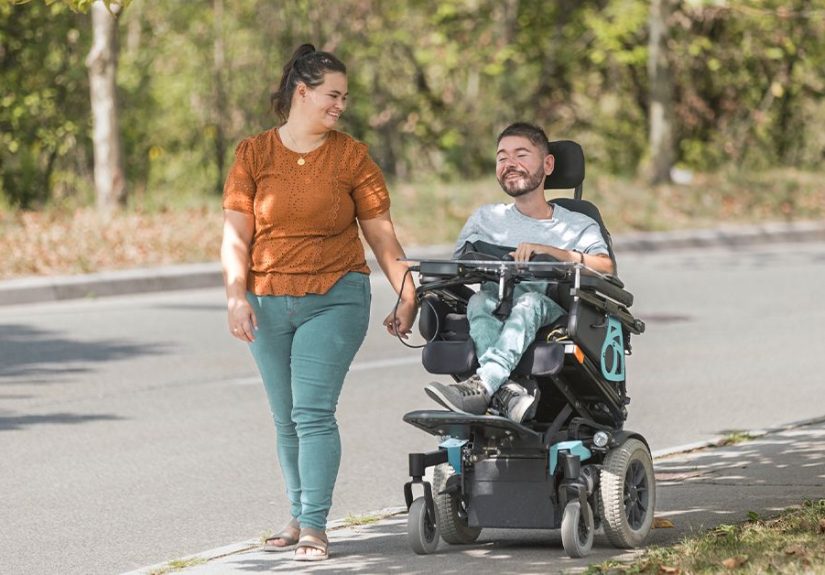
In adolescence, loss of ambulation commonly becomes part of the story. This can be emotionally tough, but it is not the end of independence. Power wheelchairs, home modifications, school support, and adaptive technology can make a huge difference. Cardiac and respiratory monitoring usually becomes even more important during this stage.
Young adulthood and beyond
This stage is becoming increasingly relevant because more people with DMD are living there. Adult life with Duchenne can include college, remote work, advocacy, gaming, creative careers, relationships, and bigger conversations about independence. It can also include more complex medical needs, chronic pain, equipment planning, home care support, and caregiver stress. This is exactly why modern discussions about living longer with Duchenne muscular dystrophy must include adult care planning, not just pediatric milestones.
Can People With Duchenne Muscular Dystrophy Live Into Their 30s or 40s?
Yes, some can and do. That is not wishful thinking. It is the reality of improved standards of care. But it is also not a guarantee, and pretending otherwise would be unfair. DMD is still a life-shortening condition. The best way to think about modern survival is not as a miracle leap from one exact number to another, but as a widening range shaped by access to care and early management of complications.
For some families, hearing that survival has improved brings hope. For others, it brings a strange new kind of anxiety, because longer life also means navigating adulthood, long-term equipment needs, caregiver fatigue, and health systems that are still catching up. Both feelings are valid.
What Families Can Do to Support a Longer, Better Life
There is no guaranteed formula, but there are smart, evidence-based habits that can support better outcomes.
Stay connected to a multidisciplinary team. Neurology, cardiology, pulmonology, rehabilitation, nutrition, orthopedics, mental health, and social work all matter.
Do not wait for major symptoms before checking the heart and lungs. In DMD, proactive monitoring is often more useful than dramatic last-minute action.
Take transition planning seriously. Adult care is not a technicality. It is part of survival planning.
Watch everyday signs. Morning headaches, worsening fatigue, frequent infections, appetite changes, and new swallowing issues deserve attention.
Support mental health. Living with a progressive condition affects the whole person, not just the medical chart. Emotional support, autonomy, and future planning are not extras. They are part of good care.
Life Expectancy Is Not the Same as Life Quality
It is important to say this clearly: longer life is not the only goal. A meaningful life with DMD can include education, friendships, hobbies, relationships, advocacy, work, humor, independence, and personal choice. Many adults with Duchenne are proving that life with serious disability is still life in the fullest sense of the word.
That shift matters. The conversation around Duchenne muscular dystrophy survival has moved from “How long?” to “How well, with what support, and on whose terms?” That is progress. Real progress.
Experiences Behind the Numbers: What Living With DMD Can Feel Like
Statistics can be useful, but they are terrible at describing a Tuesday. And for families living with Duchenne, life is built out of Tuesdays. The diagnosis often starts with a nagging sense that something is off: a child who falls more than peers, struggles with stairs, or seems strong-willed when he is actually working twice as hard just to keep up. Then comes the testing, the waiting, the appointments, and the moment the word “Duchenne” lands in the room and changes the room forever.
After that, life often becomes a strange mix of routine and reinvention. Families learn how to manage medications, therapy schedules, school accommodations, and equipment deliveries with the efficiency of a small logistics company. They become experts in insurance language they never wanted to know. They measure a good week differently. A good week may mean no chest infection, a wheelchair repair that happens on time, a successful school trip, or a cardiology appointment that brings reassuring news.
As Duchenne progresses, the emotional experience changes too. When walking becomes harder or stops, families often grieve, even when they know it is coming. But grief and adaptation frequently happen at the same time. A power wheelchair may arrive as a symbol of loss, then quickly become a tool for freedom. Suddenly there is more speed, more independence, more access to friends, school, and daily life. Duchenne has a way of forcing people to hold two truths at once: something can be painful and helpful at the same time.
The teen and adult years introduce new layers. Questions shift from “How do we manage school?” to “What will adulthood look like?” There may be conversations about college, work, relationships, transportation, caregivers, accessible housing, and medical transition. Young adults with Duchenne often want what everyone else wants: privacy, purpose, control, and the right to make choices about their own lives. That desire does not disappear because a diagnosis is involved.
There is also the invisible labor. Caregivers may be tired in a way that sleep does not fix. Siblings may grow up quickly. Parents may become part nurse, part case manager, part mechanic, and part motivational coach, all while trying to stay emotionally upright. Yet many families also describe a sharpened sense of perspective. Small wins count. Humor counts. A good accessible van counts. So does a well-timed joke during a clinic visit, because sometimes comedy is not denial; it is oxygen.
Adults living with DMD often talk about wanting the world to stop treating them like a prognosis and start treating them like people with plans. That may be the clearest lesson of all. Life expectancy in Duchenne muscular dystrophy matters, but lived experience matters just as much. The future is not only about how many years are possible. It is about what fills those years, who helps carry them, and how much room a person has to shape a life that still feels like their own.
Final Thoughts
So, what is the real takeaway on life expectancy in Duchenne muscular dystrophy? It has improved. Significantly. Many people with DMD now live into adulthood, often into their 20s and 30s, and some beyond. That progress is tied to better respiratory support, earlier cardiac treatment, steroid use, improved standards of care, and more thoughtful transition planning.
But DMD is still a serious, life-shortening condition, and prognosis remains highly individual. The most useful question is not “What is the exact number?” It is “What kind of care, support, and planning gives this person the best chance to live longer and live better?” That is where the real difference is made.
Hope, in Duchenne, is not blind optimism. It is informed action. And that may be the most powerful prognosis of all.