Table of Contents >> Show >> Hide
- What Is the Mizu Bottle with Binchotan Purifying Stick?
- What Is Binchotan, Exactly?
- How the Mizu Bottle Helps Your Water
- What the Mizu Bottle Does Not Do
- Why the Product Still Makes Sense
- Mizu Bottle vs. Modern Filtered Water Bottles
- Design, Materials, and Everyday Practicality
- Who Should Buy a Mizu Bottle with Binchotan Purifying Stick?
- Care and Maintenance Tips
- Final Verdict
- Extended Experience: What It Feels Like to Live With a Mizu Bottle with Binchotan Purifying Stick
If ordinary tap water feels a little too “public swimming pool adjacent” for your taste buds, the Mizu Bottle with Binchotan Purifying Stick arrives like a beautifully dressed peace offering. Part design object, part reusable bottle, part slow-living ritual, it turns the humble act of drinking water into something that feels just a bit more civilized. And honestly, in a world where half our hydration gear looks ready for a moon mission, that is oddly refreshing.
The appeal is easy to understand. You get a striking bottle, a piece of traditional Japanese binchotan charcoal, and the promise of cleaner-tasting water without the fuss of a bulky countertop system. But here is the grown-up question behind the good looks: does it actually work, and if so, what exactly does it do? The answer is more interesting than the marketing version. This bottle can make water taste better and feel more enjoyable to drink, but it is not a magic wand, not a survival tool, and not a substitute for a properly certified purification system when safety is the real issue.
This guide breaks down what the Mizu Bottle with Binchotan Purifying Stick is, how binchotan works, where the bottle shines, where it falls short, and who will probably love it most. Think of it as a stylish reality check, with fewer buzzwords and more useful hydration wisdom.
What Is the Mizu Bottle with Binchotan Purifying Stick?
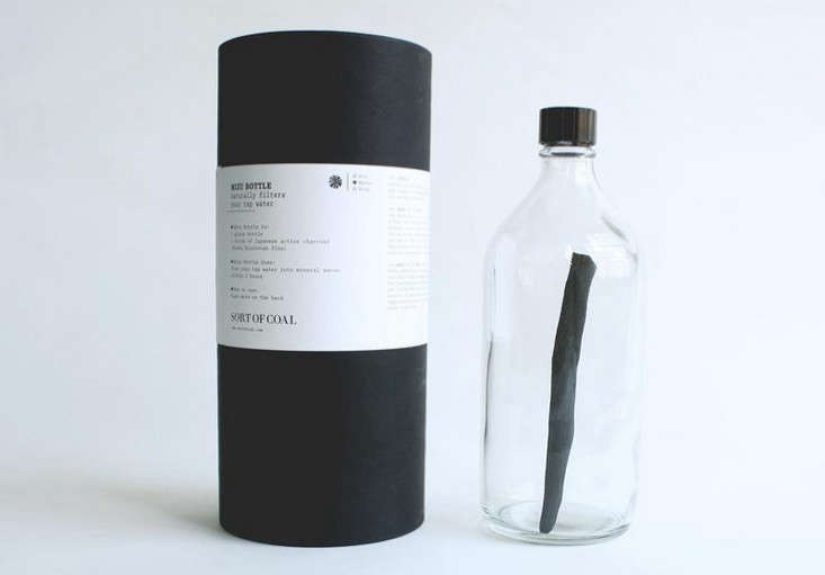
The Mizu Bottle with Binchotan Purifying Stick was presented as a design-forward glass water bottle paired with a handcrafted stick of Kishu binchotan, a premium Japanese white charcoal traditionally associated with filtration and purification rituals. Retail descriptions framed it as a minimalist way to turn plain tap water into better-tasting water while making your countertop, desk, or dinner table look suspiciously more sophisticated.
One reason the product got attention is that it did not look like a typical water filter. It looked more like an elegant laboratory flask that had wandered into a design magazine and decided to stay. The bottle was described as holding about 34 ounces, and the included charcoal stick was marketed as effective for roughly one month of daily use before replacement. That combination made it feel less like a gadget and more like a ritual object: fill, wait, sip, repeat.
Design lovers were clearly part of the target audience. This was not a “clip it to your backpack and punch through a mountain stream” kind of bottle. It was more of a “set it on your kitchen counter and pretend your life is better organized than it actually is” kind of bottle. That is not an insult. It is, in fact, part of the charm.
What Is Binchotan, Exactly?
Binchotan is a high-grade charcoal traditionally made in Japan from dense oak and fired using a specialized process that creates an unusually hard, high-carbon material. In lifestyle and wellness circles, it is often described with almost mythic reverence, as though it were forged by mountain monks and good intentions. The truth is still pretty impressive without the poetry: binchotan is a form of activated or highly adsorptive charcoal associated with odor absorption, water treatment, and air purification applications.
Its appeal in water use comes from surface area and porosity. Materials like activated carbon work by adsorbing certain compounds onto their surface, especially substances that affect taste and odor. That is why carbon-based filters are so common in pitchers, faucet attachments, and filtered bottles. When people say water tastes “cleaner” after carbon treatment, they are usually reacting to reduced chlorine taste, reduced odor, or fewer compounds that make tap water seem harsh or flat.
So yes, the basic idea behind the Mizu bottle is grounded in real filtration principles. No, the stick is not a wizard staff for all contaminants known to humankind. That distinction matters.
How the Mizu Bottle Helps Your Water
1. It can improve taste and odor
This is the bottle’s strongest case. Carbon-based filtration is widely used to reduce chlorine-related taste and odor issues. If your tap water is safe but has that slightly chemical, metallic, or stale quality that makes you drink less of it, a binchotan stick may make it more pleasant. And when water tastes better, people tend to drink more of it. Hydration often succeeds not because of discipline, but because something is easy and enjoyable enough to become automatic.
2. It turns hydration into a habit
The Mizu bottle has a psychological advantage that many ugly utilitarian products never manage: it invites use. A handsome bottle sitting in plain sight gets refilled. A clunky appliance hidden under the sink gets ignored until something tastes weird. There is a real lifestyle value in tools that are attractive enough to become part of your daily environment instead of something you avoid eye contact with.
3. It reduces dependence on disposable bottled water
If you are the type of person who keeps buying bottled water just because your home tap tastes boring, a reusable bottle like this can be a smarter long-term move. It supports a lower-waste routine and may save money over time, especially if the real issue is taste rather than water safety.
4. It feels calm, intentional, and just a little fancy
That may sound frivolous, but it is part of the product’s value. Some hydration products are all grit, grit, grit. The Mizu bottle offers ritual. You fill it, let the water sit, and return later to a more satisfying drink. It is hydration for people who enjoy tea ceremonies, beautiful kitchenware, or pretending their apartment is a boutique hotel for five minutes a day.
What the Mizu Bottle Does Not Do
It is not a true emergency purifier
This is the most important reality check. Activated carbon is helpful, but it is not the same thing as full disinfection or broad-spectrum purification. U.S. guidance on water treatment makes clear that different technologies address different problems. Carbon is commonly used to improve taste and odor and to reduce some contaminants, but it is not the go-to answer for bacteria, viruses, nitrates, or every possible dissolved substance in questionable water.
So if you are dealing with a boil-water notice, contaminated well water, floodwater, unknown outdoor sources, or any situation where pathogens may be present, this bottle is not enough. In those cases, boiling or appropriately certified treatment methods matter far more than aesthetic filtration. A beautiful bottle is lovely. Gastrointestinal regret is not.
It is not a universal contaminant remover
Some certified carbon-based systems can reduce additional contaminants, but performance depends on the exact media, the design of the system, the flow rate, and certification claims. A loose charcoal stick inside a bottle should not be assumed to perform like a modern certified filter cartridge with published test standards. That is why it is better to think of the Mizu bottle as a taste-improvement and ritual-drinking product first, not an all-purpose water safety device.
It does not eliminate the need for cleaning
If anything, a product associated with “purifying” water can make users dangerously relaxed about hygiene. Reusable bottles still need regular washing, and all those sneaky areas where moisture lingers can become cozy little neighborhoods for bacteria and mold. In other words, your bottle may help your water smell fresher, but it will not save you from your own lazy dish habits.
Why the Product Still Makes Sense
The biggest reason this bottle remains interesting is that it solves a very specific modern problem: many people are not trying to survive in the wilderness or remove industrial contamination from a questionable source. They are simply trying to make ordinary city tap water taste better while using something nicer than a plastic bottle from the gas station.
For that use case, the Mizu bottle makes sense. If your local water is already treated and safe but has noticeable chlorine flavor or an off odor, a binchotan stick may improve the drinking experience enough to change your habits. And habits are everything. The best water bottle is not the one with the most dramatic claims. It is the one you actually use every day.
Mizu Bottle vs. Modern Filtered Water Bottles
Compared with today’s filtered water bottles, the Mizu bottle is almost charmingly old-school. Many modern options use replaceable filter cartridges with carbon media, membrane microfilters, or more advanced filtration systems. Some are designed mainly for taste and chlorine reduction. Others are built for travel and can target bacteria, parasites, microplastics, and more.
The Mizu bottle lives firmly on the lifestyle end of that spectrum. It is closer to a design object for improving everyday tap-water enjoyment than a technical bottle for uncertain water sources. If you want a bottle for office, home, studio, or dinner-table use, the Mizu concept is appealing. If you want something for airports, hiking, camping, or places with questionable water quality, a modern filtered bottle with published contaminant claims is the wiser choice.
In short, the Mizu bottle wins on elegance and ritual. Modern cartridge-based bottles win on measurable filtration range, speed, and convenience. Your priorities decide the winner.
Design, Materials, and Everyday Practicality
The good news
Glass looks clean, tastes neutral, and feels premium. It does not hang onto flavors the way some plastics can, and it makes water feel a bit more refined. There is also something reassuring about seeing the water, the charcoal stick, and the whole process in plain view. It feels honest.
The less-good news
Glass is glass. It is heavier than plastic and less forgiving than steel. Drop a stainless steel bottle, and you may get a dent plus a small emotional speech. Drop a glass bottle, and you may get a broom. For stationary or careful daily use, glass is great. For chaotic commutes, gym bags, or households where everything eventually meets the floor, it is riskier.
The 34-ounce capacity is generous, which is great for fewer refills, but it also makes the bottle less portable than slimmer on-the-go options. It is not exactly the bottle you want rattling around with your keys, charger, notebook, snacks, and whatever mysterious receipts live at the bottom of your bag.
Who Should Buy a Mizu Bottle with Binchotan Purifying Stick?
You are a strong match for this bottle if:
- You already trust your tap water but want it to taste better.
- You care as much about aesthetics as utility.
- You enjoy slow rituals and reusable goods.
- You want a conversation piece that also encourages hydration.
- You are trying to cut back on disposable bottled water.
You are probably not the ideal buyer if:
- You need proven broad-spectrum water purification.
- You frequently travel where water quality is uncertain.
- You want a lightweight sports bottle.
- You are rough on your gear.
- You expect set-it-and-forget-it maintenance.
Care and Maintenance Tips
Clean the bottle regularly
A reusable bottle should be washed with soap and water, not just given a lazy rinse and a hopeful stare. Pay extra attention to threads, lids, seals, and any narrow areas where moisture hangs around. That is where residue, mold, and bacteria love to set up a tiny real-estate market.
Use the charcoal as directed
Because charcoal performance depends on use conditions, follow the product’s instructions for first use, replacement timing, and care. Archived product descriptions indicated about one month of daily use for the included stick. Once performance fades, continuing to use an exhausted stick is mostly an exercise in optimism.
Know when your water problem is bigger than taste
If your concern is odor, chlorine flavor, or general enjoyment, this bottle is in its lane. If your concern is contamination, pathogens, boil-water alerts, or health-related impurities, shift to certified treatment options and public-health guidance immediately. That is not glamorous advice, but it is the kind that keeps your week from becoming medically memorable.
Final Verdict
The Mizu Bottle with Binchotan Purifying Stick is best understood as a beautifully designed taste-improving hydration ritual, not a do-everything purification system. It is thoughtful, stylish, and rooted in a real filtration concept. It can make safe tap water more enjoyable to drink, encourage better habits, and reduce the temptation to buy disposable bottled water.
What it cannot do is magically solve every water-quality problem. If you buy it for flavor, ritual, and aesthetic pleasure, you will probably appreciate it. If you buy it expecting survival-grade purification in an artful glass silhouette, you are asking a dinner-party object to do backpacking-gear labor.
And really, that is the whole story. The Mizu bottle is not trying to be the loudest gadget in the room. It is trying to make water taste better, look better, and feel more intentional. For the right person, that is more than enough.
Extended Experience: What It Feels Like to Live With a Mizu Bottle with Binchotan Purifying Stick
Living with a bottle like this is less like owning a high-tech filter and more like adopting a tiny daily ritual that slowly sneaks into your routine. The first thing you notice is that nothing dramatic happens. There are no flashing lights, no push-button fanfare, no loud promises about conquering the universe one sip at a time. You fill the bottle, drop in the binchotan stick, leave it alone for a while, and come back later. It is hydration with patience, which in modern life almost qualifies as performance art.
On a kitchen counter, the bottle looks great. In fact, it looks so good that people tend to assume it is either expensive olive oil, a very calm science experiment, or a design item that should not be touched without permission. That visual presence matters more than it sounds. A bottle that looks good enough to leave out in the open gets used more often. It becomes part of the room instead of clutter that lives behind the coffee maker.
Then there is the taste experience. If your tap water usually has a faint chlorine edge or that generic “municipal shrug” flavor, the water in a binchotan bottle can feel softer and more pleasant. Not transformed into liquid moonlight. Let us stay reasonable. But it often tastes calmer, rounder, and easier to drink. That alone can change behavior. You take more sips. You refill more often. You stop ignoring water until your body sends the official dried-out complaint memo.
The bottle also changes the mood of hydration. A giant sports jug says, “I am here to dominate leg day.” A plastic bottle from the checkout fridge says, “I forgot to plan.” The Mizu bottle says, “I have my life at least 14% together.” It feels good on a desk during work, elegant at dinner, and oddly satisfying during quiet evening routines. It is one of those objects that makes boring healthy behavior feel a little more luxurious.
Of course, the romance has limits. Glass demands respect. You do not toss this thing around like a gym bottle and expect a happy ending. It is better for careful everyday use than chaotic travel. And because it is reusable, it still needs real cleaning. The fantasy version of ownership is all zen water rituals and tasteful countertops. The real version also includes soap, a brush, and the occasional moment of realizing you absolutely need to wash the lid properly today, not tomorrow, not “after one more refill,” but today.
What makes the experience worthwhile is that the bottle rewards attention. You fill it on purpose. You drink from it on purpose. You notice the water more. In a weirdly effective way, it makes hydration feel less like a chore and more like a choice. That may sound silly until you remember how many people walk around half-dehydrated because plain water feels boring and grabbing a plastic bottle feels easier.
So the lived experience of the Mizu Bottle with Binchotan Purifying Stick is not about miracle filtration. It is about elevating an ordinary habit. It is for people who like useful beauty, who enjoy small rituals, and who understand that sometimes the best wellness product is simply the one that makes you come back for another glass. Or another bottle. Or, if we are being honest, another very smug sip.