Table of Contents >> Show >> Hide
- What Is the “Neuralink Music Streaming Chip” Idea?
- What Neuralink Actually Does Today
- Why Music Is a Much Harder Problem Than Cursor Control
- What Science Says About Brain-Based Music
- Could Neuralink Ever Stream Music Directly to the Brain?
- Potential Benefits of Brain-Based Audio Technology
- Consumer Entertainment: Exciting, But Not First in Line
- Risks and Concerns People Should Understand
- What a Real Neuralink Music Experience Might Look Like Someday
- Neuralink Music Streaming Chip: Hype vs. Reality
- Extra Experiences and Reflections on the Neuralink Music Streaming Chip
- Conclusion
Imagine opening your favorite playlist without touching a phone, wearing earbuds, or untangling a cable that somehow tied itself into a sailor’s knot while sitting peacefully in your pocket. That is the dream behind the phrase “Neuralink Music Streaming Chip,” a futuristic idea that suggests music could one day be delivered directly through a brain-computer interface instead of through speakers, headphones, or cochlear-style devices.
It sounds like science fiction with a Spotify subscription. But the real story is more interestingand more complicatedthan a simple “brain chip plays songs” headline. Neuralink, Elon Musk’s neurotechnology company, is currently focused on medical brain-computer interface technology designed to help people with paralysis control computers and other external devices using neural signals. Its public clinical materials describe the N1 Implant as an investigational device, not a consumer gadget, and the company’s early human trials are about restoring digital autonomy, not replacing AirPods at the gym.
So, is a Neuralink music streaming chip real? Not as a commercial product. Is the underlying idea impossible? Not necessarily. The human brain already processes rhythm, melody, pitch, lyrics, emotion, and memory with stunning speed. Researchers have even reconstructed recognizable music from brain recordings in laboratory settings. But turning that into a safe, high-quality, on-demand music experience inside the brain would require major advances in neuroscience, hardware, software, regulation, privacy, ethics, and long-term safety.
What Is the “Neuralink Music Streaming Chip” Idea?
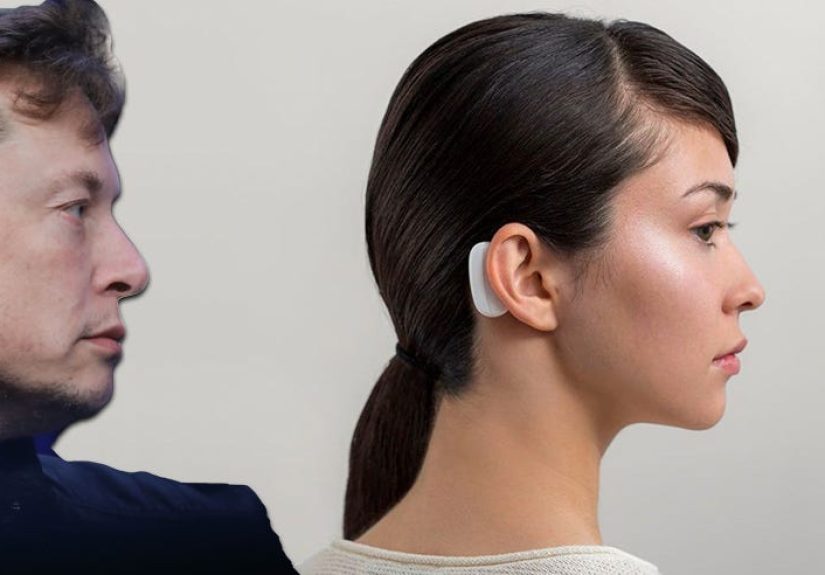
The phrase “Neuralink music streaming chip” usually refers to a speculative concept: using an implanted brain-computer interface, or BCI, to send music-related signals directly to the nervous system. In the most dramatic version, a person could hear a song without headphones, without speakers, and possibly without sound traveling through the outer ear at all.
The idea gained public attention after Elon Musk responded positively to questions about whether Neuralink might someday allow people to listen to music directly from a brain chip. That short answer helped launch a thousand headlines, memes, and late-night conversations that probably began with, “Okay, but what if ads played inside your skull?”
However, a tweet-sized possibility is not the same as an FDA-approved product. Neuralink’s current clinical work is not marketed as a music device. Its PRIME Study focuses on whether the N1 Implant, R1 surgical robot, and software can safely and effectively help people with paralysis control external devices. The company describes the system as investigational and not for sale.
What Neuralink Actually Does Today
To understand the music question, first understand the real technology. Neuralink’s current implant records neural activity from the brain, especially signals related to movement intention. In simple terms, when a participant intends to move a cursor, the system tries to decode that intention and translate it into computer control.
The N1 Implant is described as cosmetically invisible once placed. It records brain activity through 1,024 electrodes distributed across 64 ultra-thin threads. Those threads are inserted by the R1 Robot into a region of the brain involved in movement intention. The companion software then decodes signals so the user can control a computer with thought-driven input.
This is already a huge engineering challenge. The brain is not a USB port with feelings. Neural signals are noisy, highly individual, and constantly changing. A BCI must detect patterns, filter interference, adapt to the user, and remain safe inside living tissue. That is hard enough when the task is moving a cursor. Music would add another mountain to climbthen ask that mountain to keep perfect rhythm.
Why Music Is a Much Harder Problem Than Cursor Control
Cursor control is mostly about decoding intention: the user wants the pointer to move left, right, up, down, click, drag, or select. Music streaming would likely require encoding or stimulating perception, meaning the device would need to create a meaningful auditory experience in the user’s brain.
Decoding vs. Encoding
Most public Neuralink demonstrations and reports involve decoding. The system reads brain activity and turns it into action on an external device. Music streaming would probably need encoding: sending information into the brain in a way that feels like sound, rhythm, melody, harmony, and emotional texture.
That is a major difference. Reading a user’s intention to move a digital cursor is not the same as writing a symphony into the auditory system. One is like understanding that someone wants to turn left. The other is like rebuilding a jazz club inside the nervous system, complete with bass, vocals, timing, and the tiny hi-hat detail only your most opinionated friend claims to hear.
The Brain Does Not Hear Like a Speaker
Traditional music playback works by moving air. Speakers vibrate. Headphones vibrate. Those vibrations travel through the ear and are converted into neural signals by the auditory system. A brain implant would need to bypass or interact with parts of that natural pathway. That raises a big question: where would the signal go?
One possibility would be stimulating the auditory nerve or auditory cortex. But Neuralink’s current human trials for device control target movement-related brain regions, not the auditory cortex. A music-focused implant would likely need different placement, different stimulation methods, and a very different safety profile.
What Science Says About Brain-Based Music
The idea of brain-based music is not pure fantasy. Researchers have shown that music information can be represented in neural activity. In one notable study, scientists analyzed brain recordings from 29 patients who listened to a Pink Floyd song and reconstructed a recognizable version of the music using decoding models. The work highlighted the role of the superior temporal gyrus and showed that musical elements such as rhythm and structure can be reflected in brain activity.
That study does not mean a consumer brain chip can stream your “road trip playlist” tomorrow. It means scientists are learning how the brain processes music and how machine learning can decode certain patterns. It is more like discovering a rough map than opening a fully stocked concert hall.
Other BCI research has focused on restoring communication. For example, UCSF and UC Berkeley researchers developed systems that can decode brain signals into text, speech, or avatar-like expressions for people with severe paralysis. These advances show that neural interfaces can support meaningful communication, but they also highlight how careful, personalized, and medically supervised the technology must be.
Could Neuralink Ever Stream Music Directly to the Brain?
In theory, a future neural implant might help create auditory experiences. In practice, several conditions would need to be met before anyone should expect a Neuralink music streaming chip.
1. Safe Long-Term Implantation
A music chip would need to remain safe over years, not just during exciting launch videos. Brain tissue moves, heals, reacts, and changes. Implants must avoid infection, inflammation, unwanted signal changes, battery problems, wire migration, overheating, and surgical complications. When the device is inside the skull, “Have you tried turning it off and on again?” becomes a less charming customer-support line.
2. High-Quality Neural Encoding
Music is rich. A three-minute song contains pitch, timbre, timing, dynamics, stereo space, lyrics, emotion, and memory triggers. To create a pleasant listening experience, a device would need to deliver complex information in a way the brain interprets naturally. A crude buzz or beep would not count as streaming music unless your favorite genre is “printer having an existential crisis.”
3. Personalized Calibration
No two brains are identical. Even the same person’s neural signals can change over time. A brain-based audio system would likely need individual mapping, training, and adjustment. Your brain’s version of “clear vocals” might not match mine. Your auditory cortex may prefer a different signal pattern than someone else’s. That makes universal plug-and-play brain audio difficult.
4. Regulatory Approval
Any implantable brain device intended for broad use would face intense regulatory review. Neuralink’s current device-control systems are medical devices in clinical studies. A consumer entertainment implant would need to prove that its benefits outweigh its risks. For healthy people, that risk-benefit equation is much tougher. Surgery for medical independence is one conversation. Surgery to listen to a breakup album in 4K brain-audio is another.
5. Privacy and Data Protection
A music streaming chip would raise serious privacy questions. What data would be recorded? Could preferences, neural responses, attention patterns, or emotional reactions be stored? Who controls that datathe user, the device maker, the app provider, or the record label that already thinks you need another subscription tier?
BCI privacy is not just another tech-policy footnote. Brain data can be intimate. If future systems can infer attention, intention, emotion, or sensory response, users will need strong protections, transparent controls, and clear rights.
Potential Benefits of Brain-Based Audio Technology
If brain-based audio becomes possible, the most important applications would likely be medical before entertainment. That matters because the path from laboratory concept to human use usually begins where the need is greatest.
Hearing Restoration
Some people with severe hearing loss benefit from cochlear implants, which stimulate the auditory nerve rather than functioning like ordinary headphones. Future neural prosthetics might help people who cannot benefit from current hearing technologies. A brain-interface approach could someday support certain forms of hearing restoration, especially if scientists learn how to safely stimulate auditory pathways with more precision.
Communication Support
Music is connected to speech. Rhythm, tone, stress, and melody help carry meaning. Better understanding of music in the brain could improve speech neuroprostheses, making synthetic speech sound more natural and expressive. For people who have lost the ability to speak, that could be life-changing.
Accessibility and Independence
BCIs may help people with paralysis interact with computers, smart homes, phones, wheelchairs, robotic arms, and communication tools. If audio feedback became part of that system, users might receive notifications, navigation cues, or interface responses without needing traditional speakers.
Consumer Entertainment: Exciting, But Not First in Line
The entertainment version of the Neuralink music streaming chip is easy to imagine: silent concerts, private playlists, immersive soundscapes, games that send adaptive music directly into perception, and meditation apps that finally stop saying “breathe in” every six seconds.
But consumer entertainment is unlikely to be the first practical use case for invasive BCI audio. The barrier is too high. Healthy users already have excellent noninvasive options: earbuds, headphones, hearing aids, bone-conduction devices, spatial audio systems, and wearable haptics. These tools do not require brain surgery, and they can be removed when the playlist gets weird.
For a healthy person, the value proposition of an implanted music chip must be extraordinary. It would need to offer something dramatically better than premium headphones while also being safe, reversible, affordable, secure, and socially acceptable. That is a tall order, even in a world where people already pay extra for “lossless audio” they may or may not be able to distinguish during a bus ride.
Risks and Concerns People Should Understand
Any discussion of Neuralink and music streaming should include risk. Brain implants are not fashion accessories. They involve surgery, long-term monitoring, hardware reliability, software updates, and cybersecurity concerns.
Medical Risk
Implantation can involve risks such as bleeding, infection, tissue response, device failure, and the need for additional procedures. Even when a device is successful, it may require training, maintenance, recalibration, and ongoing clinical support.
Security Risk
A brain-connected device that communicates wirelessly must be protected against unauthorized access. While “someone hacked my playlist” is annoying today, the stakes become much higher when the interface is connected to neural activity.
Psychological and Social Risk
Direct brain audio could change how people experience media, attention, memory, and social space. Would users feel mentally crowded? Could always-available music become addictive? Would people use it to avoid difficult emotions? These are not reasons to reject innovation, but they are reasons to slow down and think like adultspreferably adults who have read the terms and conditions before clicking “accept.”
What a Real Neuralink Music Experience Might Look Like Someday
A realistic future system would probably not begin as “stream any song directly into your soul.” It might start as medical auditory feedback for people already using BCIs. For example, a person controlling a computer through a brain implant might receive simple sound-like cues through an assistive system. Over time, researchers could improve the quality, detail, and naturalness of those signals.
A more advanced version might combine external devices with neural interfaces. Instead of bypassing the ear completely, the system could use headphones, augmented reality glasses, haptic feedback, and neural decoding together. In that hybrid future, the implant may not “play music” by itself. It may help personalize, control, or enhance the experience.
For example, a user might think about skipping a song, lowering volume, changing mood settings, or selecting a playlist without moving. That is more plausible in the nearer term than full direct-to-brain music playback. In other words, the first “Neuralink music” feature may be brain-controlled music navigation, not brain-generated sound.
Neuralink Music Streaming Chip: Hype vs. Reality
The hype says: no earbuds, no speakers, instant music inside your mind. The reality says: Neuralink is currently developing investigational medical BCIs for people with serious unmet needs. The hype says: your brain becomes a streaming device. The reality says: scientists are still learning how to safely decode and stimulate neural patterns. The hype says: press play with your thoughts. The reality says: even reliable cursor control is a major scientific achievement.
That does not make the idea boring. It makes it more impressive. Real neurotechnology is not magic; it is biology, engineering, surgery, machine learning, patience, and a lot of calibration screens. The future may be astonishing, but it will probably arrive wearing a lab coat before it wears concert merch.
Extra Experiences and Reflections on the Neuralink Music Streaming Chip
To understand why the Neuralink music streaming chip idea captures attention, think about how personal music already feels. People do not treat songs like ordinary files. A song can pull someone back to a summer job, a first date, a long drive, a hospital waiting room, or the exact moment they decided to cut their own bangs and immediately regretted it. Music lives in memory, emotion, movement, and identity. That is why the thought of sending music directly into the brain feels both thrilling and slightly spooky.
One possible future experience could begin with accessibility. Imagine a person with paralysis using a BCI to control a computer. Music is not just entertainment for that person; it may be part of independence. They could browse playlists, compose music, edit audio, attend virtual concerts, or communicate mood through sound without relying on hand movement. In this version, the “music chip” is not about luxury. It is about giving someone more control over their world.
Another experience could involve creative work. A composer might use a brain interface to control digital instruments by intention. Instead of clicking through menus, they could shape tempo, dynamics, or arrangement through imagined gestures. The sound would still come from speakers or headphones, but the control layer would feel more natural. This is a much more realistic near-future scenario than direct neural playback, and it could still be revolutionary for musicians with physical limitations.
There is also the everyday fantasy: walking through a city while music adjusts to your mood, pace, and surroundings. A future BCI could detect that you are focused, tired, calm, or stressed and suggest audio accordingly. That sounds convenient until you imagine your device saying, “Based on your neural patterns, we recommend sad piano and a snack.” The technology would need user control, not just algorithmic confidence. Nobody wants their brain interface acting like a pushy DJ with a psychology minor.
The most important experience, however, may be trust. Users would need to trust the surgeon, the device, the software, the data policies, the update process, and the company’s long-term support. A failed pair of earbuds is irritating. A failed neural implant is a medical event. That difference should keep the conversation grounded. The dream of brain-based music is exciting, but the safest path is likely medical-first, research-led, transparent, and slow enough to respect the brain as more than a platform for apps.
If the Neuralink music streaming chip ever becomes real, the best version will not simply replace headphones. It will expand access, restore abilities, deepen communication, and maybe create new forms of art. Until then, the smartest take is balanced: be curious, be skeptical, and keep your earbuds charged.
Conclusion
The Neuralink music streaming chip is not a real consumer product today, but it is a fascinating window into where brain-computer interfaces might eventually go. Neuralink’s current work focuses on medical applications, especially helping people with paralysis control computers and digital tools. Meanwhile, broader neuroscience research shows that the brain’s relationship with music is measurable, complex, and full of possibility.
Still, direct brain music would require breakthroughs in safe stimulation, auditory encoding, personalization, privacy protection, and long-term regulation. The most likely first steps will be medical and assistive, not entertainment-first. For now, the phrase “Neuralink Music Streaming Chip” is best understood as a speculative idea inspired by real BCI progressnot as a gadget you can preorder, review, or accidentally drop in the laundry.