Table of Contents >> Show >> Hide
- Why a Computer-Controlled Loom Is the Nerdy Dream of Weavers Everywhere
- Open Source Meets Weaving: What “Open” Actually Unlocks
- How the “Pikachu Loom” Trick Works (Without Actual Magic)
- What Makes an Open Source Loom Hard (and Why That’s the Fun Part)
- Real-World Examples of Open Source and Computer-Aided Weaving
- How to Plan a “Weave Pikachu” Project Without Losing Your Mind
- Conclusion: The Future of Playful, Open Digital Weaving
- Experiences You’ll Have Building or Using an Open Source Computer-Controlled Loom
Somewhere between “I’ll just knit a scarf” and “I’ve named my soldering iron,” there’s a magical place where
craft meets code. In that place, an open source computer controlled loom can take a piece of pixel
art, translate it into thread logic, and calmly weave a familiar yellow face into clothlike your own tiny factory,
except it runs on curiosity, coffee, and the stubborn belief that machines should be explainable.
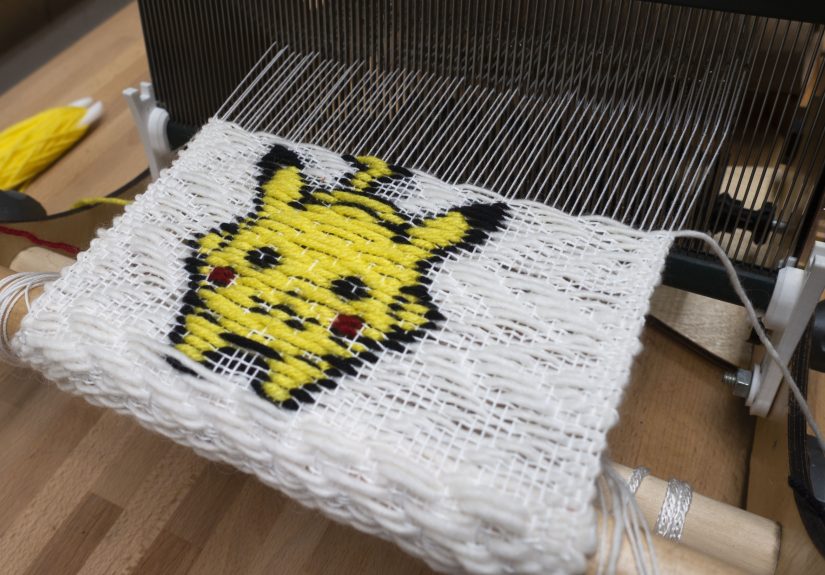
This is the story of a loom that can weave a Pikachu motif for youbecause nothing says “I love you”
like thousands of interlaced fibers doing math in public. We’ll unpack how computer-controlled weaving actually works,
why open-source hardware matters in textiles, what the real build pipeline looks like, and how makers turn cartoons into
woven structure without turning your studio into a tangled crime scene.
Why a Computer-Controlled Loom Is the Nerdy Dream of Weavers Everywhere
Traditional looms are already brilliant: you create a “shed” (an opening between warp threads), pass the weft through,
and repeat until fabric exists. The magic trick is selecting which warp threads lift (or drop) on each pick.
Do that selection by hand and you get a wonderfully tactile workflow. Do it with a computer and you get something even
wilder: repeatability, complex imagery, and the ability to iterate designs like you’re debugging a sweater.
From Dobby to Jacquard: The Control Spectrum
Most people hear “Jacquard” and picture historic punch cards (which were basically early storage mediayes, weaving helped
inspire computing, and the looms would like credit where it’s due). In modern terms:
- Dobby control selects groups of threads (shafts). Great for structured patterns and efficient setups.
- Jacquard control selects individual threads (or very small groups). That’s how you get detailed imageslike Pikachu’s ears, cheeks, and that iconic grin.
The more granular the control, the more hardware you typically need. That’s why commercial Jacquard systems can be expensive:
it’s not just “a loom,” it’s a coordinated orchestra of actuators, timing, tension, and software.
Open Source Meets Weaving: What “Open” Actually Unlocks
“Open source” in textiles is more than a feel-good label. When the designs, code, and build notes are shared, three big
things happen:
- Cost drops through options: you can choose parts that fit your budget and scale.
- Learning accelerates: the machine becomes a curriculum, not a mystery box.
- Innovation becomes communal: improvements don’t die in someone’s garagethey get forked, refined, and remixed.
In practice, open-source loom projects range from classroom-ready kits to ambitious “build-your-own Jacquard” experiments.
Some are designed for education (robotics + textiles), some for artistic exploration, and some because a maker looked at a loom
and thought, “I can absolutely automate that,” which is either the beginning of progress or a warning signdepending on how many
bobbins are already rolling around on the floor.
How the “Pikachu Loom” Trick Works (Without Actual Magic)
Let’s demystify the core idea: a computer-controlled loom doesn’t “draw Pikachu.” It executes a sequence of thread lifts and
weft insertions that, over many picks, form a planned interaction of color and structure. Think of it as printing, except the
ink is yarn and your pixels have tension.
Step 1: Start With Pixel Art That Won’t Betray You
A woven image is happiest when it’s designed like a tapestry or a simplified graphic. Clean edges, limited colors, and bold
shapes translate better than ultra-detailed shading. Pikachu is a perfect candidate: strong silhouette, recognizable features,
and a color palette that doesn’t demand a warehouse of yarn cones.
Step 2: Convert the Image Into a Weave Draft
Here’s the part that surprises newcomers: weaving isn’t just color placement; it’s structure. Software tools used in
digital weaving let you map an image into a draft by deciding:
- Which warp threads lift on each pick (the “lift plan”)
- How colors are distributed between warp and weft
- What weave structures (plain weave, twill, satin, etc.) support the image and fabric behavior
Modern open-source weave drafting software can help you generate patterns algorithmically, experiment with
structure, and preview outcomes before you commit yarn to destiny.
Step 3: The Controller Translates Draft → Motion
The loom controller is the translator between “design intent” and “mechanical reality.” Depending on the build, it may:
- Drive actuators that lift heddles (solenoids, motors, or other mechanisms)
- Synchronize with sensors to confirm position and timing
- Advance the cloth and manage tension cues
- Expose a UI (desktop app, web interface, or even a phone app) to run patterns and adjust parameters
Open builds often use microcontrollers or small computers (think Arduino-class boards or Raspberry Pi-class controllers)
because they’re accessible, well-documented, and supported by huge communities.
Step 4: Weft Insertion Still Matters (Yes, You’re Still a Weaver)
Many computer-controlled looms for studios are “computer sequenced” rather than fully automated industrial lines. That means
the machine selects the threads, but the human still throws the shuttle, beats the weft, and monitors the cloth. It’s less
“robot replaces craft” and more “robot handles the repetitive selection so you can focus on rhythm, materials, and quality.”
What Makes an Open Source Loom Hard (and Why That’s the Fun Part)
If you’re wondering why everyone doesn’t just build a DIY Jacquard loom over a long weekendcongratulations, you have the exact
optimism required for maker projects. The challenge is that weaving is unforgiving: fabric is basically error accumulation in slow motion.
Mechanical Reality: Thread Control Is a Precision Sport
Individual thread selection demands consistent alignment, repeatable motion, and stable tension. Small issues compound:
a slightly sticky heddle becomes a skipped lift; a skipped lift becomes a warped motif; a warped motif becomes “abstract Pikachu,”
which sounds cute until you realize it now resembles a confused lemon.
Software Reality: “An Image” Is Not Automatically “A Good Weave”
Turning a picture into a successful woven design involves constraints you don’t face in digital graphics:
yarn thickness, sett, floats, interlacement, and color interaction. The software pipeline has to respect these rulesor at least
give you the knobs to tweak them.
Safety Reality: Moving Parts Don’t Care About Your Deadlines
Anything with motors, pinch points, tensioned yarn, and repeated motion deserves caution. If you’re building or modifying a loom,
treat it like a machine tool: secure wiring, use proper power management, keep fingers clear of actuators, and test at slow speeds
before you let it run at “I can’t believe that worked” velocity.
Real-World Examples of Open Source and Computer-Aided Weaving
The open weaving ecosystem isn’t a single productit’s a constellation of projects, tools, and academic prototypes that push
textiles forward. Here are a few patterns of progress you’ll see across the community:
1) DIY Computer-Controlled Loom Builds for Pixel Art
Some maker-documented builds demonstrate small-scale thread control (dozens of warp threads) paired with a simple control system.
The goal is often proof-of-concept: show that affordable components and clever mechanisms can render recognizable motifslike Pikachu
without industrial budgets.
2) Open-Source Jacquard Loom Kits for Education
Classroom-focused loom kits are designed to teach mechatronics, math, and textiles together. Students don’t just weave; they learn how
mechanism choices affect outcomes, how matrices relate to patterns, and why debugging a loom feels like debugging a robot that’s also
judgmental about yarn quality.
3) Open Tools for Algorithmic and Parametric Weave Design
Open drafting environments support experimentation beyond “draw a pattern.” They encourage algorithmic design: repeat systems, rules,
transforms, and generative workflows that can create everything from classic twills to computational textures suitable for smart textiles.
4) Hybrid Ecosystems: Open Interfaces on Top of Closed Hardware
Not every advanced loom is open hardware, but open interfaces can still matter. Some projects focus on building alternative controllers,
peripherals, or design tools that make established digital looms more flexible and accessibleextending what artists can do without requiring
a complete rebuild of the machine.
How to Plan a “Weave Pikachu” Project Without Losing Your Mind
If you’re tempted to go from “That’s cool” to “I’m ordering stepper motors” in one click, here’s a practical planning approach:
Choose Your Complexity Level
- Level 1: Use a loom with existing patterning (shaft/dobby) and weave a simplified Pikachu-inspired motif using blocks and repeats.
- Level 2: Use a digital drafting tool to map pixel art into a draft you can execute with your available shafts and color strategy.
- Level 3: Explore computer-controlled thread selection (Jacquard-style) where the loom executes lifts per pick for image-level detail.
Design for Weaving, Not for Screens
Start with a small resolution (think “pixel art badge,” not “movie poster”). Limit colors. Decide what carries the colorwarp, weft, or both.
Pick a structure that supports the image without creating long floats that snag. Your future self will thank you.
Prototype Early, Prototype Tiny
Before you commit to a large piece, weave a narrow sample: check color interaction, edge behavior, and whether the motif reads correctly at
your sett. This is the weaving equivalent of “unit tests,” except the failing output is a scarf you’re emotionally attached to.
Conclusion: The Future of Playful, Open Digital Weaving
An open source computer controlled loom that can weave a Pikachu motif is funny at first glancedelightfully unnecessary, gloriously
geekybut it also points to something serious: textiles are a powerful frontier for open hardware and creative computing. When design tools are shared
and machines are understandable, more people can participate in making cloth, experimenting with structure, and building systems that don’t lock
creativity behind proprietary walls.
Whether you’re here for the craft, the engineering, or the simple joy of watching yarn become a recognizable character one pick at a time, the takeaway
is the same: weaving is already a kind of programming. Open-source digital looms just make that fact impossible to ignoreand a lot more fun to run.
Experiences You’ll Have Building or Using an Open Source Computer-Controlled Loom
You don’t need to be a veteran weaver or a full-time engineer to appreciate the experience of a computer-controlled loom projectbut you should bring
patience. The first “experience” almost everyone reports is the emotional whiplash of making something move. The moment your controller triggers a lift
plan and the heddles respond, you’ll feel like a wizard. Five minutes later, one warp thread will snag, and you’ll feel like a peasant in a medieval
tapestry shop getting audited by physics.
Next comes the calibration era, a phase that feels less like “making art” and more like “negotiating with a polite but stubborn machine.” You’ll learn
that a loom is a system of systems: if your timing is off by a fraction, if your actuator doesn’t return cleanly, or if your tension fluctuates, the cloth
records it like a diary with receipts. People often discover that their “software problem” was actually a mechanical alignment issue, and their “hardware
problem” was a design draft that asked the yarn to do something it never agreed to.
One of the most satisfying experiences is watching the design pipeline click into place. You begin with pixel artPikachu’s ears like two sharp triangles
and you translate it into a weave draft that respects interlacement. That translation teaches you to think in structure. For example, you may realize that
a perfect outline on a screen becomes fuzzy in yarn, so you compensate by exaggerating contrast or adjusting the scale. That’s not failure; that’s material
intelligence. Many makers fall in love with this part because it’s where aesthetics and constraints shake hands.
You’ll also experience the open-source advantage: the joy of not being alone. Instead of guessing blindly, you can learn from build logs, documentation,
and community discussions. If your actuator choice chatters, someone has tried damping. If your lift plan drifts, someone has fought that battle. This is
where open designs shine: they turn “I’m stuck” into “I’m stuck, but with friends.”
Then comes the “materials reality check.” Yarn that looks identical in a product photo can behave completely differently under tension. Some fibers shed,
some stretch, some squeak like a haunted violin when they pass through heddles. You’ll start keeping notes: which yarn behaves best for crisp imagery, which
weft packs evenly, which warp tolerates repeated shedding without fraying. Over time, you’ll develop a personal library of “threads that make Pikachu look
like Pikachu” and “threads that make Pikachu look like a tax audit.”
Finally, there’s the experience of finishing a woven motif that actually reads. The first time you unroll cloth and the character emerges cleanly, it’s a
uniquely satisfying payoffbecause it’s not just a printout. It’s engineered. It’s tactile. It’s the result of choices across drafting, hardware, and
craft technique. And once you’ve woven one iconic motif, your brain will immediately try to weave everything: logos, portraits, memes, QR codes (yes, people
try), and inevitably a gift for someone who doesn’t fully understand how much of your life that “cute woven Pikachu” consumed.
If you take one lesson from the process, let it be this: a computer-controlled loom doesn’t remove the craftit amplifies it. The machine handles
selection; you still make decisions that define the fabric. Open source just adds the best part: the ability to understand, tweak, and share what you build
so the next person’s Pikachu comes out even better.