Table of Contents >> Show >> Hide
- What the Su-57 Is (and What Russia Says It’s For)
- Design and Stealth: A Jet Built Around Compromises
- Engines and “Supercruise”: The Powerplant Story Is the Program Story
- Sensors, Avionics, and the “Modern” Part of Fifth Gen
- Weapons and Mission Set: What the Su-57 Is Meant to Carry
- Production Reality: The Su-57’s Biggest Constraint
- Operational Use: The Su-57 in the Shadow of War
- Exports and Diplomacy: The Su-57 as a Sales Pitch
- Su-57 vs. F-35: The Comparison Everyone Wants (and the One That Actually Helps)
- What to Watch Next
- Experiences Around Russia’s Su-57 Stealth Fighter (500+ Words)
If stealth fighters were a group project, the Su-57 would be the teammate who shows up with a
wildly impressive PowerPoint… and then asks if anyone else brought the actual materials. Russia’s flagship
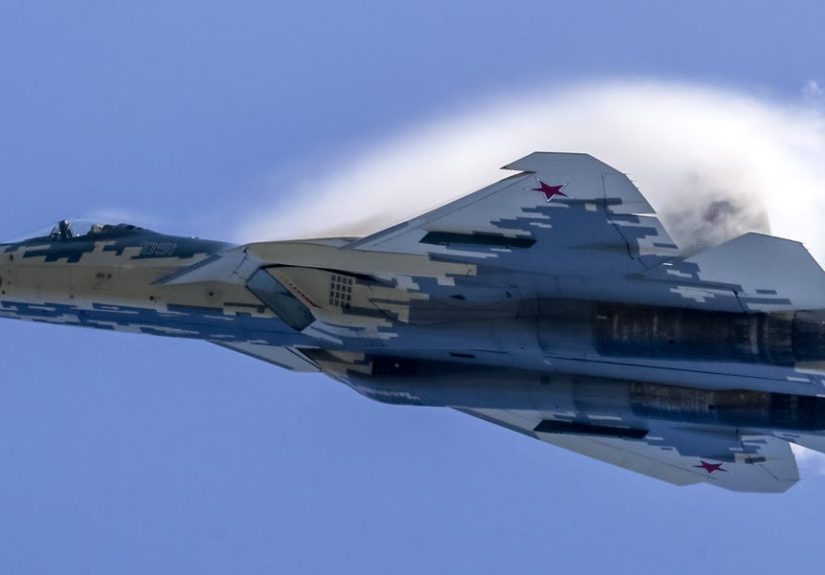
fifth-generation jet (NATO calls it the “Felon”) has been in the spotlight for yearspraised for its agility and
sensor ambition, criticized for slow production and an identity that sometimes feels split between “stealthy
strike jet” and “airshow knife-fighter.”
Still, the Su-57 matters. It represents Russia’s most advanced attempt at a modern low-observable, networked
combat aircraftbuilt to carry weapons internally, fuse sensors, and compete (at least on paper) with peers like
the F-22, F-35, and China’s J-20. The interesting question isn’t “Is it real?” It is. The better question is:
What kind of fifth-gen fighter is Russia actually fieldingand what does its slow ramp tell us about modern
aerospace power?
What the Su-57 Is (and What Russia Says It’s For)
Officially, the Su-57 is a stealthy multirole fighter designed to do the full menu: air-to-air,
air-to-ground, and specialized missions like suppressing air defenses. It grew out of Russia’s PAK FA program,
which aimed to deliver a next-generation aircraft that could replace older fighters while giving Russia a true
fifth-generation capability.
In plain English: Russia wanted an aircraft that could survive in heavily defended airspace, find targets with
advanced sensors, and launch modern weapons while staying harder to detect than traditional fourth-generation
jets.
Why it’s hard to categorize
Western stealth design tends to prioritize low observability as the “entry ticket” that enables everything else.
The Su-57, by contrast, is often described as making more visible tradeoffsbalancing reduced signature with
high maneuverability, long-range sensors, and flexibility in weapons carriage. That doesn’t make it “not stealth.”
It does mean the Su-57 is frequently assessed as having different stealth priorities than an F-35-style approach.
Design and Stealth: A Jet Built Around Compromises
The Su-57 includes shaping choices meant to reduce radar return, internal weapon bays to avoid hanging a
“radar billboard” under the wings, and attention to radar-absorbing materials. But it also retains design
features that many analysts associate with higher signature than the most “stealth-first” Western aircraft.
Internal weapons: stealth’s non-negotiable
One of the clearest fifth-gen tells is internal carriage. The Su-57 has main internal bays and smaller side bays,
designed to carry a mix of air-to-air missiles and precision weapons. In theory, internal carriage lets the jet keep
its low-observable profile during the part of the mission where it matters most. In practice, any fifth-gen fleet
often “goes loud” with external stores when stealth isn’t requiredbecause extra fuel and extra weapons are
persuasive arguments.
Agility as a feature, not a side effect
Russia has long favored high maneuverability, and the Su-57 continues that tradition. The aircraft is frequently
showcased in aggressive flight demonstrations, emphasizing control at high angles of attack. The subtext is
obvious: if you can’t always be the hardest to see, you can still aim to be the hardest to out-turn.
The catch is that modern air combat is a “first detection, first shot” contest more often than a cinematic dogfight.
Maneuverability is valuablebut it’s not the only (or even main) currency in beyond-visual-range combat.
Engines and “Supercruise”: The Powerplant Story Is the Program Story
If you want a quick summary of the Su-57’s journey, look at its engines. Early production Su-57s have flown with
an interim engine solution rather than the fully matured next-generation engine Russia has long promoted for the
platform.
The “next engine” problem
Russia’s next-stage engine effort (often discussed under labels like “Izdeliye 30”) has been a recurring headline
because it’s central to key promises: better thrust, improved efficiency, and stronger supercruise potential
(sustained supersonic flight without afterburner). Aviation outlets have repeatedly noted uncertainty and delays
around the engine’s path to widespread fieldingan issue that directly affects performance, maintenance burden,
and production tempo.
Why this matters for stealth, too
Engines aren’t just “go faster parts.” Heat management, nozzle design, and integration influence infrared
signature and overall survivability. A mature powerplant can improve range, time-on-station, and mission options
the boring logistics stuff that wins wars while social media argues about thrust vectoring.
Sensors, Avionics, and the “Modern” Part of Fifth Gen
The public conversation often fixates on stealth shaping, but fifth-generation performance is equally about
sensor fusionthe ability to combine radar, passive sensors, and offboard data into one coherent
picture. Russia has signaled that the Su-57 is intended to operate as part of a broader network, sharing tracks
and supporting other aircraft.
Radar and multi-band ambition
Analysts commonly point to the Su-57’s emphasis on radar capability and coverage. The design has been discussed
as incorporating multiple arrays and a broad sensor set aimed at tracking targets and resisting electronic attack.
In general terms, Russia appears to be betting that strong sensors and long-range weapons can help offset the
realities of contested airspace.
“AI” marketing vs. real-world integration
Like everyone else with a defense budget and a press office, Russia has made claims about automation and
decision-support. The meaningful question is whether those capabilities scale across a fleet, integrate reliably
with training and doctrine, and actually reduce pilot workload in realistic conditions. That’s harder to verify
from videos and brochures than from operational experience and fleet-wide upgrades.
Weapons and Mission Set: What the Su-57 Is Meant to Carry
The Su-57’s mission flexibility depends on a weapons ecosystem: internal air-to-air missiles for stealthy air
combat, plus precision strike options for standoff engagement.
Air-to-air: modern missiles, internal carriage
Much of the Su-57’s air-combat concept revolves around carrying beyond-visual-range missiles inside the main
bays, paired with short-range missiles in side bays. In open-source reporting, newer missile variants associated
with the Su-57 have attracted attention because internal-carriage constraints push designers toward compact,
optimized shapes.
Air-to-ground: standoff is the safer bet
In the context of modern air defenses, standoff weapons are often the most practical approachlaunch from
outside the densest threat rings, rely on guidance and low-observable missile shaping, and reduce exposure of
high-value aircraft. Reporting has linked the Su-57 to the use and display of newer standoff munitions, including
weapons designed to fit internal bays.
This is also where the Su-57’s “stealth” label intersects with reality. Even a stealth aircraft is not invincible,
especially when defenses are layered and well-supplied. Standoff weapons can let a platform contribute without
gambling a limited fleet in the highest-risk zones.
Production Reality: The Su-57’s Biggest Constraint
The Su-57’s most persistent storyline isn’t a radar chart. It’s the production line. Fifth-generation aircraft are
complex to build, expensive to sustain, and dependent on supply chains that can be surprisingly fragileespecially
under sanctions and wartime pressure.
“Order size” vs. “aircraft delivered”
Russia has publicly described a target order of 76 Su-57s by 2028, a figure widely referenced in
defense reporting. That number signals intent. Deliveries, however, have appeared incremental and often opaque,
with official announcements typically confirming “a batch” rather than a precise count.
Open-source assessments have suggested that the number delivered into Russian service by the end of 2024 was
still relatively modest compared with Western fifth-gen fleets. Some reporting also notes that publicly confirmed
deliveries in 2025 were harder to trackan information gap that fuels speculation in both directions.
Sanctions and industrial friction
Modern fighters depend on advanced manufacturing, specialized components, and reliable test-and-acceptance
pipelines. Sanctions can complicate procurement of certain technologies and force substitutions that slow output.
Even when substitutes exist, qualifying them takes timeespecially in aerospace, where “good enough” can be
another way of saying “grounded.”
Operational Use: The Su-57 in the Shadow of War
The Su-57’s operational role has been heavily discussed in connection with Russia’s war against Ukraine.
Reporting and official statements have suggested the aircraft has been used, but generally in ways that limit risk
to an aircraft type produced in small numbers.
Why limited exposure makes sense
If you have a small fleet of your most advanced jets, you don’t casually fly them into the densest threat zones.
You use them selectivelypotentially for specialized roles, standoff launches, or testing tacticswhile relying on
more numerous aircraft for day-to-day operations. That’s not just caution; it’s basic asset management.
Strikes, claims, and the fog of verification
The public record includes claims about Su-57 involvement in strikes and air-defense suppression, along with
periodic reports of damage or attempted attacks against Su-57s on the ground. As with much wartime reporting,
the most responsible interpretation is to separate what is confirmed from what is assertedand to treat precise
“kill claims” with skepticism unless supported by clear evidence.
Exports and Diplomacy: The Su-57 as a Sales Pitch
Exports are a big deal for Russia’s defense industry, and the Su-57 has been positioned as an answer for nations
that want a fifth-generation label without the political strings attached to Western platforms.
India: an on-again, off-again storyline
India previously partnered with Russia on a related concept before stepping back. More recently, reporting has
described Russia offering deeper cooperation and even local manufacturing proposals tied to the Su-57. Whether
that becomes a programor remains a negotiating leverdepends on India’s strategic calculus, budget reality, and
confidence in timelines.
First export deliveries: a headline with fine print
In late 2025, reporting indicated that Russia had delivered two Su-57s to an unnamed foreign
customerwidely described as the first export delivery of the type. That’s significant as a symbolic milestone,
but it also highlights how early the export story still is: two aircraft is the beginning of a relationship, not the
proof of a mature, high-volume production ecosystem.
Su-57 vs. F-35: The Comparison Everyone Wants (and the One That Actually Helps)
The Su-57 is often framed as a rival to the F-35, but a direct one-for-one comparison can be misleading. The F-35
is a massive multinational program with a huge fleet size, deep sustainment infrastructure, and a design that
prioritizes stealth and sensor fusion as the core. The Su-57 is a smaller fleet with different design tradeoffs and
a production ramp that has been slower and more variable.
A better comparison: “systems and scale”
Fifth-generation capability isn’t just the aircraft. It’s training pipelines, spare parts, software upgrade cadence,
secure datalinks, mission-data files, and the ability to keep jets mission-ready at scale. The Su-57’s central
challenge is not whether it can do impressive things in controlled settings, but whether Russia can field it in
meaningful numbers, sustain it reliably, and upgrade it consistently over time.
What to Watch Next
- Engine maturation: wider adoption of next-stage engines would be a major signal of program health.
- Production tempo: watch for clear, repeated delivery cycles with disclosed counts (not just “a batch”).
- Export follow-through: contracts that turn into training, basing, and multi-year sustainment.
- Operational transparency: credible evidence of mission types and loadouts (as opposed to vague claims).
- Upgrade pathways: avionics refreshes, new weapons integration, and software updates across the fleet.
Experiences Around Russia’s Su-57 Stealth Fighter (500+ Words)
For most people, “experiencing” the Su-57 doesn’t mean sitting in the cockpitit means encountering the aircraft
through the modern ritual of defense aviation: air shows, carefully edited official footage, and the occasional
unexpectedly revealing photo that launches a thousand forum threads. The Su-57 is a jet that seems designed to be
talked about. Its public appearances lean into drama: sharp banking turns, high-alpha maneuvers, and the kind of
“look what I can do” flight profile that turns even casual spectators into temporary aerospace engineers.
Aviation enthusiasts who watch the Su-57 at major shows often describe a particular kind of spectacle: the aircraft
doesn’t just fly; it performs. The display is meant to communicate confidenceagility, control, and a sense that
the jet has “authority” in the air. Even viewers who are skeptical about stealth claims can still walk away
impressed by how the aircraft moves. It’s the same psychological effect a supercar has at a stoplight: you might
never drive it, but you understand the sales pitch the moment you see it.
Then there are the “behind-the-camera” experiencesspotters, analysts, and open-source researchers who treat
aircraft sightings like puzzle pieces. For them, the Su-57 is less an airshow star and more a case study in
inference. A single image of an open weapons bay becomes a forensic exercise: how many pylons? What size? Which
shapes look optimized for internal carriage? If a standoff missile appears in a display, the debate instantly
shifts to what it suggests about intended missions and how a limited fleet would be used without exposing it to
unnecessary risk. In this sense, the Su-57 is experienced as informationan aircraft that generates clues.
People who follow military aviation also experience the Su-57 through contrast. Watch coverage of a large,
heavily networked F-35 exercise and then read about a small Su-57 delivery batch and you feel the difference in
scale. One “experience” is a mature system-of-systems at industrial volume; the other is a cutting-edge platform
still climbing the steep hill from prototype prestige to routine service. That contrast shapes how the Su-57 is
perceived: not simply as a plane, but as a measure of national industrial capacity under pressure.
Even for those who never see the jet in person, the Su-57 experience is increasingly filtered through the reality
of conflict. Reports that the aircraft is used cautiouslyoften favoring standoff launches and avoiding the
riskiest zonesfeel intuitive when you remember the fleet’s limited size and the high value of advanced hardware.
It’s one thing to lose an older aircraft; it’s another to lose a platform that represents years of development and
a smaller production base. That reality adds tension to every claim of combat use and every report of potential
damage on the ground.
Ultimately, the most honest “experience” of the Su-57 is this: it’s a jet that looks like the future while still
negotiating with the present. It can impress in demonstrations, generate genuine curiosity among aviation
watchers, and serve as a flagship for Russia’s aerospace identity. But the program’s real success will be felt not
in applause lines at an airshowrather in the unglamorous rhythm of steady deliveries, consistent readiness rates,
and upgrades that quietly arrive on time. That’s the kind of experience militaries care about most, even if it
doesn’t come with a soundtrack.