Table of Contents >> Show >> Hide
- The Viral Story Was Never Just About Food
- Why His Weight Comment Hit Such a Nerve
- The Leftovers Problem Was Real, But He Still Lost the Room
- What This Story Reveals About Weight Stigma and Relationship Conflict
- How He Could Have Handled It Without Sparking Outrage
- Why the Internet Keeps Reacting So Strongly to Stories Like This
- The Bigger Lesson Behind the Backlash
- Related Experiences: Why So Many Readers Saw Themselves in This Story
- Conclusion
- SEO Tags
Some internet stories are about leftovers. Some are about respect. And some start in the fridge, take a hard left at body shaming, and end with thousands of strangers asking, “Sir, why did you make this weird?” This viral relationship blowup belongs squarely in that last category.
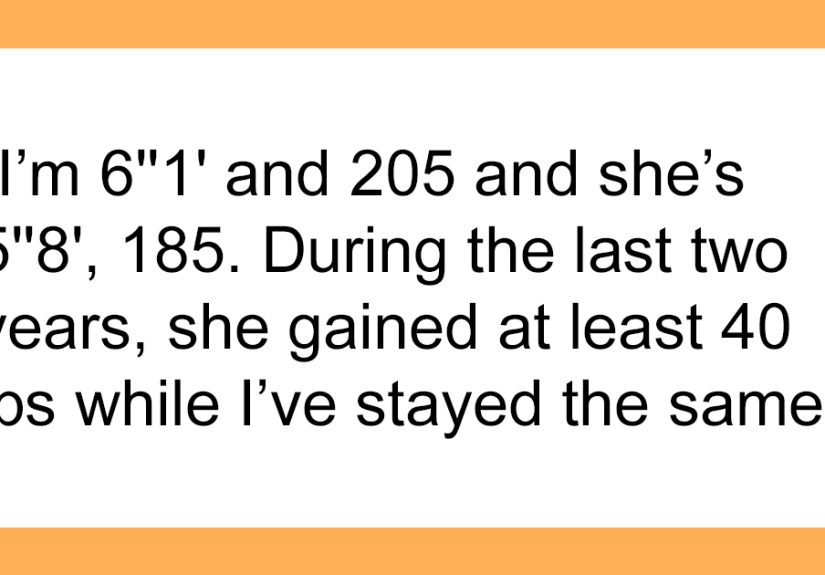
The drama began with a familiar domestic complaint: one partner said the other kept eating all the food. On its own, that is annoying, relatable, and honestly the kind of low-stakes conflict most couples could solve with one grocery list, two storage containers, and a civilized conversation before anyone gets hangry. But the story detonated online because the boyfriend did not stop at, “Please stop finishing all the leftovers.” He tied the argument to his girlfriend’s weight, claiming she had gained at least 40 pounds, and that detail changed the tone of the entire dispute.
That is why the backlash came fast. To many readers, this was no longer a simple food-sharing disagreement. It looked like resentment, contempt, and body criticism wrapped in the flimsy packaging of a kitchen complaint. In other words, the leftovers were not really the headline. The weight comment was.
The Viral Story Was Never Just About Food
At first glance, the man’s frustration sounds easy to understand. If you come home excited for leftovers and find an empty container instead, disappointment is practically guaranteed. People get oddly emotional about the last slice of pizza, the mac and cheese they were saving, or the sacred post-work burrito bowl. Civilization is fragile, and sometimes it rests on a labeled takeout box.
But in the viral post, the boyfriend did more than describe a pattern of selfish eating. He introduced his girlfriend’s body into the argument and used her weight gain as supporting evidence for why he was upset. That choice is exactly what pushed readers from mild sympathy to full-scale outrage.
Why? Because once you criticize a partner’s body in the middle of a conflict, you are no longer discussing behavior. You are attacking identity, appearance, and dignity all at once. That is a huge escalation. It turns a solvable problem into a humiliating one.
There is a big difference between saying, “I feel frustrated when there’s never any food left for me,” and saying, “You ate everything, and look what it’s done to your body.” The first sentence invites a boundary discussion. The second invites shame. One opens a door. The other slams it and then yells through the keyhole.
Why His Weight Comment Hit Such a Nerve
Body shaming rarely lands as “helpful honesty”
One reason this story took off is that many readers immediately recognized the emotional pattern. Public conversations about weight have changed in recent years, and for good reason. More people now understand that mocking, needling, or “just being real” about someone’s body does not magically inspire better habits. More often, it creates embarrassment, defensiveness, and long-lasting hurt.
That is especially true inside a romantic relationship. A partner’s words carry unusual power. Compliments can stick. So can insults. When criticism comes from the person who is supposed to know you best, it often cuts deeper than a stranger’s comment ever could.
That helps explain why the backlash was so fierce. Readers were not only responding to rude phrasing. They were reacting to the underlying message: your body is now evidence in a case against you. That is a brutal thing to hear from someone you live with.
Contempt is often what people are really reacting to
Relationship experts have long warned that contempt is one of the most corrosive forces in a partnership. And contempt is exactly what many readers thought they heard in the boyfriend’s language. He was not simply irritated about shared food. He sounded disgusted, superior, and eager to connect a domestic annoyance to a personal flaw.
That is why so many online responses treated the post as more than a silly argument over leftovers. The outrage was about tone, power, and respect. Once contempt enters the room, the original issue usually stops mattering. Nobody is debating the lasagna anymore. They are debating whether the relationship itself feels safe, kind, and equal.
The Leftovers Problem Was Real, But He Still Lost the Room
To be fair, some people did take part of his side. They argued that if one person repeatedly eats shared food without asking, that behavior is inconsiderate. And they are not wrong about that. In many households, food arguments are really about fairness, labor, and expectation. Who planned the meal? Who paid for it? Who was saving it for lunch? Who keeps cleaning out the fridge and discovering disappointment in Tupperware form?
If his girlfriend truly was eating all the leftovers regularly, then yes, there was a real issue underneath the rant. The problem is that he torched any reasonable point he might have had by framing her body as part of the complaint.
This is the classic internet self-own: a person starts with a relatable grievance, adds one cruel detail, and suddenly everybody forgets the original complaint because now they are busy processing the cruelty. It is the relationship equivalent of setting your own argument on fire and then acting surprised when people only discuss the flames.
So yes, “please leave me some food” is a valid boundary. “You gained weight, and that proves my point” is not healthy communication. Those are not the same conversation, and pretending they are is how ordinary frustration turns into public backlash.
What This Story Reveals About Weight Stigma and Relationship Conflict
Shame tends to deepen problems, not solve them
Health and psychology experts have repeatedly noted that weight stigma can increase stress, shame, and negative body image. It may also make communication around food and health more emotionally loaded. That context matters here because the boyfriend’s comment did not sound like concern for his girlfriend’s well-being. It sounded like a weaponized observation.
And when people feel shamed, they usually do not become more open, more reflective, or more cooperative. They become defensive, hurt, quiet, angry, or all four at once. That is not because they are avoiding accountability. It is because shame is a terrible teaching tool.
Even if the couple genuinely needed to discuss food habits, grocery boundaries, or health concerns, the way he handled it made a productive conversation far less likely. You cannot humiliate someone into feeling emotionally safe enough to change.
Food fights are often symbolic
Another reason the story resonated is that food is rarely just food in a relationship. Food can represent care, comfort, fairness, self-control, routine, childhood patterns, money, stress, and even identity. One person sees leftovers. Another sees the lunch they were counting on during a brutal workday. One person hears “please ask first.” Another hears “you are being watched and judged.”
That does not mean boundaries are impossible. It means couples need to discuss them clearly instead of acting out the entire emotional history of the relationship over one half-pan of baked ziti.
In healthy partnerships, the goal is not to avoid every annoyance. It is to address annoyances without attacking the other person’s worth. That is the part this viral conflict missed completely.
How He Could Have Handled It Without Sparking Outrage
If the real issue was food disappearing too fast, there were better ways to handle it. Many better ways, in fact. Better ways everywhere. Better ways falling from the ceiling tiles.
He could have focused on the actual behavior
A direct but respectful version might have sounded like this: “I keep looking forward to leftovers and finding out they’re gone. Can we start checking with each other before finishing shared food?” That is clear, adult, and difficult to screenshot as evidence of being a jerk.
He could have talked about logistics
Some couples solve this by splitting leftovers immediately, labeling containers, planning who gets lunch the next day, or buying duplicate snacks. Not romantic? Maybe. Effective? Extremely. Love is beautiful, but so is a container marked “Do not eat, this is Tuesday me’s emotional support pasta.”
He could have raised health concerns, if he truly had them, in a separate conversation
If he was genuinely worried about her health, that needed to be its own careful, compassionate discussion, not a grenade thrown during an argument over food. When health is brought up only in moments of anger, it often sounds less like concern and more like punishment.
Timing matters. Tone matters. Intent matters. Nobody hears “I care about you” when it is delivered in the voice of “I am building a case against you.”
Why the Internet Keeps Reacting So Strongly to Stories Like This
Stories like this spread because they hit several raw nerves at once: body image, fairness, household labor, food stress, and the fear that a partner may secretly be keeping score about your appearance. That last one especially tends to light up comment sections.
Many people have personal experience with body criticism in relationships, whether subtle or blatant. Some have had partners comment on what they ate, how much they weighed, or whether they looked “better before.” Others have watched small food disputes get turned into character judgments. So when a viral post includes both leftover resentment and a jab at weight, readers often see more than one couple’s fight. They see a whole pattern they already know.
That is also why the outrage was bigger than the original event. Online audiences were not just responding to one man. They were responding to a familiar script: disguise cruelty as honesty, then act shocked when people call it cruel.
The Bigger Lesson Behind the Backlash
The lesson here is not that couples should never discuss food, health, or fairness. Of course they should. Shared life requires awkward conversations. Bills, chores, sleep schedules, in-laws, thermostat wars, and mysteriously vanishing leftovers all need adult communication.
The real lesson is that respect has to stay in the room when conflict shows up. Once a disagreement becomes an excuse to shame someone’s body, the conversation stops being constructive. It becomes degrading. And people can sense that difference almost instantly.
That is why this story sparked outrage. Readers did not think the boyfriend was wrong for wanting food boundaries. They thought he crossed the line when he used weight as ammunition. The internet may disagree about almost everything, but it is surprisingly sharp at detecting when an argument is no longer about the stated issue.
In the end, the viral moment was not really about leftovers at all. It was about what happens when frustration turns mean, when concern turns contemptuous, and when somebody mistakes humiliation for honesty. That is the part people reacted to. And honestly, they had a point.
Related Experiences: Why So Many Readers Saw Themselves in This Story
One reason this topic keeps exploding online is that it feels painfully familiar. Plenty of people have lived through some version of it, even if the details were different. Maybe it was not about leftover steak or takeout containers in the fridge. Maybe it was about snacks disappearing, comments at dinner, passive-aggressive grocery shopping, or a partner who suddenly started acting like the food police. But the emotional shape of the experience is recognizable to a lot of readers.
For some people, the relatable part is the food issue itself. Living with another person can create strange little battles that seem silly from the outside but feel enormous in the moment. One person meal-preps for the week; the other free-styles through the refrigerator like a midnight raccoon with confidence. One partner thinks shared food is shared food. The other believes anything mentally reserved for tomorrow is legally protected property. Without clear communication, tiny misunderstandings start piling up like unmatched socks and low-grade resentment.
For others, the story hits harder because of the body comment. Many adults can remember at least one relationship where food and appearance got tangled together in unhealthy ways. A joke about portion sizes. A “concerned” remark about gaining weight. A critical glance at dessert. A compliment that somehow feels like surveillance. These moments can seem small in isolation, but over time they create tension around eating, self-image, and basic comfort in your own home.
That is why readers often react so emotionally to posts like this. They are not just judging a stranger on the internet. They are remembering what it felt like to be criticized while trying to enjoy a meal, or to realize that their partner was quietly monitoring their body, or to discover that a practical household complaint was actually carrying a deeper layer of resentment.
There is also another common experience hiding underneath stories like this: the fear of saying the wrong thing and making everything worse. A lot of couples genuinely do struggle with food logistics, shopping habits, or health routines. They want to talk about it, but they do not know how. So they wait too long, let annoyance build, and eventually blurt something cruel, defensive, or wildly off-target. That does not excuse hurtful comments, but it does explain why so many people end up in conflicts that were avoidable.
The more useful takeaway from these shared experiences is simple: people need clearer boundaries and kinder language. If you are upset about food, talk about food. If you are worried about health, talk about health with care and humility. If you are actually angry about feeling ignored, unsupported, or disrespected, say that instead of hiding the real issue behind a jab about weight. Couples do not need perfect scripts, but they do need to stop using shame as a shortcut. It never saves time in the long run. It just creates a much bigger mess to clean up later, and unlike leftovers, that emotional mess does not fit neatly into a container.