Table of Contents >> Show >> Hide
- How We Tested and Chose the Best Wood Routers
- Quick Look: The 7 Best Wood Routers
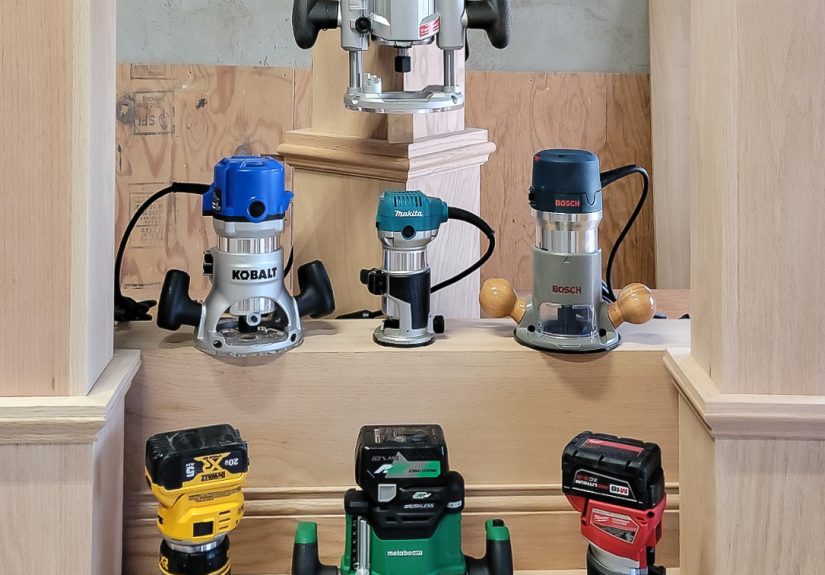
- The 7 Best Wood Routers, Tested and Reviewed
- 1. DeWalt 20V Max XR Brushless Compact Router – Best Overall
- 2. Kobalt Corded Router and Router Table – Best Bang for the Buck
- 3. Metabo HPT 36V Cordless Variable Speed Plunge Router – Best Cordless Plunge Router
- 4. Bosch 1617EVSPK Plunge- and Fixed-Base Router Kit – Best Combo Kit
- 5. Makita RT0701C Compact Router – Best Palm Router
- 6. Bosch MRP23EVS 2.3 HP Electronic Plunge-Base Router – Best Heavy-Duty Plunge Router
- 7. Milwaukee M18 Fuel Compact Router – Best Trim Router
- How to Choose the Right Wood Router for Your Projects
- Real-World Experiences and Practical Tips With These Routers
- Final Thoughts
- SEO Summary
If you’ve ever tried to “fancy up” a project with a wood router and ended up with something that looks more like a chewed 2×4 than a clean ogee profile, you already know this truth: the right router makes you look way more skilled than you feel. The wrong one just makes more firewood.
To help you spend your money wisely (and keep your fingers and sanity intact), we dug into hands-on lab tests and expert reviews from leading U.S. tool and DIY publications, then compared specs, performance, and real-world user feedback. From compact cordless models to heavy-duty plunge routers, the seven picks below have all been tested under load on real wood, not just admired on a store shelf.
Whether you’re rounding over pine shelves, cutting mortises in white oak, or trimming laminate countertops on a job site, you’ll find a router here that fits your workflow, budget, and comfort level.
How We Tested and Chose the Best Wood Routers
Instead of guessing based on marketing copy, this lineup is based on:
- Independent shop tests that routed pine and hardwoods, starting cuts both on the edge and in the field of the board.
- Professional reviewer feedback on ergonomics, vibration, visibility, and ease of depth adjustment.
- Key specs that matter in the shop: motor amps or battery voltage, variable speed range, collet sizes, and weight.
- Balance of value and performancesome routers are pro-grade workhorses, others are affordable all-rounders.
- Coverage of all major types: fixed base, trim/palm, plunge, combo kits, and a router/table bundle.
The result is a short list that reflects what actually performed well in testing, not just what’s newest or flashiest.
Quick Look: The 7 Best Wood Routers
| Router | Type | Power / Speed | Collet Size(s) | Best For |
|---|---|---|---|---|
| DeWalt 20V Max XR Brushless Compact Router | Cordless fixed base | 20V, up to ~25,500 rpm | ¼ in. | Everyday trim & detail work |
| Kobalt Corded Router and Router Table | Corded fixed base + table | 12A, up to ~25,000 rpm | ¼ in. & ½ in. | Budget-friendly shop setup |
| Metabo HPT 36V Cordless Plunge Router | Cordless plunge | 36V, up to ~25,000 rpm | ¼ in. & ½ in. | Precision plunge cuts, mobile work |
| Bosch 1617EVSPK Router Kit | Combo: fixed + plunge | 12A, up to ~25,000 rpm | ¼, ⅜, ½ in., 8 mm | Versatile all-in-one system |
| Makita RT0701C Compact Router | Corded palm/fixed | 6.5A, up to ~30,000 rpm | ¼ in. | Light-duty trim and small jigs |
| Bosch MRP23EVS 2.3 HP Plunge Router | Corded plunge | 15A, up to ~25,000 rpm | ¼ in. & ½ in. | Heavy cuts in hardwood, joinery |
| Milwaukee M18 Fuel Compact Router | Cordless trim/fixed | M18 platform, up to ~31,000 rpm | ¼ in. | On-site trim work & detail routing |
The 7 Best Wood Routers, Tested and Reviewed
1. DeWalt 20V Max XR Brushless Compact Router – Best Overall
If you want one router that can handle 90% of typical DIY routing tasks, this DeWalt compact router is the sweet spot. It’s cordless, light enough for one-handed use, and still strong enough to cut clean profiles in both pine and hardwood when used with reasonable passes.
In hands-on testing, reviewers consistently praise how smooth the soft-start isno sudden jerk when the bit spins upand how easy it is to tweak the variable speed dial with your thumb while keeping your grip. Dual LEDs help you see what the bit is doing, which is especially handy when you’re following a template or working in a dim garage shop.
The trade-off: it only accepts ¼-inch shank bits. That’s fine for trim, hinge mortises, edge profiles, and light pattern work, but not ideal if you want to swing big panel-raising bits. Think of this as a brilliant daily driver routernot a heavy-industrial hogger.
2. Kobalt Corded Router and Router Table – Best Bang for the Buck
If you’d love a router table but don’t want to piece everything together from separate components, this Kobalt package is a smart shortcut. You get a full-size corded router plus a dedicated benchtop table, which dramatically improves control for repetitive edge profiles and small workpieces.
The 12-amp motor drives both ¼-inch and ½-inch bits and has plenty of power to shape oak or other dense hardwoods. Testers report that freehand use feels stable thanks to large side handles, but the router really shines when bolted under the included table. A large, front-mounted power switch means no fumbling under the table to start and stop the tool.
The downside is the lack of variable speed; the router runs at a high fixed rpm. That means you need to control feed rate with your hands and take lighter passes on burn-prone woods. If you can live with that, the performance-per-dollar is excellent for a first serious router setup.
3. Metabo HPT 36V Cordless Variable Speed Plunge Router – Best Cordless Plunge Router
When you need plunge capability but don’t want a cord dragging over your workpiece, Metabo HPT’s 36V plunge router is one of the most capable cordless options. It uses a powerful high-voltage battery platform and offers full-size router performance with variable speed up to around 25,000 rpm.
In testing, the dual handles and smooth plunge action make it feel very controlled when dropping into the center of a board to cut mortises, inlays, or stopped grooves. The open base design improves visibility, and the depth mechanism allows fine-tuning so you can sneak up on tight-fitting joinery rather than blowing past your line in one pass.
The main complaint from reviewers is that the built-in work light could be brighter. If your shop lighting isn’t great, you may want a separate task light. But for a cordless plunge router that behaves like a corded unit, this model stands out in both power and versatility.
4. Bosch 1617EVSPK Plunge- and Fixed-Base Router Kit – Best Combo Kit
If you’re building a router-centered shop around one system, the Bosch 1617EVSPK is hard to beat. It ships as a kit with both fixed and plunge bases, accepts multiple collet sizes (including ½-inch), and has enough power for cabinet work, furniture building, and general shop routing.
Reviewers who’ve tested multiple midsize routers often point to this Bosch as a benchmark for versatility. The motor module slips easily between bases, and the variable-speed, 12-amp motor maintains speed reasonably well under load, especially when cutting denser hardwoods. Used in a router table, the fixed base offers through-the-base height adjustment, which is a huge convenience for fine-tuning bit height from above the table.
The catch? Setup can be fiddly the first time, and assembling accessories like a dedicated table takes patience. But once you’ve dialed it in, this kit gives you one of the most flexible routing platforms available to serious DIYers and hobbyist woodworkers.
5. Makita RT0701C Compact Router – Best Palm Router
For small, precise tasksthink roundovers on shelves, trimming edge banding, or routing hinge recessesthe Makita RT0701C is a classic compact router that shows up on a lot of “shop favorites” lists. It’s lightweight, comfortable to grip, and spins up to a very high top speed, which helps produce crisp edges with small bits.
Slow-start electronics keep the tool from jumping at launch, which is important for such a light housing. Users and testers like how quickly the base can be removed for bit changes and how the depth adjustment mechanism lets you sneak up on final depth in small increments rather than guessing.
The limitations are predictable: this model only supports ¼-inch bits, and the standard fixed base doesn’t offer the best visibility when starting cuts away from an edge. If you often need to plunge in the middle of a surface, consider adding Makita’s optional plunge base. But as a palm router for trim and detail work, it punches above its weight.
6. Bosch MRP23EVS 2.3 HP Electronic Plunge-Base Router – Best Heavy-Duty Plunge Router
When you graduate from light trim work to deep mortises and heavy profile bits, you want a router with real mass and horsepower. Bosch’s MRP23EVS plunge router is a bruiser in the best sense: a 15-amp motor, serious weight for stability, and a plunge mechanism built for control instead of speed.
In testing, reviewers note that the additional weight dramatically cuts down on vibration and helps keep the tool planted when routing deep grooves or wide dados. A handle-mounted trigger makes it easy to power the router on and off without releasing your grip, and constant-response electronics automatically feed more power to the motor when you hit denser sections of wood.
The speed dial sits on top of the router, which is slightly awkward to adjust mid-pass, but that’s a minor annoyance in an otherwise pro-feeling machine. If you’re cutting mortises, housing stair stringers, or making deep template cuts, this is the router you reach for when you don’t want the tool bogging down.
7. Milwaukee M18 Fuel Compact Router – Best Trim Router
Milwaukee’s M18 Fuel compact router is extremely popular with trim carpenters and remodelers who already own the M18 battery platform. It’s compact, cordless, and built around a high-rpm motor that delivers very smooth cut faces when paired with sharp bits.
Testers like the precise depth adjustment ring and the high maximum speedup to roughly 31,000 rpmwhich makes it ideal for small diameter bits, laminate trimming, and detailed edge work. The clear base and strong LED light make it easier to see your layout lines, which really matters when you’re scribing countertops or running against a template.
On the downside, the dust collection attachment is somewhat fussy to install and not especially effective, and the tool is sold bare in many kits, meaning you may need to already own an M18 charger and batteries. If you do, this router is a superb cordless trim machine that’s easy to grab for quick jobs anywhere on site.
How to Choose the Right Wood Router for Your Projects
Fixed-Base vs. Plunge vs. Combo
- Fixed-base routers are great for edge work and for use in a router table. They’re easier to set up and typically a bit lighter and cheaper.
- Plunge routers let you start the cut in the middle of a board, which is essential for mortises, inlays, and stopped grooves. They’re bulkier but more versatile for complex joinery.
- Combo kits pair one motor with both base styles. They cost more up front but often save money (and space) versus buying two separate routers.
Power, Speed, and Collet Size
For most home shops, a router in the 1¼ to 2¼ horsepower classor roughly a 10–15 amp corded motorcovers nearly every common task. Compact palm routers in the 6–7 amp range are perfect for lighter routing and detail work.
Look for:
- Variable speed so you can slow down for big bits and crank it up for tiny roundovers.
- ¼-inch collets for small-detail and trim bits and ½-inch collets when you want to run bigger profiles or remove more material per pass.
- Constant-speed electronics on mid to high-end routers, which help keep the bit rpm steady when the wood density changes under load.
Ergonomics and Visibility
Routers spin at terrifyingly high rpm, so control and comfort aren’t luxuries; they’re safety features.
- Check for comfortable handles or a well-shaped palm body if it’s a compact router.
- Transparent bases and integrated LED work lights make it much easier to see layout lines and avoid wandering off your mark.
- Look for micro depth adjustments instead of crude, jumpy mechanisms; your joinery will fit better and your edges will look cleaner.
Dust Collection and Accessories
Routers make heroic amounts of dust. A good dust port that actually works with your vacuum can make your shopand your lungsmuch happier. Also pay attention to available accessories: plunge bases, edge guides, template bushings, and guide rails all expand what a router can do in your shop.
Real-World Experiences and Practical Tips With These Routers
Specs and lab tests are useful, but what really matters is how these routers behave when you’re tired, covered in sawdust, and trying not to ruin the face frame you’ve already spent three evenings building. Here’s what using tools in this class tends to feel like in real projects.
Small projects: shelves, picture frames, and trim. A compact router like the DeWalt 20V Max XR or Makita RT0701C feels almost like cheating when you’re cleaning up edges on pine shelves or adding a small roundover to a maple picture frame. Being able to grab a tool with one hand, flip on the LEDs, and walk right up to a clamped board without wrestling a cord changes how often you reach for a router. You start doing “just one more pass” because it’s so easyand that’s where your work suddenly starts looking more polished and professional.
Medium-duty work: doors, tabletops, and built-ins. When you move up to cutting hinge recesses in solid doors, flushing edge banding on plywood, or profiling the edge of a dining table, the extra power and stability of midsize routers like the Bosch 1617EVSPK or the Kobalt/table combo really shows. Mounted in a router table, the Kobalt setup makes producing repeatable edges almost boringin a good way. Once you dial in bit height and fence position, you can run five or six boards and they’ll come out nearly identical without white-knuckle freehand passes.
Heavy work: mortises, deep grooves, and hardwood profiles. Deep joinery in oak or maple is where routers like the Bosch MRP23EVS and Metabo HPT 36V plunge shine. The weight that makes them feel intimidating on the bench turns into stability when the bit is buried half an inch in a hardwood stile. With a good plunge router, you can drop straight into layout lines for a mortise, make multiple shallow passes, and end up with joinery that fits beautifully without resorting to a chisel marathon.
Job-site finesse: cordless trim routers. If you do remodel or finish work, a cordless trim router like the Milwaukee M18 Fuel or DeWalt 20V Max XR quickly becomes part of your everyday kit. Need to shave a little off a cabinet filler strip, flush-trim laminate on a countertop, or clean up a slightly proud edge band? It’s much faster (and cleaner) to grab a trim router than to set up a saw or plane. On many sites, you’ll see these routers hanging right next to impact drivers and oscillating tools because they get used that often.
Learning curve and safety. All of these routers are capable machines, which means they can also get away from you if you rush. Realistically, most beginners take a few “learning passes” where the bit burns a patch or the router dips slightly off a fence. That’s normal. The key is to use sharp bits, take multiple shallow passes, and stand in a stance where you can resist the tool’s torque without leaning over the bit’s path. Starting with compact routers before graduating to heavier plunge models is a very workable progression.
Over time, you’ll find your personal favorites: maybe the Bosch kit lives in your table, the DeWalt compact handles daily trim work, and the big Bosch plunge router only comes out when you’re doing serious furniture joinery. The important thing is that each router in your lineup does its job reliably and gives you confidencenot anxietyevery time you switch it on.
Final Thoughts
There’s no single “best wood router” for every shop, but there is a right router (or pair of routers) for the kind of work you actually do. Compact cordless models shine for trim, detail work, and portability. Midsize combo kits dominate general-purpose routing and table use. Heavy plunge routers are the go-to choice for serious joinery and deep cuts in hardwood.
If you’re just starting out, a high-quality compact router plus a versatile midsize kit is an excellent one-two punch. As your projects grow more ambitious, you can add a heavy plunge router or a dedicated router table package. Choose carefully, respect the tool, and your projects will start to look like the inspiration photos that made you want to learn routing in the first place.