Table of Contents >> Show >> Hide
- The Magazine Story That Lit the Fuse
- Why the Fabrication Mattered More Than Usual
- Disco Did Not Begin With John Travolta’s Strut
- From Underground Community to Mainstream Commodity
- The Irony: A False Story Became the “Real” One
- The Backlash Was Not Just About Music
- What the Real Story of Disco Looks Like
- Why This Story Still Matters
- Experiences Related to This Topic: What It Feels Like to Learn the Story Behind the Myth
- Conclusion
- SEO Tags
Disco has a PR problem. In popular memory, it is often reduced to a white suit, a finger pointed at the ceiling, a Bee Gees falsetto, and enough hair product to qualify as a fire hazard. Say the word “disco,” and plenty of people do not picture the communities that built it. They picture the communities that bought the movie ticket.
That gap matters. Because one of the biggest engines behind disco’s mainstream explosion was a magazine story that was supposed to be journalism and turned out to be heavily fabricated. Worse, the fiction did not merely invent scenes for dramatic effect. It helped recast disco for mass America. A culture born in spaces shaped by Black, Latino, and queer communities was suddenly framed through a more market-friendly lens: straight, white-adjacent, male, and cinematically glamorous. History did not exactly get erased, but it definitely got shoved behind the mirror ball.
This is the strange, glittery, and frankly very American story of how a made-up article helped turn disco into a mainstream craze while flattening the people who made it possible in the first place.
The Magazine Story That Lit the Fuse
In 1976, New York magazine published Nik Cohn’s now-famous story “Tribal Rites of the New Saturday Night.” It presented itself as a reported portrait of working-class Brooklyn disco life. The piece centered on a swaggering local dance king, the kind of guy who treated the dance floor like it was Madison Square Garden and his shirt collar had union benefits.
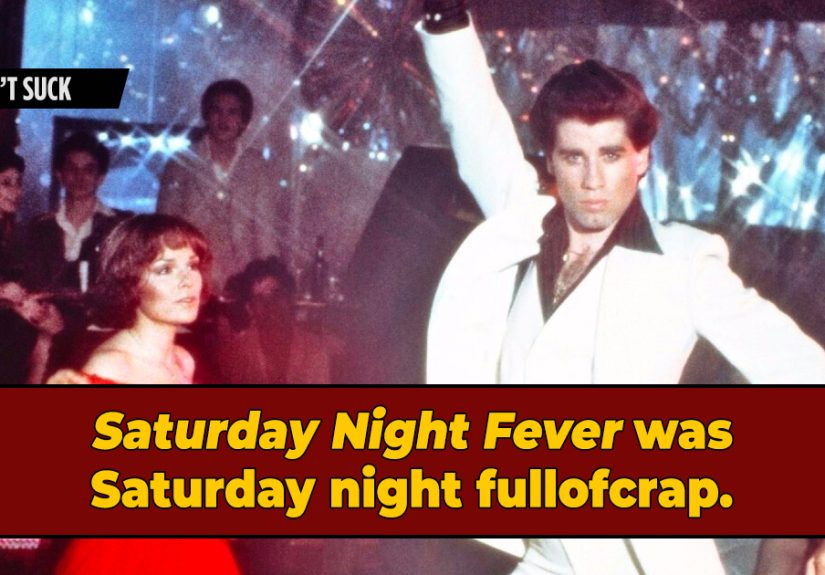
Readers ate it up. Hollywood did too. The article was sold to the movies almost immediately, and before long it became the foundation for Saturday Night Fever, the 1977 film that turned disco into a giant, global pop-culture event. This is where the white suit became scripture. This is where disco stopped being, for many outsiders, a living culture and became a consumable image.
There was just one small problem, and by “small” I mean “the central reporting premise.” Cohn later admitted that many of the characters and quotes were fabricated. The article had been presented as fact, but key elements were invented, exaggerated, or reconstructed from people and scenes that did not belong to the Brooklyn world he was supposedly documenting. In other words: one of the most influential “true” stories in pop history was not especially true.
Why the Fabrication Mattered More Than Usual
Journalistic fabrication is always bad. That part is easy. But this case was especially consequential because the made-up story did not stay on a magazine page. It became a cultural blueprint. Once adapted into Saturday Night Fever, it gave millions of people a new default image of disco. For many Americans, that film was not just an introduction to disco. It was disco.
And that is where the whitening happened. Not in the simplistic sense that white people showed up, because popular culture is always messy and mixed. The issue is that the mainstream story moved the center of gravity. Disco’s public face became a straight-ish, male, ethnic-white Brooklyn hero navigating urban life, rather than the Black, Latino, female, and queer communities who had shaped disco as a liberating social space and musical practice.
It is the difference between origin and packaging. The origin was broader, stranger, more communal, and much more radical. The packaging was easier to market to middle America. Guess which one won.
Disco Did Not Begin With John Travolta’s Strut
Long before Hollywood polished disco into a blockbuster, the music and culture had already been developing in clubs and parties where marginalized people could find something rare: room. Room to dance, room to experiment, room to be seen, and sometimes room simply to exist without being hassled every five minutes by the moral police.
Disco’s roots were tied to Black, Latino, and gay communities, especially in urban nightlife scenes where DJs, dancers, and clubgoers were creating a different kind of social world. That world mattered because it did not revolve around the old rock hierarchy of brooding authenticity and guitar hero worship. Disco was built around rhythm, movement, sensuality, and the collective energy of the dance floor. It centered the body, not just the ego. Naturally, a lot of cultural gatekeepers found this deeply suspicious.
For women, queer people, and people of color, disco offered more than catchy songs. It offered permission. It made pleasure public. It treated the dance floor as a place where identity could loosen up a little. You could be glamorous, excessive, tender, loud, flirtatious, and emotionally messy all in one night. Honestly, that sounds less like a musical genre and more like an excellent Saturday.
From Underground Community to Mainstream Commodity
Once disco hit the mainstream, the industry did what the industry does best: it scaled, simplified, and sold. Saturday Night Fever accelerated that process dramatically. It did not invent disco, but it gave the mainstream a neat, memorable image of it. And mainstream America loves nothing more than a complicated culture turned into a Halloween costume.
The movie was powerful because it translated disco into a language legible to mass audiences. It used a familiar protagonist, recognizable neighborhood tensions, and a sharp visual identity. It did not ask viewers to understand the culture’s deeper social roots before enjoying the beat. It offered entry without context, consumption without genealogy.
That is how whitening often works in American pop culture. It does not always look like theft in a cartoon-villain sense. Sometimes it looks like reframing. Sometimes it looks like choosing one figure to represent a much wider world. Sometimes it looks like telling the story from a safer angle, then acting surprised when everyone forgets the rest.
The Hero Swap
In disco’s broader history, there were Black women vocalists, queer tastemakers, Latino dancers, DJs, and club communities making the thing what it was. In the new mainstream mythology, the emblematic disco figure became Tony Manero. He was compelling, sure. But he also helped shift attention away from disco as a culture of collective liberation and toward disco as a story of individual style, male angst, and crossover cool.
That shift was not total. The music itself still carried traces of its roots. But cultural memory is lazy. People remember the poster first. They remember the white suit before they remember the people who built the room where the music mattered.
The Irony: A False Story Became the “Real” One
What makes this episode so maddening is how durable the false version became. The fabricated article helped launch a movie, the movie helped define disco for a mass audience, and that version of disco became more widely remembered than the real one. History got beaten by branding.
And branding is sticky. Even now, plenty of people still speak about disco as if it burst into existence the moment a major studio turned it into a prestige dance drama with a smash soundtrack. But by then, disco already had years of life behind it. It had scenes, rituals, sounds, codes, communities, and politics. It was not waiting in a back room for Hollywood to bless it. Hollywood just made sure a different audience noticed.
The Backlash Was Not Just About Music
Then came the hangover. As disco conquered radio, clubs, fashion, and film, the backlash got louder. The most famous symbol of that backlash was Disco Demolition Night in Chicago in 1979, when anti-disco theatrics turned into chaos. On the surface, critics claimed they were rebelling against commercial excess, repetitive beats, or overexposure. Some of that was real. By the end of the decade, the market had indeed flooded with lazy imitations.
But reducing the backlash to “people got tired of the songs” is like saying a tornado is just aggressive wind. Disco had become associated with Blackness, queerness, women’s sexual freedom, urban nightlife, and a culture of pleasure that challenged traditional norms. That made it a target. Anti-disco sentiment often carried racial panic, homophobia, and anxiety about changing gender roles, whether people said the quiet part out loud or not.
So disco got hit from both sides. First, the mainstream repackaged it in a whiter, straighter, more commercially digestible form. Then, once that form became ubiquitous, a backlash treated the whole culture as decadent, fake, or disposable. The communities that built disco watched it get borrowed, flattened, and then mocked. That is not just rude. It is practically a national tradition.
What the Real Story of Disco Looks Like
The real story of disco is richer than the myth. It includes club spaces that fostered belonging. It includes Black LGBTQ nightlife and venues such as Jewel’s Catch One in Los Angeles, where disco was not just entertainment but infrastructure for community. It includes DJs as architects, not background furniture. It includes dancers who used movement as social language. It includes women whose voices defined the emotional range of the era. It includes queer experimentation, urban creativity, and the transformation of nightlife into a form of freedom.
That version of disco is not less fun than the mainstream version. It is more fun, because it is more human. It is also more politically revealing. Once you understand where disco came from, the mainstream retelling starts to look less like innocent simplification and more like a lesson in how American culture often works: marginalized people innovate, mass media sanitizes, then nostalgia acts like the sanitized version was the original.
Why This Story Still Matters
It matters because this pattern never really went away. American culture still has a habit of embracing the aesthetics of marginalized communities while ignoring their histories. It still loves the sound, the style, the slang, and the energy, right up until someone asks where any of it came from. Then suddenly everybody gets very busy checking their phones.
The fabricated disco article is a perfect case study because the distortion is so visible. One false piece of journalism did not single-handedly erase disco’s roots, but it helped solidify a mainstream frame that was easier to sell and easier to remember. And once a frame becomes iconic, undoing it is hard.
Still, the record can be corrected. You can enjoy Saturday Night Fever and still question what it centered. You can love the soundtrack and still ask who got pushed to the margins when the music crossed over. You can admire the cultural blast radius of disco and still insist on telling the fuller story. In fact, that is exactly what should happen.
Experiences Related to This Topic: What It Feels Like to Learn the Story Behind the Myth
There is a very specific kind of whiplash that comes with learning disco history in the wrong order. First, you get the popular version: a movie poster, a soundtrack, a white suit, some strutting, maybe a relative at a wedding doing a dance move that should legally require stretching. It all seems harmless, bright, and a little cheesy. Then, much later, you discover that this glossy version was only the front window. The actual house behind it was built by communities who needed nightlife for more than nightlife.
That realization changes the emotional temperature of the whole subject. What once looked like retro fun starts to feel like a story about access, erasure, and survival. You begin to notice how often people talk about disco as a joke, as if it were a brief national fever dream made of polyester and bad decisions. But when you listen more closely to the people who lived inside its worlds, disco sounds less like a joke and more like shelter. It sounds like a social technology. It sounds like a place where people who were policed everywhere else could make themselves visible on their own terms.
There is also something oddly frustrating about realizing that the version many people know best was attached to a fabricated article. Not because great art cannot come out of messy origins; it obviously can. But because the falsehood did not float harmlessly in the air. It had consequences. It helped shape memory. It encouraged generations of audiences to associate disco with one kind of masculinity and one kind of cinematic cool, even though the culture itself was far broader and more inclusive than that image suggested.
If you have ever gone back and listened to disco after learning more of its history, the music can feel different. The songs do not get smaller; they get bigger. The grooves stop sounding like empty party fuel and start sounding like evidence. Evidence of Black innovation, queer world-making, cross-cultural exchange, female power, and the sheer genius of turning a dance floor into a social commons. Even the polish begins to feel radical. Sequins are not politically neutral when they show up in a world that keeps demanding restraint from the wrong people.
And then there is the bittersweet part. Once you know how the story was streamlined for mass consumption, it becomes hard not to see the pattern everywhere else. You start recognizing the same move in other genres, other scenes, other decades. A subculture builds something electric. The mainstream arrives with money, cameras, and selective memory. The rough edges get smoothed, the politics get softened, the originators become footnotes, and the repackaged version gets called universal. The word “universal,” in these situations, often means “finally acceptable to people who were not there at the beginning.”
But the story does not end in loss. There is real pleasure in recovering the fuller picture. It makes disco feel alive again, not as kitsch, but as culture. It returns dignity to the people who made it possible. It also makes the music hit harder. Once you understand what was at stake in those rooms, the beat lands differently. It is still joyful, still glittery, still gloriously over the top. But now the joy has context. Now the glitter has history. Now the dance floor looks less like escapism and more like a rehearsal for freedom.
Conclusion
The article that helped mainstream disco was made up, but the damage it did to public memory was real. By feeding Saturday Night Fever, it helped recast disco as a mostly straight, male, mainstream spectacle and pushed its Black, Latino, and queer roots further out of frame. Then, in classic fashion, the culture got attacked for the very excesses that mass commercialization had amplified.
Disco deserves better than that lazy retelling. It deserves to be remembered not just as a trend, but as a movement shaped by people who turned nightlife into belonging. The fake article may have helped write the mainstream myth, but it does not get the final word. The fuller story is still here, still dazzling, and still very much worth dancing with.