Table of Contents >> Show >> Hide
- Affordable Backup Power That Doesn’t Feel Like a Gamble
- Best Overall Cheap Home Generator: WEN DF475T Dual Fuel Portable Generator
- Best Quiet Cheap Generator: WEN 56380i Super Quiet Inverter Generator
- Best Budget Dual-Fuel Alternative: Champion 4,750-Watt Dual Fuel Generator
- Best Cheap Generator for Sensitive Electronics: Portable Inverter Generators
- How Much Generator Do You Really Need?
- Gas, Propane, or Solar: Which Cheap Generator Type Is Best?
- Safety Comes Before Savings
- Features Worth Paying For on a Cheap Home Generator
- What to Avoid When Buying a Cheap Generator
- Practical Buying Recommendation
- Extra Experience: What Using a Cheap Home Generator Teaches You Fast
- Conclusion
Note: This article is written for web publication and summarizes real-world testing, product specifications, and generator safety guidance. Always follow the manufacturer’s manual and use a licensed electrician for transfer-switch installation.
Affordable Backup Power That Doesn’t Feel Like a Gamble
Power outages have a special talent for arriving at the least convenient moment: dinner is half-cooked, the fridge is full, your phone battery is at 7 percent, and everyone suddenly remembers they “really need Wi-Fi.” That is where a cheap home generator can feel less like a tool and more like a household superhero wearing a steel frame and smelling faintly of gasoline.
But “cheap” should never mean flimsy, underpowered, unsafe, or so loud that your neighbors start referring to it as “the lawnmower that never sleeps.” The best cheap home generators balance price, wattage, fuel flexibility, runtime, portability, outlet selection, and safety features. They are not always fancy, but they should be reliable enough to keep essentials running when the grid takes an unscheduled vacation.
Bob Vila’s tested guide to cheap home generators puts the WEN DF475T Dual Fuel Portable Generator at the front of the pack for value, power, and practical home use. It also highlights the WEN 56380i Super Quiet Inverter Generator for shoppers who want cleaner, quieter power for electronics and RV-style use. When those results are compared with current generator buying guidance from major home, consumer, and safety sources, one lesson becomes obvious: the right generator is not simply the biggest one you can afford. It is the one that fits your real outage plan.
Best Overall Cheap Home Generator: WEN DF475T Dual Fuel Portable Generator
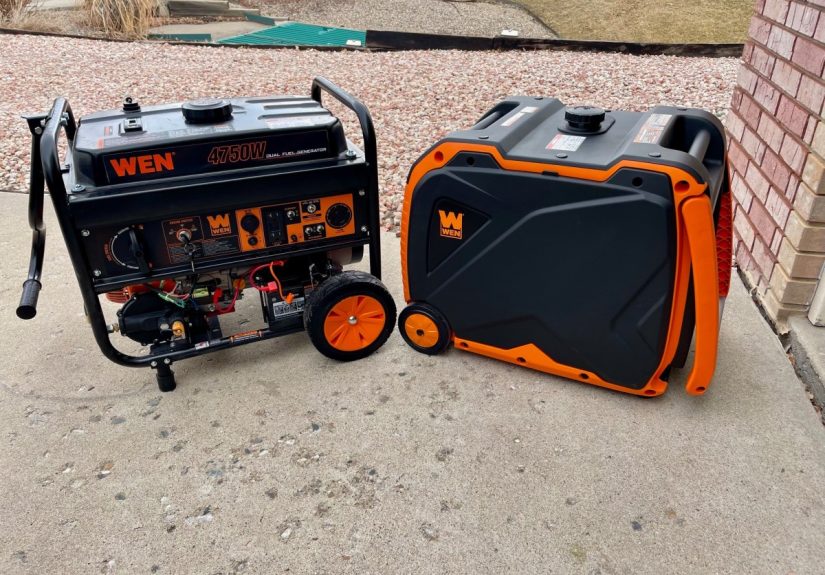
The WEN DF475T is the kind of generator that makes sense for homeowners who want usable backup power without draining the emergency fund before the emergency even happens. It offers up to 4,750 starting watts and 3,800 running watts on gasoline, with the option to run on propane as well. That dual-fuel setup is a major advantage during storms, because gasoline can be hard to find or store safely, while propane keeps longer and is often easier to manage.
For a budget-friendly portable generator, the DF475T also checks several important boxes. It includes electric start, wheels, a handle kit, 120V and 240V capability, GFCI outlets, and a twist-lock outlet that can work with the right transfer-switch setup. In plain English, that means it is not just a “charge your phone and hope for the best” generator. It can support a more serious emergency plan, especially for essentials such as a refrigerator, freezer, sump pump, lights, router, fan, or a few small appliances.
Why It Stands Out
The best thing about the WEN DF475T is not one flashy feature. It is the combination. You get enough wattage for common outage needs, fuel flexibility, and 120V/240V output at a price that often sits below many premium inverter models. It is not whisper-quiet, and it is not light enough to casually carry like a suitcase. But for homeowners who want practical backup power on a budget, it lands in the sweet spot.
It is best for people who want to power selected home essentials rather than an entire house. Think refrigerator, freezer, lights, internet gear, a coffee maker, and perhaps a pump or small window AC depending on total load. It is not the generator to buy if you expect to run central air, electric heat, an electric oven, and every television in the house while pretending nothing happened outside.
Best Quiet Cheap Generator: WEN 56380i Super Quiet Inverter Generator
If the WEN DF475T is the practical workhorse, the WEN 56380i is the more polite guest at the backyard outage party. It is an inverter generator, which means it produces cleaner power that is friendlier to sensitive electronics such as laptops, phones, tablets, and modern appliances with delicate control boards. It produces 3,800 surge watts and 3,400 rated watts, making it less powerful than large open-frame generators but much more refined.
The 56380i also has a quieter operating profile, fuel shutoff, RV-ready design, and a runtime of up to 8.5 hours at half load. That makes it attractive for homeowners who want backup power but do not want a roaring engine outside all night. It is also useful for camping, tailgating, mobile work, or RV use.
Where It Makes the Most Sense
This model is ideal if your priority list includes lower noise, cleaner power, and portability over maximum wattage. It can keep important electronics, lights, a refrigerator, and smaller appliances going, but it is not meant to carry a heavy whole-home load. For many households, that is fine. During a short outage, the mission is usually not luxury. It is food safety, communication, lighting, and keeping everyone from opening the fridge every six minutes “just to check.”
Best Budget Dual-Fuel Alternative: Champion 4,750-Watt Dual Fuel Generator
Champion’s 4,750-watt dual-fuel models are popular for similar reasons: they offer gasoline and propane operation, electric start on many versions, RV-ready outlets, and solid power for the money. Some versions include CO Shield, Champion’s carbon monoxide auto-shutoff system, which is a valuable safety feature. With around 3,800 running watts on gasoline, this class of generator is suitable for many of the same essential-load jobs as the WEN DF475T.
Champion models tend to appeal to shoppers who want wide availability, straightforward controls, and a familiar brand presence. The trade-off is noise and power quality. Many conventional open-frame generators are louder and less electronics-friendly than inverter models. That does not make them bad. It just means they are better for appliances, pumps, tools, and emergency circuits than for a desk full of sensitive electronics.
Best Cheap Generator for Sensitive Electronics: Portable Inverter Generators
For laptops, routers, CPAP machines, gaming consoles, smart TVs, and battery chargers, inverter generators are usually the better choice. They cost more per watt than open-frame generators, but they run quieter, adjust engine speed more efficiently, and produce cleaner power. A 2,000- to 4,000-watt inverter generator can be a great fit for apartments, small homes, RV owners, or anyone who wants a less dramatic soundtrack during an outage.
The catch is capacity. A small inverter generator may run your refrigerator and electronics, but it will not behave like a whole-home standby system. If your outage plan includes a well pump, furnace blower, large refrigerator, freezer, and multiple rooms of lighting, you need to calculate your wattage carefully before choosing a compact model.
How Much Generator Do You Really Need?
This is the part where many shoppers make the classic mistake: they buy based on the biggest number on the box. Generator labels often show starting watts, which are temporary surge watts used when appliances first kick on. Running watts are the number that matters for continuous operation.
A refrigerator might need a modest amount of running power but a higher surge when the compressor starts. A sump pump, furnace blower, or window air conditioner can also demand a starting surge. Add too many of those at once and even a strong generator can trip, bog down, or perform like it deeply regrets meeting you.
For basic emergency use, many households can get by with 3,000 to 5,000 running watts if they are selective. That usually covers a refrigerator, some lights, phone charging, a router, a fan, and possibly a pump or small appliance. For more comfort, 5,000 to 7,500 running watts gives extra breathing room. Whole-home standby power is a different category and can require 20,000 watts or more depending on HVAC, appliances, and home size.
Gas, Propane, or Solar: Which Cheap Generator Type Is Best?
Gasoline Generators
Gasoline generators are common, powerful, and usually the cheapest way to get a lot of watts. They are great for short-term backup power, but gasoline storage can be annoying. Fuel degrades over time, needs stabilizer, and must be stored safely away from heat or living areas.
Propane Generators
Propane burns cleaner, stores longer, and is easier to keep on hand. Dual-fuel models are especially practical because they let you use gasoline when you need maximum output and propane when you want cleaner storage and flexibility. The downside is that propane often produces slightly less power than gasoline in the same generator.
Solar Generators and Portable Power Stations
Solar generators are not generators in the traditional engine-driven sense. They are battery power stations that can recharge from wall outlets, car outlets, or solar panels. They are quiet and safe to use indoors because they do not produce exhaust. However, cheap solar generators usually have limited capacity. They are excellent for phones, laptops, lights, routers, and small appliances, but budget models will not run heavy loads for long.
Safety Comes Before Savings
A cheap generator is only a good deal if it is used safely. Portable fuel-powered generators produce carbon monoxide, an invisible and odorless gas that can be deadly. Never run a generator inside a home, garage, basement, shed, porch, or any enclosed or partially enclosed area. Open doors and windows do not make indoor use safe.
Place the generator outside, far away from windows, doors, and vents. Many safety agencies recommend keeping it at least 20 feet away from the home, with the exhaust pointed away from people and openings. Install working carbon monoxide alarms inside the home, especially near sleeping areas.
Also, do not plug a generator directly into a wall outlet. That dangerous shortcut, often called backfeeding, can send electricity into utility lines and endanger repair crews. If you want to power circuits in your home, have a licensed electrician install a manual transfer switch or approved interlock kit. For plug-in appliances, use heavy-duty outdoor-rated extension cords sized for the load.
Features Worth Paying For on a Cheap Home Generator
Even when shopping on a budget, a few features are worth prioritizing. First, look for automatic low-oil shutdown. It helps protect the engine if oil levels drop. Second, consider carbon monoxide auto-shutoff technology. It is not a substitute for proper outdoor placement, but it adds a valuable backup layer of protection.
Third, check outlet selection. A generator with only basic household outlets may be fine for extension-cord use, but a 120V/240V twist-lock outlet is important if you plan to connect to a transfer switch. Fourth, think about weight and wheels. A 100-pound generator without wheels is not “portable” unless your hobbies include regrettable lifting decisions.
Finally, consider noise. Conventional open-frame generators can be loud. Inverter generators cost more, but the lower noise level may be worth it in dense neighborhoods, campgrounds, or anywhere you do not want to become the villain of the block.
What to Avoid When Buying a Cheap Generator
Avoid buying based only on peak watts. Starting watts look impressive, but running watts determine what the generator can actually support. Avoid unknown brands with vague specs, poor warranty support, or no clear safety certifications. Avoid used generators unless you can verify maintenance history, runtime, output stability, and safe operation.
Also avoid assuming one generator can run everything. Electric heaters, central air conditioners, water heaters, electric ranges, and dryers are heavy loads. Trying to power too much at once is how you turn a generator into a very expensive noise machine.
Practical Buying Recommendation
For most budget-conscious homeowners, the WEN DF475T is a strong first choice because it offers a practical amount of power, dual-fuel flexibility, and useful outlets at a relatively accessible price. If noise and sensitive electronics matter more than maximum wattage, the WEN 56380i is the more refined pick. If you want a comparable dual-fuel alternative with broad retail availability, a Champion 4,750-watt dual-fuel model is also worth considering.
The best cheap home generator is not the one with the biggest engine or the flashiest label. It is the one that matches your actual outage plan: what you need to power, how long you need to power it, where you will safely run it, and how easily you can maintain it.
Extra Experience: What Using a Cheap Home Generator Teaches You Fast
Reading generator specs is one thing. Using one during an outage is another. The first real lesson is that setup matters more than people expect. A generator that looked perfectly manageable in a product photo suddenly feels much heavier when you are rolling it across wet grass in the dark. Wheels, handles, and a clear storage spot are not small conveniences. They are the difference between “good thing we prepared” and “why did we put this behind seven boxes of holiday decorations?”
The second lesson is that fuel planning is part of generator ownership. A gasoline generator is powerful, but it needs fresh fuel. If gas has been sitting too long without stabilizer, the generator may hesitate, run poorly, or refuse to start at the exact moment you need it. Propane is easier to store, which is why dual-fuel generators are so useful. Keeping one or two full propane cylinders ready can make short outages much less stressful.
The third lesson is that wattage discipline saves headaches. During an outage, everyone wants to plug in “just one more thing.” The refrigerator is essential. The freezer is reasonable. The router is nice. A coffee maker may feel emotionally necessary. But add a microwave, space heater, hair dryer, and window AC all at once, and the generator will quickly remind you that electricity has rules. A simple printed load plan taped near the generator can prevent overloads.
The fourth lesson is that extension cords deserve respect. Thin indoor cords are not made for generator duty. Heavy-duty outdoor-rated cords with the correct gauge and length are safer and more efficient. Long, undersized cords can overheat and waste power. If you plan to use a generator regularly for outages, a professionally installed transfer switch is much cleaner and safer than running cords through cracked doors and windows.
The fifth lesson is maintenance. Cheap generators are not maintenance-free appliances. They need oil checks, occasional oil changes, clean air filters, spark plug attention, battery charging for electric-start models, and periodic test runs. Running the generator every month or two under a small load helps confirm it will start when needed. It also keeps you familiar with the controls, because the middle of a storm is a terrible time to discover that you never learned where the choke is.
The sixth lesson is noise management. Even a “reasonable” open-frame generator can sound much louder at night. Place it safely away from the house, but also think about neighbors, bedroom windows, and hard surfaces that reflect sound. Never sacrifice ventilation for quiet, but do plan placement before an emergency.
Finally, a cheap home generator teaches you that backup power is about priorities. You do not need to recreate normal life perfectly. You need cold food, safe lighting, communication, basic comfort, and enough power to get through the outage without panic. A well-chosen budget generator can do that beautifully. It may not be glamorous, but when the lights go out and your refrigerator keeps humming, glamour is extremely overrated.
Conclusion
The best cheap home generators prove that dependable backup power does not have to cost as much as a kitchen remodel. The WEN DF475T stands out as a strong value pick for homeowners who want dual-fuel flexibility and useful wattage for essentials. The WEN 56380i is better for quieter, cleaner inverter power, while comparable Champion dual-fuel models offer another practical budget route.
Before buying, calculate your running watts, decide which appliances truly matter, plan safe outdoor placement, and budget for proper cords or a transfer switch. A generator is not just a purchase. It is a power-outage plan with an engine attached.