Table of Contents >> Show >> Hide
- What Makes a Male Figure Skater “Great”?
- Pioneers Who Built Men’s Figure Skating
- The Showmen of the 1970s and 1980s
- The 1990s and 2000s: The Battle for Technical Supremacy
- The Hanyu and Chen Era: Quad Kings and Record Breakers
- Beyond Medals: Impact and Legacy
- What Fans Can Learn from These Legends
- Personal Experiences and Reflections on the Greatest Male Skaters
- Conclusion
If you’ve ever tried to stay upright on rental skates and immediately met the ice with your backside, you already know: figure skaters are built differently. The greatest male figure skaters of all time don’t just stay verticalthey spin, leap, and fly across the rink while telling a story, hitting their music cues, and somehow making sequins look powerful. This list takes a closer look at the legends who reshaped men’s skating, from early Olympic pioneers to today’s quad-jumping powerhouses.
What Makes a Male Figure Skater “Great”?
Ask ten skating fans who the greatest male figure skater is and you’ll get at least twelve answers. To keep this from turning into a full-on judging scandal, we’ll look at a few key factors experts and fans often use:
- Championships and medals – Olympic titles, World Championships, and national dominance.
- Technical innovation – new jumps, harder combinations, and records broken.
- Artistry and performance – musicality, choreography, and that “wow” factor you feel in your chest.
- Legacy – influence on future skaters, rule changes, or how they changed what men’s figure skating could be.
Using those lenses, let’s glide through some of the greatest male figure skaters to ever carve an edge into the ice.
Pioneers Who Built Men’s Figure Skating
Dick Button: The Original Technical Revolution
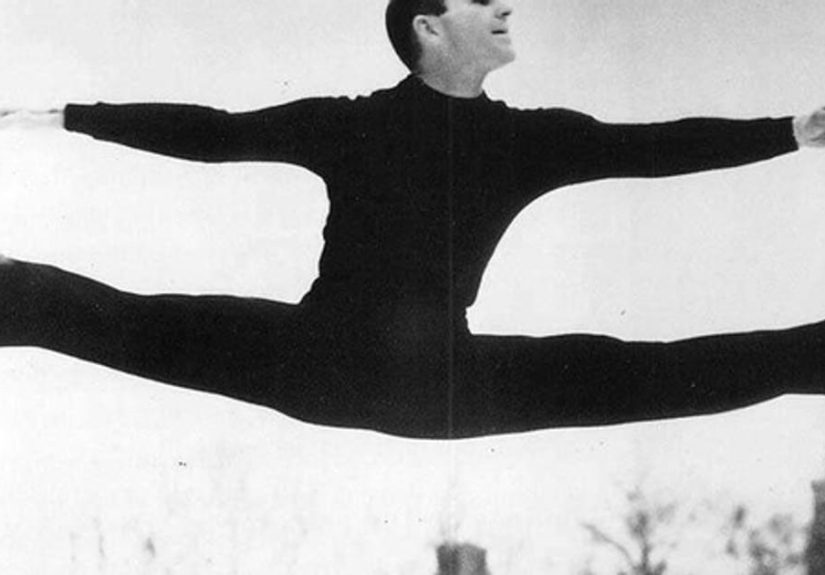
Before quads were standard, Dick Button was already blowing minds. The American star won back-to-back Olympic gold medals in 1948 and 1952, along with five straight World Championships, making him one of the sport’s first true superstars.
Button introduced the double Axel and was the first to land a triple jump (the triple loop) in competition, fundamentally raising the technical bar for everyone who followed. After retiring, he became the sharp-tongued voice of figure skating on American television, helping millions understand what they were seeingand occasionally roasting a performance with legendary honesty.
The Jenkins Brothers and the Early U.S. Dynasty
The 1950s also belonged to Hayes Alan Jenkins and his younger brother David. Between them, they collected Olympic titles and World Championships, keeping American men on top of the podium throughout the decade. Their skating looks simple compared with today’s quad era, but at the time they were pushing the limits of speed, control, and jump consistency, laying groundwork for the explosive men’s events that would follow.
The Showmen of the 1970s and 1980s
John Curry and Toller Cranston: Artistry Takes Center Ice
In the 1970s, John Curry of Great Britain and Canada’s Toller Cranston proved that men’s figure skating could be as much about ballet and modern dance as it was about jumps. Curry’s 1976 Olympic gold is still remembered for its elegance, long lines, and refined musical interpretation, while Cranston’s intensity and drama helped redefine what a “masculine” performance could look like.
Scott Hamilton: The Crowd-Pleasing Champion
In the 1980s, American skater Scott Hamilton became one of the most recognizable names in skating. He won Olympic gold in 1984 and four consecutive World Championships, then carried his charisma into a long professional career and touring shows. Hamilton’s signature backflip (illegal in competition but iconic in shows) made him a fan favorite and a gateway star for many new skating enthusiasts.
Brian Boitano: Precision, Power, and an Olympic Classic
Brian Boitano’s 1988 Olympic duel with Canada’s Brian Orser is still considered one of the greatest men’s events in history. Boitano’s skating combined clean, powerful jumps with meticulous programs; his free skate to “Napoleon” is textbook 1980s figure skating drama. He later became a pop-culture figure, but within skating circles he’s remembered as a master of discipline and competitive focus.
The 1990s and 2000s: The Battle for Technical Supremacy
Kurt Browning: The Quad Pioneer
Canadian legend Kurt Browning is credited with landing the first ratified quadruple jumpa quad toe loopin a World Championship in 1988. A four-time World Champion, Browning blended complex footwork, charm, and inventive choreography. Even after his amateur career, his professional programslike the crowd-pleasing “Singin’ in the Rain”showed how far personality could take a skater.
Alexei Yagudin vs. Evgeni Plushenko: Rivalry on Ice
If you love sports rivalries, the early 2000s in men’s figure skating were pure drama. Russia’s Alexei Yagudin and Evgeni Plushenko pushed one another to ridiculous levels. Yagudin’s 2002 Olympic win in Salt Lake City, with programs like “Winter” and “Man in the Iron Mask,” remains a benchmark in combining technical firepower with emotional storytelling.
Plushenko, meanwhile, became a long-running powerhouse: multiple World titles, European dominance, and medals at three different Olympics, including gold in 2006. His massive jumps and confident swagger helped define the pre-quad-explosion era and influenced countless skaters who grew up watching him.
Elvis Stojko: Grit and Athleticism
Canadian skater Elvis Stojko leaned hard into athleticism. Known for his triple-triple combinations and martial-arts-inspired style, he won three World titles and three Olympic medals. Stojko’s approach helped cement the idea that men’s skating could look powerful, intense, and unapologetically athletic while still meeting artistic requirements.
The Hanyu and Chen Era: Quad Kings and Record Breakers
Yuzuru Hanyu: The Complete Package
If you check fan-voted rankings for the greatest male figure skaters, one name rockets to the top over and over: Yuzuru Hanyu. The Japanese superstar is a two-time Olympic champion (2014 and 2018), multiple-time World Champion, and a longtime world-record holder in the modern scoring system.
What sets Hanyu apart is his rare balance of everything: breathtaking edge quality, musicality that makes entire arenas go silent, and technically difficult layouts packed with triple Axels and quads. His programssuch as “Seimei” and “Hope and Legacy”are studied by skaters and coaches for how seamlessly they blend choreography and scoring strategy.
Hanyu also chased the near-mythical quadruple Axel in competition, underlining his drive to keep pushing skating’s technical limits even after already securing his legacy.
Nathan Chen: The Quad Master
On the other side of the world, American skater Nathan Chen rewrote the technical rulebook. A three-time World Champion (2018, 2019, 2021) and 2022 Olympic gold medalist, Chen built programs that featured four or five quads in a single skateand still somehow had room for complex choreography.
Chen currently holds multiple scoring records in the ISU system, including the highest combined total at major events like the Olympics and the Grand Prix Final. In Beijing in 2022, he delivered a near-flawless short program and free skate to win gold, ending a long drought for U.S. men. Recently, he announced he won’t return for the 2026 Olympics, choosing instead to focus on his education and a future in medicinecementing his story as one of both athletic and academic excellence.
Ilia Malinin: The Future of Men’s Skating
Technically, Ilia Malinin represents the next chapter, but it’s impossible to talk about “greatest male figure skaters” without mentioning him. Known as the “Quad God,” the young American is the first skater to land a fully rotated quadruple Axel in competition and has already become a two-time World Champion, putting him on a fast track to all-time-great conversations.
Beyond Medals: Impact and Legacy
Medal counts and world records are easy to measure, but greatness in figure skating also lives in less tangible places: the programs that give you goosebumps, the moments that bring a crowd to its feet, the skaters whose styles are echoed by generations to come.
- Technical pioneers like Dick Button, Kurt Browning, Yuzuru Hanyu, Nathan Chen, and Ilia Malinin fundamentally raised the difficulty of what’s possible on ice.
- Artistic innovators such as John Curry and Toller Cranston proved that men could skate with balletic grace and theatrical flair.
- Charismatic champions like Scott Hamilton, Brian Boitano, and Evgeni Plushenko helped popularize the sport, drawing TV audiences and inspiring young skaters around the world.
When you put it all together, the “greatest male figure skaters of all time” are those who did more than just winthey changed the sport’s DNA.
What Fans Can Learn from These Legends
Whether you’re a casual viewer who tunes in every four years or someone who can explain GOEs and step sequence levels in your sleep, these skaters offer a few universal lessons:
- Progress comes from risk. Button’s first triple jump, Browning’s quad, and Malinin’s quad Axel were all enormous risks that paid offand raised the bar for everyone.
- Longevity matters. Skaters like Plushenko and Stojko stayed at or near the top for years, showing how discipline and adaptation keep a career alive.
- Artistry never goes out of style. Curry’s elegance or Hanyu’s emotional depth still resonate long after the scoring systems change.
Personal Experiences and Reflections on the Greatest Male Skaters
Part of what makes this topic so fun is that “greatest” isn’t just a math problemit’s personal. Fans remember where they were when they watched Nathan Chen finally skate clean at the Olympics, or when Yuzuru Hanyu floated across the rink in a costume that looked like it was sewn from moonlight. The best male figure skaters of all time don’t just collect medals; they collect memories.
For many longtime viewers, the first emotional hook came during an Olympic broadcast. Maybe it was Scott Hamilton celebrating with pure joy in 1984, or Brian Boitano delivering that cinematic 1988 performance. For others, it was the drama of Yagudin versus Plushenko, with commentators whispering about rival coaches and training camps like a cold-weather soap opera.
More recently, younger fans talk about staying up at strange hours to stream Hanyu’s performances live from Japan or Europe, refreshing social media to see practice reports about whether he’d attempt a new quad. Chen’s rise inspired another wave: here was a skater balancing Ivy League studies with some of the most demanding programs ever performed. His story made it easier for parents and kids alike to see skating not just as art or sport, but as a part of a well-rounded life.
There’s also something quietly powerful about watching the evolution of men’s skating over decades. If you compare footage from the 1950s to today, the jumps are bigger, the spins faster, and the choreography more intricate. Yet one thing hasn’t changed: the look on a skater’s face after a clean program. Whether it’s Dick Button landing a new element in black-and-white footage or Malinin nailing a quad Axel in HD slow-motion, that burst of disbelief, joy, and relief is timeless.
For new fans, exploring these skaters’ performances is the best way to understand why lists like “The Greatest Male Figure Skaters of All Time” are endlessly debated. Watch Button’s early triple, Browning’s quad, Boitano’s precision, Hanyu’s “Seimei,” Chen’s Beijing free skate, and Malinin’s quad Axel. You’ll see the sport evolve jump by jump, spin by spin, program by program. And you might find your own personal “greatest of all time” somewhere along the way.
In the end, that’s part of the magic: the greatest male figure skaters don’t just make historythey make fans feel like they’re part of it.
Conclusion
The greatest male figure skaters of all time span generations, styles, and scoring systems, but they all share a few core traits: ambition, originality, and the ability to make a sheet of ice feel like a stage. From Dick Button pioneering early triple jumps to Yuzuru Hanyu’s lyrical programs and Nathan Chen’s quad-packed dominance, each of these skaters changed men’s figure skating in ways that still ripple through the sport today.
As new talents like Ilia Malinin continue to push limits, one thing is certain: the conversation about the greatest male figure skaters of all time will never fully endand honestly, that’s part of the fun. There’s always another program to rewatch, another edge to analyze, and another moment that makes you gasp and think, “Okay… that might be the greatest I’ve ever seen.”