Table of Contents >> Show >> Hide
- What Is the Müller-Lyer Pulsating Star?
- The Classic Müller-Lyer Illusion: A Line-Length Lie That’s Over a Century Old
- So Why Does the Star Look Like It’s Pulsating?
- Try These Quick “Home Experiments” (No Lab Coat Required)
- What This Illusion Reveals About Your Brain
- When “Pulsating” Isn’t an Optical Illusion: A Quick Reality Check
- Conclusion: A Tiny Star That Roasts Our Confidence
- Experience Add-On: of Real-Life “Pulsating Star” Moments
- SEO Tags
Some optical illusions politely ask to be admired. The “Müller-Lyer Pulsating Star” does not. It kicks the door in, announces
“YOUR EYEBALLS ARE LYING,” and then proceeds to look like it’s breathingexpanding and contracting like a tiny geometric sea creature.
Except (plot twist) the star isn’t actually changing size the way it seems to. Your brain is.
This illusion is a clever, animated remix of a classic perception prank: the Müller-Lyer illusion, famous for making equal-length lines
look different depending on which way little “fins” (arrow-like ends) point. In the pulsating star version, those fins flip direction
over and over, and your visual system reacts as if the line segments are stretching and shrinkingeven though the segment lengths stay constant.
It’s like watching a rubber band that never moves, but your brain insists it does anyway.
Let’s break down what you’re seeing, why it happens, how to “test” your own perception, and what the illusion reveals about the
shortcuts your visual system uses every day (including when you’re not staring at hypnotic stars on the internet).
What Is the Müller-Lyer Pulsating Star?
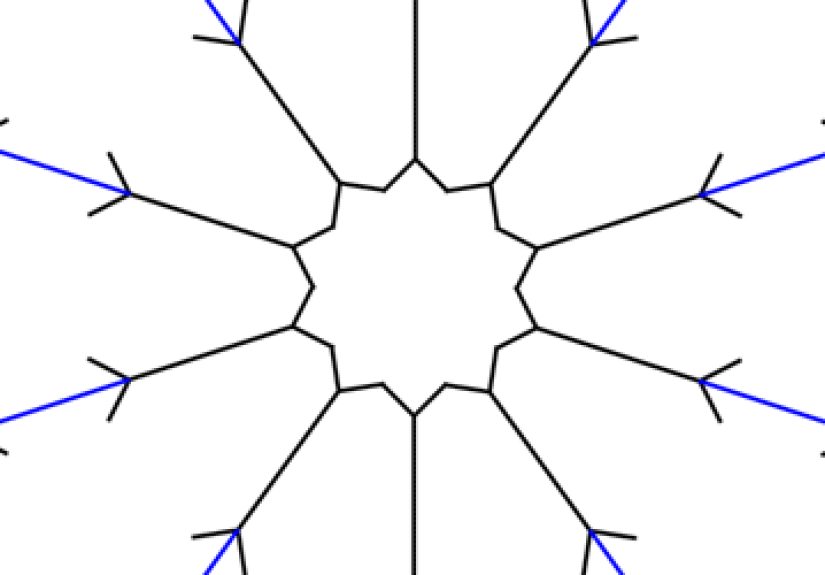
The Müller-Lyer Pulsating Star is an animated optical illusion built from a simple recipe:
a starburst of line segments (often alternating colors) plus arrow-like fins attached to those segments.
The animation changes the direction of the finstypically flipping them inward, then outward, then inward againcreating the
impression that the star’s “spokes” are growing and shrinking in a rhythmic pulse.
Here’s the key detail that makes this illusion so satisfying: the line segments don’t change length.
Only the fins rotate or flip orientation. Yet your perception treats the entire setup like a living shape that’s expanding and contracting.
The illusion is basically a “before-and-after” demonstration of how context can warp what feels like an obvious measurement.
How to View It for Maximum “Wait… What?!”
- Look at the center for a few seconds, then let your gaze soften (don’t clamp your eyes down like you’re trying to win a staring contest).
- Blink normally. Tiny eye movements can make the effect feel stronger.
- Step back from the screen or zoom out so the star is smaller. The “pulse” can feel more dramatic at certain sizes.
- Try a quick reality check: pause the animation if possible, or take a screenshot and measure a segment with a ruler on-screen. Your brain will be annoyed by the evidence.
The Classic Müller-Lyer Illusion: A Line-Length Lie That’s Over a Century Old
The original Müller-Lyer illusion is a classic in psychology and vision science because it’s so minimal and so stubborn.
You see two straight line segments of identical length. One has fins pointing outward (like a line wearing “< >” at its ends),
and the other has fins pointing inward (like “> <”). Most people swear the outward-finned line looks longer.
That’s the whole trick: the “shaft” lengths are equal, but the context at the ends changes your perceived length.
If you’ve ever felt betrayed by a tape measure, welcome to the club.
Why the Brain Falls for It: Depth Cues and Size Constancy
One popular explanation is that your visual system treats those fin angles like depth information.
In real life, inward-angled corners can resemble an inside corner of a room receding away, while outward-angled corners can resemble an outside corner
coming toward you. If your brain interprets one line as “farther” and the other as “closer,” it may apply a size-constancy correctionbasically:
“If it’s farther away but looks this big on my retina, it must be bigger in the world.”
In other words, your eyes don’t just report pixels; your brain tries to infer a 3D scene from a 2D image, and sometimes it
overcommits to the vibe.
Another Big Idea: Conflicting Cues and “Whole-Shape” Shortcuts
Another explanation focuses less on depth and more on how we estimate size in a hurry. Instead of measuring only the central line,
the brain may blend cues from the entire figure: line plus fins plus overall span.
Because the fins change the apparent “total footprint” of each arrow-like figure, your judgment of line length gets pulled around by context.
Think of it like judging the length of a dog by including the tail and the dramatic ear fluff. Accurate? Not always. Fast? Absolutely.
So Why Does the Star Look Like It’s Pulsating?
The pulsating star turns a static illusion into a dynamic one. When the fins flip direction in an animation,
your visual system doesn’t calmly reassess the geometry each frame like a spreadsheet.
It treats the change in context as a change in the thing itselfso the “spokes” appear to stretch when the fins suggest “longer,”
and shrink when the fins suggest “shorter.”
The result is a convincing, rhythmic expansion-and-contraction effect, like the star is inhaling and exhaling.
The illusion feels physical, as if the lines are elastic, even though only the fin orientation is changing.
What’s Actually Moving vs. What Only Feels Like It’s Moving
- Actually moving: the arrow-like fins changing direction (the animation is real motion).
- Not changing: the length of the colored line segments (they stay constant).
- Changing in your mind: the perceived length of the segmentsand therefore the perceived “size” of the star.
Why Animation Makes It Hit Harder
In a static Müller-Lyer figure, your brain makes one mistaken judgment and sticks with it.
In the star, the illusion is refreshed over and over: fins flip, perception swings, fins flip again, perception swings again.
That repetition creates a strong sense of rhythmic changelike a visual metronome for your size-estimation system.
Add everyday eye movements (tiny shifts, blinks, micro-saccades), and the illusion can feel even more alive.
You’re not just seeing a picture; you’re watching your brain’s assumptions update in real time.
Try These Quick “Home Experiments” (No Lab Coat Required)
1) The Screenshot-and-Measure Test
Pause the animation or take a screenshot, then use a ruler or on-screen measuring tool to compare one “spoke” in two different frames.
If you measure carefully, you’ll find the spoke lengths matcheven when your perception insists they don’t.
This is the illusion’s favorite party trick: it dares you to prove it wrong, and then it keeps feeling right anyway.
2) Cover the Fins, Keep the Spokes
If you can cover the fins (with a sticky note, your hand, or a window on your screen) while leaving part of the spokes visible,
the pulsing effect usually weakens. That’s because the fins are the context that drives the length distortion.
Remove the “hint,” and the brain stops performing the wrong magic trick.
3) Change the Size
Zoom in and out. Some people experience the strongest pulsation at a specific scaleoften when the star sits comfortably in the middle
of vision without filling it. Too large and you start “inspecting.” Too small and the details vanish.
There’s a sweet spot where perception takes shortcuts and the illusion throws a parade.
4) Look Away, Then Back
Glance at something else in the room for a second, then return your gaze to the star. The first moment back can feel extra dramatic,
because your visual system is re-anchoring context and “recommitting” to the illusion.
What This Illusion Reveals About Your Brain
The Müller-Lyer Pulsating Star is entertaining, but it’s also a neat demonstration of a serious point:
vision is not a camera feed. It’s a fast, interpretive process that uses patterns, assumptions, and learned shortcuts to build a useful model
of the world. Those shortcuts are usually helpfuluntil a cleverly designed drawing exploits them.
Your Brain Doesn’t Measure First; It Interprets First
In daily life, you rarely need to measure line segments with perfect accuracy. You need quick judgments:
Which object is closer? Which edge is longer? Is that doorway wide enough? Can I park there without becoming a viral video?
The visual system prioritizes speed and usefulness, not ruler-level truth.
Context Is King (Even When Context Is Just Decorative Fins)
The illusion works because the fins supply context that your brain treats as meaningful structure.
That’s why the pulsating star is so effective: it keeps changing the context while leaving the “facts” (segment lengths) alone.
Your brain keeps responding as if the facts changed.
Actions and Intentions Can Change What You Perceive
One fascinating finding in Müller-Lyer research is that how you think about the task can affect the illusion’s strength.
When people prepare to act (or frame the problem as action-related), susceptibility can decrease compared to when they make a purely visual estimate.
Translation: sometimes your “doing” brain is less gullible than your “judging” brain.
When “Pulsating” Isn’t an Optical Illusion: A Quick Reality Check
Optical illusions are safe, normal brain quirks. But just to avoid confusion:
if you ever notice new flashes, sparkles, zigzags, or persistent visual disturbances in everyday life (not while watching an illusion),
it can be caused by a variety of thingssome harmless, some worth discussing with a clinician.
If something changes suddenly or interferes with vision, it’s smart to get medical advice.
For example, some people experience “phosphenes,” which are flashes of light without an external light source.
That’s not the same as the Müller-Lyer effect, but it’s a common term people run into while searching “why did I see a starburst.”
The important takeaway: the pulsating star illusion is designed deception; unexpected real-world symptoms deserve attention.
Conclusion: A Tiny Star That Roasts Our Confidence
The “Müller-Lyer Pulsating Star” is proof that your brain is brilliantly efficientand occasionally very easy to prank.
With a simple flip of arrow-like fins, equal-length segments can feel like they’re stretching and shrinking like a heartbeat.
Once you know the trick, it doesn’t stop working; it just becomes a front-row seat to your own perception in action.
So the next time you see the star “breathe,” enjoy the moment. You’re watching your visual system do what it does best:
turn incomplete clues into a confident story. Even when the story is hilariously wrong.
Experience Add-On: of Real-Life “Pulsating Star” Moments
Once you’ve watched the Müller-Lyer Pulsating Star for a minute, you start noticing how often your brain relies on “fins” in the real worldlittle
surrounding cues that quietly bully your perception. The star is basically a dramatic stage performance of something your visual system does all day:
it guesses the size of things based on context. And context, as it turns out, is a loud roommate.
Think about shopping. Two identical couches can look like completely different sizes depending on whether the showroom has giant windows, low
ceilings, or a rug with bold stripes. It’s the same logic as the pulsating star: the couch hasn’t changed, but the “visual fins” around itscale cues,
edges, and anglespush your brain toward a size story. Ever bought something that looked “perfectly normal” in a store and then arrived at home
looking like it belongs in a dollhouse (or a football stadium)? Congratulations, you’ve starred in your own home version of a geometric illusion.
Doorways do it too. A doorway framed by thick trim can feel narrower than the exact same opening framed by minimal molding. Hallways feel longer
when the lights are evenly spaced, and shorter when the lighting is chaotic. Even a simple painted stripe can change how tall a wall feels.
Your brain is constantly estimating distance and size using cues it has learned to trustcorners, converging lines, and consistent patterns.
The pulsating star is funny because it weaponizes those cues in a simplified, repetitive way: fins flip, your size estimate flips, and the “breathing”
effect pops out like a cartoon.
Then there’s the digital world. Scroll through an animation like the pulsating star on a phone, and you might notice the “pulse” feels different
depending on brightness, screen size, or even whether you’re tired. Late at night, illusions can feel strongernot because the image got smarter,
but because your attention and eye movements change. Tiny shifts in where you focus (and how often you blink) can make the illusion feel more
intense, like the star is suddenly extra determined to convince you it’s alive. It’s a reminder that perception isn’t a fixed setting; it’s a
conversation between the image and your current visual state.
My favorite “experience” with the pulsating star is the moment you try to outsmart it with measurement. You pause the animation, you line things up,
you confirm the segments matchand then you hit play and your brain immediately goes back to: “Nope, it’s pulsing.” That stubbornness is the real
lesson. Knowing the truth doesn’t always erase the feeling of it. Optical illusions are like that friend who keeps telling the same joke because it
still makes them laugh. Except the friend is your brain, and the joke is how confidently it can be wrong while still being incredibly useful.