Table of Contents >> Show >> Hide
- Why These Two Numbers Matter More Than They Look
- ARR vs. Annualized Revenue: A Quick (Painless) Translation
- How Canva Became a B2B Giant While Still Feeling Like a Consumer App
- Enterprise Expansion: The Part of the Story the IPO Crowd Cares About
- AI Is Not a Feature for CanvaIt’s a Distribution Strategy
- Competition: Adobe, Microsoft, and “Everything That Starts With a Blank Slide”
- What Would a Public-Market Canva Look Like?
- IPO Readiness Checklist: What Canva Already Signals
- Risks to Watch (Because Every S-1 Needs a “Here’s the Scary Stuff” Section)
- What Investors and Operators Should Track Next
- Conclusion: Canva Looks Like an IPO Candidate Because It Acts Like One
- Experience Notes: What the “Canva IPO” Story Teaches Teams Building Toward Their Own Big Moment (Extra)
- 1) Your best enterprise strategy might be… letting people play first
- 2) ARR milestones are emotional eventstreat them like culture moments, not just finance moments
- 3) AI adoption is a change-management problem wearing a cool jacket
- 4) Pre-IPO signals are usually boringand that’s the point
- 5) The “Canva effect” inside companies is real: people become faster communicators
There are two kinds of “overnight successes” in tech: the ones that show up overnight, and the ones that show up after a decade of quietly building a product people actually use. Canva is aggressively the second kindexcept now it’s not quiet anymore.
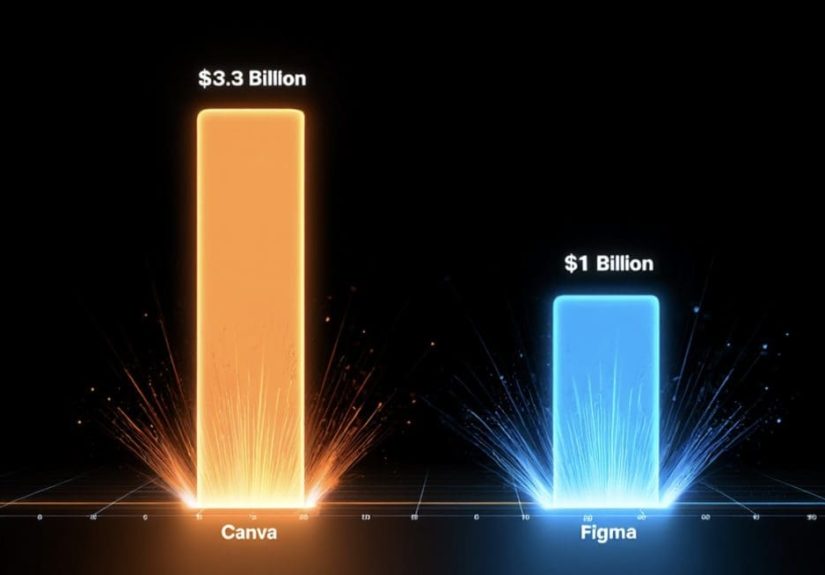
The headline numbers are the sort that make public-market investors sit up straighter and founders suddenly remember what “GAAP” stands for: roughly $3.3 billion in annualized recurring revenue (ARR) (often described as annualized revenue run-rate) and a $42 billion valuation tied to a major employee share sale. That combinationscale + liquidity + enterprise expansionputs Canva in the “this could be the next great B2B IPO” conversation whether the company is ready to file tomorrow or not.
Why These Two Numbers Matter More Than They Look
$3.3B ARR is not just “big.” It’s category-defining.
At $3.3B ARR, you’re not a “promising SaaS company.” You’re a platformone that’s large enough to have multiple growth engines running at once: self-serve subscriptions, teams, enterprise, ecosystem partners, templates/creators, and now an increasingly AI-shaped product surface. Public markets have a different vocabulary for this stage: durability, expansion, and operating leverage.
$42B valuation isn’t a vibe. It’s a pricing signal.
Valuation in private markets can be theatrical (hello, 2021). But structured liquidity eventslike employee tendersare more than theater. They create an actual clearing price with real buyers, real governance, and real paperwork. In other words: the “IPO pregame” playlist.
ARR vs. Annualized Revenue: A Quick (Painless) Translation
You’ll see Canva’s milestone described in slightly different ways depending on the outlet: “ARR,” “annualized revenue,” “annualized sales,” or “run-rate.” For subscription software, these often point to the same ideawhat the business would generate over 12 months if current recurring performance holds.
The nuance matters because it hints at business mix. A company with clean ARR (mostly subscription) tends to be easier to model and is often rewarded with higher multiples. A company with more usage-based or services revenue can still be extremely healthy, just a bit more seasonal or variable. Canva’s direction of travel is what investors care about: recurring, expanding, and increasingly enterprise-weighted.
How Canva Became a B2B Giant While Still Feeling Like a Consumer App
Canva’s magic trick is that it sells like a consumer product (easy onboarding, instant delight, viral templates) but monetizes like enterprise software (seats, governance, brand controls, admin features, compliance). That’s a rare combo. Most companies pick one lane and then install turn signals later.
The flywheel: Free → Pro → Teams → Enterprise
The path is simple enough to explain to a non-technical executive (always a good sign): individuals start free, upgrade for speed and premium assets, invite teammates, and thenonce the organization realizes everyone is already using itcentral IT wants admin control, security, and standardized brand governance. That’s when B2B really kicks in.
“Design” expanded into “visual work”
Canva isn’t just competing with design software anymore. It’s competing with the messy middle of modern business communication: presentations, internal docs, sales collateral, social content, lightweight video, and every “can you make this look nicer?” request that floats through Slack at 4:57 p.m.
Enterprise Expansion: The Part of the Story the IPO Crowd Cares About
For an IPO narrative, “used by creators” is nice. “Standardized across enterprises” is money. Canva has leaned hard into the enterprise motion: centralized brand kits, approval workflows, SSO, audit logs, permissions, and the sort of controls that make security teams stop sweating.
A common enterprise pattern is already visible: bottom-up adoption drives top-down procurement. That tends to produce strong net revenue retention because once a company operationalizes a workflow around a tool, ripping it out feels like replacing plumbingtechnically possible, emotionally exhausting, and guaranteed to cause at least one flood.
AI Is Not a Feature for CanvaIt’s a Distribution Strategy
In 2024 and 2025, Canva accelerated AI tooling inside the productgenerative design assistance, text-to-image, and workflow automation that turns “I need a QBR deck” into “here’s a draft, want it more ‘bold’ or more ‘board-friendly’?”
The strategic angle is bigger than “AI is cool.” AI reduces the skill gap for non-designers, which expands the addressable market, which increases collaboration, which increases seat growth, which increases recurring revenue. It’s a compounding loop, not a gimmick.
Acquisitions that reinforce the “Creative OS” narrative
Canva’s acquisitions have been telling: adding professional-grade tooling (like Affinity) signals a push up-market; adding generative AI capability (like Leonardo.ai) signals a future where the default interface is conversational and the output is instantly usable content. Those moves aren’t randomthey’re roadmap accelerators.
Competition: Adobe, Microsoft, and “Everything That Starts With a Blank Slide”
Canva’s competitive set looks weird because it spans multiple categories:
- Adobe (Express and the Creative Cloud ecosystem): strong pro tooling, strong brand, historically heavier complexity.
- Figma-ish workflows (collaboration-first creation): overlaps in team collaboration, especially for product and marketing teams.
- Microsoft/Google (productivity suites): where “good enough” design happens inside the tools companies already pay for.
- Niche point tools (video snippets, social scheduling, lightweight editing): Canva increasingly bundles these experiences.
Canva’s advantage is that it turns design into an everyday business action, not a specialist task. That’s a positioning win. The risk is that giants don’t love losing everyday workflowsespecially when those workflows are adjacent to documents, presentations, and team collaboration.
What Would a Public-Market Canva Look Like?
An IPO isn’t just “selling shares on a bigger stage.” It’s a shift in what the company must optimize for: predictable forecasting, cleaner revenue disclosure, more formal risk controls, and a story that holds up under quarterly scrutiny.
Multiples: where the debate gets spicy
If Canva’s run-rate is $3.3B+ and it’s still growing meaningfully, the public market math can support huge valuations. But the multiple depends on three things investors obsess over:
- Growth rate (is it accelerating, steady, or decelerating?)
- Profit profile (margin structure and credible path to more operating leverage)
- Durability (retention, expansion, and defensibility against platform giants)
Translation: the market will not only ask “how big are you?” It will ask “how predictable are you?” and “how hard are you to replace?”
IPO Readiness Checklist: What Canva Already Signals
Without pretending we’re sitting in Canva’s board meetings, several classic “IPO warm-up” moves are visible in the public record:
- Liquidity programs that let employees and early investors sell shares (reducing pressure and aligning incentives).
- Finance leadership with public-company experience (a strong tell for governance readiness).
- Enterprise product expansion that supports predictable, contract-based revenue.
- Strategic acquisitions that broaden moat and accelerate roadmap instead of distracting the org.
Risks to Watch (Because Every S-1 Needs a “Here’s the Scary Stuff” Section)
1) The “too many jobs” platform problem
The broader Canva becomes, the more it risks becoming a Swiss Army knife with 41 tools and a bottle opener nobody can find. Platform expansion must stay coherent: users should feel like Canva is saving time, not offering infinite options.
2) AI commoditization and data scrutiny
Generative AI is moving fast, and differentiation can evaporate if every suite ships similar features. Meanwhile, questions around training data, licensing, and enterprise governance are not going away. Companies that treat transparency like a product feature will win more trust.
3) Enterprise competition is a knife fight in a phone booth
Once you go enterprise, you inherit enterprise competitors. That means longer cycles, more procurement complexity, and more pressure to prove ROI. Canva’s advantage is its existing bottom-up adoption. The challenge is proving it can standardize at scale without losing its “fun” simplicity.
What Investors and Operators Should Track Next
- Enterprise mix: how quickly larger contracts become a bigger slice of revenue.
- Net revenue retention signals: seat expansion and cross-sell within organizations.
- AI-driven workflows: whether AI features materially increase engagement and retention, not just demos.
- International execution: maintaining pricing power and growth across regions with different willingness-to-pay.
- Governance maturity: controls, disclosures, and operational discipline that reduce IPO execution risk.
Conclusion: Canva Looks Like an IPO Candidate Because It Acts Like One
Canva hitting ~$3.3B in annualized recurring revenue and resetting valuation expectations at $42B isn’t just a milestoneit’s a signal that the company has moved into a different phase of scale. The product has consumer-grade adoption, but the business has enterprise-grade economics.
Whether Canva goes public in 2026, later, or chooses to stay private longer, the underlying point holds: it has the ingredients public markets typically rewardrecurring revenue, broad adoption, expanding enterprise footprint, and a platform narrative increasingly powered by AI.
If the next great B2B IPO is the one that makes investors say, “Wait, everyone already uses this,” Canva is the obvious suspect.
Experience Notes: What the “Canva IPO” Story Teaches Teams Building Toward Their Own Big Moment (Extra)
The most useful part of watching a potential IPO candidate isn’t the gossip about timingit’s the operational lessons hiding inside the headline. Canva’s scale moment is basically a field guide for any SaaS team trying to graduate from “growth” to “grown-up.”
1) Your best enterprise strategy might be… letting people play first
In many organizations, the first “Canva deployment” doesn’t come from IT. It comes from marketing, HR, sales enablement, or a scrappy founder who needs a pitch deck by tomorrow morning. That matters because bottom-up adoption creates a different kind of enterprise pipeline: one where users are already trained, value is already proven, and the procurement conversation is about standardizationnot persuasion.
Teams building B2B products can copy this principle even if they’re not designing templates. Give users an on-ramp where they can experience the payoff quickly (minutes, not weeks). Then make it easy to collaborate. Collaboration is the quiet engine of expansion revenue: once a tool becomes a shared workspace, every additional teammate feels less like “a cost” and more like “a requirement.”
2) ARR milestones are emotional eventstreat them like culture moments, not just finance moments
When companies cross major recurring revenue thresholds, the internal energy shifts. People start asking different questions: “Are we building for the next quarter or the next decade?” “Are we disciplined enough for public markets?” “What does ‘efficiency’ mean here?” Leaders who handle this well do two things at once: they celebrate the momentum and they introduce the next layer of rigor without killing the vibe.
The healthiest organizations make the “grown-up” work visible and meaningful. Forecasting improvements aren’t presented as punishment; they’re framed as freedomthe freedom to invest confidently, hire intentionally, and build longer-term products without constantly bracing for surprises.
3) AI adoption is a change-management problem wearing a cool jacket
It’s tempting to believe AI is purely a product race. But inside real companies, AI success looks like workflow redesign: who reviews outputs, how brand standards are enforced, how data is handled, and how teams avoid generating 47 versions of the same asset because “the bot can.”
Canva’s AI story is compelling because it reduces friction for non-experts while still aiming to keep outputs usable for businesses. If you’re building AI features, the takeaway is simple: the model matters, but the workflow matters more. The winning AI products don’t just generate content; they help teams agree on content.
4) Pre-IPO signals are usually boringand that’s the point
The public sees flashy launches. Operators see process: tighter controls, clearer metrics definitions, more consistent reporting, hardened security, better internal documentation, and leadership hires that add governance muscle. If you’re aiming for an IPO someday, the unglamorous work is the work. The market doesn’t reward chaos with a ticker symbol.
5) The “Canva effect” inside companies is real: people become faster communicators
One practical experience many teams share is that when visual creation becomes easy, communication becomes more frequentand, ideally, clearer. Sales teams iterate collateral more often. HR updates training content without waiting in a design queue. Product marketing ships launch kits faster. These small time savings compound into organizational speed.
That’s the hidden reason Canva’s B2B potential is so strong: it’s not only selling “design.” It’s selling velocity. And in business, velocity is one of the few advantages that scales.