Table of Contents >> Show >> Hide
- The Cornetto Moment: Small Snack, Big Personality
- The Real Reason: Edgar Wright’s Actual Hangover Cure
- Not (Really) Product Placement: How a Private Joke Became a Public Tradition
- The Trilogy Gets a Name: “Three Flavours” Meets “Blood and Ice Cream”
- Why Strawberry? The Color-Coding Fans Love (and Wright Doesn’t Fight)
- Why It Works So Well in Shaun: A Masterclass in “Normal Life, Then Chaos”
- How Cornetto Turned Into a Fan Game (and Why That Matters)
- FAQ: Quick Answers for Curious Viewers
- Conclusion: The “Real Reason” Is the Most Human One
- The Cornetto Experience: of Relatable Fan Moments (and a Few Delicious Rituals)
There are two kinds of movie details: the ones that scream “Important plot point!” and the ones that whisper,
“This is a very specific person’s weird little habit.” The Cornetto in Shaun of the Dead
is the second kinduntil it isn’t.
Because here’s the punchline hiding in plain sight: the Cornetto wasn’t originally a grand cinematic symbol, a clever brand partnership,
or a marketing masterstroke. It was a hangover jokea real-life “this helped me once” story that Edgar Wright smuggled into a scene
because it felt funny, believable, and just a little bit gross in that “Sunday morning after bad decisions” way.
Then the joke got bigger. Then it got a name. Then it became a scavenger hunt for fans. And suddenly an ice cream cone was doing
what Wright’s films always do: turning tiny details into a big, satisfying payoff.
The Cornetto Moment: Small Snack, Big Personality
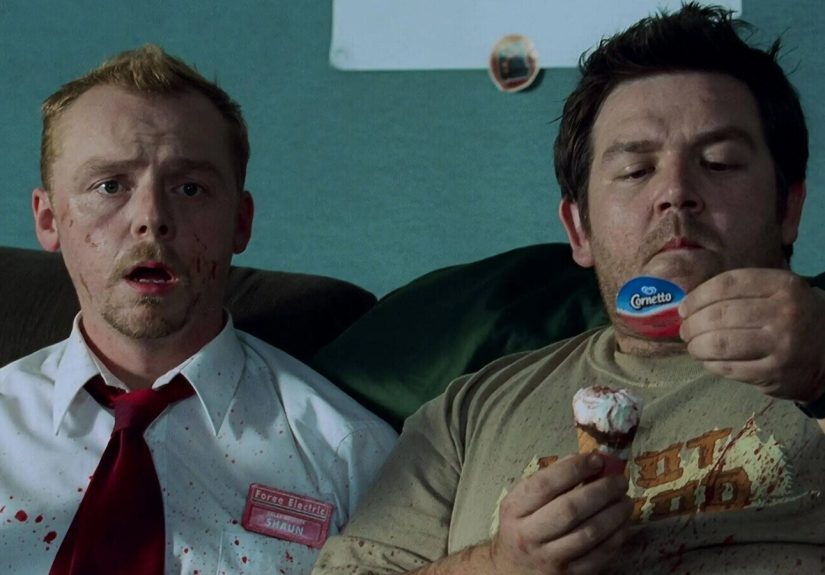
In Shaun of the Dead, the Cornetto shows up early, and it tells you a lot about the movie in under a minute:
this apocalypse story isn’t about heroes; it’s about ordinary people who are a little hungover, a little confused,
and still trying to make the day feel normal.
The Cornetto works on multiple levels at once:
- Character: Ed is the type of guy who treats “breakfast” as “anything within arm’s reach that contains sugar.”
- Comedy: Ice cream as a “cure” is absurd enough to be funny but specific enough to feel real.
- Tone: The movie’s whole vibe is “mundane life… but with zombies,” and a convenience-store Cornetto fits that perfectly.
It’s not a dramatic close-up with angelic lighting. It’s not a slow-motion, choir-singing, product-reveal moment.
It’s a quick, natural beatlike the film is saying, “Yes, the world is ending, but also… your friend is still annoying.”
The Real Reason: Edgar Wright’s Actual Hangover Cure
The “real reason” is refreshingly un-mystical: Edgar Wright has said that when he was at art college and was badly hungover,
he ate a strawberry Cornetto in the morning and felt betterenough times that it became his go-to hangover ritual.
So he gave that habit to Nick Frost’s character and let the movie treat it as a casually ridiculous truth.
That’s the magic of the detail: it’s oddly specific, which is usually the universal language of authenticity.
You don’t invent “strawberry Cornetto hangover cure” unless you’ve either lived it… or you’re writing a character who absolutely would.
And Ed absolutely would.
Is it medically true?
Wright himself has joked that he doesn’t know if there’s any medical basis to the ideahe just likes believing it.
Which is also a very Ed-like philosophy, if you think about it.
Not (Really) Product Placement: How a Private Joke Became a Public Tradition
Here’s where the story levels up from “funny personal anecdote” to “movie history trivia you pull out at parties.”
After Shaun of the Dead, the team received free Cornettos at the premiere/afterparty.
That unexpected reward turned the gag into a tradition: Wright and Simon Pegg leaned into the Cornetto reference again in
Hot Fuzz, partly as a wink to fansand partly in the hope the ice cream fairy would visit twice.
It didn’t… at least not the same way. But the joke had momentum now, and momentum is hard to stop once the audience starts playing along.
When you’ve planted a recognizable “thread,” viewers start tugging on it.
And Wright’s whole creative personality is basically: “Oh, you noticed that? Great. Here’s more.”
The Trilogy Gets a Name: “Three Flavours” Meets “Blood and Ice Cream”
Eventually, fans and interviewers began connecting the dots: the Cornetto appeared in Shaun of the Dead,
then Hot Fuzz, and then The World’s End. The films aren’t sequels, but they share a creative DNA:
Edgar Wright’s kinetic style, Pegg and Frost’s chemistry, and stories about growing up (whether the characters want to or not).
The Cornetto became the perfect emblem for that connection because it’s:
simple, repeatable, and delightfully unserious.
It’s also the kind of running gag that tells fans, “You’re in on this with us.”
The naming itself became part of the joke. Wright has referred to it as the “Three Flavours” Cornetto trilogy
(a playful nod to the idea of a themed trilogy), while Pegg has also used the phrase “Blood and Ice Cream.”
Either way, the Cornetto isn’t the point of the moviesit’s the flag that marks the territory.
Why Strawberry? The Color-Coding Fans Love (and Wright Doesn’t Fight)
Once a fandom has a pattern, it will build a clubhouse around it. One of the most popular observations:
the Cornetto flavors align with each film’s “signature” color palette and genre vibes.
- Shaun of the Dead: Strawberry/red (blood, zombies, and that rom-zom-com heart).
- Hot Fuzz: Classic/blue (police, uniforms, “by the book”… until the book is on fire).
- The World’s End: Mint/green (sci-fi, the eerie glow of something not quite human).
Was that the master plan from day one? Probably not. But that’s the fun part:
Wright’s films are so precise that accidental motifs can start behaving like intentional ones.
The Cornetto becomes a tiny totem that feels “designed,” even when it began as a hangover snack.
Why It Works So Well in Shaun: A Masterclass in “Normal Life, Then Chaos”
Shaun of the Dead is obsessedin the best waywith the overlap between the mundane and the catastrophic.
The movie’s early sequences underline how routine can make you zombie-like long before any undead show up.
A Cornetto fits that worldview perfectly because it’s a normal thing… used for a very abnormal purpose
(“hangover medicine”) in a story that will soon become extremely abnormal (“civilization collapses”).
In other words, the Cornetto is a thematic appetizer:
the world is changing, but people are still people.
They still want comfort. They still crave sugar. They still make dumb choices.
And they still believe in little “cures” that might be nonsense but feel like hope.
Also, it’s funny because it’s specific
Comedy loves specificity. “He ate ice cream” is mildly amusing.
“He ate a strawberry Cornetto as a hangover cure” is a personality.
It’s a detail with fingerprints on it.
How Cornetto Turned Into a Fan Game (and Why That Matters)
Once audiences realized Wright was the kind of filmmaker who rewards attention, the Cornetto became part of the viewing ritual.
It’s not just “spot the ice cream”it’s “spot the mindset.”
The Cornetto is a marker for a larger promise: if you’re paying attention, you’ll be entertained twice.
That’s a big reason the Cornetto “highlight” still gets talked about:
- It’s accessible: You don’t need film school to understand a snack.
- It’s repeatable: You can rewatch the films and hunt for connections.
- It’s social: Fans love pointing it out to first-time viewers. It’s a friendly flex.
- It’s on-brand: Wright’s style thrives on callbacks, echoes, and payoffs.
Some directors hide Easter eggs like they’re guarding treasure.
Wright hides Easter eggs like he’s setting up a party game.
The Cornetto is basically a neon sign that says: “Yes, you’re allowed to have fun here.”
FAQ: Quick Answers for Curious Viewers
Was Cornetto paid product placement in Shaun of the Dead?
The Cornetto started as a personal hangover-cure gag and then became a self-referential running joke.
The story is usually told as a creative choice first, with the “free ice cream” premiere moment acting as a hilarious accelerant.
Why does it show up in Hot Fuzz and The World’s End?
Because once the Cornetto became a recognizable thread, the team leaned into it.
It turned into a playful signature that links the filmsan “if you know, you know” detail.
Why do fans call it the Cornetto Trilogy if the stories aren’t connected?
Because the movies share creators, cast, style, and thematic obsessions (especially friendship, masculinity, and growing up),
and the Cornetto is the easiest recurring object to point to as a unifying emblem.
Conclusion: The “Real Reason” Is the Most Human One
So the real reason Shaun of the Dead highlighted Cornetto ice cream is not corporate strategy or hidden symbolism.
It’s simplerand better: Edgar Wright once ate a strawberry Cornetto when he was hungover and decided it was funny.
That tiny, personal detail fit the character, fit the tone, and fit the film’s obsession with everyday life.
And then, because art is weird (and audiences are attentive), the small joke grew into a trilogy-sized tradition
a fan-favorite thread that now feels as iconic as the movies themselves.
Not bad for a snack you buy half-awake while blinking at the fluorescent lights of a corner shop.
The Cornetto Experience: of Relatable Fan Moments (and a Few Delicious Rituals)
If you’ve ever watched Shaun of the Dead with someone who’s seeing it for the first time, you already know the feeling:
you’re sitting there trying to act casual, like you’re not about to become a human spoiler alert.
Not about the plotabout the stuff. The background gags. The mirrored moments. The tiny choices that pay off later.
Edgar Wright movies do that to people. They turn otherwise chill adults into excitable detectives who can’t stop pointing at the screen.
The Cornetto is one of the most fun examples because it creates a harmless, joyful “initiation” into the fandom.
It’s not a twist that ruins anything. It’s not a secret ending you have to protect like it’s classified.
It’s an ice cream cone. The stakes are: zero. The delight is: weirdly high.
And the moment you notice it, you start understanding how the movie thinks.
A very common first-time viewer reaction goes something like this (no quotes needed, because you’ve heard it in spirit):
“Wait… did he just eat ice cream as hangover food?” And then the follow-up: “Is that… a thing?”
Then you, the smug veteran, get to say: “It’s a thing in this universe.” And everyone laughs,
because it’s such a silly “solution” in a film that is constantly balancing absurdity with sincerity.
The best part is how the Cornetto becomes a viewing ritual. People bring snacks on rewatch nightssometimes actual Cornettos if they can find them,
sometimes whatever local equivalent feels closest: cone-and-chocolate nostalgia in edible form.
It’s the easiest themed movie night in history. No complicated costumes. No elaborate props.
Just: “Show up. Watch zombies. Eat something sweet.”
And once you’ve done that once, your brain starts building tiny traditions of its own. You might find yourself timing the snack:
“Okay, this is the moment.” You might start noticing the color vibes and laughing at how neatly the flavors line up with the trilogy’s moods.
You might even catch yourself feeling weirdly proud when a friend spots it without helplike they just passed a pop-culture driving test.
There’s also a subtler fan experience: the Cornetto makes the films feel connected in a personal way.
Not “franchise connected,” not “shared universe connected,” but “friends made these and wanted you to feel included.”
It’s the difference between a giant cinematic brand and a small, confident wink.
When the Cornetto pops up, it reminds you that these movies are built by people who genuinely love genre storytelling
and genuinely want you to have a good time.
That’s why the Cornetto highlight still lands years later. It’s not just trivia.
It’s a tiny invitation: pay attention, laugh with us, and don’t be surprised if the dumb little snack becomes the most charming thread of all.