Table of Contents >> Show >> Hide
- What Is The Socialite Family Book Really About?
- The Meaning Behind “Socialite”
- Constance Gennari’s Eye for Real Homes
- Why the Book Still Feels Fresh
- Key Design Lessons From The Socialite Family Style
- The Book as a Guide to Modern Family Living
- French Style Without the Clichés
- Why Coffee Table Book Lovers Appreciate It
- How to Apply The Socialite Family Look at Home
- Experience Notes: Living With The Socialite Family Mindset
- Conclusion
The Socialite Family book is not the kind of design title that politely sits on a coffee table waiting to be admired from a safe distance. It wants to be opened, smudged with espresso fingerprints, argued with, and used as proof that a home can be stylish without looking like everyone inside has been ordered not to touch the sofa. Centered on modern families, lived-in interiors, and the art of mixing taste with everyday chaos, the book captures a decorating philosophy that feels especially relevant now: beauty should have a pulse.
Created by Constance Gennari, founder of The Socialite Family, the project grew from a media platform launched in 2013 into a broader design world built around contemporary family life. The brand’s eye is distinctly European, but its appeal travels well. American readers who love French style, vintage furniture, family-friendly interiors, and rooms with actual personality will recognize the book’s quiet rebellion against sterile perfection. It says, in effect, “Yes, the chair can be beautiful. Also, someone may leave a toy truck under it.” Finally, design honesty.
What Is The Socialite Family Book Really About?
At its heart, The Socialite Family book: lifestyles of the young and chic is a visual and cultural guide to how stylish modern families live. It is not simply about expensive furniture, polished marble, or rooms staged so carefully that even the lemons look nervous. Instead, it explores homes as living biographies. A living room becomes a family album. A kitchen becomes the headquarters of snack diplomacy. A child’s room becomes proof that imagination is the most affordable design material on Earth.
The 2017 French edition, often discussed as Le Guide Déco, collected the spirit of The Socialite Family website into a room-by-room design guide. Rather than treating family life as an obstacle to elegance, it treats family life as the very thing that gives interiors their character. That approach matters because modern design culture has spent years worshiping the empty room: white walls, one heroic chair, and a bowl that seems to exist only to make guests feel underdressed. The Socialite Family takes a different route. It celebrates homes where people actually live, gather, spill things, read books, display art, and occasionally lose the remote in a very chic way.
The Meaning Behind “Socialite”
The word “socialite” can sound like it belongs to a gossip column, preferably next to a photo of someone wearing sunglasses indoors. But in The Socialite Family universe, the term has a warmer, more modern meaning. It refers to people who balance careers, travel, creativity, family, friendships, and home life. These are not necessarily grand old families with inherited silver and mysterious oil portraits. They are urban, creative, connected households building style around real routines.
This definition makes the book more democratic than the title might first suggest. The “young and chic” lifestyle here is less about age and more about attitude. It is curious, flexible, unafraid of color, and comfortable with contrast. It might pair a flea-market mirror with a modern lamp, a patterned rug with a scribbled drawing taped proudly to the wall, or a sculptural chair with a pile of children’s books. The lesson is simple: chic is not the absence of mess. Chic is knowing which mess tells a good story.
Constance Gennari’s Eye for Real Homes
Constance Gennari’s background helps explain the book’s distinctive tone. As a former journalist and art buyer with roots between Paris and Milan, she brings both editorial discipline and visual instinct to the project. The homes featured by The Socialite Family are not presented as cold case studies in luxury. They are observed with warmth, curiosity, and a strong sense of narrative.
That matters because interior design can easily become a parade of objects. Sofa, lamp, table, rugrepeat until credit card cries for mercy. Gennari’s approach is different. She looks at how families use rooms, how objects carry memory, and how personal style develops over time. The book’s charm lies in this balance between aspiration and access. Readers may not have a Parisian apartment, a Burgundy converted stable, or a Milanese address, but they can understand the method: collect slowly, mix boldly, and let the home reflect the people inside it.
Why the Book Still Feels Fresh
Although the book came out years ago, its ideas have aged extremely well. In fact, today’s interior trends seem to be catching up with it. Current design conversations in the United States are full of phrases such as personal style, layered interiors, vintage touches, collected objects, rich color, and livable luxury. The Socialite Family was already speaking that language before “curated maximalism” became the phrase everyone used to justify buying one more patterned pillow.
The book’s staying power comes from its resistance to trend-chasing. It does not ask readers to copy a specific look. Instead, it encourages a way of seeing. A family home can be elegant and practical. A room can include antiques without feeling like a museum. Children’s spaces can be playful without becoming plastic explosions. Color can be used with confidence. Storage can be visible and still attractive. Most importantly, a home can be unfinished in the best possible wayalways growing, always collecting, always adapting.
Key Design Lessons From The Socialite Family Style
1. Mix Old and New Without Apologizing
One of the strongest ideas in The Socialite Family book is the power of contrast. A vintage cabinet can sit beside contemporary lighting. A rustic table can live under modern art. A family heirloom can share space with a playful ceramic piece found on vacation. The magic happens when these elements do not match too perfectly. Matching is easy. Conversation is harderand much more interesting.
2. Let Children Belong in the Design Story
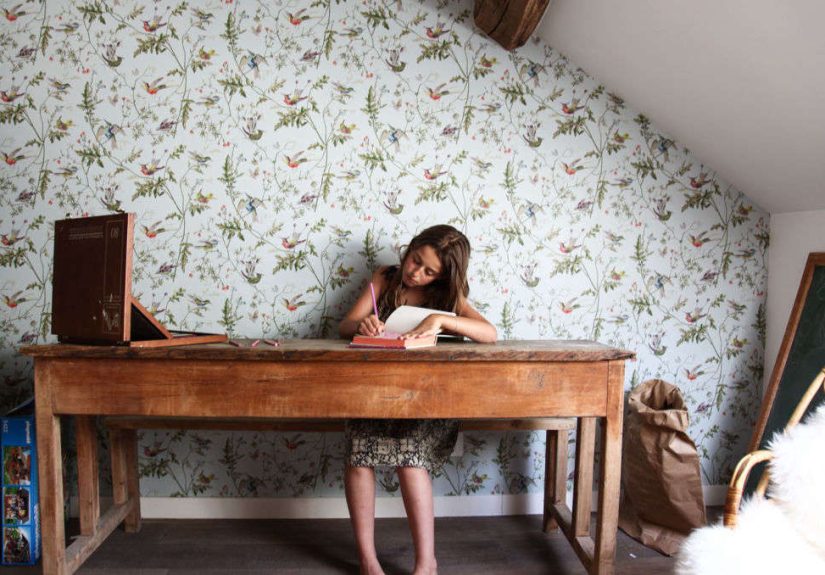
Many design books quietly pretend children are mythical creatures who live elsewhere. The Socialite Family does not. Children appear as part of the home’s rhythm, not as design problems to be hidden behind baskets. Their rooms, toys, drawings, and routines influence how spaces work. This is one reason the book connects so strongly with modern parents. It recognizes that family interiors must survive bedtime, breakfast, homework, and the occasional architectural experiment built from sofa cushions.
3. Use Color Like You Mean It
The Socialite Family aesthetic is not afraid of color. It often embraces warm tones, saturated accents, patterned textiles, and playful combinations. But the color does not feel random. It is usually grounded by natural materials, vintage forms, or strong architectural bones. The result is lively rather than loud. Think “cultured dinner party,” not “paint store had a nervous breakdown.”
4. Make Storage Part of the Look
Real homes need storage. The book understands this deeply. Shelves, crates, carts, hooks, baskets, and open displays are treated as opportunities rather than compromises. A stack of books can become texture. Kitchen objects can become decoration. Everyday tools can be arranged with intention. This is useful advice for anyone living in an apartment, a small house, or a home where closets mysteriously shrink every December.
5. Choose Soul Over Perfection
The Socialite Family book is ultimately a love letter to soul. Its rooms feel personal because they include evidence of life: art, textiles, books, souvenirs, family objects, and furniture with history. The result is not messy; it is layered. There is a difference. Mess says, “I gave up.” Layering says, “I have lived, traveled, inherited, collected, changed my mind, and possibly bought this lamp at 2 a.m.”
The Book as a Guide to Modern Family Living
What makes The Socialite Family book more than a pretty interiors volume is its understanding of lifestyle. The featured homes are stylish, yes, but they are also practical stages for daily life. Dining rooms are for gathering. Kitchens are for cooking and conversation. Children’s rooms support imagination. Living rooms welcome guests without requiring them to sit like museum visitors.
This is where the book becomes especially useful for American readers. Many families want homes that feel sophisticated but not fragile. They want design that can handle pets, kids, work-from-home routines, dinner parties, and the strange number of charging cables required by modern civilization. The Socialite Family style offers a flexible model. Invest in pieces with character. Mix price points. Keep useful objects close. Avoid decorating only for photographs. A room should look good, but it should also know how to host a Tuesday.
French Style Without the Clichés
American audiences often romanticize French interiors as effortless, which is a little unfair because “effortless” usually takes a great deal of effort and at least one very confident person saying, “No, the wall should be aubergine.” The Socialite Family book offers a more grounded version of French style. It is not just about ornate moldings, linen curtains, and antique mirrors, although those certainly do not hurt. It is about confidence, restraint, contradiction, and the refusal to over-explain.
The homes associated with The Socialite Family often combine elegance with informality. A beautiful chair does not need a velvet rope around it. A dining table can be both sculptural and covered in crumbs by 8 a.m. Art can be serious while the room remains joyful. This is the kind of French-inspired decorating that feels livable, not theatrical. It whispers rather than shouts, though occasionally it whispers in a fabulous wallpaper.
Why Coffee Table Book Lovers Appreciate It
As a coffee table book, The Socialite Family succeeds because it offers both visual pleasure and practical inspiration. Some design books are stunning but emotionally distant, like a very beautiful person who only talks about imported stone. This one feels more conversational. You can flip through it for mood, study it for ideas, or use it as a reference when trying to convince yourself that mismatched dining chairs are not a crisis but a personality trait.
The photography is central to the experience. The rooms are not simply documented; they are observed. Details matter: a child’s bed canopy, a stack of crates used as shelving, a bathtub placed with relaxed confidence, a table surrounded by signs of daily life. These moments help readers understand that design does not always require a total renovation. Sometimes it begins with rearranging what you already own, editing what feels flat, and adding one object with a better story.
How to Apply The Socialite Family Look at Home
You do not need a Parisian address to borrow from The Socialite Family style. Start with the room you use most and ask a simple question: does this space reflect how we actually live? If the answer is “not unless we are pretending to be quieter people,” begin there.
Add warmth through textiles: rugs, throws, curtains, cushions, and bedding. Bring in vintage or secondhand pieces that add age and texture. Display books and objects that reveal interests rather than just color schemes. Use lighting at different heights so the room feels layered at night. Mix furniture shapes instead of buying everything from one collection. Most importantly, leave room for real life. A home that cannot handle a backpack, a coffee cup, or a spontaneous dance session is not chic. It is simply anxious.
Experience Notes: Living With The Socialite Family Mindset
Spending time with the ideas behind The Socialite Family book: lifestyles of the young and chic changes the way you look at rooms. You begin to notice that the most memorable homes are rarely the most perfect ones. They are the homes with a slightly crooked stack of art books, a lamp that seems to have had a previous life in a glamorous aunt’s apartment, and a dining chair that does not match the others but somehow wins the whole room. The book encourages that kind of noticing. It trains the eye to value atmosphere over symmetry.
One practical experience inspired by the book is the “home walk-through.” Instead of shopping first, walk through your space as if you were photographing it for a story. What corners feel alive? Which surfaces look accidental rather than intentional? Where does the family naturally gather? This simple exercise reveals more than any trend report. Maybe the kitchen table is the emotional center of the home, so it deserves better lighting. Maybe the hallway is wasted, though it could hold art, hooks, or a narrow bench. Maybe the living room is too formal, and everyone secretly prefers the smaller den because it has softer light and fewer rules.
Another experience is learning to edit without erasing personality. Many people hear “declutter” and imagine stripping a room down until it resembles a polite waiting area. The Socialite Family approach suggests a better method: keep what has energy. Remove what feels generic. A handmade bowl, a vintage frame, a travel photograph, a child’s drawing, or a stack of favorite magazines can stay if it contributes to the room’s identity. The goal is not emptiness. The goal is meaning.
The book also helps families rethink durability. In many homes, “family-friendly” has become code for dull, washable, and emotionally beige. But family life does not require surrendering style. It requires smarter choices. A patterned rug can hide daily wear better than a pale one. A solid wood table can age beautifully. Slipcovered seating can be practical without looking defeated. Open shelving can work if the objects are useful and attractive. The trick is to design for movement, not stillness.
Perhaps the most valuable experience is emotional permission. The Socialite Family book gives readers permission to trust personal taste. You do not need to follow every design rule, buy only new furniture, or hide every sign that children exist. You can mix eras, colors, and moods. You can let your home evolve. You can choose charm over showroom perfection. And yes, you can put a beautiful book on the coffee table, then actually read it. Revolutionary behavior, but someone has to lead.
Conclusion
The Socialite Family book remains compelling because it understands something many interiors miss: style is not separate from life. It grows from the way people cook, rest, host, work, raise children, collect objects, and remember places. Its version of chic is not icy or untouchable. It is warm, layered, clever, and sometimes delightfully imperfect.
For readers interested in French interiors, family-friendly design, modern eclectic homes, or coffee table books with substance, this book offers more than inspiration. It offers a philosophy. Build a home with character. Let rooms tell the truth. Choose pieces that can live with you, not just pose for you. And when in doubt, add a better lamp. Homes, like people, usually improve with good lighting.