Table of Contents >> Show >> Hide
- Why the Supercon 2025 Badge Stands Out
- A Two-Board Badge That Invites Creative Mischief
- The Keyboard Makes Customization Feel Useful
- LoRa Turns the Badge Into a Social Device
- MicroPython Lowers the Barrier to Badge Hacking
- Real Badge Hacks Show What the Platform Can Become
- Customization Is More Than Decoration
- Tips for Designing a Custom Supercon 2025 Badge Panel
- Why the Supercon 2025 Badge Matters for Open Hardware Culture
- Experience Section: What It Feels Like to Customize a Badge Like This
- Conclusion
The Hackaday Supercon badge has never been just a name tag. Calling it a badge is a little like calling a multitool “a pointy thing.” Technically true, emotionally insufficient. The Supercon 2025 Badge continues that glorious tradition, but this year’s communicator-style electronic badge adds a new twist: it is not only built to be hacked in software and hardware, it is built to be visually customized.
That matters. In the badge-hacking world, blinking LEDs are nice, wireless radios are exciting, and a tiny keyboard makes every hacker immediately think, “Could I turn this into a pocket computer?” But the 2025 Hackaday Supercon badge also invites makers to change how the badge looks and feels in the hand. The front panel is not merely decoration; it is a user-replaceable design opportunity. In other words, Supercon 2025 did not just hand attendees a gadget. It handed them a tiny spaceship console and said, “Please improve the upholstery.”
Why the Supercon 2025 Badge Stands Out
The main keyword here is obvious: Supercon 2025 badge. But the bigger story is customized electronic badge design. This badge was created around hackability, a value that has long defined Hackaday Superconference culture. The event, held in Pasadena, California, brings together hardware hackers, embedded developers, makers, artists, tinkerers, and the kind of people who keep a spare logic analyzer in the same drawer as their socks.
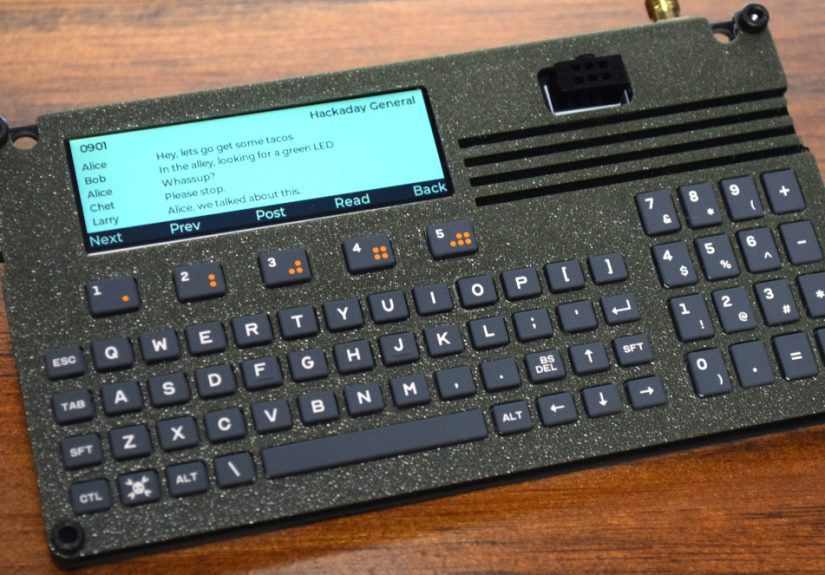
The 2025 badge leans into the idea that conference hardware should have an “afterlife.” Instead of becoming a forgotten souvenir, it can become a test platform, a handheld communicator, a small software playground, or a very suspicious object that makes airport security ask follow-up questions. Its core hardware includes an ESP32-S3, LoRa communication capability through an SX1262-based module, an LCD, a LiPo battery system, charging circuitry, a custom keyboard, and an expansion-friendly badge layout.
That is already a generous pile of toys. Yet the most charming part of the design may be the physical stack-up: the badge uses two PCBs, and the front board has no electrical function. Its job is mechanical. It holds the keyboard membrane against dome switches on the rear PCB. That means the front board can be replaced with another material if the maker respects the spacing and keyboard requirements. Suddenly, customization is not a scary “redesign the entire circuit” job. It is a front-panel project.
A Two-Board Badge That Invites Creative Mischief
Traditional PCB badges often look nearly identical from attendee to attendee. People can rewrite firmware, add peripherals, or attach a blinking creature to the side, but the base badge still looks like the official badge. Supercon 2025 changes that equation by making the non-electrical front PCB a customizable surface.
The official badge repository includes front-panel files in maker-friendly formats such as STEP, DXF, and SVG. That is a huge gift to people who use CAD, laser cutters, CNC routers, 3D printers, or design software. A STEP file helps with 3D modeling and mechanical planning. A DXF file is friendly to laser cutting and CNC workflows. An SVG file opens the door to graphics, vector edits, and fast visual experimentation.
Material Ideas for Custom Front Panels
Because the front panel is mechanical rather than electrical, makers can explore a wide range of materials. Aluminum could give the badge a polished sci-fi instrument feel. Thin plywood could create a warm retro-computing look, as if the Enterprise bridge briefly stopped at a mid-century furniture store. Acrylic could offer translucent colors, edge-lighting effects, or layered graphics. 3D-printed panels could add raised lettering, grip texture, or dramatic curves that say, “Yes, I own calipers, and I am not afraid to use them.”
The critical detail is fit. The spacing between the rear and front boards should be about 2 mm, and the area around the keyboard should be roughly PCB thickness, about 1.7 mm, for comfortable typing. M3 nuts and bolts are a practical way to attach a custom panel. These are not glamorous constraints, but they are the difference between “beautiful custom badge” and “why does every key feel like mashed potatoes?”
The Keyboard Makes Customization Feel Useful
The 2025 Hackaday Supercon badge is not just a screen with a few buttons. Its custom keyboard gives it the spirit of a tiny portable computer. The keyboard is tied to Solder Party’s KeebDeck design philosophy: compact, tactile, thumb-friendly, and maker-oriented. The result is a badge that encourages real input, not just menu poking.
This is important for badge hacking. When a badge has a keyboard, software projects become more interesting. Text adventures, chat tools, tiny music apps, configuration screens, handheld utilities, local games, and radio messaging interfaces all become more practical. A badge with a keyboard says, “Type something.” A badge with only two buttons says, “Please enjoy scrolling forever.”
The keyboard also raises the stakes for front-panel customization. A maker cannot simply cut a rectangle and call it done. The panel must support the typing feel. It must hold the membrane correctly, preserve travel, and avoid squeezing the keys like a nervous robot handshake. That makes the project more satisfying because the finished result is not only decorative; it changes the tactile experience.
LoRa Turns the Badge Into a Social Device
The badge’s communicator theme is not just visual theater. LoRa support gives the badge a wireless personality. The design explores the idea of badges forming a dense local mesh where attendees can listen to topics, relay messages, and interact through badge-hosted communication channels. Think of it as IRC wandering through a hardware conference wearing a battery pack.
Using LoRa in a crowded badge environment is funny in the best engineering way. LoRa is known for long-range, low-power communication. Supercon puts hundreds of radios close together, sometimes only a few meters apart. That creates an unusual design challenge: instead of asking, “How far can this go?” the badge team has to ask, “How do we keep this from shouting across the room like a caffeinated town crier?”
This wireless layer expands the meaning of customization. A custom front panel may change the look, but code changes can transform behavior. A maker might build a themed chat client, a radio game, a badge-to-badge scavenger hunt, or a channel browser with a strange user interface that only makes sense after two coffees and one soldering mistake.
MicroPython Lowers the Barrier to Badge Hacking
One of the smartest choices in recent Supercon badge design is the emphasis on MicroPython. Embedded development can be intimidating, especially when newcomers are dropped into toolchains, flashing procedures, and C compiler errors that look like ancient curses. MicroPython makes experimentation more approachable by letting attendees write Python-style code for microcontroller hardware.
That does not mean every project becomes easy. Embedded graphics, hardware pins, timing, memory, radios, and input handling still require patience. But MicroPython helps shorten the path between “I have an idea” and “the badge is doing something weird, which is technically progress.”
The badge also uses LVGL-related graphics capabilities through MicroPython bindings, giving hackers a route to build interfaces on the LCD. That combination of display, keyboard, radio, and programmable firmware makes the Supercon 2025 badge feel less like a souvenir and more like a tiny development kit disguised as conference swag.
Real Badge Hacks Show What the Platform Can Become
The best proof of a hackable platform is what people actually build with it. Community projects around the Supercon 2025 badge already show the range. One maker turned the badge into a small synthesizer-style project using PWM output, a simple piezo buzzer on the SAO header, keyboard input, and a graphical interface. That kind of project captures the Supercon spirit perfectly: start with a badge, add a tiny hardware idea, write some code, test it in the chaos of a conference, and present it before anyone has time to overthink the aesthetics.
Make: also described the 2025 Supercon atmosphere as open, helpful, and deeply community-driven, with badge hacking celebrated in a closing ceremony. That is the real engine behind the badge’s success. Great hardware matters, but the surrounding culture matters even more. A badge becomes powerful when people share code, debug each other’s mistakes, swap parts, offer advice, and cheer when someone’s project finally stops crashing.
Customization Is More Than Decoration
It is tempting to treat the customizable front panel as a cosmetic feature. That would be underselling it. Aesthetic customization changes ownership. When attendees make their own badge faceplate, they stop carrying “the event badge” and start carrying “my badge.” That emotional shift is why people love keyboards with custom keycaps, laptops covered in stickers, and 3D printers modified until they look like small industrial octopuses.
For hardware hackers, personalization is practical too. A custom panel can label special functions, improve grip, add mounting points, protect edges, or make room for accessories. A panel can be designed for a specific software hack. For example, a text adventure game could have engraved command hints. A radio chat interface could label channel controls. A music app could use a front panel styled like a miniature synthesizer. A Star Trek-inspired communicator theme could add color blocks, faux interface lines, or “do not press this unless dramatic music is playing” labels.
Tips for Designing a Custom Supercon 2025 Badge Panel
Start With the Official Files
Use the official STEP, DXF, or SVG front-panel files as the foundation. Do not trace a photo unless your goal is “almost fits, but emotionally.” The official files preserve dimensions and alignment, which is essential for the keyboard and mounting hardware.
Respect the Keyboard Geometry
The keyboard is the most sensitive part of the mechanical design. Keep the key area close to PCB thickness and maintain the intended spacing between the front and rear boards. If the panel is too thick, typing may feel stiff. If it is too loose, the keypad may feel vague. Good badge customization is part art, part engineering, and part not angering the dome switches.
Prototype Before Making the Fancy Version
Cut a cheap test panel before machining aluminum or printing in expensive material. Cardboard, thin acrylic scraps, or quick 3D prints can reveal fit problems early. A prototype is not failure; it is the universe politely warning you before you waste the pretty filament.
Design for Use, Not Just Photos
A badge lives on a lanyard, gets bumped on tables, rides in bags, and is handled by curious people. Sharp edges, fragile tabs, and decorative parts that snag on clothing may look wonderful for five minutes and then become pocket confetti. A good customized badge should survive the weekend and still look cool on Monday.
Why the Supercon 2025 Badge Matters for Open Hardware Culture
The Supercon 2025 badge is a small object with a big lesson: open, hackable design gets better when it invites multiple kinds of creativity. Some people are firmware wizards. Some are CAD artists. Some are RF experimenters. Some are 3D printing goblins with opinions about layer height. A badge that supports software, hardware, and physical customization gives all of them a place to play.
This is why the badge works as a symbol of modern maker culture. It is not locked down. It is not polished into boredom. It gives users files, interfaces, ports, code paths, and enough constraints to make the challenge interesting. It does not say, “Do not open.” It says, “Open carefully, bring M3 bolts, and maybe label your wires.”
Experience Section: What It Feels Like to Customize a Badge Like This
Working with a badge like the Supercon 2025 Badge feels different from modifying a normal gadget. With a regular consumer device, customization often begins with fear. You worry about voiding warranties, breaking clips, cracking plastic, or discovering that the manufacturer used adhesive strong enough to secure a moon base. With this badge, the mood is more welcoming. The design practically winks at you and says, “Go ahead, make it yours.”
The first experience is planning. You download the mechanical files, open them in CAD or vector software, and immediately start imagining versions. A brushed aluminum communicator. A smoky acrylic cyberdeck. A plywood panel with engraved labels. A bright 3D-printed faceplate that looks like it escaped from a 1980s toy aisle. This stage is dangerously fun because every idea seems possible until dimensions arrive wearing a tiny referee uniform.
The second experience is humility. The keyboard area teaches respect quickly. A panel that looks perfect on screen may press too hard, flex too much, or sit slightly off-center. The badge reminds you that mechanical design is not just “make shape pretty.” It is tolerances, thickness, spacing, fasteners, and the mysterious behavior of real materials. Acrylic melts if cut badly. Wood varies. 3D prints shrink or warp. Aluminum does not care about your feelings.
The third experience is iteration. You make a rough panel, attach it, press the keys, frown thoughtfully, remove it, sand something, adjust a hole, print again, and repeat. This loop is the maker equivalent of kneading dough, except the bread has GPIO pins. Every pass teaches something. Maybe the screw heads need more clearance. Maybe the keyboard opening should be slightly cleaner. Maybe the badge hangs better if the panel has a softer edge. Small changes add up until the object starts feeling intentional.
The fourth experience is personality. Once the panel fits, the badge becomes yours. People notice it. They ask what material you used. They ask whether the keyboard still feels good. They ask for files. Someone suggests a ridiculous improvement, and now you are doomed because it is actually a good idea. That social feedback is part of the reward. Custom badge work is not only about the object; it is about conversation.
The final experience is momentum. After customizing the front panel, software hacking feels more tempting. A custom faceplate begs for matching firmware. If the panel looks like a starship console, the screen should probably behave like one. If the panel looks like a synth, the badge should make noise. If it looks like a tiny terminal, it needs a text interface. Physical customization becomes the doorway to deeper badge hacking.
That is the magic of the Supercon 2025 Badge. It does not separate art from engineering. It lets them sit at the same workbench, borrow the same calipers, and argue about fonts. The badge is built to be customized because customization is how hackers think. They see a finished object and immediately imagine version two.
Conclusion
The Supercon 2025 Badge is built to be customized in the most meaningful sense. Its two-board design makes the front panel accessible to makers with laser cutters, CNC routers, 3D printers, and vector design tools. Its ESP32-S3, LoRa radio, MicroPython environment, LVGL graphics potential, keyboard, and expansion-friendly design make it a serious badge-hacking platform. Its community turns all of that hardware into stories, projects, lessons, and delightful weekend chaos.
For SEO readers searching for the Supercon 2025 badge, Hackaday Supercon badge customization, or custom electronic badge design, the key takeaway is simple: this badge is not just a collectible. It is a platform. It can be coded, expanded, decorated, redesigned, and transformed. It is the rare conference badge that invites you to bring both firmware skills and craft supplies. Honestly, more electronics should have that attitude.