Table of Contents >> Show >> Hide
- What Is a Belt Sander?
- Why Every Home Workshop Needs a Belt Sander
- Belt Sander vs. Random Orbital Sander: Do You Need Both?
- Common Projects Where a Belt Sander Is Extremely Useful
- How to Choose the Right Belt Sander for a Home Workshop
- Understanding Sandpaper Grit for Belt Sanders
- How to Use a Belt Sander Without Ruining Your Project
- Safety Tips for Belt Sander Use
- Mistakes Beginners Make With Belt Sanders
- Is a Belt Sander Worth It for Beginners?
- When You Should Not Use a Belt Sander
- of Real Workshop Experience: What Owning a Belt Sander Actually Feels Like
- Conclusion: A Belt Sander Is the Workshop Shortcut That Still Requires Skill
A home workshop without a belt sander is like a kitchen without a sharp knife: technically functional, but you will spend a lot of time making simple jobs harder than they need to be. Whether you are building a farmhouse table, rescuing a thrift-store dresser, smoothing a rough board, or trying to make two stubborn pieces of wood behave like they belong together, a belt sander can save your arms, your patience, and possibly your weekend.
A belt sander is not the quiet, dainty tool that politely whispers across a surface. It is the energetic friend who shows up with coffee, a pickup truck, and a plan. It removes material fast, levels uneven wood, strips old finishes, reshapes edges, and turns “this board looks like it fought a raccoon” into “hey, this might actually become furniture.” Used wisely, it becomes one of the most useful power sanders in a home workshop.
But here is the important part: a belt sander is powerful. That power is exactly why you need one, and also why you need to respect it. It is not meant for delicate final polishing or tiny decorative corners. It is built for serious sanding tasks where hand sanding would feel like punishment. If you enjoy DIY woodworking, furniture repair, home improvement projects, or weekend builds, a belt sander deserves a permanent parking spot on your bench.
What Is a Belt Sander?
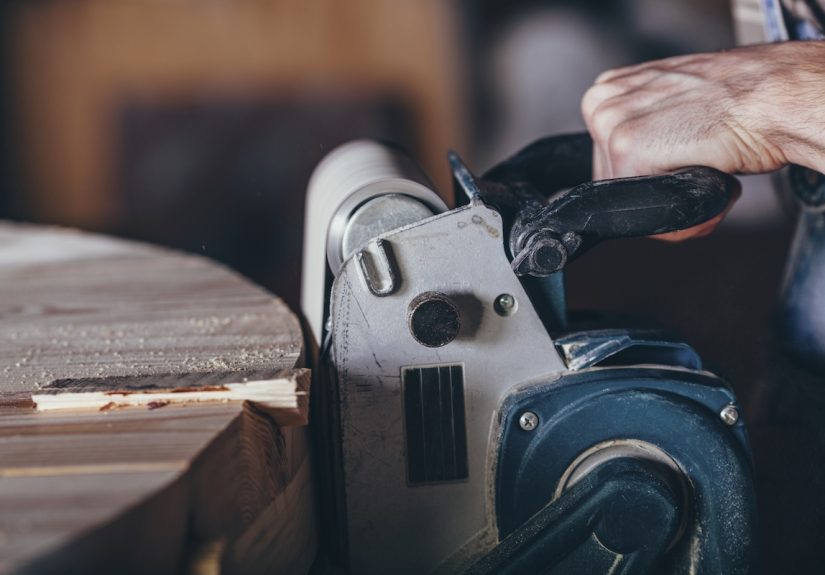
A belt sander is a power tool that uses a continuous loop of abrasive sandpaper stretched around two drums. When the motor runs, the sanding belt spins in one direction, allowing the tool to remove wood, paint, varnish, and other surface material quickly. Unlike a random orbital sander, which moves in small circular patterns, a belt sander attacks the surface with straight-line force.
That makes it ideal for aggressive work. Think flattening, leveling, stripping, shaping, and smoothing large flat surfaces. If a random orbital sander is the tool you use to make something look beautiful, a belt sander is often the tool you use first to make the project manageable.
Why Every Home Workshop Needs a Belt Sander
1. It Removes Material Fast
The biggest reason to own a belt sander is speed. Hand sanding a rough board can make you question every decision that led you to woodworking. A belt sander, on the other hand, can remove high spots, old finish, glue squeeze-out, and rough saw marks in a fraction of the time.
For example, imagine you are building a simple bench from construction lumber. The boards are sturdy, affordable, and full of personality, which is a polite way of saying they may be rough, uneven, scratched, and slightly dramatic. A belt sander with a coarse grit can quickly knock down the roughness and prepare the surface for finer sanding later.
This is where the tool shines: not in creating the final silky finish, but in doing the heavy lifting before the finishing tools take over.
2. It Levels Uneven Boards and Panels
Wood is not always perfectly flat. Even boards that look straight at the store can reveal small ridges, cupping, twist, or mismatched edges once you get them home. A belt sander helps correct those uneven areas, especially on tabletops, shelves, doors, benches, and large panels.
When two boards meet and one sits slightly higher than the other, a belt sander can blend the joint so the transition feels smooth. This is especially useful after glue-ups, where tiny differences in board height can create annoying ridges. Instead of spending an hour with a sanding block and a frown, you can use the belt sander to bring the surface closer to level before moving to a random orbital sander for refinement.
3. It Makes Furniture Restoration Less Painful
Old furniture often comes with mystery finishes, dents, scratches, and paint layers that seem to have been applied by someone with both enthusiasm and poor lighting. A belt sander can help strip old coatings from flat surfaces such as tabletops, dresser tops, cabinet doors, and wooden benches.
For restoration work, the trick is control. You do not want to dig trenches into the wood or burn through thin veneer. Start with a grit that matches the job, keep the sander moving, and let the tool’s weight do the work. If the piece has delicate veneer or antique value, test carefully in a hidden area or switch to a gentler sanding method.
For solid wood furniture, however, a belt sander can be a game changer. It turns a long, dusty battle into a manageable prep step.
4. It Helps Shape Edges and Trim Pieces
A belt sander is also useful for shaping. Need to slightly adjust a piece of trim? Smooth a rough edge? Ease the corner of a shelf? Fit a board to an imperfect wall? A belt sander can remove small amounts of material quickly and evenly when handled with care.
This is especially helpful in real homes, where walls are not always square, floors are not always level, and “standard size” sometimes feels like a beautiful myth. A belt sander can help you sneak up on a better fit without dragging out five different tools.
5. It Saves Time on Large Flat Surfaces
Large surfaces are where a belt sander earns applause. Tabletops, workbench tops, doors, shelves, wood countertops, and wide boards all benefit from a tool designed to cover area quickly. A small finishing sander can do the job eventually, but “eventually” is not always the schedule you had in mind.
With the right grit and good technique, a belt sander can quickly prepare a large surface for finer sanding. After that, you can step down to a random orbital sander or finishing sander to remove belt marks and create a smoother surface for stain, paint, oil, or polyurethane.
Belt Sander vs. Random Orbital Sander: Do You Need Both?
Yes, if you do regular DIY work, owning both is ideal. A belt sander and a random orbital sander are not enemies. They are teammates with very different personalities.
A belt sander is best for rough work: removing material, flattening boards, stripping finishes, and leveling surfaces. A random orbital sander is better for general smoothing and finish preparation. It leaves fewer visible marks and is easier to control on many projects.
Think of it this way: the belt sander is the bulldozer, and the random orbital sander is the landscaper. One clears the rough ground. The other makes it look nice enough for guests.
Common Projects Where a Belt Sander Is Extremely Useful
Building a Workbench
A workbench top takes abuse. It also needs to be reasonably flat. A belt sander helps level boards, smooth glue joints, and remove rough mill marks. You do not need a museum-quality finish on a workbench, but you do want a surface that does not snag every piece of wood you place on it.
Refinishing a Tabletop
Dining tables, coffee tables, and side tables often collect scratches, water rings, dents, and old finish. A belt sander can remove damaged top layers from solid wood surfaces so you can sand progressively finer and apply a fresh finish.
Fitting Doors
If a wooden door sticks along the edge, a belt sander can help remove a controlled amount of material. It is faster than hand sanding and cleaner than hacking away with the wrong tool. Mark the area carefully, remove the door if needed, and work slowly.
Smoothing Rough Lumber
Not everyone has a planer or jointer at home. A belt sander is not a perfect replacement for those tools, but it can improve rough boards enough for many home projects. It can reduce raised grain, saw marks, small high spots, and surface roughness.
Removing Paint or Varnish from Flat Wood
When old paint or varnish needs to come off a flat surface, a belt sander can make quick progress. Always check whether the old coating may contain lead before sanding older painted surfaces. If there is any chance of lead paint, do not sand it casually; follow proper safety and local guidance.
How to Choose the Right Belt Sander for a Home Workshop
Handheld Belt Sanders
For most home workshops, a handheld belt sander is the most practical choice. Common sizes include 3-by-18-inch and 3-by-21-inch models. A 3-by-21-inch belt sander offers a good balance of power, control, and sanding area for many DIY users.
Look for comfortable handles, easy belt changes, adjustable belt tracking, a dust bag or dust port, and enough power for hardwoods and refinishing work. Variable speed is also useful because it lets you slow the tool down for more control.
Benchtop Belt Sanders
A benchtop belt sander stays mounted in place and is excellent for shaping small parts, smoothing edges, and refining curves. Many models combine a belt and disc sander in one machine. These are great for small woodworking pieces, craft projects, and repeatable edge work.
If your projects involve cutting small parts, shaping trim, or smoothing edges after a saw cut, a benchtop belt sander can become one of those tools you use more often than expected.
Corded vs. Cordless
Corded belt sanders deliver consistent power and are often better for longer sanding sessions. Cordless models offer convenience and mobility, especially for quick tasks away from an outlet. For a primary home workshop sander, many DIYers still prefer corded power because belt sanding can drain batteries quickly under heavy load.
Understanding Sandpaper Grit for Belt Sanders
The sanding belt you choose matters as much as the machine. A powerful sander with the wrong grit is like using a snow shovel to frost a cake. Technically, something will happen, but it may not be what you wanted.
- 40 to 60 grit: Best for aggressive material removal, stripping old finishes, and leveling rough surfaces.
- 80 grit: A common starting point for rough wood that needs smoothing without going full demolition mode.
- 100 to 120 grit: Useful for refining surfaces after coarse sanding.
- 150 grit and higher: Better suited for later sanding stages, often with a random orbital or finishing sander rather than aggressive belt sanding.
Do not skip too many grit levels. If you start with 60 grit and jump straight to 220, you may leave deep scratches behind and spend more time trying to erase them. A smoother progression produces better results with less frustration.
How to Use a Belt Sander Without Ruining Your Project
Let the Tool Do the Work
Do not press down hard. A belt sander already has enough muscle. Adding extra pressure increases the risk of gouges, uneven sanding, overheating, and tired arms. Hold the tool firmly, guide it steadily, and let the weight of the sander do most of the work.
Start Before Touching the Wood
Bring the sander up to speed before placing it on the work surface. Then ease it down gently with the sanding plate flat against the wood. When finishing a pass, lift the sander off the work before turning it off. This helps prevent dips and stop marks.
Keep It Moving
A belt sander sitting in one spot can dig a low area faster than you can say, “I meant to do that.” Keep the tool moving in smooth, overlapping passes. Move with the grain whenever possible to reduce visible scratches.
Stay Flat
Tilting the sander can create grooves. Keep the base flat on the wood, especially on tabletops, shelves, and doors. If you need to work an edge, approach it carefully and avoid rounding it unintentionally unless that is your goal.
Practice on Scrap First
If you are new to belt sanding, practice on scrap wood. Learn how quickly the tool removes material, how it pulls, and how different grits behave. A few minutes of practice can prevent a very exciting mistake on your actual project.
Safety Tips for Belt Sander Use
Belt sanders create dust, noise, and fast-moving abrasive action. Respect the tool and your lungs will thank you.
- Wear eye protection to guard against dust and debris.
- Use hearing protection, especially during longer sanding sessions.
- Wear a suitable dust mask or respirator when sanding wood or finishes.
- Connect the sander to a dust bag, shop vacuum, or dust extractor when possible.
- Secure the workpiece with clamps so it cannot slide.
- Keep cords away from the sanding belt.
- Do not wear loose sleeves, dangling jewelry, or anything that could get caught.
- Unplug the tool or remove the battery before changing belts.
Dust control is not just about keeping the shop pretty. Fine wood dust can irritate your eyes, skin, and respiratory system. Some woods are especially irritating, and old finishes may contain substances you do not want floating around your garage. Good dust collection, ventilation, and personal protective equipment should be part of the setup, not an afterthought.
Mistakes Beginners Make With Belt Sanders
Using Too Coarse a Grit for Too Long
Coarse grit removes material quickly, but it also leaves deeper scratches. Use it only as long as needed, then move to finer grits. The goal is to remove the problem, not excavate a canoe.
Pressing Down Too Hard
More pressure does not mean better sanding. It usually means more heat, more scratches, and more chances of gouging. Relax your grip and guide the tool.
Skipping Dust Collection
A tiny dust bag is better than nothing, but connecting to a shop vacuum often improves cleanup and visibility. If your sander has a dust port, use it.
Using a Belt Sander for Final Finish Work
A belt sander is not usually the final step before stain or finish. After belt sanding, switch to finer sanding tools to remove belt marks and prepare the surface properly.
Sanding Veneer Too Aggressively
Thin veneer can be sanded through quickly. If you are working on plywood or veneered furniture, proceed with extreme care or choose a gentler tool.
Is a Belt Sander Worth It for Beginners?
Yes, as long as beginners understand what the tool is for. A belt sander is not difficult to use, but it is easy to misuse if you treat it like a finishing sander. Start with simple projects, use moderate grits, practice on scrap, and focus on control.
For a beginner building shelves, benches, planter boxes, garage storage, or simple furniture, a belt sander can reduce prep time dramatically. It also makes rough materials more approachable. Instead of avoiding imperfect boards, you can correct them.
When You Should Not Use a Belt Sander
A belt sander is useful, but it is not the answer to every sanding problem. Avoid using it on delicate carvings, intricate moldings, thin veneer, small loose pieces, final finish sanding, or surfaces where removing too much material would ruin the project.
For tight corners, use a detail sander or sanding block. For final smoothing, use a random orbital sander or hand sanding. For precision thicknessing, use a planer if available. The belt sander is a specialist in fast removal, not delicate whispering.
of Real Workshop Experience: What Owning a Belt Sander Actually Feels Like
The first time many DIYers use a belt sander, they have the same reaction: “Oh. This tool is serious.” It does not nibble at wood. It eats. That can be intimidating for about five minutes, and then it becomes addictive in the best possible way. Suddenly, rough boards look less scary. Old tabletops look restorable. That weird swollen edge on a door becomes fixable. You start seeing projects not as problems, but as surfaces waiting to be improved.
In a home workshop, the belt sander often becomes the tool you reach for when a project has gone from “cute weekend idea” to “why is nothing flat?” Maybe you glued up boards for a small tabletop and the seams did not align perfectly. Maybe you bought budget lumber and one board had raised grain that felt like a tiny wooden mountain range. Maybe you cut a shelf slightly proud and need to bring it flush. These are the moments when a belt sander earns its keep.
One of the biggest lessons is that the sander rewards patience, even though it works quickly. The beginner instinct is to push hard, as if the tool needs encouragement. It does not. A better approach is to hold it steady, keep it flat, and move with calm confidence. When you stop fighting the machine and start guiding it, the results improve immediately.
Another lesson is that dust collection matters more than you think. The first sanding session without good dust control teaches you this very clearly. Dust gets on the bench, the floor, your shirt, your eyebrows, and somehow inside a closed drawer across the room. Connecting the sander to a shop vacuum, wearing a respirator, and opening up ventilation makes the whole experience cleaner and healthier. It also helps you see the surface better while you work.
Grit choice becomes second nature over time. You learn that 40 grit is not a casual suggestion; it is a commitment. You learn that 80 grit is often a friendly starting point for rough boards. You learn that the belt sander should usually hand the project off to a random orbital sander before finishing. The process becomes a rhythm: aggressive correction, smoother refinement, final preparation.
The best part of owning a belt sander is the confidence it gives you. You stop rejecting boards because they are a little rough. You stop dreading finish removal. You stop assuming every uneven surface needs a professional machine. A belt sander does not replace skill, but it gives you a powerful way to build skill faster.
There is also something deeply satisfying about watching a damaged surface become clean and level again. It feels like undoing time. Scratches fade, old finish disappears, rough lumber becomes touchable, and a project that looked questionable starts to look intentional. That moment is why the belt sander belongs in the home workshop. It turns effort into visible progress, and visible progress is the fuel that keeps DIY projects moving.
Conclusion: A Belt Sander Is the Workshop Shortcut That Still Requires Skill
A belt sander is one of the most practical tools you can add to a home workshop because it solves real problems quickly. It removes material, levels uneven surfaces, strips old finishes, shapes edges, and prepares rough wood for better sanding and finishing. It is not the tool for every task, and it is not meant for delicate final polish, but when you need power and speed, few sanders are more useful.
The secret is learning to control it. Use the right grit, keep the sander moving, avoid heavy pressure, protect yourself from dust, and practice before working on an important piece. Once you understand its personality, a belt sander becomes less intimidating and more like a trusted shop assistantone with a loud voice, a strong work ethic, and absolutely no patience for rough lumber.
If your workshop is growing and you want to build, repair, refinish, or improve wood projects with less frustration, a belt sander is not just a nice upgrade. It is one of those tools that makes you wonder how you managed without it.