Table of Contents >> Show >> Hide
- A Beach Scene Built From Love (and a Lot of Pixels)
- Why Losing a Pet Can Hurt So Much (Yes, It’s “Real Grief”)
- How a Virtual Reality Pet Memorial Works (In Human Terms)
- The Bigger Trend: Digital Grief Spaces Aren’t Just for Pets
- When Technology Helps Griefand When It Might Not
- Alternatives (and Add-Ons) If VR Isn’t Your Thing
- If You’re in the Thick of It: Practical Coping Steps
- Conclusion: Love Doesn’t EndIt Learns a New Address
- Real-Life Experiences Related to This Topic (Approx. )
If you’ve ever loved a dog, you already know the math is unfair: one dog equals a thousand good mornings,
but the years never add up. When a beloved pup dies, the silence can feel louder than a vacuum cleaner
(and, frankly, just as unwanted).
That’s why one grieving dog dad did something both heartbreakingly tender and quietly mind-blowing:
he used virtual reality to build a place where he could “visit” his dog againbecause their last planned
beach trip never happened in real life. So he made it happen in a digital one.
A Beach Scene Built From Love (and a Lot of Pixels)
The man at the center of this story is Daniel Esparza, a virtual reality professional who shared nearly 13 years
with his Labrador, Sam. As Sam aged, her health declined, and the beach vacation he’d planned as a final memory
didn’t work out. After she passed, he leaned into the one skill set he had that could build something grief
couldn’t: a world.
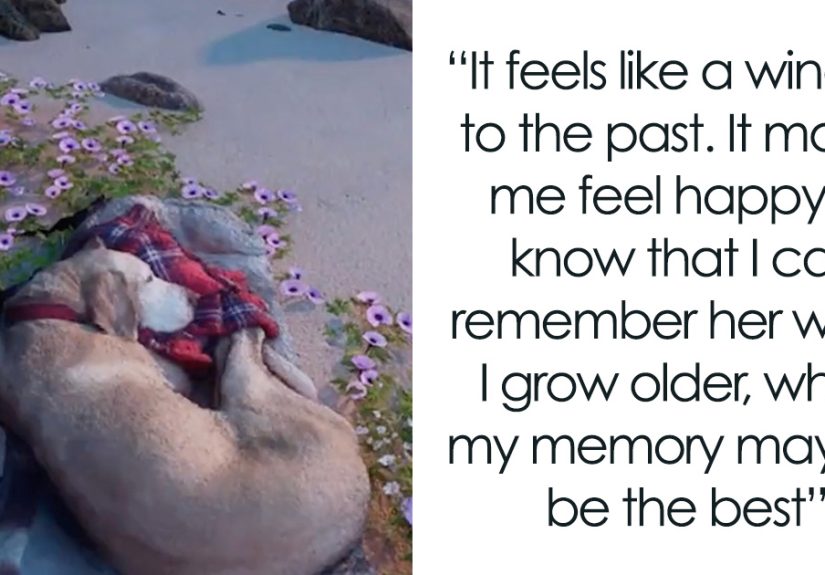
Before Sam died, Esparza had scanned her while she was sleeping. Afterward, he used that scan to create a
dreamlike beach environment in VRa space where Sam could rest among flowers, and where he could sit with her,
life-size, in a way that felt different from looking at a photo on a phone.
This isn’t a sci-fi plot about replacing reality. It’s closer to a digital scrapbook you can step insidea private,
immersive “memory room” built to hold a bond that didn’t disappear just because a heartbeat did.
Why Losing a Pet Can Hurt So Much (Yes, It’s “Real Grief”)
Pet grief can be intense because the relationship is intensely daily. Dogs don’t just live with us; they
pattern our lives. Wake up? Dog. Sit down? Dog. Snack? Dog. Cry in the bathroom so nobody sees you?
Dog outside the door like a fuzzy security guard.
And yet, people sometimes treat pet loss like it’s “less than” other grief. That mismatchbig feelings, small
social permissioncan leave mourners feeling isolated or embarrassed. Veterinary and mental-health resources
increasingly recognize that pet loss is a legitimate bereavement experience, and that people benefit from
support, rituals, and validation.
The concept that explains the ache: “continuing bonds”
Modern grief psychology often emphasizes that healing doesn’t require “letting go” in the way pop culture
suggests. Instead, many people adapt by maintaining a healthy connectionwhat researchers call
continuing bonds. You don’t erase love; you reshape it.
In that light, a virtual reality pet memorial isn’t automatically “avoidance.” It can be a structured way to
honor the relationshipespecially when it’s paired with real-world coping skills, community, and time.
How a Virtual Reality Pet Memorial Works (In Human Terms)
Let’s translate the tech into plain English. Creating a VR “visit” usually involves a few building blocks:
- A digital model of the pet (created from a 3D scan, photogrammetry, or 3D artistry).
- A setting (a beach, a living room, a parksomewhere meaningful).
- A way to experience it (VR headset, desktop, or even a phone-based experience).
Esparza’s approach stood out because the dog wasn’t a generic “dog-like object.” It was Samcaptured in a familiar,
restful poseand placed in a location tied to a specific promise: “one last beach trip.”
Why it can feel different from photos
Photos are powerful, but they’re framed and flat. VR adds scale, space, and presence. Your brain processes
“I’m here with this memory,” not only “I’m looking at it.” That doesn’t mean VR is betterjust different.
For some people, that difference is comforting. For others, it’s too raw.
The key is how it’s used: as a gentle connection point, not a replacement life.
The Bigger Trend: Digital Grief Spaces Aren’t Just for Pets
Esparza’s story sits inside a much larger cultural shift: grief is increasingly expressed in digital spaces.
People create online memorial pages, post tributes, hold livestream funerals, and gather in virtual worlds to
remember loved ones. Researchers have even studied memorial rituals inside social VR platforms, exploring how
avatars and shared virtual environments can support mourning and community.
Meanwhile, businesses and communities have begun offering everything from online pet memorials to “metaverse”
remembrance spaces. Whether you find that beautiful, weird, or beautifully weird often depends on your comfort
with techand your need for a place to put your love when it has nowhere obvious to go.
When Technology Helps Griefand When It Might Not
A virtual world can be a soft landing, but it’s not automatically healthy for everyone. Here’s a grounded way to
think about it.
Signs it may be helping
- You feel comforted afterward (even if you cry), not emotionally wrecked for days.
- You’re still engaging with lifework, relationships, basic self-care.
- The “visits” help you remember the love without spiraling into guilt or denial.
- You can talk about your pet in real life, not only inside the virtual space.
Signs it may be keeping you stuck
- You spend increasing hours “visiting” to avoid daily life or human connection.
- You feel panic at the idea of not logging in, like the grief will “win” if you stop.
- You’re unable to accept the reality of the loss outside the headset.
- Sleep, appetite, or functioning are significantly disrupted for weeks or months.
If any of the second list feels familiar, you don’t need shameyou need support. Pet loss hotlines, grief
counselors, and veterinary-school support lines exist for exactly this reason.
Alternatives (and Add-Ons) If VR Isn’t Your Thing
Not everyone wants to grieve in a headsetand that’s more than okay. There are many ways to keep a healthy bond:
1) Create a “living” memorial
- Plant a tree or flowers in your dog’s favorite sunny spot.
- Volunteer or donate to a shelter in their name.
- Keep a memory box with a collar, tag, toy, and printed photos.
2) Use digital tools without building a whole world
- Make a private album and add one photo a day for a month, with a caption.
- Create a short “day in the life” video montage with music that feels like them.
- Build a simple online memorial page where friends can share stories.
3) Try “rituals with guardrails”
Rituals help because they give grief a container. Light a candle on the day they passed. Take a walk on your
old route once a week. Write them a letter. The guardrail is time: choose a start and end, so remembrance
supports you rather than swallowing you.
If You’re in the Thick of It: Practical Coping Steps
Here are grief tools that are simple, evidence-informed, and surprisingly effectiveno inspirational posters
required:
-
Name what you’re feeling. “I miss her” is different from “I feel guilty” is different from
“I feel untethered.” Specific feelings are easier to carry. -
Normalize the waves. Grief is rarely linear. One day you’re okay; the next day you’re crying
because you found a single rogue tennis ball under the couch. -
Use support that fits your style. A friend, a pet loss group, a hotline, a counselorchoose
the least awkward option that still counts as connection. -
Reduce “what if” spirals. When guilt shows up, ask: “What would my dog want for me today?”
(Spoiler: snacks, sunshine, and for you to stop being so mean to their favorite human.) -
Know when to get extra help. If your grief feels unmanageable, persistent, or disabling,
professional support is a strength move, not a last resort.
Conclusion: Love Doesn’t EndIt Learns a New Address
The most touching part of Esparza’s virtual beach isn’t the technology. It’s the intention: a promise kept, a bond
honored, a safe place for love to land. For some people, a virtual reality pet memorial might be a bridge between
“I can’t believe they’re gone” and “I can carry them with me.”
If you’re grieving a dog, remember this: your sadness is not proof you’re broken. It’s proof you showed up for
a creature who loved you with their whole life. That’s not something to “get over.” That’s something to integrate
gently, bravely, and at whatever pace your heart can manage.
Real-Life Experiences Related to This Topic (Approx. )
People who lose a dog often describe grief as a series of ordinary moments turned into emotional booby traps.
A leash hook by the door becomes a gut punch. A quiet kitchen turns into a reminder that nobody is waiting for the
cheese tax. And yet, many pet parents also describe something else: the gradual discovery that love can be “visited”
in multiple wayssome high-tech, some wonderfully low-tech.
One common experience is the need for a place to put the relationship. Some people build a memory
shelf with a collar, photo, and paw print. Others create a small corner outsidea garden stone, a wind chime, a plant
that gets watered with equal parts routine and remembrance. The consistent theme is that grief feels less chaotic when
it has a container, even a tiny one.
Another frequently shared experience is how helpful it can be to recreate a familiar ritualbut with
a gentle twist. For example, some people keep the morning walk for a few weeks, but change the route slightly so it
feels like a tribute rather than a replay. Others keep a “Friday night treat” tradition: they buy the same snack their
dog loved and share it with a partner, a friend, or even another pet. It sounds small, but many say it helps transform
an empty habit into a meaningful one.
Tech shows up in these experiences too, often in surprisingly tender ways. Some people describe watching old videos
not to “pretend” the dog is still alive, but to remember specific traits: the head tilt, the squeaky-toy obsession,
the dramatic sigh when bedtime was five minutes late. Others create a short compilation video and revisit it on tough
days the way you might reread a letter. And for people who are comfortable with immersive tech, the idea of stepping
into a recreated environmentlike a park or beachcan feel like sitting inside a memory instead of staring at it from
the outside.
Many pet parents also describe an emotional turning point: the first time they laugh without guilt. It might happen
when someone tells a ridiculous story about their dog stealing a sandwich the size of their own body. Or when they
catch themselves saying, “He would have hated this weather,” and realize that the love is still present in the sentence.
That’s often when continuing bonds become obvious: the relationship isn’t gone; it’s changed form.
Finally, a lot of people say support matters more than they expected. A single message“I’m so sorry; tell me about
her”can feel like oxygen. Pet loss groups and hotlines are often described as especially helpful because they remove
the pressure to “justify” grief. You don’t have to explain why it hurts. Everyone already knows.
Whether your “visiting place” is a virtual beach, a photo album, a favorite trail, or a quiet corner of your home,
the lived experience many share is this: healing doesn’t mean forgetting. It means learning how to carry the love
without dropping yourself.