Table of Contents >> Show >> Hide
- 1. The Word Is Older Than the Stereotype
- 2. The Cartoon Version Is Usually the Least Accurate Version
- 3. A Pimp Does Not Need to Move Someone Across State Lines to Be a Trafficker
- 4. “Love” Is Often Used as a Weapon
- 5. The Most Powerful Chains Are Often Invisible
- 6. Branding Can Be Frighteningly Literal
- 7. The Street-Corner Myth Is Outdated
- 8. In Cases Involving Minors, the Law Sees Through the “Choice” Argument
- 9. The Numbers Are Messy, and That Is a Fact in Itself
- 10. The Biggest Myth Is That a Pimp Is Just a Colorful Middleman
- What These 10 Facts Really Add Up To
- Experience-Based Stories That Show How Strange the Reality Can Be
- Conclusion
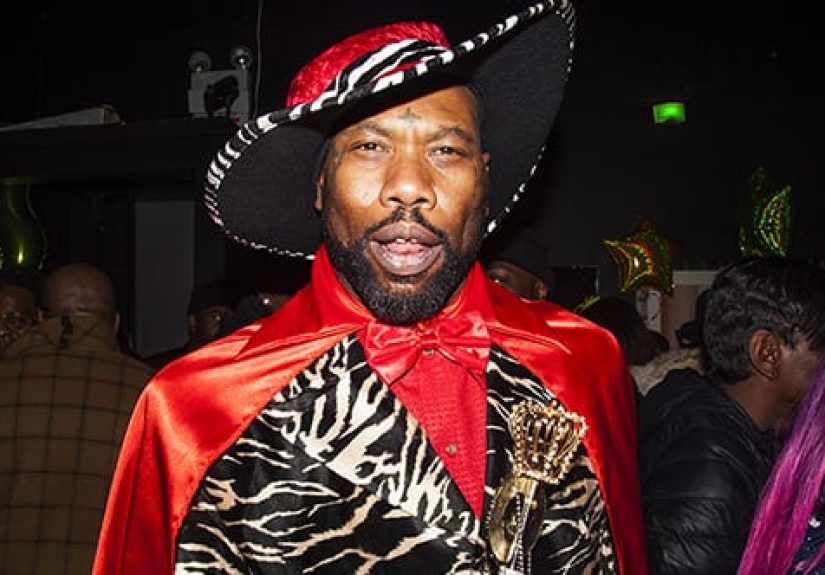
If pop culture taught America anything about pimps, it taught the wrong lesson with fantastic confidence. The stereotype is loud, flashy, over-accessorized, and weirdly quotable. The real-world version is much darker, much more ordinary-looking, and far more tied to coercion, trafficking, manipulation, and control than to any cartoonish image in a feathered hat. That gap between the myth and the reality is where this topic becomes genuinely strange.
So yes, this article uses the word pimps because it is in the title. But in many modern legal, survivor-centered, and anti-trafficking contexts, a more accurate word is often traffickers, exploiters, or controllers. That is not a fussy vocabulary upgrade. It matters because language shapes what people notice, what law enforcement investigates, what survivors recognize, and what the public wrongly laughs off as “just part of the game.”
Below are ten bizarre but real facts about pimps in America, not to glamorize them, but to strip away the costume. Some of these facts are bizarre because the history is odd. Some are bizarre because the myths are so stubborn. And some are bizarre because the truth is stranger, sadder, and more psychologically complex than the movies ever admitted.
1. The Word Is Older Than the Stereotype
The slang may feel modern, but the term is old enough to have dust on it
One of the strangest facts about pimps is purely linguistic: the word itself is much older than the modern cultural image attached to it. Merriam-Webster traces the first known use of pimp as a verb to around 1640, while the noun sense appears later. In other words, the word existed long before velvet suits, blaxploitation imagery, flashy rap references, or reality-TV makeovers gave it a theatrical afterlife.
That is bizarre because most people assume the term belongs mainly to twentieth-century street culture. It does not. It has been hanging around the English language for centuries, accumulating meanings, baggage, and cultural grime along the way. So the first weird fact is this: the “modern” pimp is partly a very old word wearing a very new costume. Language, apparently, also knows how to dress up and lie to your face.
2. The Cartoon Version Is Usually the Least Accurate Version
The real exploiter often looks less like a caricature and more like someone trusted
Ask the average person to picture a pimp, and they may imagine a peacock in platform shoes. But one of the most important facts about pimps is that the flamboyant stereotype can completely obscure how exploitation really works. Modern anti-trafficking experts repeatedly note that traffickers are often intimate partners, family members, or people the victim already knows and trusts.
That turns the stereotype upside down. The person exercising control may not arrive like a villain in neon trim. He might look like a boyfriend, a girlfriend, a family member, a “manager,” or a person offering housing, gifts, rides, affection, or false protection. In real life, exploitation often hides inside ordinary relationships. That is more bizarre than the old costume because it is psychologically slipperier. The public expects a theatrical predator and misses the quiet manipulator standing right in front of them.
3. A Pimp Does Not Need to Move Someone Across State Lines to Be a Trafficker
No dramatic kidnapping van required
Another strange but crucial fact: trafficking does not require crossing a border, boarding a bus, or disappearing into some international criminal pipeline. Under U.S. law and federal guidance, human trafficking can take place entirely within one city, one neighborhood, or even one home. The crime hinges on exploitation and coercive control, not on cinematic travel.
This matters because people often confuse trafficking with smuggling. They imagine passports, hidden trucks, or border chaos. But trafficking can happen without any of that. A victim can be recruited, manipulated, controlled, advertised, and exploited without ever leaving town. That reality is bizarre only because the public imagination still demands a big action scene before it will believe a crime is serious. In practice, some of the ugliest systems of control operate without any dramatic movement at all. The geography is boring; the abuse is not.
4. “Love” Is Often Used as a Weapon
The so-called Romeo approach is one of the darkest tricks in the book
If there is one fact about pimps that makes the stereotype collapse instantly, it is this: many traffickers do not start with violence. They start with charm. Anti-trafficking organizations and clinicians have described how traffickers use romance, emotional attention, gifts, promises, and a manufactured sense of belonging to recruit victims. This is sometimes called Romeo pimping or the “boyfriend” model.
That phrase sounds almost absurdly soft for something so predatory, which is exactly why it works. The manipulator studies vulnerability, supplies emotional oxygen, then turns affection into leverage. Suddenly the relationship is no longer a relationship; it is a business model with a heartbeat. Victims may not even identify the person as a pimp because, in their lived experience, he is “my boyfriend,” “the person who helped me,” or “the only one who cared.” That contradiction is one of the eeriest facts in the whole subject: exploitation can arrive dressed as devotion.
5. The Most Powerful Chains Are Often Invisible
Psychological control can do what handcuffs do not
People often assume a pimp must rely mainly on physical force. Violence certainly appears in many cases, and sometimes brutally so. But another bizarre truth is that psychological control can be just as powerful, and sometimes more durable. Federal, clinical, and survivor-centered sources describe coercion that includes threats, debt, humiliation, dependency, manipulation, fear, trauma bonding, and isolation.
That means the victim may stay not because a door is locked, but because reality itself has been bent. The exploiter controls money, housing, transportation, phones, threats against loved ones, or the victim’s sense of self. In some cases, trauma bonds form so strongly that victims defend or protect the person exploiting them. From the outside, people may ask, “Why didn’t they just leave?” From the inside, the question barely makes sense. That is the bizarre part: the trap can be real even when the chains are mostly emotional, economic, and psychological.
6. Branding Can Be Frighteningly Literal
Sometimes ownership is not just implied; it is marked
Among the grimmest facts about pimps is the existence of literal branding in some trafficking cases. Healthcare and trafficking literature has documented tattoos, marks, or other forms of body art that can function as signals of control, ownership, affiliation, or intimidation. Not every trafficking case involves branding, and not every tattoo means exploitation, but the pattern is real enough that medical and victim-service professionals are trained to notice it.
The bizarre part is how ancient the logic feels. It is the language of ownership dragged into a supposedly modern society with smartphones, apps, and algorithmic ads. A trafficker may talk like a boyfriend and market online like a small business, yet still use symbols that echo old systems of domination. It is medieval behavior wearing digital sneakers. When people say the modern sex trade is “just vice” or “just hustle,” facts like this ruin the fantasy in a hurry.
7. The Street-Corner Myth Is Outdated
Today’s pimp may recruit and market through a phone screen
One of the most bizarre facts about pimps in the internet age is how thoroughly the playbook has migrated online. Recruitment can happen on social media. Control can be maintained through constant messaging, surveillance, and emotional manipulation. Advertising can move through online listings and digital platforms rather than the old-school street corner that still dominates public imagination.
Research from justice agencies has shown that trafficking indicators can appear in online ads, including how victims are described and marketed. Survivors and anti-trafficking organizations also report increases in online recruitment, especially through false relationships and social media contact. So the modern pimp may look less like a movie extra and more like a person with a charger, a script, and a highly cynical understanding of algorithms. That is bizarre because the technology is new, but the underlying logic is antique: find vulnerability, package a person, and turn attention into money.
8. In Cases Involving Minors, the Law Sees Through the “Choice” Argument
For children, the legal lens is very different from the street myth
A particularly important fact about pimps is that when minors are involved in commercial sex, U.S. law does not require the same proof of force, fraud, or coercion that adult cases do. That is because a child cannot legally consent to being commercially sexually exploited. Period. End of debate. No tired philosophical speech about “street choices” survives contact with that legal reality.
Even more unsettling, federal guidance notes that trafficked children are often presented as adults, may appear older, and can be coached or trained to lie about their age. That makes these cases harder for outsiders to recognize and easier for exploiters to hide in plain sight. The bizarre twist is that the public often mistakes a child for an adult while the law, more wisely, strips away the performance and recognizes a victim. When the facts are clear, the old “she chose it” shrug starts sounding less like skepticism and more like negligence.
9. The Numbers Are Messy, and That Is a Fact in Itself
One of the weirdest truths is how hard this problem is to count
People love big, neat numbers. They want a statistic that settles everything in one tidy line. But one of the most intriguing facts about pimps and trafficking systems is that the numbers are notoriously difficult to pin down. Research reviews tied to U.S. justice and youth-protection work have emphasized that there is no reliable national estimate for the prevalence of commercial sexual exploitation of minors in the United States.
That does not mean the problem is small. It means the problem is hidden, underreported, inconsistently defined, and difficult to measure. Victims may not self-identify. Cases may be misclassified. Arrest records may miss the underlying coercion. Public discourse often treats uncertainty as weakness, but here uncertainty is part of the story. It is bizarre because the same system that leaves digital footprints everywhere can still fail to count human beings accurately when shame, fear, manipulation, and criminal markets intersect.
10. The Biggest Myth Is That a Pimp Is Just a Colorful Middleman
Modern policy increasingly treats the role as part of a wider exploitation system
Perhaps the strangest fact of all is how long American culture tolerated the idea of the pimp as a comic side character, rogue entrepreneur, or weirdly stylish antihero. That image lingers in jokes, catchphrases, costumes, and old entertainment tropes. But modern law enforcement, survivor advocacy, and trafficking research increasingly treat the role very differently: not as colorful vice management, but as coercive exploitation embedded in a larger ecosystem of buyers, facilitators, ads, hotels, and demand.
That shift is important because it changes the frame. A pimp is not merely a “manager” with terrible morals. He is often part of a networked market that depends on demand, concealment, vulnerability, and control. That is the real bizarre fact: the culture spent decades polishing the myth while investigators, clinicians, and survivors were describing something far uglier. The costume was loud enough to distract from the crime.
What These 10 Facts Really Add Up To
The most bizarre thing about pimps is not the fur coats, the slang, or the mythology. It is the cultural whiplash. On one side, there is a long-running American habit of turning exploitation into style, punch lines, and pop symbolism. On the other side, there is the reality documented by survivor accounts, federal agencies, researchers, and clinicians: grooming, coercion, trauma, hidden control, online recruitment, legal complexity, and lasting harm.
So if you came looking for “weird facts,” here is the real answer: the weirdness lies in how successfully myth has disguised something predatory as something almost theatrical. The more closely you look, the less glamorous it becomes. And frankly, that is the healthiest possible outcome. Some myths deserve better lighting. This one deserves demolition.
Experience-Based Stories That Show How Strange the Reality Can Be
1. The “Boyfriend” Story
A teenager meets an older, attentive man who seems impossibly patient. He texts good morning. He remembers little details. He buys small gifts, not enough to look suspicious, just enough to feel life-changing. He says she is smarter than everyone around her. He says they are building something together. Weeks later, the compliments come with pressure. Then the pressure comes with guilt. Then the guilt comes with a business plan she never would have recognized at the beginning. When someone later calls him a pimp, she rejects the word. In her mind, he is the first person who saw her. That is what makes the experience so bizarre from the outside: the label is obvious to strangers, but emotionally impossible to the person inside the trap.
2. The “Online Side Hustle” Story
A young adult thinks she is entering a quick-money arrangement with flexible hours, slick photos, and “independent” work. The person coaching her says all the right things: empowerment, hustle, choice, freedom. The phone becomes headquarters. Ads appear. Messages are filtered. Meetings are scheduled. Money never quite lands where promised. Every problem has an explanation. Every boundary becomes negotiable. Every protest is met with emotional pressure, financial pressure, or threats to expose private information. There is no alleyway, no dramatic abduction, no movie-scene violence at the start. Just notifications, persuasion, and a slowly shrinking sense of self. The bizarre part is how the whole arrangement can look like entrepreneurship from ten feet away and coercion from one foot away.
3. The “Everyone Missed It” Story
A hotel clerk notices a controlling older partner answering every question. A nurse notices unexplained bruising and a tattoo that does not fit the story. A friend notices that the victim never seems to have her own money, never speaks privately, and suddenly uses language that sounds rehearsed. A police officer might once have seen only prostitution. A better-trained officer sees a pattern: fear, dependency, control, contradictions, age confusion, and someone else handling the logistics. This kind of experience is related to one of the strangest realities in the subject: the clues are often visible, but the public has been trained by bad stereotypes to look for the wrong clues. People expect a cartoon villain and therefore miss the actual system of domination operating in plain daylight.
4. The “Why Didn’t They Leave?” Story
Afterward, outsiders often ask the world’s most overconfident question: why didn’t the victim just leave? But lived experience rarely unfolds like a clean exit door. Maybe there is no money. Maybe there is a child involved. Maybe there are threats against siblings. Maybe the trafficker controls the phone, the ride, the room key, the drugs, the rent, or the emotional story the victim tells herself to survive the day. Maybe leaving means homelessness. Maybe staying feels safer than the unknown. Maybe the person doing the exploiting is still being called “baby,” “my man,” or “my girl,” because trauma does not always update its vocabulary on command. That is perhaps the most bizarre experience-related truth of all: to outsiders, the situation may look irrational; to the victim, it may feel like the only available version of reality.
Conclusion
The title of this article promises bizarre facts about pimps, and the facts are indeed bizarre. But they are bizarre in the way a cracked mirror is bizarre: not because it is funny, but because it shows how distorted public perception can become. The term is old. The stereotype is loud. The reality is manipulative, often intimate, frequently digital, and deeply tied to trafficking patterns that experts have spent years trying to explain to a culture that still loves a costume more than a case file.
If there is any useful takeaway here, it is this: the more “intriguing” the pimp image looks in pop culture, the more carefully it deserves to be questioned. The real story is less sequined, more systemic, and much harder to laugh at. Which, in the end, is exactly why the myths need to go.