Table of Contents >> Show >> Hide
- Why People Need Hip Surgery in the First Place
- 1. Hip Arthroscopy
- 2. Total Hip Replacement (Total Hip Arthroplasty)
- 3. Partial Hip Replacement (Hemiarthroplasty)
- 4. Hip Resurfacing
- 5. Hip Osteotomy and Other Hip-Preservation Surgery
- 6. Hip Fracture Repair With Screws, Plates, or Rods
- 7. Revision Hip Replacement
- 8. Core Decompression and Other Less-Common Hip Procedures
- How Surgeons Decide Which Hip Surgery You Actually Need
- What Recovery Usually Looks Like
- Risks to Know Without Turning This Into a Horror Movie
- Real-World Experiences Related to Hip Surgery
- Final Thoughts
- SEO Tags
If your hip has been complaining like a grumpy landlord every time you stand up, walk upstairs, or try to tie your shoes, surgery may eventually enter the conversation. But “hip surgery” is not one operation. It is a whole menu of procedures, and each one is designed to solve a different problem. Some surgeries repair the joint. Some preserve it. Some replace it. And some step in after trauma, like a fracture, turns life upside down in a split second.
That difference matters. A 24-year-old with hip dysplasia does not usually need the same operation as a 72-year-old with advanced osteoarthritis. A runner with a labral tear is not treated the same way as someone with a failed hip implant. In other words, hip surgery is less like ordering “food” and more like ordering the right dish from a very specific menu.
This guide breaks down the main types of hip surgery, what each one is used to treat, who may benefit, and what makes one option more appropriate than another. If you have ever wondered why one person gets arthroscopy while another gets a full replacement, welcome to the good stuff.
Why People Need Hip Surgery in the First Place
Hip surgery is usually considered for one of three broad reasons: the joint is worn out, the joint is structurally abnormal, or the bone has been broken or damaged. In many cases, surgery is not the first step. Doctors often start with medication, activity changes, injections, or physical therapy. But when pain keeps winning, mobility keeps shrinking, or the hip is broken or collapsing, surgery becomes much more than a “maybe.”
Common conditions that may lead to hip surgery include osteoarthritis, rheumatoid arthritis, labral tears, femoroacetabular impingement (FAI), hip dysplasia, avascular necrosis, fractures, tendon tears, and complications from prior hip implants. The exact diagnosis is what drives the surgical choice, not just the fact that the hip hurts.
1. Hip Arthroscopy
What it is
Hip arthroscopy is a minimally invasive procedure in which a surgeon uses a small camera and slender instruments inserted through tiny incisions to see inside the joint and treat specific problems. Think of it as precision work rather than a complete remodel.
What it is used to treat
This surgery is most often used for conditions such as labral tears, femoroacetabular impingement, loose bodies inside the joint, some cartilage injuries, and certain tendon problems. It is also part of what many specialists call hip preservation, which means fixing the problem early enough to reduce further damage and possibly delay arthritis.
Who it fits best
Hip arthroscopy is generally a better match for people whose joint still has relatively healthy cartilage. That often includes younger or active patients who have mechanical symptoms like catching, clicking, or sharp pain during motion. It is usually not the superstar option for someone with severe arthritis, because you cannot arthroscopy your way out of bone-on-bone degeneration.
What recovery is like
Many arthroscopy patients go home the same day. Recovery still takes effort, though. Crutches, physical therapy, and a few months of rehab are common. “Minimally invasive” does not mean “bounce back by lunch,” unfortunately.
2. Total Hip Replacement (Total Hip Arthroplasty)
What it is
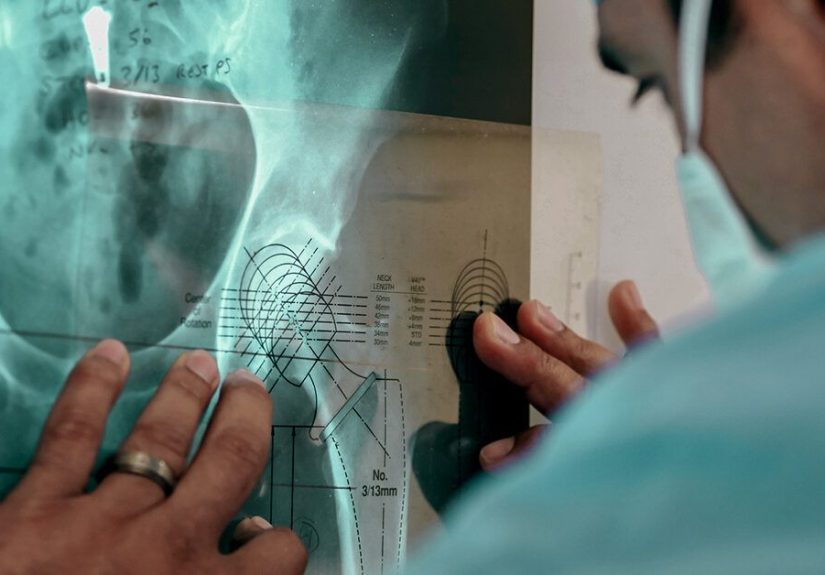
Total hip replacement is the heavy hitter of hip surgery. In this operation, the surgeon removes the damaged ball of the femur and the worn cartilage in the socket, then replaces them with artificial components. The new joint usually includes a stem, a ball, a socket, and a liner made from combinations of metal, ceramic, and plastic.
What it is used to treat
This surgery is most commonly used for advanced osteoarthritis, but it may also be recommended for rheumatoid arthritis, severe joint damage from avascular necrosis, arthritis caused by hip dysplasia, or some serious fractures. In plain English: when the joint is badly damaged and function is declining, total hip replacement is often the reset button.
Why it works so well for many people
Total hip replacement is designed to relieve pain, improve function, and help people get back to daily activities with less misery. For many patients, that means walking farther, sleeping better, and no longer planning their day around where the next chair is located.
Different surgical approaches
The operation can be done through different approaches, including traditional, minimally invasive, and anterior-based techniques. These approaches differ in incision placement and how tissues are handled, but the basic goal stays the same: remove the damaged joint surfaces and replace them with a prosthesis. The “best” approach depends more on the surgeon’s expertise and the patient’s anatomy than on internet hype.
3. Partial Hip Replacement (Hemiarthroplasty)
What it is
Partial hip replacement, also called hemiarthroplasty, replaces the ball portion of the hip but not the socket. It is not the half-price combo meal of hip surgery. It is a specific operation for specific problems.
What it is used to treat
This procedure is often used for certain femoral neck fractures, especially in older adults. In these injuries, the blood supply to the femoral head may be disrupted, which makes healing unreliable. In that setting, replacing the damaged femoral head can be more dependable than trying to fix it with hardware alone.
When surgeons choose it
Surgeons weigh age, activity level, fracture pattern, overall health, and whether the socket is already arthritic. If the socket is in decent shape and the fracture mainly affects the femoral head and neck, partial replacement may be a sensible option. If the socket is also diseased or the patient is more active, total hip replacement may sometimes be considered instead.
4. Hip Resurfacing
What it is
Hip resurfacing is a bone-preserving alternative to total hip replacement for carefully selected patients. Instead of removing the entire femoral head, the surgeon trims and caps it with a smooth metal covering, while the socket is fitted with a metal shell.
What it is used to treat
Hip resurfacing is used for arthritis in select patients, often younger and more active adults with strong bone quality. Its big appeal is that it preserves more of the patient’s natural femoral bone.
Why it is less common than people assume
Resurfacing sounds elegant, but it is not right for everyone. Concerns include femoral neck fracture and issues related to metal-on-metal bearings, including metal ion release and local tissue reactions. Because of those concerns, surgeons use it much more selectively than standard total hip replacement.
So yes, hip resurfacing is a real option. No, it is not the default cool-kid version of hip replacement.
5. Hip Osteotomy and Other Hip-Preservation Surgery
Periacetabular osteotomy (PAO)
A periacetabular osteotomy is a hip-preservation procedure used most often for acetabular dysplasia, especially in teens and young adults. In hip dysplasia, the socket does not cover the femoral head well enough, which leads to instability, abnormal wear, and pain. In PAO, the surgeon reorients the socket to improve coverage and spread forces more normally across the joint.
Femoral osteotomy
Femoral osteotomy changes the shape or alignment of the femur to improve how the ball and socket work together. It may be used for certain deformities, gait problems, childhood hip conditions, or cases where abnormal mechanics are damaging the joint.
What these surgeries are used to treat
These operations are usually aimed at structural problems rather than end-stage arthritis. They are meant to preserve the native joint and delay or prevent the need for replacement. In the right person, that can be a major win. In the wrong person, it is a lot of surgery for too little benefit. Timing matters.
6. Hip Fracture Repair With Screws, Plates, or Rods
What it is
Not all hip fractures are treated with replacement. Many are treated with internal fixation, meaning the surgeon uses metal screws, plates, or rods to stabilize the broken bone while it heals.
What it is used to treat
This approach is commonly used for fracture patterns in which the bone is likely to heal well with stabilization, such as many intertrochanteric or subtrochanteric fractures and some femoral neck fractures in younger patients. The decision depends heavily on the exact location of the break, the patient’s age, and whether the blood supply to the femoral head is likely to survive.
Why this choice can be urgent
Hip fractures are often surgical emergencies in older adults because they can dramatically reduce mobility and trigger serious complications. The goal is not just to fix a bone on an X-ray. It is to get the patient moving safely again as soon as possible.
7. Revision Hip Replacement
What it is
Revision hip replacement is a second operation done after a previous hip replacement has failed or caused complications. Some or all of the original components may be removed and replaced.
What it is used to treat
Reasons for revision surgery include implant loosening, wear, dislocation, infection, fracture around the implant, instability, or mechanical failure. Sometimes the joint simply wears out over time. Sometimes the problem is more dramatic. Either way, revision surgery is usually more complex than the first operation.
Why revision is tougher
Revision procedures often require more planning, more specialized implants, and more reconstruction of damaged bone or soft tissue. Recovery can also be slower and less predictable than after a primary replacement. This is not the sequel anyone asks for, but it can be extremely effective when done for the right reason.
8. Core Decompression and Other Less-Common Hip Procedures
Core decompression
Core decompression is most often used for early avascular necrosis, also called osteonecrosis, when the femoral head has lost blood supply but has not fully collapsed. In this surgery, the surgeon removes a core of bone to reduce pressure and encourage blood flow. In some settings, the procedure may be combined with bone grafting or biologic techniques.
This is a joint-preserving operation. It is generally considered earlier in the disease process, before severe arthritis develops. Once the femoral head collapses and the joint is badly damaged, hip replacement becomes more likely.
Synovectomy and specialized repairs
Less commonly, surgeons may perform procedures such as synovectomy to remove inflamed joint lining, tendon repairs around the hip, or cartilage restoration procedures in select cases. These are not the most common household-name hip surgeries, but they can be important when the diagnosis calls for them.
How Surgeons Decide Which Hip Surgery You Actually Need
The most important factor is the diagnosis. After that, the big decision-makers are age, bone quality, cartilage condition, activity level, anatomy, severity of symptoms, and whether the patient has had prior surgery. A younger patient with preserved cartilage and FAI may be steered toward arthroscopy. A patient with severe osteoarthritis may be a strong candidate for total hip replacement. A teen or young adult with dysplasia may benefit more from PAO. An older adult with a displaced femoral neck fracture may need a partial or total replacement instead of screws.
That is why two people can say “I have hip pain” and end up with completely different surgical plans. The symptom may sound the same. The structure underneath it is often not.
What Recovery Usually Looks Like
Recovery depends on the procedure. Arthroscopy is often outpatient and may require crutches and physical therapy for weeks to months. Total hip replacement often gets patients standing and walking quickly, but full recovery still takes time and effort. Partial replacement after fracture may involve a different rehab pace, especially in older adults. Osteotomies can require more protected weight-bearing because bone has been cut and repositioned. Revision surgery often has the longest and most complicated road back.
Across the board, rehabilitation matters. Muscles around the hip do not magically become cooperative because a surgeon had an excellent day in the operating room. Strength, balance, flexibility, and movement patterns all need attention afterward.
Risks to Know Without Turning This Into a Horror Movie
All hip surgeries carry risks, though the specific risks vary by procedure. These may include infection, blood clots, nerve injury, bleeding, stiffness, continued pain, fracture, dislocation, implant wear, and the need for future surgery. Resurfacing has its own metal-related concerns. Fracture repair can fail if bone healing does not go as planned. Joint-preservation surgery may not fully prevent arthritis. And even a successful replacement is not indestructible forever.
That sounds intimidating, but it is also why matching the operation to the condition matters so much. The right procedure can offer major pain relief and functional improvement. The wrong one can be a detour nobody wanted.
Real-World Experiences Related to Hip Surgery
When people talk about hip surgery, they often focus on the name of the procedure. What they usually remember, though, is the experience around it. The runner with hip impingement often talks about the weird frustration of looking fit on the outside while feeling like a rusty hinge on the inside. Before arthroscopy, many describe months of groin pain, clicking, and the strange ritual of avoiding low chairs, deep squats, or getting in and out of cars like a normal human. After surgery, the surprise is not always the pain. It is the patience required. A lot of patients say the hardest part is accepting that a small incision does not mean a tiny recovery.
People who undergo total hip replacement often describe a different story. Their experience is less about one sharp motion causing pain and more about the slow shrinking of life. They stop walking for fun. They stop sleeping well. They plan errands around how far the parking lot is from the entrance. Many say the emotional relief after successful surgery is just as powerful as the physical improvement. The classic line is some version of, “I forgot what it felt like not to think about my hip every hour.” That may be the least glamorous sentence ever written, but it says a lot.
For older adults who break a hip, the experience can be abrupt and frightening. One fall changes everything. Families suddenly learn new vocabulary like hemiarthroplasty, fixation, walker training, and discharge planning. In these cases, the operation is only one chapter. The bigger journey often involves rebuilding confidence, balance, and independence. Patients frequently describe the first safe walk after surgery as a huge psychological turning point, even if that walk is short and full of sass from a physical therapist.
Young adults with hip dysplasia or structural issues often have yet another experience: confusion before clarity. They may be told for years that they are “too young” for serious hip trouble, only to discover that their anatomy has been the problem all along. When they finally reach a hip-preservation specialist and learn about osteotomy or related surgery, the response is often mixed. Relief, because there is an explanation. Anxiety, because the fix is not minor. These patients often talk about how important it is to understand the goal of surgery: not just feeling better today, but protecting the joint for the future.
And then there are revision patients, who bring a completely different mindset. They have already been through surgery once. They know the routine, the limitations, and the stakes. Their experience tends to be more cautious, more practical, and a little less impressed by cheerful hospital brochures. But many also say that when revision surgery solves instability, pain, or implant failure, the improvement can feel like finally getting closure after a long and exhausting detour.
Different surgeries, different diagnoses, different timelines. The shared thread is this: people are not really chasing a procedure. They are chasing the ability to move through life without their hip calling all the shots.
Final Thoughts
The phrase “hip surgery” covers a lot of territory. Arthroscopy is used to repair problems inside a still-salvageable joint. Osteotomy helps correct structural issues and preserve the hip. Fracture fixation stabilizes broken bone. Partial replacement is often used for certain fractures. Total hip replacement is the go-to for advanced joint damage. Hip resurfacing has a narrower role in carefully selected patients. Revision surgery is the solution when an earlier replacement fails. Core decompression may help in early osteonecrosis before collapse.
The most important takeaway is simple: the best hip surgery is not the newest-sounding one or the most dramatic-sounding one. It is the one that matches the actual problem inside the joint. That is the difference between a smart treatment plan and a very expensive misunderstanding.