Table of Contents >> Show >> Hide
- What Is the U.S. Space Fence (and Why Does It Sound Like a Sci-Fi Force Field)?
- Why the U.S. Built a New “Fence” in the Sky
- How Space Fence Works (Without Melting Your Brain)
- What Space Fence Actually Does for Space Domain Awareness
- Specific Examples of Why Space Fence Matters
- Where Space Fence Lives (and Why That Location Is a Feature, Not Trivia)
- Limitations, Tradeoffs, and the Honest “Yeah, But…” Section
- What’s Next for Space Fence and U.S. Space Tracking
- Experiences Related to the U.S. Space Fence (A 500-Word Reality Check)
- Conclusion
Space is not empty. It’s more like that junk drawer in your kitchen: useful stuff, mysterious stuff, and at least one thing you’re pretty sure shouldn’t be there. Only this drawer is moving at thousands of miles per hour, and the “mysterious stuff” can punch a hole clean through a satellite.
Enter the U.S. Space Fence: a high-sensitivity radar system operated by the U.S. Space Force to detect, track, and help identify objects orbiting Eartheverything from active satellites to spent rocket bodies to fragments of debris you can’t see with the naked eye (and really don’t want to meet at orbital speed).
This article breaks down what Space Fence is, why it exists, how it works (without turning into a physics midterm), and why it matters more now than everbecause Earth orbit is getting crowded, fast.
What Is the U.S. Space Fence (and Why Does It Sound Like a Sci-Fi Force Field)?
The modern Space Fence is the AN/FSY-3 ground-based radar system. The U.S. Space Force declared it at initial operational capability and operational acceptance in March 2020. It’s located on Kwajalein Atoll in the Republic of the Marshall Islandsan equatorial spot that’s great for watching a lot of low-inclination orbital traffic.
It’s important to clear up a common point of confusion: “Space Fence” used to refer to an older Cold War-era radar network (often associated with the Air Force Space Surveillance System) that ran across the southern United States and was turned off in 2013. The new Space Fence is a next-generation replacementdifferent architecture, different location, dramatically improved sensitivity, and designed for the modern orbital environment.
In plain terms: the Space Fence helps the U.S. maintain a more complete and more precise understanding of what’s circling Earth and where it’s going next.
Why the U.S. Built a New “Fence” in the Sky
Orbit has changed. A lot.
1) The debris problem is real (and the math is rude)
When two objects collide in orbit, they don’t just “break.” They produce clouds of fragments that each become a fast-moving hazard. Even small pieces can do serious damage. Agencies and operators manage risk with tracking data, warnings, and maneuver planningbut you can’t avoid what you can’t see.
NASA’s own oversight reporting has highlighted a key challenge: tracking capability is limited for smaller debris sizes in the altitudes where critical missions (including the International Space Station) operate, and DoD sensors play an important role in tracking and conjunction assessment for certain debris classes.
2) More satellites, more launches, more “stuff” per year
Commercial mega-constellations, national security spacecraft, science missions, and constant launch cadence mean the population of objects in orbit growsnot only the satellites you intended to put there, but also the byproducts: upper stages, adapter rings, mission-related debris, and fragments from breakups.
3) The old system was aging out
The legacy “fence” system provided valuable uncued detection (meaning it could notice “new” objects without being told exactly where to look), but it was also limited by older design choices and was discontinued in 2013. The new Space Fence was built for modern sensitivity needs and modern data volumes.
Bottom line: Space Fence is a response to a congested domain where knowing what’s up there is no longer a nice-to-have. It’s table stakes.
How Space Fence Works (Without Melting Your Brain)
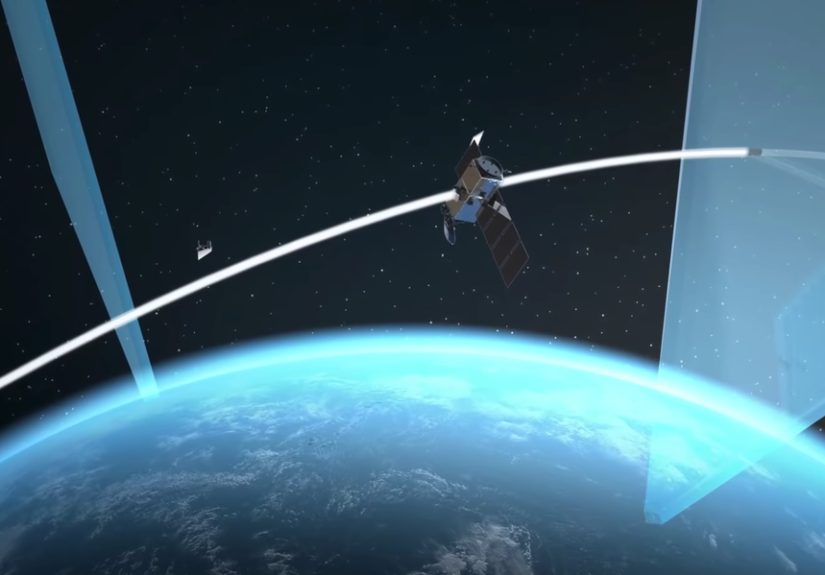
Space Fence is a solid-state S-band radar with a phased-array design. Those two details matter because they explain why it can do its job so well.
Phased array: aiming without moving
Traditional radar often “steers” mechanicallyphysically turning an antenna to point where it wants to look. Phased arrays steer electronically by adjusting the timing (phase) of signals across many antenna elements. That means faster response, rapid re-pointing, and the ability to track multiple targets in quick succession.
According to U.S. Space Force fact sheets, the unit that operates Space Fence also operates the AN/FPS-85 radar at Eglin and conducts tens of millions of satellite observations per yearillustrating how modern space surveillance is an industrial-scale data operation, not an occasional telescope peek.
“Uncued” surveillance: the radar can find things you weren’t expecting
Space Fence is designed to detect and track both known and unknown objectsparticularly important for discovering newly created debris after a breakup, spotting a new object after a launch, or noticing an unexpected event without waiting for someone to ask the system to look.
S-band: a good balance of sensitivity and performance
S-band radars can deliver strong performance for tracking in multiple orbital regimes. In public descriptions, Space Fence is credited with improved sensitivityoften described as the ability to detect very small objects in low Earth orbit. The Space Force has even described it as capable of detecting objects as small as a marble in LEO, which is an intentionally memorable way of saying: “Yes, we’re looking for the little stuff, too.”
What Space Fence Actually Does for Space Domain Awareness
Space Fence contributes to what’s often called space domain awareness (SDA): understanding what’s in space, what it’s doing, and what might happen next.
1) Builds and improves the space object catalog
The U.S. maintains a catalog of tracked objects. Space Fence data feeds into that broader tracking enterprise. When you can observe smaller objects and collect more precise measurements, the catalog gets more complete and predictions get better.
2) Enables conjunction assessment and collision avoidance
If two objects are predicted to pass too close to one another, operators generate a conjunction warning. Satellite operators may choose to maneuver, depending on probability of collision, mission constraints, and fuel budgets. Better radar observations can reduce uncertaintyfewer “cry wolf” alerts, better confidence in the ones that matter, and clearer decisions under time pressure.
3) Detects breakups, anomalies, and “wait, what was that?” moments
When a satellite breaks upwhether from collision, explosion, or other failureSpace Fence’s surveillance capability helps characterize the new fragment population. That can drive rapid updates to the catalog and improve safety for everyone sharing the neighborhood.
4) Supports national security missions
Some of the most important work happens behind the scenes: identifying objects, detecting unexpected maneuvers, and providing early warning signals that something in orbit has changed. Public-facing descriptions emphasize Space Fence’s role in tracking threats to both manned and unmanned assetsmilitary and commercial alike.
Specific Examples of Why Space Fence Matters
Let’s make this real with a few grounded scenariosno sci-fi lasers required.
Example A: Post-launch “sorting the bins”
A launch doesn’t just put a payload into orbit; it often introduces multiple objects: the satellite, the upper stage, and sometimes additional mission-related objects. Quickly cataloging these objects matters because operators need to know what’s where to plan maneuvers, schedule observations, and avoid close approaches.
Example B: The debris cloud nobody ordered
If an on-orbit event creates fragments, a system with high observation throughput can help build an initial picture faster: how many pieces, how they’re spreading, and which orbits are now riskier. Faster characterization improves collision risk screening for other spacecraft that may cross the same altitude bands in the days that follow.
Example C: Helping protect crewed missions (the “please don’t hit the station” use case)
NASA documentation has stressed that the most dangerous debris sizes can be the ones that are hard to tracklarge enough to cause damage but small enough to be difficult to monitor continuously. That’s why improved radar surveillance matters. Better tracking supports better conjunction assessment, which supports better “move or don’t move” decisions.
Where Space Fence Lives (and Why That Location Is a Feature, Not Trivia)
Space Fence’s primary sensor site is on Kwajalein Atoll, close to the equator. That geographic positioning helps it observe a wide variety of low Earth orbit traffic, especially objects in lower-inclination orbits. Public Space Force descriptions also emphasize that Space Fence supports tracking across low, medium, and geosynchronous regimesmeaning it contributes to a broad surveillance mission, not just one narrow altitude band.
Operations and data flow aren’t just “the radar does everything.” Space surveillance is a networked enterprise: sensors collect observations, mission systems process data, and operational units use outputs for catalog maintenance and screening. Public Space Force releases have described Space Fence as being operated by Space Force units and providing data into the broader space surveillance ecosystem used to maintain the catalog and screen satellites against tracked objects.
Limitations, Tradeoffs, and the Honest “Yeah, But…” Section
Space Fence is powerfulbut it’s not magic.
- It won’t track everything. The smallest debris (millimeter-class) can still be a major hazard, and tracking capability at those sizes is a known challenge across the space community.
- More data can mean more work. Better sensitivity increases the number of detections, which increases processing demands. That’s why acquisition and oversight discussions often pair sensors with the mission systems and workflows needed to handle higher data volumes.
- One sensor is not a full solution. Space domain awareness depends on multiple sensors (radar and optical), different locations, and different observation geometries. Space Fence is a major contributor, not a one-radar substitute for an entire global network.
Still, even with limitations, improved surveillance capability can materially reduce uncertainty in the environment where “uncertainty” is measured in kilometers of error ellipses moving at orbital velocity.
What’s Next for Space Fence and U.S. Space Tracking
Space Fence is not a “build it and walk away” system. Like any large operational radar, it requires sustainment, upgrades, cybersecurity work, and modernization as components age and software evolves.
Public procurement notices and reporting in recent years have indicated continued attention to sustainment and modernization services for the Space Fence radar systeman expected reality for a mission that runs continuously and must keep pace with growing orbital populations.
Strategically, Space Fence fits into a broader trend: more sensors, more automation, more data-sharing, and more emphasis on keeping orbit safe for military, civil, and commercial users. The future of space operations depends on the ability to measure the environment accuratelyand do it fast enough to matter operationally.
Experiences Related to the U.S. Space Fence (A 500-Word Reality Check)
When people talk about Space Fence, it’s tempting to imagine a single dramatic moment: a red alert, a blinking screen, a heroic operator saving a satellite with one perfectly timed click. Real life is less cinematicand more impressive because of it.
First, there’s the rhythm of surveillance work. Space tracking is persistent. That means shift schedules, handovers, checklists, and a steady stream of “normal” tasks that keep the system reliable. Operators and analysts in the space surveillance world often describe the job as a blend of discipline and curiosity: you trust procedures, but you stay alert for the odditiesan unexpected cluster of detections, an object behaving differently than predicted, a subtle pattern that hints at a breakup or a new object entering the catalog.
Second, there’s the human challenge of uncertainty. Conjunction assessment isn’t just math; it’s decision-making under imperfect information. Even with great sensors, orbital predictions come with uncertainty bands, and risk thresholds vary by mission and operator. The experience here is frequently about communication: translating technical probability language into operational choices. “We think it’s fine” is not a satisfying sentence when the consequence is a collision, so teams learn to speak preciselyconfidence levels, time windows, maneuver options, and what additional observations would reduce ambiguity.
Third, there’s the operational reality of a remote sensor site. Kwajalein is not down the street from a big-box hardware store. Remote locations demand careful logistics, spare parts planning, and maintenance discipline. People who work with large radars tend to remember the unglamorous victories: a component swapped efficiently, a calibration completed ahead of schedule, a software patch rolled out without disrupting operations. Reliability isn’t exciting until you need itand then it’s everything.
Fourth, there’s the “data tsunami” effect. More sensitive sensors can mean more detections and more objects to manage. For teams supporting catalog maintenance and screening, that can feel like upgrading from a flashlight to stadium lighting: you see more, but you also have to sort more. Analysts develop instinctswhat looks like noise, what looks like a pattern, what demands escalation. Over time, the work becomes a craft: combining automation with experience, letting software do the repetitive lifting while humans focus on the weird cases that don’t fit.
Finally, there’s the quiet satisfaction. Most successful outcomes are invisible: a close approach that never becomes dangerous because it was caught early; an anomaly clarified by additional observations; an operator who sleeps well because the catalog is cleaner today than it was yesterday. In a world where orbit is getting busier, those routine wins add up. Space Fence, at its best, is not a headline machineit’s a stability machine. And that’s exactly the point.
Conclusion
The U.S. Space Fence is one of the most significant upgrades in modern space surveillance: a highly sensitive S-band phased-array radar designed to detect, track, and help characterize the growing population of satellites and debris around Earth.
It matters because the orbital environment is crowded and consequential. Navigation, communications, weather forecasting, national security, science, and human spaceflight all depend on knowing what’s up thereand knowing it with enough precision to act. Space Fence doesn’t solve every problem in space domain awareness, but it strengthens the foundation: better measurements, faster detection, and a more resilient understanding of a domain that’s no longer quiet.