Table of Contents >> Show >> Hide
- First: “Gold” Isn’t One ColorIt’s a Whole Personality Spectrum
- The Best Colors That Go with Gold (and Why They Work)
- 1) White + Gold: Clean, Bright, and Instantly “Designed”
- 2) Black + Gold: High-Contrast Glam That Never Gets Old
- 3) Gray + Gold: Elegant, Modern, and Surprisingly Warm
- 4) Beige, Tan, and Cream + Gold: Quiet Luxury (Without the Shouting)
- 5) Navy + Gold: Regal, Dramatic, and Always a Win
- 6) Blues (Cobalt, Teal, and Dusty Blue) + Gold: Bold or Breezy
- 7) Green + Gold: Rich, Earthy, and Unreasonably Flattering
- 8) Purple + Gold: The “Royal” Combo (Yes, It’s a Thing for a Reason)
- 9) Blush + Gold: Soft Glam That Feels Warm, Not Fussy
- 10) Burgundy and Deep Red + Gold: Cozy Drama
- 11) Terracotta, Rust, and Warm Orange + Gold: Sunset Palette Perfection
- How to Use Gold Like a Pro (Without Overdoing It)
- Room-by-Room Gold Pairing Cheat Sheet
- Gold Beyond Home Decor: Quick Tips for Outfits and Branding
- Common Gold Mistakes (So You Don’t Accidentally Create a “Pirate Chic” Theme)
- Bonus: Real-World Experiences with Gold (The “I Actually Tried This” Edition)
- Final Takeaway
- SEO Tags
Gold is the friend who shows up wearing sunglasses indoorsbold, a little extra, and somehow still invited everywhere.
Used well, it reads “warm luxury.” Used badly, it reads “I won a trophy in 1997 and decorated my whole house around it.”
The good news: gold is surprisingly easy to style once you understand which gold you’re working with and how color relationships
(hello, color wheel) make it sing instead of scream.
In this guide, you’ll get a practical, designer-style breakdown of what colors go with gold, why they work, and exactly how to use them
in real rooms, outfits, and paletteswithout turning your space into a disco ball with a mortgage.
First: “Gold” Isn’t One ColorIt’s a Whole Personality Spectrum
Before you pair anything, figure out what kind of gold you have. The color that goes with gold depends on whether you’re dealing with a shiny metallic finish,
a warm paint color, or a softer champagne tone. Think of gold like hot sauce: the bottle says “spicy,” but your mouth deserves more specifics.
Metallic Gold (Brass, Polished Gold, Gilt)
Metallic gold behaves like a bright, warm highlight. It reflects light and pulls attention. That means it pairs best with colors that either
(1) calm it down (neutrals), (2) balance it with depth (navy, charcoal, forest green), or (3) intentionally go glam (jewel tones).
Golden Paint Colors (Ochre, Mustard, Honey, “Harvest Gold” Vibes)
Painted golds lean earthy and cozy. They play well with nature-inspired neutrals, warm woods, and grounded shades like olive, clay, and warm grays.
These are less “bling” and more “sunset in a jar.”
Soft Golds (Champagne, Brushed Gold, Antique Gold)
Softer golds are the easiest to live with day-to-day. They work with both warm and cool palettesespecially when you repeat the finish a few times
(hardware, frame, lamp base) so it looks intentional, not accidental.
The Best Colors That Go with Gold (and Why They Work)
Gold sits in the warm zone of the color wheel, between yellow and orange. That’s why it loves deep, moody colors (for contrast),
earthy hues (for harmony), and crisp neutrals (for balance). Here are the most reliable pairings.
1) White + Gold: Clean, Bright, and Instantly “Designed”
White gives gold a crisp backdrop so it looks deliberate and elevated. This combo is especially good if you want gold to read as an accent:
cabinet pulls, picture frames, mirror edges, lighting, or bar cart details.
Try it: White walls + gold hardware + one warm texture (oak, rattan, linen). If your white is very cool and icy,
choose brushed/antique gold to keep the overall vibe soft instead of harsh.
2) Black + Gold: High-Contrast Glam That Never Gets Old
Black grounds gold. Gold brightens black. Together they’re dramatic, graphic, and classiclike a tuxedo that also knows how to have fun.
This pairing works in everything from modern kitchens to Art Deco bedrooms.
Try it: Matte black fixtures + warm gold accents (or vice versa). Keep finishes consistent: if your gold is shiny, go sleek elsewhere;
if your gold is brushed, use softer textures like velvet or boucle to match the mood.
3) Gray + Gold: Elegant, Modern, and Surprisingly Warm
Gray can lean cool, gold is warmso the mix creates balance. The trick is choosing the right gray:
mid-tone and charcoal shades make gold feel richer, while very pale cool grays can make gold look extra yellow.
Try it: Warm gray walls + gold sconces + creamy textiles. If you want a more modern edge, go charcoal + gold + crisp white.
4) Beige, Tan, and Cream + Gold: Quiet Luxury (Without the Shouting)
Gold looks “at home” with nature-inspired neutralsthink sand, camel, taupe, and cream. The vibe is warm, layered, and expensive-looking,
especially when you mix textures (linen, wool, wood, leather).
Try it: Cream sofa + camel rug + gold frame + walnut side table. It’s the kind of palette that whispers “I have my life together.”
5) Navy + Gold: Regal, Dramatic, and Always a Win
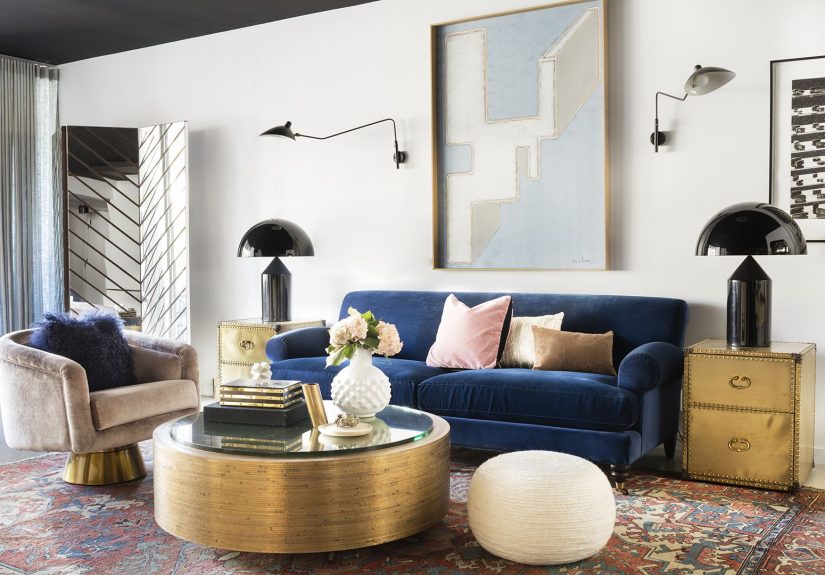
Navy is one of the best colors that go with gold because it provides deep contrast without feeling as stark as black.
Gold on navy reads classic and luxegreat for dining rooms, bedrooms, and formal living spaces.
Try it: Navy walls + gold mirror + white trim. Or navy velvet pillows with gold piping on a neutral sofa.
6) Blues (Cobalt, Teal, and Dusty Blue) + Gold: Bold or Breezy
Blue is opposite orange on the color wheel, and gold often leans orange-yellowso it naturally “pops” against many blues.
Cobalt makes gold feel energetic, dusty blue makes it feel soft, and teal gives you that rich, boutique-hotel mood.
Try it: Teal accent wall + brushed gold lighting + warm white bedding. For a playful look, cobalt + gold + white is a crowd-pleaser.
7) Green + Gold: Rich, Earthy, and Unreasonably Flattering
Green and gold feel organic togetherlike sunlight hitting leaves. Dark greens (emerald, forest) look luxurious with gold.
Softer greens (sage, olive) feel relaxed and vintage-friendly.
Try it: Emerald sofa + gold side table + cream rug. Or sage cabinetry + gold pulls + warm white walls for a softer kitchen look.
8) Purple + Gold: The “Royal” Combo (Yes, It’s a Thing for a Reason)
Yellow and purple are complementary colors on the color wheel, which is why purple makes gold feel intentional and high-impact.
Deep plum reads moody-luxe; lavender reads whimsical and soft.
Try it: Plum accent chair + gold floor lamp + neutral walls. Or lilac accessories with champagne gold for a gentler take.
9) Blush + Gold: Soft Glam That Feels Warm, Not Fussy
Blush is a subtle warm tone that lets gold shine without competing. It’s popular in bedrooms, weddings, and “make it pretty” corners of the home.
The key is to keep blush slightly muted so the combo doesn’t feel overly sweet.
Try it: Blush pillows + gold frame + off-white sofa. Add one grounding neutral (charcoal, espresso wood, or black) for polish.
10) Burgundy and Deep Red + Gold: Cozy Drama
If navy + gold is regal, burgundy + gold is romantic with a side of confidence. It’s especially great in dining rooms and entryways,
where you want warmth and impact.
Try it: Burgundy wall + antique gold mirror + warm white trim. Add wood tones to keep it rich rather than theatrical.
11) Terracotta, Rust, and Warm Orange + Gold: Sunset Palette Perfection
These hues are gold’s close cousins, so they blend easily. The result feels earthy, modern, and welcomingespecially with natural materials.
Use this combo when you want warmth that feels curated rather than shiny.
Try it: Rust throw + gold lamp + cream sofa + olive plant life. Instant “I read design blogs on purpose.”
How to Use Gold Like a Pro (Without Overdoing It)
Pick Your Role for Gold: Star or Supporting Actor
Gold can be the main event (gold wallpaper, gold-painted ceiling, bold gold tile), but it often works best as an accent.
If your room already has a strong color story, let gold be the jewelry: hardware, frames, lighting, tray tables, and decorative objects.
Use the 60–30–10 Rule for Easy Balance
A simple formula: 60% main color (walls/large furniture), 30% secondary color (upholstery/rug), 10% accent (gold lives here).
The accent can be split: 5% gold + 5% another accent like black or wood.
Repeat the Finish (At Least Three Times)
One gold thing can look random. Three gold moments look like a plan. For example: gold cabinet pulls, gold faucet, gold pendant.
Or gold frame, gold lamp base, gold side table legs.
Mixing Metals? Yes, You CanJust Add a “Bridge”
Gold and silver can coexist, but they need a mediator. Black, white, or wood tones help different metals feel cohesive.
Also, try matching the sheen: brushed with brushed, polished with polished. That’s the difference between “collected” and “confused.”
Room-by-Room Gold Pairing Cheat Sheet
Kitchen
Gold hardware loves: white, navy, sage, charcoal, and warm woods. For a clean modern look, do white cabinets + gold pulls + black accents.
For softer warmth, do cream cabinets + brushed gold + oak shelves.
Bathroom
Gold fixtures look especially good against: white tile, deep green paint, navy vanities, or warm gray walls.
Keep it simple: gold faucet + matching mirror frame + one additional gold detail.
Living Room
The easiest gold win: neutral sofa + gold lighting + one bold color (navy, emerald, or terracotta) in textiles or art.
Add texture so the room feels layered, not shiny.
Bedroom
Want calm? Try blush/cream + champagne gold. Want drama? Try deep navy/forest green + antique gold.
A gold-framed mirror or warm metallic lamp can instantly make the room feel more finished.
Entryway
If you want a strong first impression: black + gold + a patterned runner.
If you want welcoming warmth: tan/cream + gold + wood + greenery.
Gold Beyond Home Decor: Quick Tips for Outfits and Branding
Fashion: Gold accessories pair beautifully with navy, black, white, emerald, and burgundy. For daytime, brushed gold feels relaxed.
For evening, polished gold brings drama.
Branding/graphic design: Gold reads “premium,” but on screens it can skew yellow. Pair it with deep neutrals (black, charcoal, navy)
and consider using a softened gold (champagne) for modern brands. In print, gold foil or metallic ink can do the heavy lifting.
Common Gold Mistakes (So You Don’t Accidentally Create a “Pirate Chic” Theme)
- Too many shiny surfaces: If everything reflects light, nothing looks special. Mix matte textures with gold.
- Wrong undertone pairing: Cool icy gray + bright yellow-gold can look mismatched. Choose warmer grays or softer gold finishes.
- Gold overload: Gold is an accent for most spaces. If you go big, balance it with neutrals and negative space.
- Random one-off gold: Repeat gold elements so the room looks cohesive, not like a single impulse purchase.
Bonus: Real-World Experiences with Gold (The “I Actually Tried This” Edition)
People usually come to gold with one of two moods: “I want my space to feel warmer,” or “I saw a gold faucet online and now I can’t stop thinking about it.”
In real homes, gold works best when it’s treated like seasoning, not the whole meal. One common experience: someone swaps out basic cabinet hardware for brushed gold,
and suddenly the kitchen feels “new” even though nothing else changed. That’s gold’s superpowersmall upgrades that look expensive without requiring a second mortgage.
Another pattern you’ll see is the “gold meets moody paint” glow-up. A lot of homeowners try a dark color (navy, charcoal, forest green) and worry the room will feel
like a cave. Then they add goldmaybe a mirror frame, a sconce, or a warm-toned picture lightand the room instantly feels intentional and layered.
Dark colors give gold a stage, and gold gives dark colors a little sparkle so they don’t feel heavy.
There’s also the “neutral house, personality shortage” scenario. Think beige walls, gray sofa, white kitchenperfectly fine, but a bit like toast with no butter.
In those spaces, gold becomes the fastest way to add warmth and character. A gold-framed piece of art, a brass coffee table, or even a simple gold tray
can break up the blandness without forcing a full-color commitment. People who are color-shy often find gold to be a safe first step because it’s technically
a neutral-adjacent metallicbold, but not a neon wall.
A very relatable experience: mixing metals anxiety. Someone inherits chrome fixtures, falls in love with gold lighting, and panics because the internet told them
they have to “pick one.” In real life, mixed metals can look great when there’s a bridgeblack, white, or woodplus a sense of repetition.
For example, chrome plumbing with a gold mirror frame can work if there’s also a black faucet handle detail or a warm wood vanity that ties everything together.
The stress usually disappears the moment the finishes look deliberate rather than accidental.
Finally, the most charming gold success stories are the ones that lean into mood. A blush-and-gold bedroom that feels like a calm sunrise.
A navy-and-gold dining room that feels like a cozy restaurant you’d order dessert in. A green-and-gold living room that looks like nature got a glow-up.
The consistent theme: gold is at its best when it supports a feelingwarmth, depth, softness, dramarather than trying to be the entire personality of the room.
Final Takeaway
If you remember nothing else: gold loves contrast (navy, black, charcoal), harmony (beige, tan, olive, rust), and crisp backdrops (white).
Choose the right gold finish, repeat it a few times, and let it act like jewelrynot a full suit of armor.