Table of Contents >> Show >> Hide
- When a Laser Level Is the Right Tool (and When It’s Overkill)
- Quick Primer: Types of Laser Levels (Pick the Right Beam for the Job)
- How to Use a Laser Level: The Fast Setup That Prevents Slow Regret
- 13 Expert Tips for Laser-Level Accuracy (and Sanity)
- Tip 1: Start with the “reference decision,” not the tool
- Tip 2: Use a tripod (or a solid mount) like you mean it
- Tip 3: Keep it out of “bump range”
- Tip 4: Trust self-levelinguntil you shouldn’t
- Tip 5: Don’t draw the line; mark the line
- Tip 6: Use the laser for layout, then measure off it for consistency
- Tip 7: For tile, let the laser guide “squareness,” not just level
- Tip 8: Make “center” effortless for mirrors, art, and hardware
- Tip 9: Outdoors, assume you need a detector (and plan for it)
- Tip 10: Use “pulse mode” only when it actually helps
- Tip 11: Check accuracy after drops, hard knocks, or mystery falls
- Tip 12: Work “to one side” of the beam for repeatable alignment
- Tip 13: Treat uneven surfaces like data, not doom
- Common Mistakes (and the Fixes That Save Weekends)
- Laser Safety: Keep the Beam Out of Your Eyeballs (and Everyone Else’s)
- Maintenance and Accuracy Checks (Because “Close Enough” Isn’t a Spec)
- Real-World Experience: What Happens After the Laser Turns On (Bonus Field Notes)
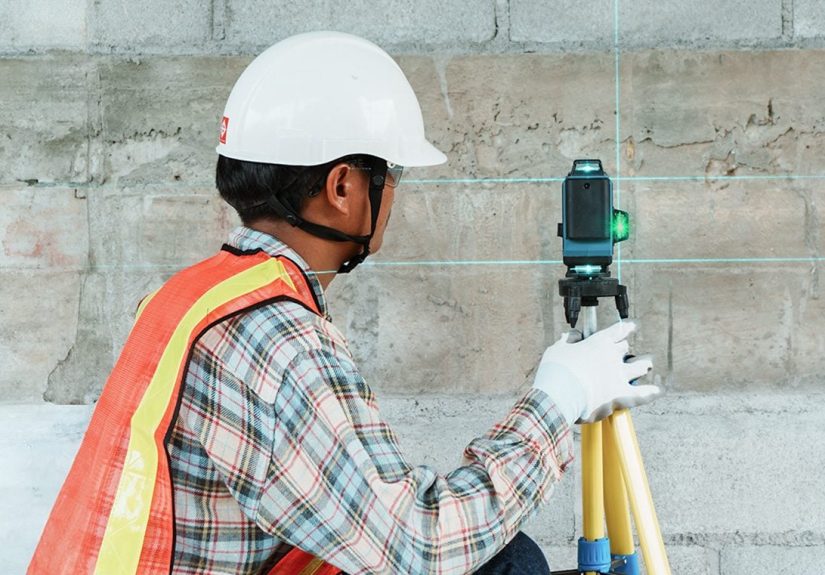
A laser level is basically a tiny, battery-powered truth-teller. It projects a perfectly straight reference line (or plane) so you can stop arguing with your bubble level, your drywall, and your own eyeballs. If you’ve ever hung a shelf that looked “fine” until you stepped back (and then considered moving to a new house), a laser level is your redemption arc.
This guide covers when a laser level is the right tool, how to use it without turning your project into modern art, and 13 expert tips that help you work faster and more accuratelywhether you’re lining up kitchen cabinets, laying tile, or setting grade outdoors.
When a Laser Level Is the Right Tool (and When It’s Overkill)
Use a laser level when you need a consistent reference line across distanceespecially when “close enough” becomes “crooked forever.” Laser levels shine (literally) for:
- Cabinets and shelving: keeping runs straight over multiple studs.
- Tile layout: creating level and plumb lines so your grout joints don’t slowly drift into chaos.
- Picture frame galleries: aligning multiple frames without measuring 47 times.
- Drop ceilings / grid work: keeping tracks aligned across a room.
- Outdoor grading and posts: establishing a level plane over long distances using a detector/receiver.
When it’s overkill: if you’re hanging one small hook or checking a single short board, a standard level is faster. A laser level is a “set it once, use it everywhere” toolbest when there are multiple marks, repeated heights, or long runs.
Quick Primer: Types of Laser Levels (Pick the Right Beam for the Job)
Not all laser levels are the same. Choosing the right type is half the battleand also half the reason your neighbor’s “great deal” laser doesn’t work for your project.
- Line laser (horizontal or vertical): projects one straight line. Great for basic shelves, chair rails, and quick alignment.
- Cross-line laser: projects a horizontal and vertical line that intersect. Ideal for tile layout, centering, and plumb + level work.
- 360° line laser: wraps a line around the room. Fantastic for installing cabinets, leveling a whole room, or running trim.
- Rotary laser: spins a dot to form a level planeespecially useful outdoors with a detector for grading, foundations, and long distances.
- Dot/point laser (plumb points): shoots points for transferring positions from floor to ceiling (layout, framing, plumbing lines).
How to Use a Laser Level: The Fast Setup That Prevents Slow Regret
Most accuracy problems aren’t “bad lasers.” They’re bad setup. Use this simple routine:
- Mount it securely: tripod, pole, shelf, or magnetic bracketanything stable.
- Choose your reference height: decide what “level” means for this task (top of cabinets, center of mirror, first tile row, etc.).
- Turn it on and let it settle: self-leveling models need a moment to find level; blinking often indicates it’s out of range.
- Confirm your target surface: aim lines where you can actually mark, measure, or alignthen fine-tune position.
- Mark clean reference points: don’t trace a fuzzy line; mark crisp points and connect if needed.
13 Expert Tips for Laser-Level Accuracy (and Sanity)
Tip 1: Start with the “reference decision,” not the tool
Before you power up anything, pick the one thing that must be true: “Top of upper cabinets is level,” “Bottom of backsplash tile aligns with outlets,” or “Mirror center is 60 inches off the floor.” Your laser doesn’t create correctnessit broadcasts it. Decide the reference first, then project it.
Tip 2: Use a tripod (or a solid mount) like you mean it
A laser level sitting on a paint can is a comedy sketch, not a measurement strategy. A tripod gives you stability and easy height adjustment. For framing or ceiling work, a magnetic bracket or pole mount can be even betterjust make sure it’s rigid and won’t shift when you bump it.
Tip 3: Keep it out of “bump range”
Place the laser where you’re least likely to kick it, catch a cord on it, or tap it with a sheet of drywall. If you can’t avoid traffic, place it higher (tripod raised, shelf, or wall mount) and angle it so you can still mark safely.
Tip 4: Trust self-levelinguntil you shouldn’t
Self-leveling lasers are great, but they have a limited correction range. If the unit is tilted beyond that range, the beam often blinks or alarms. Don’t “force it” by pretending it’s finereposition it so it can self-level properly.
Tip 5: Don’t draw the line; mark the line
Laser lines can look thicker or fuzzier depending on distance and surface texture. Instead of tracing the entire line with a pencil, make small, sharp marks at key points (ends, corners, stud centers). Connect marks with a straightedge if you need a solid pencil line.
Tip 6: Use the laser for layout, then measure off it for consistency
For cabinets: project a level line for the top or bottom reference. Then measure down (or up) from that line at multiple points to locate cleats, ledger boards, or mounting rails. This method catches wavy walls and uneven floors before they become permanent features.
Tip 7: For tile, let the laser guide “squareness,” not just level
In tile work, the big mistake is starting level but drifting out of square. Use a cross-line (or two perpendicular lines) to establish both a level baseline and a plumb reference. Dry-lay a few tiles along the lines to confirm your cuts at edges won’t be tiny slivers.
Tip 8: Make “center” effortless for mirrors, art, and hardware
For a round mirror (or any “why does this look crooked” item), use the vertical laser line to establish center over a vanity or console. Then use the horizontal line for height. It’s like math, but without the mathand with fewer arguments.
Tip 9: Outdoors, assume you need a detector (and plan for it)
Bright daylight laughs at most visible laser lines. If you’re grading, setting forms, or aligning posts outdoors, use a rotary laser (or compatible outdoor-rated system) with a detector/receiver and a grade rod. That combo lets you “find” the laser plane even when you can’t see the beam.
Tip 10: Use “pulse mode” only when it actually helps
Some lasers have a pulse mode designed for use with detectorsoften extending usable range. Indoors, pulse mode can make the line look dimmer to your eyes. If you’re not using a detector, standard mode is usually more visible. Use the right mode for the job, not the vibe.
Tip 11: Check accuracy after drops, hard knocks, or mystery falls
Laser levels are tough, but gravity is undefeated. If the unit takes a tumbleor rides loose in the truck beddo a quick accuracy check before you rely on it for something permanent like cabinets or tile. A fast check beats a slow redo.
Tip 12: Work “to one side” of the beam for repeatable alignment
When aligning edges (like a ledger board, a tile edge, or a shelf standard), decide whether the workpiece aligns to the top edge, bottom edge, or center of the beamand stick to that choice for the whole task. Consistency matters more than philosophical debates about beam thickness.
Tip 13: Treat uneven surfaces like data, not doom
A laser level reveals inconvenient truths: floors slope, walls bow, and nothing is perfectly square. Use that information. If your laser line shows a floor drops 3/8 inch across a room, that’s not a failureit’s a planning advantage. You can scribe trim, shim cabinets, or adjust tile layout before installation turns into a patch-fest.
Common Mistakes (and the Fixes That Save Weekends)
- Mistake: Setting the laser at eye level near reflective surfaces.
Fix: Lower it, angle it away from faces, and avoid aiming at mirrors, windows, or glossy tile. - Mistake: Assuming the wall is straight and the floor is level.
Fix: Use the laser to spot variations, then shim/scribe accordingly. - Mistake: Repositioning the laser mid-task without rechecking reference marks.
Fix: Make two “control marks” you can always return to if you have to move the tool. - Mistake: Trying to use an indoor-only line laser outdoors in full sun.
Fix: Use an outdoor-capable system with a detector, or work at dawn/dusk if you must (and still expect limits).
Laser Safety: Keep the Beam Out of Your Eyeballs (and Everyone Else’s)
Most consumer laser levels are designed to be safe under normal use, but “normal use” does not include staring into the beam like it owes you money. Follow these practical rules:
- Don’t stare into the beam and don’t aim it at anyone’s faceever.
- Don’t set it at eye level in busy areas where someone can walk into the line.
- Avoid reflective surfaces (mirrors, glass, glossy tile) that can bounce the beam unpredictably.
- Use the case and lock features when transporting so the internal mechanism isn’t taking a beating.
- Keep it out of reach of kidsbecause curiosity plus lasers is a bad combo.
Maintenance and Accuracy Checks (Because “Close Enough” Isn’t a Spec)
A laser level is a precision tool. Treat it like one:
- Store it in a protective case and avoid tossing it into a drawer with hardware and loose batteries.
- Lock the pendulum (if your model has it) before transport to protect the self-leveling mechanism.
- Keep the windows clean with a soft cloth; dust can make lines look weak or distorted.
- Do periodic accuracy checks (especially after drops): project to one wall, rotate 180°, compare marks, and confirm it tracks true.
Real-World Experience: What Happens After the Laser Turns On (Bonus Field Notes)
The first time I used a laser level for a “simple” floating shelf install, I expected instant perfection. I set the laser, saw the line, and thought, “Greattechnology has solved human error.” Then I measured from the laser line down to my bracket marks at three studs and got three different numbers. My immediate reaction was to question physics, the tool, and possibly the concept of studs.
What actually happened was much less dramatic: the wall wasn’t flat, the floor wasn’t level, and my shelf plan needed to decide what it was referencing. Was I matching the shelf to the floor (so it “looked” parallel), or making it truly level (so objects didn’t roll)? The laser didn’t create the problemit revealed it. Once I chose “true level,” the fix was straightforward: keep the laser line as the master, shim the brackets as needed, and stop assuming walls behave like CAD drawings.
The second big lesson came during a backsplash tile job. A laser line is a confidence booster… until it isn’t. I used a horizontal line to start my first course, but I didn’t set a vertical reference. Halfway across the wall, my grout joints had drifted just enough that the outlet cuts started looking tight on one side and roomy on the other. That’s when I learned the difference between “level” and “square.” The recovery was possible because the laser made the drift obvious early: I paused, adjusted spacers, and used a vertical line to steer the pattern back on track before the thinset became permanent.
Outdoors taught me humility. I tried using a bright green line laser on a sunny day to align fence post heights. I could barely see the line, and I kept re-aiming, which meant my “reference” moved every time I touched the tool. Once I switched to a setup that used a detector and a rod, the work became boringin the best way. The detector told me when I hit the plane, even when my eyes couldn’t. Suddenly I was measuring, not guessing.
The most useful habit I’ve kept is making two control marks before I really start. If I have to move the laser (battery swap, tripod bump, or someone stepping over the legs like they’re auditioning for a circus), I can put the beam back on those marks and know I’m still working from the same truth. Laser levels are fantastic toolsbut the real “expert move” is using them consistently, not magically.