Table of Contents >> Show >> Hide
- The Night Tina Turner Turned Maracanã Into Her Own Stage
- Why This Guinness World Record Mattered
- The Break Every Rule Tour: A Comeback With Stadium Muscles
- What Tina Turner Sang in Rio
- Why Brazil Loved Tina Turner
- The Record Behind the Record: Tina Turner’s Reinvention
- A Female Artist Breaking Stadium Rules in the 1980s
- The Tina Turner Live Experience
- Why the Maracanã Concert Still Feels Historic
- Experiences and Takeaways From Tina Turner’s Record-Breaking Moment
- Conclusion
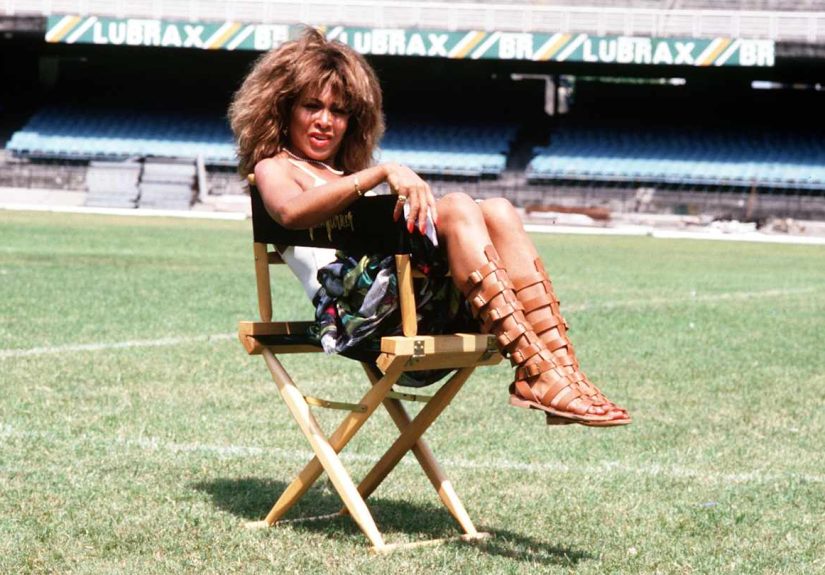
There are big concerts, there are legendary concerts, and then there is the night Tina Turner walked onto the stage at Estádio do Maracanã in Rio de Janeiro and made even a massive soccer stadium look like it had underestimated her. On January 16, 1988, the Queen of Rock ’n’ Roll performed for an official Guinness World Records attendance of 180,000 ticketed fans, setting a record for the highest attendance at a ticketed concert by a female artist.
That number is not just large; it is the kind of number that makes a tour manager reach for a calculator, a safety crew reach for extra radios, and a singer with ordinary lungs reach for a chair. Tina Turner, however, was not ordinary. She was 48 years old, in the middle of one of the greatest career comebacks in modern music history, and still performing with enough voltage to make stadium lights feel decorative.
The record-breaking Rio concert was part of her Break Every Rule World Tour, a global run supporting her 1986 album Break Every Rule. The tour grossed about $60 million, reached millions of fans, and helped prove that Tina Turner was not simply enjoying a comeback. She had become a worldwide stadium force.
The Night Tina Turner Turned Maracanã Into Her Own Stage
Maracanã Stadium was already one of the most famous venues on Earth before Tina Turner arrived. Located in Rio de Janeiro, Brazil, it was built for soccer glory and national spectacle. It had hosted huge sporting events, roaring crowds, and cultural moments that felt too big for regular buildings. But on that January night in 1988, the stadium belonged to Tina.
The official Guinness record lists 180,000 fans in attendance. Some historical retellings have used slightly higher estimates, such as 182,000 or 188,000, but Guinness currently recognizes 180,000 as the official figure. Either way, the conclusion is the same: Tina Turner stood before a sea of paying fans so vast that most performers would have needed binoculars just to wave at the back row.
At the time, her Maracanã show was recognized as the biggest crowd ever assembled for a ticketed concert, excluding music festivals. It also surpassed the previous benchmark set by Frank Sinatra at the same stadium in 1980. That little detail makes the story even tastier. Sinatra had the tuxedo, the martini aura, and the Chairman-of-the-Board swagger. Tina arrived in heels, a miniskirt, and a roar, then took the record for herself.
Why This Guinness World Record Mattered
The Tina Turner Guinness World Record was more than a statistic. It was a public announcement that her second act had become bigger than almost anyone predicted. By the late 1970s, many in the music business had treated Turner as a brilliant performer whose best commercial years were behind her. That assumption aged about as well as a plastic jumpsuit under stadium lights.
Her 1984 album Private Dancer changed everything. Powered by hits like “What’s Love Got to Do with It,” “Better Be Good to Me,” and “Private Dancer,” the album transformed Turner from a respected survivor into a global pop-rock superstar. It won major Grammy Awards, sold in enormous numbers, and introduced her to a new generation that may not have known the full Ike & Tina Turner story but instantly understood the voice.
Then came Break Every Rule in 1986. The album included songs such as “Typical Male,” “Two People,” “What You Get Is What You See,” and “Back Where You Started.” It did not merely extend her comeback; it expanded her international reach. By the time the world tour reached South America, Turner was no longer proving she belonged. She was proving there might not be a venue large enough to contain her.
The Break Every Rule Tour: A Comeback With Stadium Muscles
The Break Every Rule World Tour began in March 1987 and continued into March 1988. It traveled through Europe, North America, South America, Australia, and Asia. The scale was enormous: hundreds of shows, millions of spectators, and a production built around Turner’s physical intensity, rock band power, and unmistakable stage command.
Her touring success was especially striking because it came at a time when the live music industry was still heavily shaped by male rock acts. Stadiums were often treated as the territory of bands with walls of amplifiers and armies of roadies. Tina Turner walked into that world and made it clear that one woman with the right voice, the right band, and the right pair of legs could command the same scale.
Turner’s stagecraft was direct. She did not need elaborate fantasy castles, flying spaceships, or theatrical fog thick enough to hide a small village. Her formula was simpler and more dangerous: a great band, explosive songs, relentless movement, and a voice that could sound like gravel, thunder, heartbreak, and triumph all in the same chorus.
What Tina Turner Sang in Rio
The Rio de Janeiro concert gave fans a setlist that captured the full range of Turner’s career. She performed rock covers, solo hits, Ike & Tina classics, and songs from the Break Every Rule era. The show included “Addicted to Love,” “I Can’t Stand the Rain,” “Typical Male,” “The Acid Queen,” “Better Be Good to Me,” “Private Dancer,” “We Don’t Need Another Hero,” “What’s Love Got to Do with It,” “Let’s Stay Together,” “Proud Mary,” “Break Every Rule,” and “Nutbush City Limits.”
That setlist was smart because it did not ask fans to choose which Tina they loved. It gave them all of her. There was Tina the soul shouter, Tina the rock singer, Tina the pop-chart champion, Tina the film star, Tina the survivor, and Tina the woman who could turn “Proud Mary” into a full-body athletic event. Plenty of singers perform encores. Tina Turner seemed to perform detonations.
“Proud Mary” and the Art of Owning a Song
“Proud Mary” is a perfect example of Tina Turner’s power as an interpreter. Creedence Clearwater Revival wrote and recorded the song first, but Tina’s version became its own creature: part sermon, part workout, part explosion. By the time she performed it in Rio, audiences knew exactly what was coming. The slow build was the warning. The fast section was the earthquake.
In a stadium of 180,000 people, a song like that becomes less like a performance and more like a weather event. When the crowd responds, the artist is no longer singing at the audience; she is steering a giant emotional machine. Tina Turner was one of the rare performers who could steer it without losing control.
Why Brazil Loved Tina Turner
Brazilian audiences have a long reputation for passionate live-music energy, and Tina Turner’s performance style was perfectly matched to that environment. She sang with urgency. She danced like the beat had personally challenged her. She did not hide behind coolness. Her shows were hot, human, and immediate.
That mattered in Rio. A crowd that large does not respond only to celebrity. It responds to connection. Turner’s story carried emotional weight: a woman who had endured public and private hardship, rebuilt her life, and returned stronger than before. Her voice sounded lived-in because it was. Her confidence felt earned because it was. Fans did not just admire her success; many saw themselves in her refusal to disappear.
The result was a concert that felt both enormous and personal. Even from the farthest seats, Turner had a way of making performance feel like direct communication. That is not easy in a stadium. Most artists become smaller as the venue gets bigger. Tina somehow got bigger with it.
The Record Behind the Record: Tina Turner’s Reinvention
To understand why the Maracanã record still matters, it helps to look at the reinvention that made it possible. Born Anna Mae Bullock in Tennessee, Turner first rose to fame in the Ike & Tina Turner Revue. Her early performances were electrifying, and songs such as “A Fool in Love,” “River Deep – Mountain High,” “Proud Mary,” and “Nutbush City Limits” established her as one of the most dynamic singers of the 1960s and 1970s.
But the professional success came with personal pain. Turner later spoke openly about the abuse she suffered during her marriage to Ike Turner. Leaving that marriage meant starting over with limited money and uncertain industry support. She performed in smaller venues, took television appearances, and worked her way through a period when many executives failed to imagine her as a future pop superstar.
Then came the 1980s, and Turner did something rare: she did not simply return; she returned larger. Her voice had more texture, her image had sharper confidence, and her music found a powerful balance between rock, pop, soul, and adult contemporary radio. She became proof that reinvention is not the same as pretending to be new. Sometimes it means finally being seen clearly.
A Female Artist Breaking Stadium Rules in the 1980s
The 1980s produced some of the biggest tours in music history, but the stadium circuit was not equally open to everyone. Rock mythology still leaned heavily male, and women were often boxed into narrower commercial expectations. Tina Turner’s record challenged that. She did not ask to be treated as a novelty, a comeback story, or a nostalgia act. She performed like a headliner because she was one.
Her Maracanã record also helped expand the idea of what a female solo artist could achieve globally. This was not a club record, a radio record, or a chart footnote. It was a physical record: 180,000 people buying tickets and showing up. That kind of proof is difficult to dismiss. You can argue about taste, genre, or marketing. You cannot argue with a stadium packed to the edges.
Turner’s success helped create a path for later generations of women who would dominate global touring, from Madonna and Janet Jackson to Beyoncé, Taylor Swift, Pink, and others. Tina did not have the same digital tools, streaming platforms, or social media megaphones. She had songs, stamina, charisma, and the kind of stage presence that made fans want to be in the same physical space as her.
The Tina Turner Live Experience
What made Tina Turner’s live shows so memorable was not perfection in the polished, museum-glass sense. It was presence. She made effort visible, and that effort became part of the thrill. You could hear the grit in her voice and see the athleticism in her movement. She was glamorous, yes, but never delicate. She looked like she had fought her way to the microphone and had no intention of giving it back.
Her band also played a crucial role. Turner’s concerts were built on muscular arrangements, big guitar lines, strong backing vocals, and rhythms that pushed her forward. The music had enough space for her voice to command attention, but enough force to keep a stadium crowd moving. A Tina Turner concert was not background entertainment. It was an invitation to sweat, sing, and possibly reconsider your cardio routine.
Why the Maracanã Concert Still Feels Historic
Decades later, the Tina Turner Maracanã concert still stands as one of the defining moments in live music history. Records are eventually broken; that is what records do. But the meaning of a record can remain powerful long after someone else claims a bigger number. Turner’s achievement endures because it captured a turning point: a survivor becoming a global monarch, a female artist conquering a stadium culture, and a performer in her late forties rewriting expectations about age, gender, and commercial power.
The image is irresistible: Tina Turner in Rio, standing before a human ocean, delivering songs with the confidence of someone who knew exactly how much it had cost to get there. She was not carried by hype. She was carried by talent, discipline, resilience, and a connection with audiences that had been forged over decades.
In the end, the Guinness World Record was not just about the size of the crowd. It was about the size of the journey.
Experiences and Takeaways From Tina Turner’s Record-Breaking Moment
One of the most inspiring experiences related to Tina Turner’s Guinness World Record is the feeling of watching a performer turn adversity into authority. For fans who have seen footage from the Rio concert, the first impression is usually the size of the crowd. It seems endless. But after a few minutes, the crowd becomes almost secondary because Turner’s energy pulls the focus back to the stage. That is the lesson: scale matters, but command matters more.
For artists, entrepreneurs, writers, and anyone trying to build a second chapter, Tina Turner’s 1988 record is a masterclass in patience. Her Maracanã moment did not arrive because of one lucky single or one clever marketing campaign. It came after years of performing, rebuilding, choosing better collaborators, refining her sound, and refusing to let the industry write her final paragraph too early. Many people want the stadium moment. Fewer people are willing to survive the small-room years that come before it.
There is also an experience in this story for audiences. Fans did not gather in Rio only to hear famous songs. They gathered to witness proof. Tina Turner represented the possibility that life could restart loudly. Her music carried joy, but not the shallow kind. It was joy with scar tissue. That is why songs like “What’s Love Got to Do with It” and “Better Be Good to Me” landed with such force. They were catchy, but they also sounded like boundaries being set to a beat.
Another takeaway is the importance of physical presence in an increasingly digital world. Today, music can travel instantly through phones, playlists, short videos, and streaming platforms. That convenience is wonderful, but Turner’s Maracanã record reminds us why live performance remains irreplaceable. A record-breaking crowd is not just a number; it is thousands of separate lives choosing to meet in one place for one shared emotional experience. Nobody can pause it, skip it, or play it at half volume while washing dishes. You are there, and the moment asks for your full attention.
For women in entertainment, the record carries extra weight. Turner was not a teenager when she set it. She was not being packaged as a brand-new discovery. She was a mature artist with history, pain, humor, power, and total ownership of her stage identity. That matters because popular culture often treats women as if their influence has an expiration date. Tina Turner answered with 180,000 paid tickets and a microphone.
The experience of revisiting this concert today feels almost cinematic. You can imagine the heat of Rio, the roar inside Maracanã, the anticipation before the band kicked in, and the astonishing confidence required to face a crowd that huge without shrinking. It is the kind of scene that makes the phrase “larger than life” feel less like a cliché and more like a job description.
Most of all, Tina Turner’s Guinness World Record teaches that triumph is sweeter when it is earned in public after struggle. Her Rio performance was not merely a victory lap. It was a declaration that she had become the author of her own legend. The stadium was full, the world was watching, and Tina Turner did what Tina Turner always did best: she sang like freedom had a backbeat.
Conclusion
When Tina Turner set a Guinness World Record at Maracanã Stadium in 1988, she did more than attract 180,000 ticketed fans. She confirmed her place as one of the most powerful live performers in music history. The concert represented the peak of her Break Every Rule era, the success of her extraordinary comeback, and the global love audiences felt for a woman who turned survival into rock ’n’ roll electricity.
Records can be broken, but moments like this do not fade easily. Tina Turner’s Rio concert remains a symbol of stamina, reinvention, and star power on a scale few artists ever reach. She did not just fill a stadium. She filled it with proof that the second act can be louder, brighter, and bigger than the first.
Note: This article uses Guinness World Records’ current official figure of 180,000 ticketed attendees while acknowledging that some historical accounts have circulated slightly higher estimates.