Table of Contents >> Show >> Hide
- The Tattoo Wasn’t the Affair. It Was the Receipt.
- Why This Story Feels So Devastating
- The Real Red Flags Hidden Inside the Lily Tattoo Story
- What Affairs Do to a Long Marriage
- What To Do If You Start Connecting Similar Dots
- Can a Marriage Survive a Betrayal Like This?
- Why This Story Resonates So Deeply Online
- Experiences People Commonly Have in Situations Like This
- Conclusion
- SEO Tags
Most tattoos are souvenirs. Some are style statements. Some are tiny emotional support dragons. And then, once in a while, a tattoo behaves less like body art and more like a confession with shading. That is why the viral story behind “Wife Of 19 Years Connects Dots About Her Husband’s Affair Through His Lily Tattoo” hit so many readers right in the chestfiguratively, unlike the husband’s very literal chest ink.
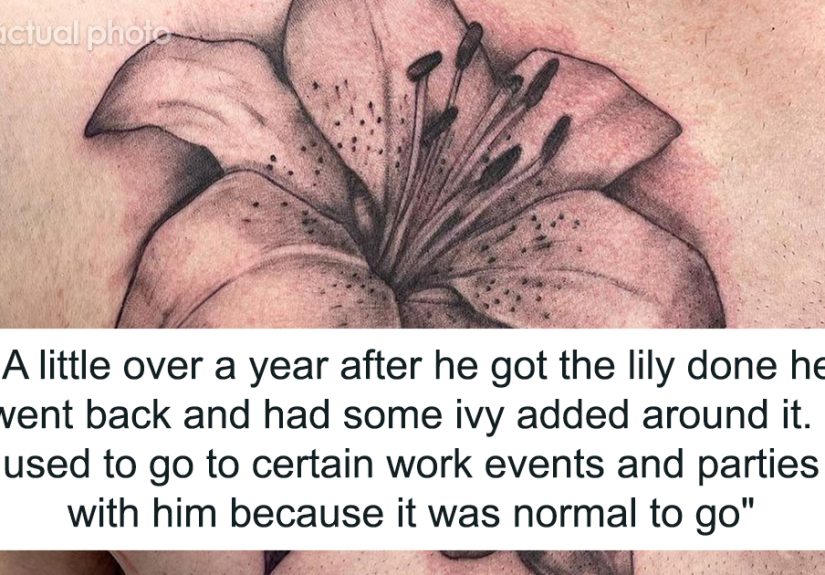
According to the widely shared account, a woman married for 19 years began piecing together the truth after her husband got an unusual new tattoo: a lily. Later, he added ivy around it. At first, it seemed random, maybe even harmless. But once she attended one of his work events and met a colleague named Lily, the symbolism started looking less like coincidence and more like a neon sign in cursive. Eventually, the affair came out, along with the explanation that the ivy was connected to the other woman’s baby, named Ivy. If that sounds like the kind of plot twist that would make a soap opera writer whisper, “Bit much,” you are not alone.
Still, what makes this story stick is not just the outrageous detail of the tattoo. It is the painfully familiar pattern underneath it: secrecy, behavior changes, shifting explanations, emotional distance, and the slow, awful realization that the relationship you thought you were living in was not the same one your partner was living in. In other words, the tattoo was not the whole story. It was just the clue that made the rest of the story impossible to ignore.
The Tattoo Wasn’t the Affair. It Was the Receipt.
That is the first important point. A tattoo alone does not prove infidelity. Plenty of people get strange tattoos for reasons that are deeply meaningful, mildly confusing, or Thursday-specific. But in this case, the lily tattoo affair became a lightning rod because it sat inside a larger pattern of odd behavior. The husband had never shown much interest in getting tattooed. He offered a flimsy explanation. He changed his work-event habits. He appeared to be managing accesswho his wife saw, what she knew, and when she was allowed into parts of his life that had once been normal territory for both of them.
That is how many people discover cheating: not through one dramatic clue, but through a stack of details that stop making innocent sense when placed together. One odd thing can be nothing. Five odd things start holding hands. Ten odd things move into a studio apartment and call themselves a pattern.
In long marriages, especially, that pattern can be easy to miss at first. Not because the betrayed partner is naïve, but because long-term commitment builds trust, routine, and assumptions of goodwill. After nearly two decades together, most people are not walking around expecting their spouse to leave breadcrumb trails toward betrayal in floral ink. They are busy living life, paying bills, parenting, working, and assuming that the story they are in is still the story both people agreed to tell.
Why This Story Feels So Devastating
Infidelity is not only about sex or romance outside the marriage. It is about deception. That distinction matters. For many betrayed spouses, the deepest wound is not merely that a partner was unfaithful, but that the partner lied repeatedly while continuing to accept love, loyalty, and everyday trust at home. That is why stories like this one trigger such strong reactions. The betrayal is not a single event. It becomes a rewritten history.
When someone discovers an affair after years of marriage, the emotional damage often comes in layers. First there is shock. Then humiliation. Then the forensic phase, where the brain tries to go back through months or years and re-label old memories: Was that work trip really a work trip? Was that sudden protectiveness around the phone just stress? Was that tattoo really “just art,” or was it a love letter hiding in plain sight?
This is where the story becomes bigger than gossip. Relationship experts and trauma-informed counselors have long noted that betrayal trauma after cheating can include hypervigilance, intrusive thoughts, anxiety, numbness, anger, sleep problems, and a profound collapse of emotional safety. The body often reacts as though it has been ambushed, because in a meaningful way, it has. The person who was supposed to be your safest witness in life has become the source of the threat.
The Real Red Flags Hidden Inside the Lily Tattoo Story
1. Out-of-character behavior
The tattoo itself mattered because it was unusual for him. When a spouse suddenly adopts a new behavior, habit, hobby, style, or emotional energy that does not fit their usual pattern, it does not automatically mean cheating. But it does deserve context. Sudden reinvention sometimes signals a hidden relationship, a fantasy life, or an identity split between home and elsewhere.
2. Secrecy dressed up as logistics
Another key detail in the story was the husband’s resistance to bringing his wife to work events. That kind of gatekeeping is a classic clue in many signs of infidelity discussions. Again, not proof on its own. Sometimes schedules change. Sometimes work culture changes. But when access narrows without a believable reason, and transparency shrinks right along with it, suspicion naturally grows.
3. Defensive coincidence stories
Once the wife met a coworker named Lily, the tattoo’s meaning stopped looking random. His responseessentially, trust me, that’s a coincidencedid not restore trust. It increased pressure. One common feature in affairs is the use of explanations that are technically possible but emotionally absurd. Betrayed partners often describe the moment they realize they have been asked to swallow a story that insults both their intelligence and their instincts.
4. Layered symbolism
The later addition of ivy is what pushed the story from suspicious to emotionally brutal. Affairs often involve hidden rituals, private meanings, coded gifts, pet names, playlists, locations, or symbols. Those details matter because they reveal investment. A one-time lapse and a two-year double life do not hit the nervous system the same way. Symbolic behavior suggests intention, attachment, and ongoing deception.
What Affairs Do to a Long Marriage
When a marriage has lasted 19 years, betrayal lands differently than it might in a newer relationship. There is more shared history. More routines. More family architecture. More invisible labor. The betrayed spouse is not simply asking, “Did you cheat?” She is also asking, “What part of my life was real? What part was performance? And how long have I been standing in a room with the lights off?”
That is why the aftermath is so disorienting. The pain can include grief, rage, embarrassment, obsessive analysis, and a strange feeling of emotional vertigo. People often want clean categoriesstay or leave, forgive or don’t, marriage or divorcebut the early reality is usually much messier. The mind wants certainty while the heart is still trying to understand what just happened.
There is also the issue of self-trust. One of the cruelest side effects of betrayal is that it can make the injured partner question their own judgment. If they missed something this big, what else have they missed? That is one reason many therapists encourage betrayed partners to stop treating themselves like incompetent detectives and start treating themselves like injured people. Healing usually begins when the focus shifts from “How did I not know?” to “What do I need now?”
What To Do If You Start Connecting Similar Dots
If a story like this feels familiar, the goal is not to spiral into amateur espionage over every tulip, password, and awkward calendar invite. The goal is to slow down and assess patterns clearly.
Start with behavior, not fantasy. Look for repeated secrecy, access control, emotional withdrawal, inconsistent explanations, unusual protectiveness around devices, sudden schedule changes, and unexplained shifts in affection, spending, or availability. One weird detail means very little. A pattern of concealment means much more.
Then ground yourself before confrontation. If you suspect an affair, it helps to document what you actually know versus what you fear. Talk to a trusted friend, therapist, or attorney if the situation has financial, family, or legal implications. You do not need to audition for the role of Cool, Unbothered Spouse. You also do not need to blow up your whole life in one afternoon because your partner suddenly likes peonies and password privacy.
Most of all, remember this: a partner’s dishonesty is not evidence of your failure. People cheat for many reasonsimmaturity, entitlement, avoidance, resentment, escapism, thrill-seeking, poor boundaries, emotional hungerbut none of those reasons magically become your fault because you were loyal in good faith.
Can a Marriage Survive a Betrayal Like This?
Sometimes, yes. But not through vibes. Not through flowers. And definitely not through “Can we just move on?” by next Tuesday.
Rebuilding trust after an affair usually requires several hard ingredients: full disclosure, accountability, transparency, consistency, emotional honesty, and a genuine willingness to tolerate the betrayed partner’s pain without becoming defensive. Remorse is not the same thing as panic about consequences. Tears are not the same thing as repair. And begging someone not to divorce you is not the same thing as becoming a safe person to remain married to.
For some couples, therapy helps them rebuild. For others, therapy helps them separate with more clarity and less chaos. Both outcomes can be healthy. What matters is not preserving the relationship at any cost. What matters is restoring dignity, safety, and truth. A marriage can survive infidelity, but it cannot survive ongoing deception pretending to be healing.
In the viral tattoo story, the wife reportedly felt certain she could not forgive what happened. That response makes sense. Forgiveness is not a coupon code. It does not have to be rushed, performed, or granted just because the unfaithful partner finally stopped lying after getting cornered by his own floral chest piece.
Why This Story Resonates So Deeply Online
There is a reason so many readers reacted strongly to this tale. It combines three things the internet never ignores: a long marriage, a painfully obvious clue, and a betrayal so brazen it almost seems theatrical. But under the spectacle is something much more ordinary and much more painful: the experience of realizing that intuition was whispering long before proof arrived.
That part is deeply relatable. Many betrayed partners say they sensed that something was off before they could explain why. A change in tone. A sudden withdrawal. A tenderness that felt guilty rather than loving. A story that looked normal from ten feet away and ridiculous up close. The lily tattoo simply gave that intuition a shape people could see.
So yes, the detail is dramatic. But the emotional core is not. The real story is about how hidden dishonesty leaks into ordinary life, how betrayal often reveals itself through patterns rather than confessions, and how devastating it is when the person you trusted most turns out to be curating two realities at once.
Experiences People Commonly Have in Situations Like This
Stories like “Wife Of 19 Years Connects Dots About Her Husband’s Affair Through His Lily Tattoo” are memorable because they sound extreme, but the emotional experiences surrounding them are surprisingly common. Many people who discover a spouse’s affair do not describe the moment as one clean explosion. They describe it as a strange, slow-motion collapse. They remember feeling suspicious and then guilty for being suspicious. They remember noticing one odd thing and talking themselves out of it. Then another. Then another. By the time the truth arrives, it can feel less like a surprise and more like a horrible confirmation.
One common experience is embarrassment. Not because the betrayed spouse did anything wrong, but because betrayal often makes people feel publicly foolish even when the deception was private. They replay conversations, vacations, anniversaries, and family gatherings, wondering who knew what and when. They think about all the times they defended their spouse, trusted their explanations, or ignored that tug in their gut because they wanted to believe in the marriage they had built.
Another common experience is mental replay. People often become obsessed with details after discovery. They go back through receipts, texts, photos, work events, strange expenses, mood shifts, and tiny lies that once seemed too small to matter. This is not pettiness. It is the mind trying to rebuild reality after reality has been cracked open. In a case like the lily tattoo story, that replay becomes especially intense because the clue was literally visible the whole time. That can make the betrayed partner feel haunted, as if the evidence was right there and still somehow hidden.
There is also the experience of anger mixed with absurdity. Sometimes the details are so outrageous that the betrayed partner laughs, then cries, then laughs again because the situation is too ridiculous for one emotion. A hidden playlist. A suspicious hotel charge labeled as “office supplies.” A spouse suddenly developing a passionate interest in a band they previously thought was noise made by haunted microwaves. In this case, a flower tattoo that turned into a roadmap. The absurdity does not reduce the pain. If anything, it sharpens it.
And then there is the question of what comes next. Some people leave immediately. Some stay and try counseling. Some separate emotionally before they separate legally. Some do not even know what they want at first; they just know that the old version of the relationship is gone. That uncertainty is normal. A betrayed spouse does not owe anyone a quick, elegant response. She does not need to become inspirational on schedule. She needs room to think, support to stand on, and enough truth around her to make an honest decision.
In that sense, the lily tattoo story is not really about body art at all. It is about intuition, betrayal, and the moment a person stops explaining away what they can clearly see. It is about the painful power of connecting the dots. And it is about something many readers understand far too well: sometimes the clue is not what breaks your heart. Sometimes it is just the thing that finally proves your heart was right to hurt.
Conclusion
The viral story behind “Wife Of 19 Years Connects Dots About Her Husband’s Affair Through His Lily Tattoo” grabbed attention because the clue was cinematic. But the deeper lesson is painfully real. Affairs are rarely uncovered by one detail alone. More often, they reveal themselves through patterns of secrecy, emotional distance, inconsistent explanations, and the slow erosion of trust. The tattoo did not create the betrayal; it simply exposed it.
For readers dealing with their own suspicions, this story is a reminder to pay attention to patterns, not panic over isolated details. And for anyone recovering from infidelity, it offers a hard truth with a useful edge: clarity can be brutal, but it is also the beginning of getting your footing back. Once the dots connect, the next step is not to protect the fantasy. It is to protect yourself.