Table of Contents >> Show >> Hide
- The Real Story Behind the Viral Headline
- Why This Story Hit People So Hard
- Google Maps Did Not Solve the Human ProblemBut It Helped Solve the Mystery
- What the Case Reveals About Alzheimer’s and Wandering
- Lessons Families Can Take From This Story
- The Internet Loves the Twist. The Real Story Is the Marriage.
- Experiences Related to This Story: What Families and Caregivers Often Go Through
- Final Thoughts
- SEO Tags
Some headlines sound like they were written by a novelist who had too much coffee and an excellent sense of timing. This is one of them. A woman disappears. Her husband searches desperately. Time stretches from hours into years. Then, in a twist that feels almost too cinematic to be real, Google Maps helps reveal what happened.
But beneath the viral headline is not a thriller, and it is definitely not a tech fairy tale. It is a deeply human story about love, caregiving, dementia, uncertainty, and the painful difference between hope and closure. It is also a reminder that modern tools sometimes act as accidental witnesses. No cape, no dramatic soundtrack, just a camera car rolling by on an ordinary day while life quietly falls apart across the street.
This article looks at the real case behind the headline, why it struck such a chord online, what it reveals about Alzheimer’s-related wandering, and what families can learn from a story that is heartbreaking, unforgettable, and uncomfortably plausible.
The Real Story Behind the Viral Headline
The woman at the center of the story was Paulette Landrieux, an 83-year-old woman from Andenne, Belgium, who was living with Alzheimer’s disease. Her husband, Marcel Taret, was also her caregiver. On a day in November 2020, he stepped outside briefly to hang laundry. Before doing so, he had settled Paulette with lunch and television, the kind of ordinary caregiving routine that millions of families know all too well.
When he came back, she was gone.
That sentence looks tiny on the page, but anyone who has cared for a loved one with dementia knows it can contain an entire earthquake. A few missing minutes can feel like a trapdoor opening under the entire household. Marcel searched. He called out for her. He checked the home, then the area outside, then the neighbors. Police were called, and search efforts followed. Still, there was no answer.
For two years, the disappearance remained unresolved. No miracle phone call. No sudden return. No simple explanation. Just the crushing weight of not knowing, which is often its own kind of punishment.
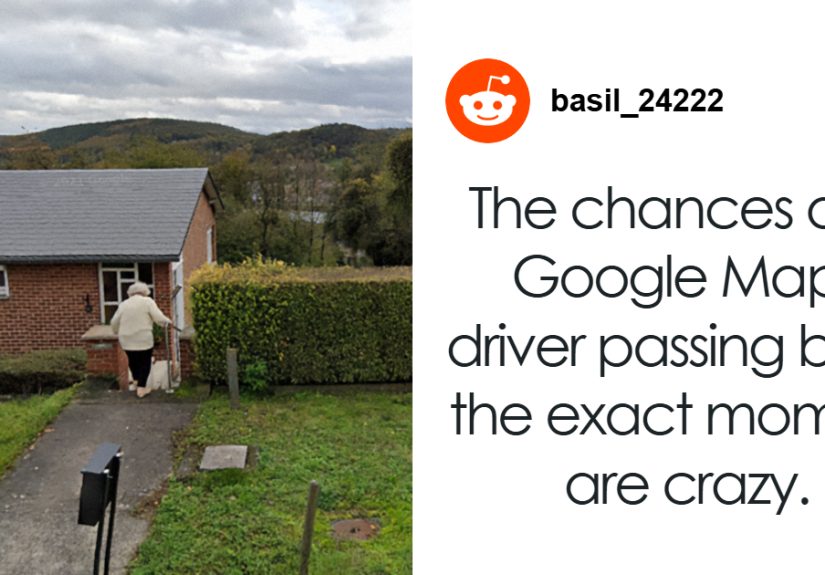
Then came the clue that transformed the case from mystery to answer. A neighbor later noticed imagery on Google Street View that had been captured on the very day Paulette vanished. The images appeared to show Paulette walking away from the house while Marcel was outside handling the laundry. Investigators used that visual breadcrumb to retrace the likely route she had taken. Eventually, they found her remains in dense brush nearby.
That discovery did not create a happy ending. It created something more complicated and, in some ways, more important: closure. Not relief. Not joy. But an end to the question that had haunted her husband for two years.
Why This Story Hit People So Hard
There are plenty of missing-person stories on the internet. There are also plenty of stories about technology doing something eerie, useful, or both. This one landed differently because it sits at the intersection of three emotional fault lines.
1. It turns an ordinary moment into a life-changing one
Marcel did not leave for a weekend fishing trip. He did not vanish into a dramatic subplot. He stepped outside to hang laundry. That tiny detail matters because it makes the story feel terrifyingly close to home. Ordinary life is where most family crises begin. Not with thunder. With chores.
2. It shows how dementia can turn familiar places into dangerous ones
Many people still imagine wandering as something random or theatrical, like a confused person marching into the horizon for no reason. In reality, dementia-related wandering is often quiet, brief, and devastatingly fast. A person may believe they are headed somewhere meaningful, familiar, or necessary. They may not look lost at all. That is part of what makes these incidents so frightening.
3. It gives closure, but not comfort
Online audiences love the word “closure” because it sounds tidy. Real closure is not tidy. It does not erase grief. It does not magically make the past easier to live with. What it does offer is an answer. And for families who have spent months or years in limbo, an answer can matter in a huge way, even when the answer hurts.
Google Maps Did Not Solve the Human ProblemBut It Helped Solve the Mystery
The technology angle is what made the headline go viral, but it is worth keeping the proportions right. Google Maps was not a detective in a trench coat muttering, “I’ve cracked it.” It was an accidental witness.
Street View images are captured from public roads, often for routine mapping updates. In this case, that routine image collection happened to freeze a crucial moment in time. A neighbor noticed the clue. Investigators followed up. The discovery was the result of human attention meeting archived technology at exactly the right moment.
That combination is increasingly common in modern investigations. Digital traces, security cameras, smartphones, doorbells, maps, and geolocation data all create records of everyday life. Sometimes those records become evidence. Sometimes they become timelines. Sometimes they become the last missing puzzle piece.
And yet the deeper lesson here is not really about Google. It is about fragility. A passing camera happened to capture the one sliver of movement that the family, neighbors, and authorities had not been able to reconstruct in time. Technology helped answer the question, but it could not undo the tragedy.
What the Case Reveals About Alzheimer’s and Wandering
Stories like this resonate because they expose a truth many families already know: Alzheimer’s disease does not only affect memory. It can alter judgment, orientation, daily routines, recognition of place, and the sense of what is safe. A person may leave home with full confidence and no meaningful ability to return.
That matters in the United States, where Alzheimer’s affects millions of older adults and places enormous strain on families, spouses, adult children, and unpaid caregivers. Wandering is one of the most feared complications because it transforms everyday care into permanent vigilance. You are not only helping with medication, meals, appointments, and emotional regulation. You are also, in effect, running a quiet safety operation 24 hours a day.
Experts on dementia care have warned for years that wandering can happen at many stages of the disease and that familiar settings do not eliminate risk. In fact, familiar settings may create a false sense of security. A spouse may think, “They know this neighborhood,” when the illness has already changed how the neighborhood is being processed in the brain.
That is one reason this story matters beyond its headline value. It reflects a larger public health reality. Dementia care is emotionally exhausting, logistically complex, and often deeply isolating. Caregivers can do everything “right” and still face situations that spiral in minutes. There is no perfect routine, no foolproof lock, and no magical warning sign that says, “Pay attention, the next three minutes are about to change your life.”
Lessons Families Can Take From This Story
No article can fully soften the pain inside this case, but it can offer practical takeaways. Families caring for someone with Alzheimer’s or another form of dementia often need strategies, not just sympathy.
Build a wandering safety plan before you think you need one
If a person has shown confusion, restlessness, disorientation, or a habit of trying to “go home” while already at home, it is wise to create a plan early. That can include recent photos, updated medical information, a list of likely destinations, and a clear plan for who to call first.
Make the home harder to exit unnoticed
Door alarms, smart doorbells, high or low locks, fenced yards, motion alerts, and simplified home layouts can reduce the chance of a person leaving undetected. No measure is perfect, but layers help.
Tell neighbors what is going on
Many families keep dementia private out of love, pride, or exhaustion. That is understandable. But in wandering situations, informed neighbors can become part of the safety net. In Paulette’s case, a neighbor noticing something unusual on Google Maps made all the difference.
Use modern tools without expecting miracles
GPS-enabled wearables, identification bracelets, location sharing, and monitoring devices can help. They are not cold or unkind. They are practical. If a house has smoke detectors, it can also have a wandering plan. Love and logistics are not enemies.
Take caregiver stress seriously
Caregiving is often described as an act of devotion, and it is. It is also labor. Mental labor. Physical labor. Financial labor. Sleep-deprivation labor. The saintly version of caregiving may look good on greeting cards, but real caregivers need breaks, backup, and support before the stress becomes overwhelming.
The Internet Loves the Twist. The Real Story Is the Marriage.
What lingers after reading this story is not just the Google Maps angle. It is the image of Marcel as a husband and caregiver trying to manage an impossible situation with ordinary tools: lunch, television, routine, laundry, hope. The technology is the plot twist; the marriage is the emotional core.
That matters because viral storytelling often strips away the human center and turns people into headline furniture. “Woman vanishes.” “Google Maps finds clue.” “Case solved.” Efficient? Yes. Complete? Not even close.
The fuller truth is that this was a family story long before it was a viral one. A woman living with a difficult disease. A husband caring for her day in and day out. A disappearance that likely unfolded in minutes and then stretched into years of pain. A clue that arrived late, but not too late to answer the question that mattered most: What happened?
There is a strange cruelty in the fact that closure arrived through a mapping tool many people use to check traffic or look up a coffee shop. But there is also something quietly profound in it. Human life leaves traces, even when families fear all evidence has disappeared. Sometimes those traces sit unnoticed until someone looks again.
Experiences Related to This Story: What Families and Caregivers Often Go Through
Stories like Paulette’s do not go viral just because they are unusual. They go viral because they echo real experiences that thousands of families recognize immediately. Not the exact facts, of course, but the emotional pattern. The split second when a loved one is no longer where you expected them to be. The instant replay in your head. The guilt. The frantic search. The terrible math of time.
Caregivers often describe dementia-related wandering as one of the most draining parts of the illness because it destroys the illusion that “home” automatically means “safe.” A spouse can be in the next room. An adult child can be unloading groceries. A caregiver can be making a phone call that lasts less time than a microwave popcorn cycle. And still, that can be enough time for someone with dementia to leave, get turned around, and become impossible to find.
Another common experience is the emotional confusion that follows. Caregivers may feel panic first, then self-blame, then embarrassment, then anger at themselves for feeling angry. Many report replaying the same moment over and over: Why did I step away? Why didn’t I check sooner? Why didn’t I install that alarm last week? These thoughts are brutally common, even when the caregiver has already been carrying a crushing load for months or years.
Families also talk about how wandering incidents change the atmosphere of a home. After one scare, the house can stop feeling like a home and start feeling like a control center. Doors get monitored. Keys get hidden. Routines become stricter. Sleep becomes lighter. Every unusual silence sounds suspicious. Some caregivers begin waking at the slightest creak, as if their nervous systems have been hired as unpaid night security.
There is also the social experience, which is rarely discussed enough. Friends may sympathize, but they often do not understand the constant vigilance involved. Some relatives offer opinions from a safe distance, which is a fancy way of saying they become tactical experts only after the crisis. Meanwhile, the primary caregiver is left doing the actual work: tracking medications, preventing falls, calming agitation, arranging appointments, and trying to preserve dignity in a disease that erodes it bit by bit.
Then comes the hardest experience of all: the emotional complexity of closure. When a missing loved one is found, families may feel grief, relief, numbness, gratitude, regret, and exhaustion all at once. That mix can feel almost disloyal. But it is human. Closure does not cancel love. It does not make someone “move on.” It simply ends the torture of not knowing.
That is why this story has stayed with so many readers. It is about a missing woman, yes. It is about Google Maps, yes. But it is also about the quiet reality many families fear every day: that caregiving can demand everything, and sometimes even everything feels heartbreakingly incomplete.
Final Thoughts
The headline invites curiosity because it sounds improbable. The story stays with you because it is painfully believable. A husband steps outside. A woman with Alzheimer’s disappears. Two years later, a digital image helps answer a question that love could not solve on its own.
There is no tidy moral here, and that may be the most honest thing about it. Technology can help, but it cannot rescue every family from tragedy. Caregiving can be loving, but it cannot eliminate every risk. Closure can matter deeply, but it is not the same thing as peace.
Still, this story offers one useful truth. In a world full of noise, sometimes the smallest details matter most: a neighbor paying attention, a routine image archive, a caregiver doing his best, a path retraced years later. And sometimes, after unimaginable uncertainty, even a difficult answer is kinder than endless silence.