Table of Contents >> Show >> Hide
- Why These Texts Go Viral So Fast
- The Main Types of Out-Of-Pocket Delivery Texts
- Why Weird Delivery Texts Happen in the First Place
- What Makes the Creepy Texts Different From the Funny Ones
- What Delivery Platforms Say About It
- What Customers Should Do When a Delivery Text Crosses the Line
- Drivers Have Their Own Horror Stories Too
- More Experiences Behind the Weird Texts
- Conclusion
There are few modern experiences more emotionally loaded than watching a tiny car icon drift across your phone while you wonder whether your tacos are still warm, your groceries are still upright, and your delivery driver has found your apartment without entering a spiritual battle with Building C. Usually, the text updates are harmless. “On my way.” “Gate code?” “Left at door.” Clean. Efficient. Beautiful. Civilization at work.
And then there are the other messages. The messages that are too personal, too dramatic, too weird, too aggressive, or somehow all four at once. One minute you are expecting pad thai. The next minute you are reading something that sounds like it was written by a sleep-deprived improv comic, a disgruntled philosopher, or a person who absolutely should not be holding both your dinner and your address at the same time.
That is the strange appeal of viral roundups like “44 real out-of-pocket texts from delivery drivers”. They are funny until they are not. They are absurd until they get a little too real. And they reveal something important about app-based delivery culture: every order sits at the intersection of convenience, stress, privacy, customer service, and plain old human unpredictability.
This article is not a copy of any viral thread or meme roundup. Instead, it is a deeper look at why these delivery-driver texts hit such a nerve, what kinds of messages keep showing up, why the funniest screenshots often share space with genuinely unsettling ones, and what customers and drivers can do when the vibe goes from quirky to absolutely not.
Why These Texts Go Viral So Fast
The best delivery texts go viral because they compress an entire story into six lines and one typo. You do not need a long setup. A driver says something wildly casual, suspiciously poetic, hilariously chaotic, or quietly threatening, and the internet immediately understands the plot.
Part of the appeal is contrast. Delivery apps sell smoothness. Tap a button, track a route, receive your item, continue being a responsible adult with a burrito. But the screenshots that spread online expose the messy human layer inside that polished system. They remind us that behind every ETA is a real person navigating traffic, confusing drop-off instructions, bad weather, low pay, algorithmic pressure, and sometimes a customer whose building appears to have been designed by an enemy.
That is why the funniest messages feel so memorable. They break the corporate script. Some drivers sound like stand-up comedians. Some sound like they have accepted defeat. Some sound like they are narrating an action movie that nobody else agreed to join. And some sound so alarmingly personal that the joke falls straight through the floorboards.
The Main Types of Out-Of-Pocket Delivery Texts
1. The unexpectedly funny updates
These are the screenshots people actually want to show their friends. A driver sends an update that is goofy, oddly charming, or delightfully overcommitted. Maybe they use dramatic language to describe a routine handoff. Maybe they send a bizarrely enthusiastic ETA. Maybe they treat your chicken sandwich like a sacred object on a quest. These texts work because they are weird in a safe way. They feel human, memorable, and harmless.
The good version of “out of pocket” is the driver who is clearly trying to add personality to a repetitive job. That can be refreshing. Delivery work is often invisible until something goes wrong. A light joke can turn a generic transaction into a pleasant moment.
2. The too-much-information dispatch
Then you get the overshare. The driver tells you about their argument, their stomach ache, their dog, their gas tank, their ex, the restaurant staff, or the cosmic injustice of waiting eight minutes for fries. This can still be funny in a chaotic way, but it also starts nudging into awkward territory. Customers did not open the app to become accidental supporting characters in somebody else’s group chat.
That said, these messages usually reflect stress more than malice. Delivery work is repetitive and isolating. When people are rushed, tired, or frustrated, the line between “status update” and “personal monologue” can disappear fast.
3. The tip guilt trip
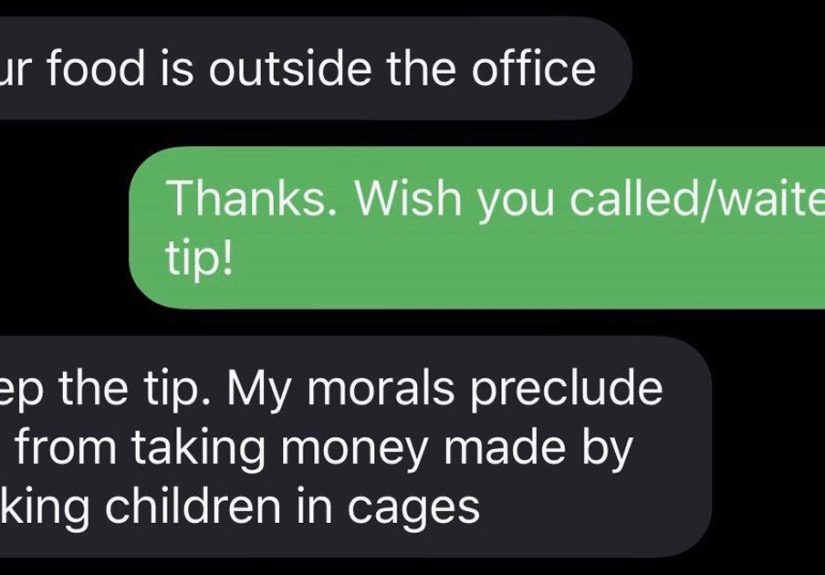
This is where the comedy starts limping. One of the most widely discussed types of driver message is the request for a bigger tip after the order has already been accepted. Sometimes it is framed politely. Sometimes it arrives with multiple question marks, a guilt trip, or the emotional energy of a hostage note written near a milkshake.
Customers tend to hate these messages because they feel coercive. Even when the wording is technically mild, the subtext is hard to miss: I have your order, I know where you live, and now we are going to discuss my compensation. That is a rough customer-service mood. At the same time, the existence of these messages says something real about how dependent many drivers are on tips and how unstable the work can feel.
4. The flirty or overly familiar message
Few things turn a convenient transaction into instant discomfort faster than a driver acting like the app is a dating service with side dishes. A cheerful update is one thing. Unwanted flirting, comments about appearance, repeated follow-up messages, or trying to continue the conversation after the delivery is done is another thing entirely.
This category unnerves people because it blows past the understood social contract. The customer ordered groceries, not a “hey beautiful” from a stranger who now knows what their porch looks like. Even if the sender believes they are being charming, the power dynamic is not neutral. The other person did not choose the interaction in a normal social setting; it arrived through a service app tied to their home.
5. The openly aggressive or threatening text
This is the category nobody laughs at for long. Messages that mention a person’s address, insult them, retaliate over a tip or review, or imply some kind of future contact go from rude to scary in seconds. Once a driver signals that they are thinking beyond the delivery itself, the message stops being “unprofessional” and starts sounding like a boundary problem with a map attached.
And yes, that is why lines like “be careful” or “I know your address” hit so hard. Even when the sender thinks they are being dramatic rather than dangerous, the recipient has no reason to assume that. Home addresses are not abstract. They are where people sleep, where children live, where packages arrive, and where safety is supposed to feel boring.
Why Weird Delivery Texts Happen in the First Place
There is no single reason these messages exist, but there are a few obvious ingredients.
First, app-based delivery is built around speed, uncertainty, and constant improvisation. Drivers deal with traffic, missing items, confusing apartment complexes, inaccurate GPS pins, locked gates, restaurant delays, and customer instructions that read like an escape room clue. Under pressure, communication gets sloppy fast.
Second, many gig workers are financially stretched. For some, this is side income. For others, it helps cover basic needs. That pressure can distort how every order feels. A small tip may not register to the customer as a moral statement, but a driver who has burned gas, lost time in a drive-thru line, and taken a low-paying order may interpret the whole experience differently. That does not excuse manipulative or threatening messages, but it does explain why some of them carry such raw frustration.
Third, the apps create a strange social environment. The exchange feels private, immediate, and informal. Messaging inside a delivery platform can make people talk more casually than they would in a store, a restaurant, or an office. Sometimes that produces a funny one-liner. Sometimes it produces a regrettable digital footprint.
Fourth, the system relies on temporary trust. Customers do not know the driver. Drivers do not know the customer. Both are asked to cooperate quickly around food, property access, timing, ratings, and money. Most of the time, it works. But when either side feels disrespected, ignored, or unsafe, the whole thing can sour at record speed.
What Makes the Creepy Texts Different From the Funny Ones
The line is not always about whether a message is weird. Weird can be delightful. The line is whether the message respects the purpose of the interaction and the boundaries around it.
A funny text says, “I am a person.” A creepy or hostile text says, “I have access.” That is the difference.
The safe messages stay attached to the delivery. They are about the order, the location, the ETA, or a harmless joke. The unsafe ones detach from the task and drift toward pressure, insult, retaliation, flirtation, or personal commentary. Once the communication is no longer about getting the food from point A to point B, the customer starts doing a mental risk assessment instead of checking the tracking screen.
This is also why post-delivery contact is such a red flag. The job is over. The social permission expires with it. If someone keeps texting after the handoff for reasons unrelated to a lost item or a real delivery problem, most people will read that as intrusive at best and threatening at worst.
What Delivery Platforms Say About It
The major platforms have clearly recognized that messaging can become a safety issue. Harassment, threatening behavior, discrimination, and inappropriate contact are explicitly against policy on the biggest delivery apps. Some companies say communication should end when the trip or delivery ends unless it is about a legitimate issue, such as a lost item or a live order problem. Others emphasize in-app reporting, customer-support escalation, or investigation by trust-and-safety teams.
Privacy controls matter here too. Some platforms use masked phone numbers or app-based contact tools so that drivers and customers do not automatically exchange personal phone numbers. That is helpful, but it does not erase the bigger emotional reality: during a delivery, the worker still gets access to a customer’s location, and the customer still has to trust that this information will be used only for the order itself.
That is why enforcement matters more than glossy safety language. Policies are reassuring. Consistent consequences are what make them real.
What Customers Should Do When a Delivery Text Crosses the Line
Keep communication inside the app when possible
If a delivery app provides in-app messaging, use it. It creates a cleaner record and gives support teams something concrete to review later.
Do not escalate the tone
If the message is rude, creepy, or manipulative, resist the urge to win the argument. Screenshot it. Keep replies short. Focus on the order. A dramatic comeback may feel satisfying for six seconds and exhausting afterward.
Report it immediately
If the message is threatening, sexually inappropriate, discriminatory, or clearly outside the bounds of the delivery, report it through the app right away. Include screenshots. The faster the report is made, the easier it usually is for the company to trace the interaction.
Take threats seriously
If a driver references your address in a threatening way, implies retaliation, or makes you fear for your safety, trust your gut. Contact the platform, document everything, and if the situation feels urgent, call local emergency services. “Maybe they were joking” is not a safety plan.
Watch for scams too
Not every alarming delivery text comes from a real driver. Fake package messages now flood phones year-round, often claiming there is an address issue, a missed delivery, or a warehouse hold. If you were not expecting a package, or if the text pushes you to click a link, slow down. Check the order directly through the retailer or carrier account you already know is real.
Drivers Have Their Own Horror Stories Too
It would be lazy to frame every strange delivery message as proof that drivers are the problem. They are not. Drivers are also dealing with rude customers, fake addresses, unsafe drop-off locations, aggressive dogs, dimly lit properties, impossible apartment instructions, identity concerns, tip baiting, and the emotional roulette of public-facing gig work.
In other words, the app economy is full of people asking strangers to trust each other while both sides are under pressure. That is not exactly a recipe for perfect emotional regulation.
Many drivers are excellent communicators. They send clear, brief messages, adapt to changes, follow instructions, and protect the customer’s sense of privacy. Those workers rarely go viral because competence is not screenshot bait. The weird texts get attention precisely because they are exceptions, even if they are common enough to feel familiar.
More Experiences Behind the Weird Texts
Once you start looking at the stories behind these messages, the subject gets more layered than a simple “delivery drivers are wild” punchline. There are customers who describe harmlessly funny updates that made a bad day better. There are customers who say a driver’s odd text turned into a family joke for months. But mixed in with those are accounts that feel much heavier: unsolicited flirting after a handoff, guilt-laced demands for extra tip money, angry messages after a bad review, and warnings that suddenly make a person hyperaware that a stranger has just been outside their home.
Some of the most uncomfortable experiences are not dramatic in a movie sense. They are subtle. A driver keeps messaging after the order is complete. A text becomes too personal. A delivery account appears to show one identity, but someone else arrives. The customer cannot always prove immediate danger, but the interaction leaves a residue of unease. That matters. Safety is not only about major incidents; it is also about whether an ordinary errand leaves someone feeling watched, pressured, or reluctant to order again.
There are also experiences that show how fast humor and alarm can trade places. A driver may start with goofy commentary and then pivot into asking for money. A customer may laugh at an over-the-top update until the tone becomes demanding. A strange text about navigating the property may seem harmless until it includes a line that sounds like a reminder that the sender knows exactly where the recipient lives. The emotional whiplash is part of why these screenshots spread so quickly online. People recognize the shift instantly.
And then there is the worker side of the experience. Drivers often describe their own uncomfortable encounters: customers sending hostile messages, unsafe drop-off requests, dark houses with no visible numbers, broken elevators, aggressive pets, and orders that feel economically pointless by the time gas, waiting time, and distance are factored in. A text that looks irrational in a screenshot may have been sent at the end of a very long shift after three restaurant delays and one apartment complex apparently designed by a cryptographer.
Still, context is not a free pass. Stress can explain behavior without excusing it. A driver can be underpaid and still be wrong to pressure a customer. A customer can be frustrated and still be wrong to insult a worker. The healthiest version of this whole ecosystem depends on both sides staying inside a pretty basic set of boundaries: keep the message relevant, keep the tone respectful, and once the delivery is done, let the interaction end.
That is really why these “out-of-pocket” texts fascinate people. They are not just random screenshots. They are little receipts from a convenience economy that runs on access, speed, ratings, and temporary trust. Sometimes that creates a funny human moment. Sometimes it creates a cautionary tale with fries on the side.
Conclusion
The wildest delivery-driver texts are entertaining because they reveal the human chaos underneath a supposedly frictionless system. But the reason people keep sharing them is not just comedy. It is recognition. Everyone understands, at least instinctively, that delivery apps ask us to normalize a weird arrangement: a stranger gets temporary access to our food, our timing, and often our front door.
Most of the time, nothing bad happens. The order arrives, the chat ends, and life continues. But when a message turns pushy, invasive, or threatening, it reminds people that convenience without boundaries gets uncomfortable fast. The funniest screenshots succeed because they stay on the safe side of absurd. The scariest ones go viral because they cross into something more serious: a reminder that professionalism, privacy, and trust are not optional extras in the delivery business. They are the whole meal.