Table of Contents >> Show >> Hide
- What Zoom’s financial story really implies (and why it matters)
- Burn rate 101: the two numbers you must stop guessing
- The Zoom-style move: turn burn into a budget, not a post-mortem
- Build your burn rate budget in 60 minutes
- Step 1: Calculate your real net burn (use the last 3–4 months)
- Step 2: Decide your minimum runway target (and don’t be optimistic)
- Step 3: Set the monthly burn cap that matches that runway
- Step 4: Allocate the cap like a grown-up: fixed, variable, and “bets”
- Step 5: Add a buffer (because life enjoys surprises)
- Step 6: Make the budget enforceable with triggers
- The three budgets almost every business needs (even if you “hate finance”)
- How to cut burn without cutting your future
- Operating rhythm: the weekly habit that makes budgets real
- When a burn rate budget becomes your competitive advantage
- Conclusion: your burn rate budget is a promise to your future self
- Experiences from the field: what a burn rate budget changes (and why it sticks)
- SEO tags
“Burn rate” is one of those startup phrases that sounds like it belongs on a treadmill. But it’s not a vibe. It’s math.
And if you treat it like a vibe, your bank account will eventually treat you like a ghost.
Here’s the underrated lesson from Zoom’s early years: they didn’t just track burn. They budgeted it.
Not “we’ll try to spend less” budgeting. More like “this is the monthly cap, and we’re not crossing it” budgeting.
That discipline helped Zoom grow fast while staying unusually capital-efficient heading into its IPO era.
You don’t need Zoom’s scale to copy Zoom’s habit. Whether you’re a startup, an agency, a creator business, or a small SaaS,
a burn rate budget can buy you something priceless: time. Time to find product-market fit, time to fix churn,
time to experiment without panic, and time to raise money without begging.
What Zoom’s financial story really implies (and why it matters)
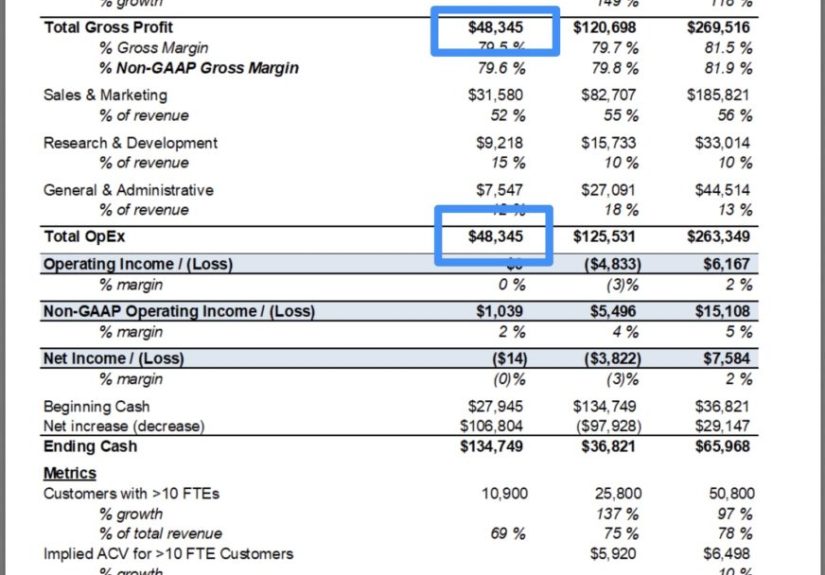
Zoom’s IPO filing showed a growth profile that was almost rude: revenue accelerating and profitability showing up earlier than most high-growth SaaS peers.
In the fiscal year ended January 31, 2019, Zoom reported revenue of $330.5 million and net income of $7.6 million,
after posting much smaller revenue in prior years ($60.8 million in FY2017 and $151.5 million in FY2018).
That’s not “we’ll worry about money later.” That’s “we’re growing, and we’re watching the scoreboard.”
Zoom also raised comparatively modest venture capital before going public (relative to many unicorn-era IPOs).
The point isn’t that fundraising is bad. The point is that Zoom behaved like capital was precious even when it had access to it.
That mindset shows up in a very specific practice: having a burn rate budgeta planned, controlled monthly burn you can defend.
If you want a simple translation: Zoom didn’t let spending “happen.” They made spending compete for a limited monthly burn allowance.
The team still invested in growth, but within a defined burn envelope. That is how you avoid the classic startup tragedy:
raising money, scaling costs, and then realizing your business model didn’t get the memo.
Burn rate 101: the two numbers you must stop guessing
1) Gross burn vs. net burn
Gross burn is how much cash you spend in a month (total cash outflows).
Net burn is how much cash you lose in a month (cash outflows minus cash inflows).
If you’re pre-revenue, gross and net burn might look similar. If you’re generating revenue, net burn is the truth-teller.
2) Runway
Runway is how long you can operate before your cash hits “uh-oh.”
The basic formula is:
Runway (months) = Cash on hand ÷ Net burn per month.
If your runway is short, your decision-making gets weird. You stop doing what’s smart and start doing what’s fast.
(Congrats, you’ve unlocked the Panic DLC.)
A burn rate budget connects these concepts to behavior. Tracking burn says, “Here’s what happened.”
Budgeting burn says, “Here’s what we will allowbecause we have goals, not just feelings.”
The Zoom-style move: turn burn into a budget, not a post-mortem
The “burn rate budget” concept popularized in the SaaS world is simple: pick a monthly burn number you will not exceed,
then force every department (and every founder craving “just one more hire”) to live inside that constraint.
This isn’t anti-growth. It’s pro-priorities.
Think of it like packing for a trip with one suitcase. You can still bring great outfits. You just can’t bring your entire closet.
Weirdly, you’ll look better when you stop trying to bring everything.
Build your burn rate budget in 60 minutes
You don’t need a finance team. You need a bank balance, your last few months of cash movement, and the courage to be honest.
Here’s a practical process you can do today.
Step 1: Calculate your real net burn (use the last 3–4 months)
Pull your cash balance at the start and end of each month. Add in any financing events (like a loan draw) so you don’t fool yourself.
If your cash went from $520,000 to $460,000 in a month, your net burn is about $60,000.
Do that for the last 3–4 months and average it. This helps smooth one-time weirdness (like the month you prepaid annual software… because “discount”).
Step 2: Decide your minimum runway target (and don’t be optimistic)
Many founders pick runway targets based on the best-case fundraising timeline.
Instead, pick a runway target based on the timeline you can control: shipping, selling, retention, and milestone progress.
A common discipline is building for 12–18 months of runway if you’re still proving the model, and
9–12 months if you have strong, repeatable growth and financing options.
Step 3: Set the monthly burn cap that matches that runway
Example:
- Cash on hand: $600,000
- Desired runway: 12 months
- Max net burn per month: $600,000 ÷ 12 = $50,000
If you’re currently burning $80,000/month, you’ve got a gap of $30,000/month to close. That gap is your job now.
Not “later.” Not “after we hire this one person.” Now.
Step 4: Allocate the cap like a grown-up: fixed, variable, and “bets”
Split expenses into three buckets:
- Fixed: payroll, rent, core tools, unavoidable contracts
- Variable: cloud usage, contractors, travel, performance marketing
- Bets: experiments that might work (new channel tests, new product initiatives)
Your burn rate budget should protect the betsbut only the bets with a measurement plan.
The most expensive line item in startups isn’t marketing. It’s “we tried stuff.”
Step 5: Add a buffer (because life enjoys surprises)
A disciplined burn plan includes a cushion. If your max burn is $50,000/month, plan to operate at $45,000/month.
That extra $5,000/month becomes your shock absorber: churn bumps, sales cycles stretch, servers spike, or the universe decides to humble you.
Step 6: Make the budget enforceable with triggers
A burn budget without triggers is just a spreadsheet with hopes and dreams. Create rules like:
- If runway drops below 9 months, freeze new hires unless revenue milestones are hit.
- If runway drops below 6 months, cut non-core spend and renegotiate major contracts.
- If net revenue retention drops, redirect spend from acquisition to retention until stabilized.
The three budgets almost every business needs (even if you “hate finance”)
1) The People Budget (your biggest lever)
Payroll is often the largest expenseand also the easiest place to overspend by accident.
The fix isn’t “never hire.” The fix is linking hiring to milestones.
If your plan assumes a sales ramp, tie headcount to signed revenue or pipeline quality.
Hiring ahead of traction is like buying groceries for a party you haven’t been invited to.
2) The Infrastructure Budget (COGS and cloud reality)
Zoom’s product success required reliable infrastructurebut modern teams can still overspend on cloud and tools.
Track unit economics:
cost per active user, cost per meeting, cost per transaction, or cost per customer served.
If usage grows but margins collapse, you don’t have growthyou have an expensive hobby.
3) The Growth Budget (CAC with a leash)
A Zoom-style burn budget does not mean “stop marketing.” It means “spend within a known cap and get smarter.”
If customer acquisition cost (CAC) rises, don’t instantly slash everything. Diagnose:
- Is conversion down because the message is wrong?
- Is the funnel leaky (trial-to-paid, demo-to-close)?
- Is churn erasing your growth?
Then reallocate. The goal is efficient growth, not performative austerity.
How to cut burn without cutting your future
Cutting burn is easy. Cutting burn well is a skill. Here are smarter moves that preserve momentum:
Renegotiate before you remove
Vendors expect negotiation, especially in tighter markets. Ask for:
monthly terms, smaller tiers, deferred payments, or multi-product bundles.
You can often cut 10–20% from tooling and services without breaking anything.
(Unlike “cutting support,” which breaks everything, usually at 2 a.m.)
Reduce “silent churn” costs
Silent churn is when customers stay but downgrade, use less, or stop expanding. It doesn’t show up like a cancellation,
but it hits your growth like a slow leak. Invest in onboarding, activation, and customer success motions that
improve retention and expansion. Retention upgrades often beat acquisition spend in ROI.
Make experiments smaller, faster, and measurable
If your team can’t define what success looks like in one sentence, it’s not an experimentit’s a wish.
Put timeboxes and budget caps on tests:
“Two weeks, $3,000, success = 30 qualified demos at <$100 per lead.”
If it fails, you learned cheaply. If it works, you scale with confidence.
Operating rhythm: the weekly habit that makes budgets real
Zoom’s discipline wasn’t magic; it was routine. Create a weekly 30-minute finance reality check:
- Cash balance today
- Net burn trailing 4 weeks
- Runway at current burn
- Budget vs. actual by major category
- Top 3 spend decisions coming next week
This meeting should feel boring. Boring is good. Boring means you’re not about to be surprised by your own credit card statement.
When a burn rate budget becomes your competitive advantage
The market rewards teams that can operate in multiple modes:
spend to grow when efficiency is strong, tighten when signals turn, and still keep shipping.
A burn rate budget helps you do all three because it forces clarity:
what you’re buying, why you’re buying it, and what you’ll stop buying if it doesn’t work.
Also: investors love this. Not because they’re allergic to spending, but because a burn budget signals
you can scale responsibly. It tells them you’re building a company, not a bonfire.
Conclusion: your burn rate budget is a promise to your future self
If you take one idea from Zoom’s discipline, take this: set a burn cap that matches your runway needs,
then run the company like that cap is realbecause it is.
- Know your net burn (average the last 3–4 months).
- Pick a runway target based on milestones, not optimism.
- Set a monthly burn cap that buys that runway.
- Allocate intentionally: fixed, variable, and measurable bets.
- Enforce with triggers so the budget actually governs behavior.
Zoom didn’t win because they spent the most. They won because they spent on purpose.
Your burn rate budget is how you do the samewithout needing a Zoom-sized bank account.
Experiences from the field: what a burn rate budget changes (and why it sticks)
The best argument for a burn rate budget isn’t theoryit’s what teams feel when they adopt one. Here are five common,
real-world patterns founders and operators report (shared here as composite experiences, so you can recognize the lesson
without anyone getting “subtweeted” by their own P&L).
1) The “we stopped arguing emotionally” moment
Before a burn cap, spending debates often sound like: “We need this!” vs. “No, we really need this!”
Once a monthly burn budget exists, the argument changes into something healthier:
“If we fund this hire, we can’t fund that channel test. Which one gets us to the milestone faster?”
Teams don’t magically become nicerbut the budget forces tradeoffs into the open, and tradeoffs are where strategy lives.
2) The “hidden subscriptions” cleanup that feels like finding money in a coat
A burn budget usually triggers a tool audit. Somebody realizes the team has three project managers,
two analytics platforms, and a “temporary” design tool license from 11 months ago.
It’s not uncommon to cut meaningful monthly spend in the first weekwithout touching product, headcount, or growth.
The real experience here is psychological: people stop assuming spending is inevitable and start treating it as optional.
3) The “marketing got better when it got smaller” surprise
When growth budgets are infinite (or feel infinite), teams often run too many channels at once.
Performance reviews become fuzzy: “LinkedIn is kind of working, SEO is kind of working, events are kind of working…”
Under a burn cap, teams pick fewer bets and instrument them properly. They tighten landing pages, improve follow-up speed,
fix attribution, and focus on conversion. The strange experience is this: budget pressure can raise quality
because it eliminates the comfort of “we’ll just spend more.”
4) The “hiring plan stopped being a mood board” reset
Many teams start with a hiring plan that’s basically aspiration: “By Q3 we’ll have a VP, three AEs, and a data person.”
A burn rate budget forces a sequencing question: “What must be true for the next hire to pay for itself?”
The experience people report is relief. Not because hiring is bad, but because hiring becomes a decision tied to outcomes.
You stop hiring for hope and start hiring for leverage.
5) The “we slept better” effect (seriously)
This is the least spreadsheet-y, most honest outcome: leaders sleep better when runway is managed.
A burn budget doesn’t remove risk, but it replaces vague dread with concrete levers.
If churn ticks up, you know what to pause. If sales cycles stretch, you know how to extend runway.
The business still has problemsevery business doesbut the problems stop feeling like they’re sneaking up behind you.
In a world where surprises are expensive, predictability is a competitive advantage.