Table of Contents >> Show >> Hide
- What Counts as a Historical Comeback?
- 1) Richard Nixon: From “Last Press Conference” to the White House
- 2) Benjamin Disraeli: The “Greasy Pole” and the Second Trip to the Top
- 3) Napoleon Bonaparte: The Hundred Days That Shocked Europe
- 4) Ulysses S. Grant: From Hard Luck to “Unconditional Surrender”
- 5) Charles II: Hiding, Exile, and the Restoration
- 6) The Medici Family: Exiled Bankers Who Reclaimed Florence
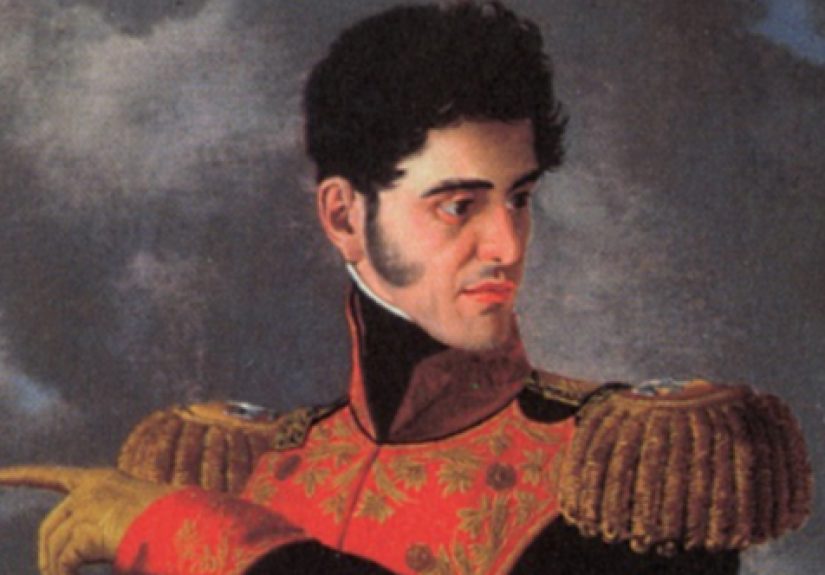
- 7) Antonio López de Santa Anna: The Serial Returner
- 8) Justinian II: The Emperor Who Came Back After Mutilation
- 9) Grover Cleveland: The Only U.S. President With Nonconsecutive Terms
- 10) Charles de Gaulle: Returning From Retirement to Rebuild a Republic
- Conclusion
- Experiences & Takeaways From Studying Big Comebacks (Extra)
History is basically one long highlight reel of people falling flat on their faces… and then getting back up like they
meant to do that. We love a comeback story because it feels like proof that one bad election, exile, defeat, or
humiliating headline doesn’t have to be the end of the road. Sometimes it’s the beginning of the second (and far messier)
act.
Inspired by the classic “Listverse-style” roundup of reversals of fortune, this article explores 10 amazing comebacks
by historical figuresthe kind where the world writes you off, you disappear for a while, and then you return with
enough momentum to make everyone pretend they “always believed in you.” Along the way, we’ll look at what made each comeback
possible: timing, alliances, public mood, personal reinvention, andlet’s be honestsheer audacity.
What Counts as a Historical Comeback?
A comeback isn’t just a “good day after a bad day.” It’s a meaningful return to influence after a serious fall:
losing power, getting exiled, suffering public disgrace, or being politically “done.” Some of the people below staged
elegant returns. Others came back like a wrecking ball. Either way, they remind us that history isn’t a straight line
it’s a scribble, drawn by people who refused to stay in the margins.
1) Richard Nixon: From “Last Press Conference” to the White House
The Fall
After losing California’s 1962 governor’s race, Richard Nixon delivered the kind of bitter farewell that sounds like the
end of a career. He framed it as his “last press conference,” snapping at reporters and implying the Nixon era was over.
The Return
Except it wasn’t. Nixon spent the next years rebuilding connections, polishing his credentials, and reshaping his image
until he secured the Republican nomination and won the 1968 presidential election. The lesson: never underestimate a
politician with stamina, a strategy, and a grudge file organized alphabetically.
2) Benjamin Disraeli: The “Greasy Pole” and the Second Trip to the Top
The Fall
Benjamin Disraeli briefly became Britain’s prime minister in 1868, but his government didn’t last. He lost power in an
election and returned to oppositionpolitical purgatory with better tailoring.
The Return
Disraeli didn’t sulk quietly. He rebuilt his party’s appeal and, in 1874, returned as prime minister againthis time with
real staying power. His famous “greasy pole” remark wasn’t just wit; it was a recognition that politics is climbing while
everyone else is trying to oil your boots.
3) Napoleon Bonaparte: The Hundred Days That Shocked Europe
The Fall
After years of war, Napoleon was forced to abdicate and accept exile to Elbaa humiliating downgrade from “Emperor of the
French” to “Island Manager (Temporary).”
The Return
In 1815, he escaped Elba, landed in France, and marched back into political reality like he still owned the place. He
regained power and launched what became known as the Hundred Days. The ending wasn’t a fairytaleWaterloo slammed the door
but as comebacks go, returning from exile to seize a nation’s attention is an all-time move.
4) Ulysses S. Grant: From Hard Luck to “Unconditional Surrender”
The Fall
Grant’s pre–Civil War life included resignation from the Army and years of financial struggle. He tried farming and other
work, often scraping byhardly the résumé of a future national icon.
The Return
When war erupted in 1861, Grant returned to military service and rose fast. Battlefield success turned him into a household
name, and his victories helped shape the Union’s path to victory. The comeback here isn’t flashyit’s stubborn competence
showing up at exactly the moment the country needed it.
5) Charles II: Hiding, Exile, and the Restoration
The Fall
Charles II spent years in exile after the English Civil War and the collapse of royal power. For a time, his “career path”
looked like: “former king’s son, full-time fugitive.”
The Return
After political upheaval and shifting alliances, the monarchy was restored in 1660. Charles returned to London in triumph,
and the Restoration reshaped English politics and culture. It’s hard to top a comeback that ends with the country literally
inviting you back to the thronelike an entire nation sending a “u up?” text.
6) The Medici Family: Exiled Bankers Who Reclaimed Florence
The Fall
The Medici were once Florence’s power brokers, then got pushed outproof that even rich families can get “unfriended” by
an entire city when the political winds shift.
The Return
In 1512, the Medici regained control and re-established themselves as central players in Florentine life. Their comeback
wasn’t one person storming backthis was a dynasty’s slow, strategic return, using political leverage, patronage, and cultural
influence to turn “we’re back” into “we never left.”
7) Antonio López de Santa Anna: The Serial Returner
The Fall
Santa Anna’s political life reads like a revolving door: overthrown, exiled, discredited, then suddenly relevant again.
He was pushed out more than once and still kept finding a way back into Mexico’s power struggles.
The Return
He reappeared repeatedly when factions needed a familiar strongman, a symbol, or simply a gamble. His later years included
major controversieslike the Gadsden Purchase erafollowed by removal and exile again. It’s a comeback pattern powered less
by redemption and more by the political equivalent of “fine, I’ll do it myself.”
8) Justinian II: The Emperor Who Came Back After Mutilation
The Fall
In the Byzantine world, losing power could mean losing body parts. Justinian II was deposed, mutilated (his nose famously
cut), and exiledan attempt to make him politically “unpresentable.”
The Return
He returned years later with allies, reclaimed the throne, and ruled againan astonishing reversal in a brutal political
system. The comeback is real, but it’s also a warning: returning to power doesn’t automatically mean returning to wisdom.
9) Grover Cleveland: The Only U.S. President With Nonconsecutive Terms
The Fall
Cleveland won the presidency, then lost re-electiondespite remaining a major political force. Many presidents fade after
defeat; Cleveland treated it like an intermission.
The Return
Four years later, he won again, becoming the only U.S. president to serve two nonconsecutive terms. His comeback shows how
political identity and public trust can survive a lossespecially when voters decide the alternative didn’t age well.
10) Charles de Gaulle: Returning From Retirement to Rebuild a Republic
The Fall
After World War II, de Gaulle led during a national crisis, then stepped away from power. For years, he remained a looming
figurerespected, debated, and very much not in charge.
The Return
In 1958, amid political instability and the Algerian crisis, France called him back. De Gaulle returned, helped create a
new constitutional framework, and became the first president of the Fifth Republic. It’s the kind of comeback where the
“plot twist” is that the country changes the rules of government because you showed up.
Conclusion
These stories aren’t neat morality tales. Some comebacks are admirable. Some are unsettling. Some are both at the same time.
But together, they reveal the mechanics of resilience at scale: reputations rebuilt, coalitions reforged, timing exploited,
and second chances takensometimes by force, sometimes by persuasion, and sometimes because history ran out of better options.
If you’re here because you love historical comebacks (or because you’re procrastinating and this is a very classy way to do
it), the takeaway is simple: failure is common. Staying down is optionalunless the political system literally exiles you to
an island. In that case, maybe start with a small boat.
Experiences & Takeaways From Studying Big Comebacks (Extra)
One surprising “experience” people often have when they dive into comeback stories is realizing how rarely the comeback is
a single dramatic moment. We like the cinematic version: the hero kicks open the door, the crowd gasps, the music swells.
Real history is more like: letters, meetings, fundraising, alliances, bad sleep, a few humiliating setbacks, and thenfinally
the opening appears. The headline comes at the end, but the work usually happens when nobody is watching.
Another common realization is that comebacks depend on more than personal willpower. Yes, persistence matters. But so do
networks, institutions, and timing. Nixon’s return wasn’t just gritit was strategy, party dynamics, and a national mood
that created space for “experienced leadership.” De Gaulle didn’t simply decide to reclaim France; France reached a point
where leaders believed he could stabilize the country. Even Napoleon’s return depended on moving fast through a fragile
political moment, when loyalties could flip in a day.
If you’ve ever tried to write (or even just retell) one of these stories, you also learn how complicated “comeback” can be
as a label. A comeback is not automatically a happy ending. Justinian II’s return is jaw-dropping, but it also shows how
vengeance and instability can intensify after restoration. Santa Anna’s repeated returns underline something even more
uncomfortable: sometimes a leader keeps coming back because a political system can’t stop fighting long enough to build
something better. In other words, comebacks can be symptoms of chaos, not cures for it.
There’s also an emotional experience that hits readers: these stories make modern setbacks feel smaller without making them
feel trivial. When you read about exile, mutilation, imprisonment, or total public disgrace, it reframes the everyday drama
of being rejected, laid off, or told “no.” It doesn’t erase real painbut it adds perspective. And perspective is one of the
few things in life that is free, portable, and doesn’t require a subscription.
Finally, studying comebacks teaches you to watch for the “quiet rebuild” phase in real timewhether in politics, business,
sports, or personal life. The comeback often starts with boring choices: learning, repairing relationships, showing up,
taking smaller roles, and building credibility brick by brick. That’s not as thrilling as a victorious speech, but it’s
usually the part that makes the victory possible. If you remember anything from these 10 amazing comebacks by
historical figures, remember this: the comeback isn’t magic. It’s momentumearned, borrowed, or occasionally stolen.