Table of Contents >> Show >> Hide
- First, What Plantar Fasciitis Actually Needs From a Shoe
- 10 Best Shoes for Plantar Fasciitis 2024 (Recommended by Experts)
- 1) Hoka Clifton 9 (Best Overall)
- 2) Brooks Adrenaline GTS 22 (Best Value Stability Pick)
- 3) ASICS GT-2000 (Best Workout / Cross-Training Support)
- 4) Orthofeet Hands-Free Knit Sneaker (Best Slip-On Convenience)
- 5) Brooks Ghost 15 (Best Neutral Running Shoe Feel)
- 6) New Balance Fresh Foam X 1080 (Best for Wide Feet)
- 7) Hoka Bondi 8 (Best Max Cushion for Walking & Standing)
- 8) OOFOS OOahh Slide (Best Recovery Option)
- 9) Vionic Tide Toe-Post Sandal (Best Supportive “Flip-Flop Alternative”)
- 10) KURU TREAD Sandal (Best Active Sandal for Outdoors)
- How to Choose the Right Pair for Your Foot (Because Your Heel Is Unique)
- Common Mistakes That Keep Plantar Fasciitis Hanging Around
- Make the Shoes Work Even Better: Simple Add-Ons
- Conclusion: Your Heel Doesn’t Need to Be the Main Character
- Real-World Experiences (500+ Words): What People Notice After Switching to Better Shoes
- SEO Tags
Plantar fasciitis has a special talent: it can turn the simple act of getting out of bed into a dramatic event.
One minute you’re living your life, the next you’re hobbling to the coffee maker like you just lost a duel at dawn.
The good news? For many people, the right shoes (plus a few smart habits) can make a very real difference.
This guide pulls together expert-backed advice and podiatrist/physical-therapist–reviewed picks to help you shop
smarter in 2024without falling for “cloud foam” hype that vanishes the moment your heel touches the ground.
(Spoiler: squishy isn’t always supportive.)
First, What Plantar Fasciitis Actually Needs From a Shoe
Plantar fasciitis is irritation of the plantar fasciathe thick band of tissue that runs along the bottom of your foot.
Shoes won’t “cure” it overnight, but they can reduce daily strain so your body can calm the area down.
Think of supportive footwear as taking the loudspeaker away from your heel.
The non-negotiables experts keep repeating
- Real arch support: not a bump, not a vibeactual support that matches your arch height.
- Cushioning with structure: shock absorption plus a stable platform (so your foot doesn’t wobble).
- A firm heel counter: the back of the shoe should feel secure, not collapsible like a soft taco.
- A slightly raised heel / heel-to-toe drop: many experts prefer avoiding totally flat shoes during flare-ups.
- Enough stiffness: if a shoe twists like a washcloth, it’s usually not doing your plantar fascia any favors.
- Room to fit well: especially in the toe boxcramped toes can change how you walk and worsen irritation.
Quick “try-on” tests (takes 60 seconds in a store)
- The twist test: hold the shoe at both ends and twist. Some give is fine; super easy twisting is a red flag.
- The heel squeeze: pinch the heel counter. You want firm and supportive, not floppy.
- The bend point: the shoe should bend near the ball of your foot, not fold in the middle like a taco.
- The walk test: take a brisk lap. Your heel should feel cushioned and your arch should feel “held.”
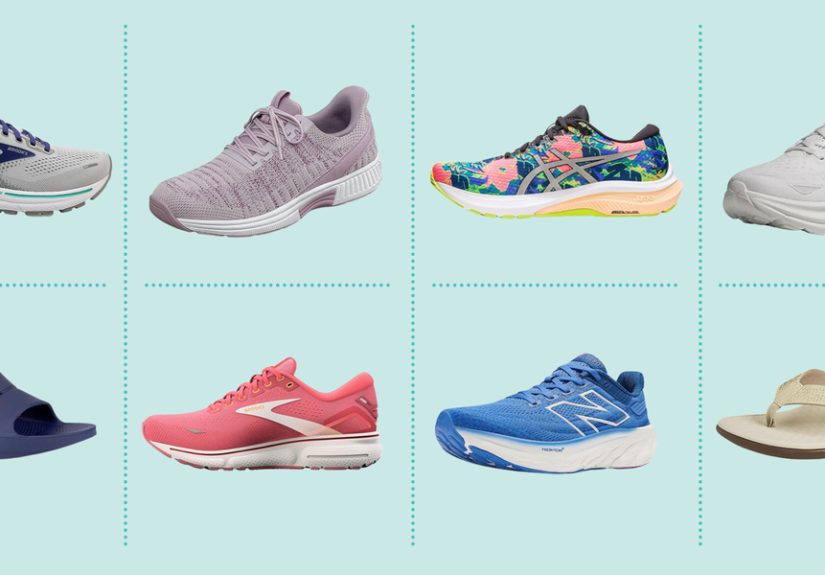
10 Best Shoes for Plantar Fasciitis 2024 (Recommended by Experts)
These picks show up again and again in podiatrist/physical-therapist–informed roundups and testing-based guides.
They’re grouped by how people actually live: walking, running, working long shifts, traveling, andyessurviving summer.
1) Hoka Clifton 9 (Best Overall)
If you want one “do-most-things-well” shoe, Clifton 9 is a strong place to start. It’s known for lightweight cushioning
with a smooth, rolling ride that can feel gentler on the heel during walking and easy runs.
- Best for: daily walking, errands, travel days, light running.
- Why experts like it: shock absorption + a rocker-style geometry that can reduce the harsh “heel slam.”
- Heads-up: the rocker feel can take a couple of wears to get used to.
- Fit tip: if your toes feel crowded, look for wide optionsdon’t “break in” a toe box that’s too tight.
2) Brooks Adrenaline GTS 22 (Best Value Stability Pick)
Overpronation (your foot rolling inward) can increase stress through the arch and heel.
Adrenaline is a classic stability shoe designed to guide motion without feeling like a rigid brace.
- Best for: walkers and runners who want support, especially if ankles tend to roll in.
- Why experts like it: stable platform + cushioning that doesn’t feel mushy under the heel.
- Heads-up: some people find it snug in the forefoottry on carefully.
- Fit tip: bring the socks you actually wear; “store-thin socks” can trick you into buying too small.
3) ASICS GT-2000 (Best Workout / Cross-Training Support)
For people bouncing between walking, gym sessions, and cardio classes, the GT-2000 line is a practical workhorse.
It aims for a balanced mix of support and shock absorption, with a stable base that many heel-pain sufferers appreciate.
- Best for: gym workouts, treadmill walks, light runs, all-purpose training.
- Why experts like it: a supportive feel without “brick shoe” heaviness.
- Heads-up: fit varies by versiontry multiple sizes/widths if you’re between.
- Fit tip: lace-lock (runner’s loop) can reduce heel slip if you’re between sizes.
4) Orthofeet Hands-Free Knit Sneaker (Best Slip-On Convenience)
If bending down is annoying (or painful), hands-free shoes can be a lifestyle upgrade. Orthofeet models are popular for
their orthotic-friendly design and roomy toe boxestwo things that matter when you’re trying not to aggravate heel pain.
- Best for: easy on/off, walking, everyday wear, people who want a roomier fit.
- Why experts like it: built-in support and included insoles, plus a comfort-first shape.
- Heads-up: some models run largecheck sizing carefully.
- Fit tip: make sure your heel feels anchored; “easy on” shouldn’t mean “sloppy fit.”
5) Brooks Ghost 15 (Best Neutral Running Shoe Feel)
Not everyone needs stability features. If your gait is fairly neutral, Ghost is a widely loved option for smooth cushioning
and a supportive, consistent ride that works for walking and running.
- Best for: neutral runners, walkers who want a cushioned but not overly soft feel.
- Why experts like it: reliable cushioning + a comfortable upper that suits long wear.
- Heads-up: if you strongly overpronate, a stability shoe may feel better.
- Fit tip: try later in the dayfeet swell, and your “real size” often shows up after lunch.
6) New Balance Fresh Foam X 1080 (Best for Wide Feet)
The 1080 line is frequently recommended for comfort and long-wear cushioning, and it’s easier than many “trendy” sneakers
to find in multiple widths. If you’ve ever tried to squeeze a wide foot into a narrow shoe, you already know:
your plantar fascia is not impressed.
- Best for: wide feet, long shifts, walking-heavy days, soft cushioning lovers.
- Why experts like it: plush cushioning + options in wider widths for a stable, less pinched fit.
- Heads-up: some people find the sole “chunky”great for impact, less great for minimalists.
- Fit tip: if you use orthotics, bring themfit can change dramatically once inserts go in.
7) Hoka Bondi 8 (Best Max Cushion for Walking & Standing)
Bondi is often described as “maximum cushion.” For plantar fasciitis, that extra shock absorption can feel like mercy on
hard floorsespecially if you stand or walk for hours.
- Best for: standing all day, walking on concrete, travel, heavier runners/walkers seeking impact reduction.
- Why experts like it: soft landing + stable base that can reduce heel pounding.
- Heads-up: bulky look; not everyone loves the style, but your heel might.
- Fit tip: if you feel “tippy,” try a wide width for a more planted stance.
8) OOFOS OOahh Slide (Best Recovery Option)
Plantar fasciitis flares don’t stop when you get home. Many experts warn against going barefoot on hard surfaces,
and a supportive recovery slide can be a practical “house shoe” so your heel gets a break indoors.
- Best for: at-home wear, post-workout recovery, quick errands when lacing up feels like a chore.
- Why experts like it: shock-absorbing feel + noticeable arch support for casual wear.
- Heads-up: not a hiking sandal; treat it as recovery footwear, not an all-terrain vehicle.
- Fit tip: your heel should sit centered on the footbedtoo small can force a weird gait.
9) Vionic Tide Toe-Post Sandal (Best Supportive “Flip-Flop Alternative”)
Traditional flip-flops are often the enemy during plantar fasciitis flares. Vionic sandals are designed to add structure
and arch support so you can still wear warm-weather footwear without your heel filing a complaint.
- Best for: summer days, casual wear, people who miss sandals but need support.
- Why experts like it: more arch support and stability than typical flat sandals.
- Heads-up: a firmer footbed can feel “too hard” to somesupport sometimes feels like firmness at first.
- Fit tip: if toe-post sandals irritate your skin, look for Vionic styles without the post.
10) KURU TREAD Sandal (Best Active Sandal for Outdoors)
Need a sandal that can handle more than “walk to the mailbox”? An active sandal with traction and a supportive feel can be
helpful for gardening, light hikes, and outdoor choressituations where flimsy sandals often trigger heel pain fast.
- Best for: outdoor activities, walking on varied surfaces, warm-weather adventuring.
- Why experts like it: a more structured design intended to stabilize the heel and support the arch.
- Heads-up: sizing can run small in some modelstry on with the socks (or no socks) you’ll actually wear.
- Fit tip: adjust straps so your foot doesn’t slide; sliding = friction + altered gait.
How to Choose the Right Pair for Your Foot (Because Your Heel Is Unique)
“Best” depends on why your plantar fascia is irritated and how your foot moves. Use this quick decision guide:
If you overpronate (ankles roll inward)
Start with a stability shoe (like Brooks Adrenaline or ASICS GT-2000). A more guided ride can reduce strain through the arch.
If you’re neutral but want plush cushioning
Try a neutral cushioned trainer (like Brooks Ghost or New Balance 1080). Look for support that feels steady, not wobbly.
If you stand on hard floors for work
Prioritize shock absorption and a stable platform (Hoka Bondi–style cushioning, plus a secure heel counter).
And consider a “house shoe” so you don’t go barefoot at home after a long shift.
If you wear orthotics
Bring them when you shop. You want a removable insole, enough volume in the shoe, and a stable midsole so the orthotic
doesn’t feel like it’s balancing on a mattress.
Common Mistakes That Keep Plantar Fasciitis Hanging Around
- Wearing worn-out shoes: the midsole can lose support long before the upper looks “done.”
- Going barefoot on hard floors: your heel gets no help indoors (where many people walk the most).
- Choosing “flat and flexible”: ballet flats, flimsy sandals, and thin-soled shoes often worsen symptoms.
- Switching too fast: a supportive shoe can help, but sudden big changes (new shoe + new walking routine) can still flare pain.
Make the Shoes Work Even Better: Simple Add-Ons
Footwear is the foundation, but most experts also recommend pairing it with basic care:
gentle calf/foot stretching, strengthening, and (when needed) insoles or heel pads.
If your pain is persistent, severe, or changing, check in with a qualified clinician.
Two easy routines people actually stick with
- Calf stretch + foot roll (2–3 minutes): helps reduce tension that tugs on the plantar fascia.
- Foot strengthening (2 minutes): towel scrunches or arch lifts to support your arch naturally.
Conclusion: Your Heel Doesn’t Need to Be the Main Character
The best shoes for plantar fasciitis in 2024 share a theme: cushioning with structure, real arch support, a secure heel,
and enough stability to calm down repetitive strain. Start with a pair that matches your gait (stability vs. neutral),
avoid flat and flimsy shoes during flares, and consider supportive “indoor footwear” so your heel isn’t fighting a second
battle at home. Combine smart shoes with basic stretching and sane activity increases, and you’ll give your plantar fascia
what it wants most: a break.
Real-World Experiences (500+ Words): What People Notice After Switching to Better Shoes
When people finally move from “whatever was on sale” shoes to supportive footwear, the first thing they often notice is
not a miraclebut a reduction in drama. That classic “first steps in the morning” pain may still show up, but it often
feels less sharp and less shocking. Many describe it as going from “stepping on a tack” to “stepping on a grumpy LEGO,”
which… isn’t perfect, but it’s progress.
Another common experience: the weird emotional roller coaster of a new shoe feel. Shoes with rocker-like geometry (often
found in max-cushion trainers) can feel unfamiliar for a few days. Some people love the smooth roll immediately. Others
feel like they’re walking on a gently moving sidewalk. The trick is to ease in: wear the new pair for errands first, then
longer walks, then full-day use. Your feet and calves sometimes need a short “getting acquainted” periodespecially if you
spent months in flat, flexible shoes.
People who stand all dayteachers, nurses, retail workers, warehouse staffoften report that the biggest win is not just
pain reduction, but end-of-day endurance. Supportive shoes can make the difference between “I need to sit right now”
and “I can finish this shift without bargaining with my skeleton.” That said, many learn quickly that ultra-soft cushioning
isn’t automatically better. If the shoe is too squishy and unstable, it can feel great for five minutes and then start to
fatigue the foot because your arch is constantly trying to stabilize you. The best feedback usually sounds boring:
“They just feel steady.”
Travel brings its own set of experiences. Airports and theme parks are basically concrete marathons with snacks. People who
switch to a supportive walking shoe before a trip often say they feel the difference around hour threenot hour one.
The shoes aren’t “magic,” but the heel pounding is lower, and the foot feels less cooked. A practical travel habit that
comes up a lot: bringing a second pair and alternating. Rotating shoes can reduce repetitive stress in the exact same spots,
and it gives foam time to rebound between long days.
At home, the most surprising change for many people is realizing how much barefoot time they were logging on hard floors.
Once they adopt a supportive slide or house shoe, they often say the day feels “less flared” overall. It’s not glamorous,
but it’s effective. People also notice that a supportive sandal is a different universe from a floppy flip-flop.
The first time they wear a structured sandal and don’t regret it immediately, it feels like cheating.
Finally, lots of people discover a mindset shift: they stop buying shoes based solely on looks and start buying them based
on how their body behaves after eight hours. The best plantar fasciitis shoe experiences don’t sound dramatic.
They sound like relief: “I forgot about my heel today.” And honestly, that’s the goalbecause your heel has had enough attention.