Table of Contents >> Show >> Hide
- Quick takeaways (the patterns that keep showing up)
- What counts as a “police shootout” here?
- 1) The FBI Miami Shootout (April 11, 1986) a five-minute turning point
- 2) The Newhall Incident (April 6, 1970) seconds that reshaped training
- 3) The Norco Shootout (May 9, 1980) a robbery, a pursuit, and public danger
- 4) Ruby Ridge (August 1992) escalation, scrutiny, and the cost of mistrust
- 5) Waco (February 28, 1993) a raid gone wrong, then a long and contested siege
- 6) North Hollywood (February 28, 1997) a live-broadcast gun battle in Los Angeles
- 7) Pittsburgh, Stanton Heights (April 4, 2009) a domestic call becomes a four-hour crisis
- 8) Dallas (July 7–8, 2016) an ambush, then a tense standoff downtown
- 9) Jersey City (December 10, 2019) a four-hour firefight and a city in lockdown
- 10) Miramar, Florida (December 5, 2019) a hostage situation on a busy street
- What these 10 deadly police shootouts teach us (without turning tragedy into trivia)
- 500-word add-on: What people experience after a deadly police shootout
- Conclusion
Content note: This article discusses real-world violence. Details are kept non-graphic and focused on context, consequences, and public-safety lessonsnot sensationalism.
In American news cycles, the word shootout can sound like an action-movie beat. In reality, it’s a worst-case emergency: a fast, chaotic exchange of gunfire where seconds matter, communication is everything, and the aftermath can reshape policy for decades. This list looks at 10 deadly police shootouts (including federal law-enforcement firefights) that became “teachable moments” in U.S. policingsometimes because of heroic problem-solving, often because of hard lessons bought at a painful cost.
Quick takeaways (the patterns that keep showing up)
- Information gaps (what responding officers knowor don’t) can decide outcomes.
- Equipment and training matter, but so do decision-making, coordination, and command structure.
- Public risk rises sharply in moving incidents (chases, busy streets, crowds).
- After-action reviews often drive reforms: radio protocols, medical response, negotiation practices, and oversight.
What counts as a “police shootout” here?
For this article, a “police shootout” means a documented incident in the United States where law enforcement and an armed suspect (or suspects) exchanged gunfire, and the event resulted in fatalities. Some cases begin as ambushes and become extended firefights; others begin as raids, stops, or chases. All are real incidents with significant public record coverage.
1) The FBI Miami Shootout (April 11, 1986) a five-minute turning point
Often cited in training rooms nationwide, the FBI Miami shootout involved agents confronting two violent suspects after a string of robberies. The firefight was brief but devastating: two FBI Special Agents were killed and multiple agents were wounded, and the two suspects were ultimately killed as well. What followed wasn’t just griefit was a major rethink of law-enforcement preparedness. Agencies revisited handgun and ammunition performance, training scenarios, and how quickly an encounter can turn into a life-or-death problem. The legacy of Miami is a reminder that “routine” operations can become extraordinary emergencies without warning.
2) The Newhall Incident (April 6, 1970) seconds that reshaped training
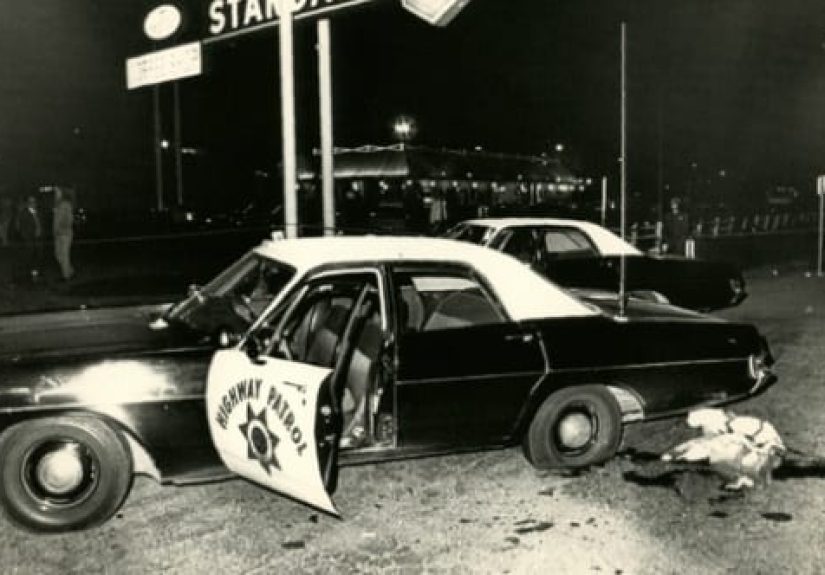
The Newhall Incident remains one of California law enforcement’s most haunting cases. A traffic stop escalated into a rapid gun battle that killed four California Highway Patrol officers. Beyond the tragedy, Newhall became a catalyst for changes in officer safety culture and trainingespecially around contact-and-cover tactics, weapon handling under stress, and the importance of preparation even during “ordinary” stops. In plain English: Newhall reinforced that complacency is expensive, and that consistent fundamentals can be the difference between going home and not.
3) The Norco Shootout (May 9, 1980) a robbery, a pursuit, and public danger
The Norco shootout began with a bank robbery and turned into a running confrontation involving multiple agencies. A sheriff’s deputy was killed, and the event left a deep imprint on how departments think about responding to heavily armed suspects. Norco is frequently referenced when discussing patrol readiness, coordination between neighboring agencies, and the tradeoffs of pursuing suspects through areas where bystanders may be present. The “lesson” isn’t a simple sloganit’s that managing a fast-moving crisis requires both courage and disciplined decision-making to reduce risk to the public.
4) Ruby Ridge (August 1992) escalation, scrutiny, and the cost of mistrust
Ruby Ridge began as an attempt by U.S. Marshals to arrest Randy Weaver after a failure to appear in court and escalated into a deadly exchange of gunfire. A deputy U.S. marshal and Weaver’s teenage son were killed during the initial confrontation, and the standoff that followed became a national flashpoint. Years later, official reviews examined planning, rules of engagement, communication, and accountability. Ruby Ridge is often discussed as a case study in how quickly an operation can spiral when trust collapsesbetween residents, authorities, and the wider public watching from afar.
5) Waco (February 28, 1993) a raid gone wrong, then a long and contested siege
The Waco story is bigger than one firefight, but it begins with one. When the ATF attempted to serve warrants at the Branch Davidian compound, gunfire erupted. Four ATF agents were killed, and multiple Branch Davidians died that day as well. The incident expanded into a lengthy siege that remains controversial in American memory, raising enduring questions about operational planning, negotiation strategy, and proportionality in high-risk situations. In training and policy debates, Waco is often referenced as a warning: once an operation becomes a national spectacle, every decision carries amplified consequences.
6) North Hollywood (February 28, 1997) a live-broadcast gun battle in Los Angeles
The North Hollywood shootout unfolded in daylight andthanks to news helicoptersplayed out in front of a stunned public. Two heavily armed bank robbers exchanged prolonged gunfire with police. Both suspects were killed; numerous officers and civilians were injured, but no officers or bystanders were killed. The case is frequently linked to changes in patrol equipment and response planning, including broader access to more capable long guns and improved coordination during major incidents. North Hollywood also demonstrated a reality the public doesn’t always see: officers sometimes arrive with limited equipment and must adapt on the fly while trying to protect people in the open.
7) Pittsburgh, Stanton Heights (April 4, 2009) a domestic call becomes a four-hour crisis
Some of the deadliest shootouts start with the kinds of calls that happen every day. In Pittsburgh’s Stanton Heights neighborhood, officers responding to a domestic situation were met with gunfire. Three Pittsburgh police officers were killed, and the incident evolved into a prolonged standoff before the suspect was taken into custody. A recurring theme from this tragedy is information flow: what dispatch knows, what responding officers are told, and how quickly risk details are shared. Pittsburgh’s loss highlighted how “small” communication failures can have enormous real-world consequences.
8) Dallas (July 7–8, 2016) an ambush, then a tense standoff downtown
During a protest in downtown Dallas, a gunman targeted law enforcement, killing five officers and injuring others. The situation then shifted into an extended standoff as police tried to contain the threat and prevent further harm. Dallas forced agencies nationwide to reexamine crowd events, perimeter control, and how to coordinate multiple units under pressure in a dense urban environment. It also raised difficult ethical and policy questions about ending a standoff when traditional options feel too risky. Dallas is remembered not only for its loss, but also for how quickly a public gathering can become a complex, multi-hour crisis scene.
9) Jersey City (December 10, 2019) a four-hour firefight and a city in lockdown
The Jersey City shooting began with the killing of a police detective and escalated into a sustained confrontation that ended at a kosher grocery store. Multiple civilians were killed, and the two perpetrators died after a long exchange with police. The incident triggered lockdowns and a large-scale response effortan example of how modern policing often requires rapid coordination across units while simultaneously managing public communication, evacuation, and rumors spreading in real time. Jersey City also underscored how targeted violence can impact entire communities long after the last siren fades.
10) Miramar, Florida (December 5, 2019) a hostage situation on a busy street
Few scenarios are as frightening as a moving hostage crisis that ends in traffic. In Miramar, a robbery and chase culminated in a shootout involving multiple officers and a hijacked UPS truck. The tragedy killed the two suspects, a UPS driver taken hostage, and a bystander. In the years since, the incident has remained a subject of investigations and legal scrutiny, reflecting how high-stakes decisions made in seconds can be reviewed for years. Miramar is frequently discussed in terms of public-safety risk, cross-agency command, and the critical importance of tactics that minimize danger to people who never chose to be part of the story.
What these 10 deadly police shootouts teach us (without turning tragedy into trivia)
1) “Training” is more than marksmanship
When people hear “police shootout,” they often think about firearms. But after-action reforms commonly focus on decision-making under stress: communication, containment, negotiation, rescue medical response, and coordination. In many cases, the first failure isn’t “aim”it’s information: who knows what, when, and how clearly.
2) The public is almost always closer than it looks
Chases, crowded streets, or incidents near businesses create a dangerous overlap between responders, suspects, and bystanders. Events like Miramar and North Hollywood show how quickly public space becomes a risk zone, even when everyone is trying to do the right thing. Modern planning often emphasizes perimeters, evacuation routes, and unified command to reduce chaos.
3) Accountability and transparency matter after the fact
Incidents such as Ruby Ridge and Waco demonstrate that deadly encounters don’t end when the gunfire stops. Investigations, reports, lawsuits, and public trust become part of the aftermath. Clear standards, documentation, and independent review can help communities process what happened and what should change.
500-word add-on: What people experience after a deadly police shootout
“After” is where the real weight lives. In the hours following a deadly police shootout, a scene often turns into two overlapping worlds: the criminal investigation and the human recovery process. Both are intense, and neither is quick.
For officers and first responders, the immediate experience can be oddly mechanical. Secure the scene. Locate witnesses. Account for everyone. Start reports that will be read by supervisors, investigators, attorneys, andsometimesan entire nation. Even when the adrenaline begins to drop, the work doesn’t. Many departments now emphasize peer support, counseling access, and structured decompression because critical incidents can leave lasting stress reactions: sleep disruption, hypervigilance, and emotional numbness. None of those reactions are “weakness”; they’re common stress responses to danger and loss.
For civilians who were nearby, the experience is often disbelief followed by a flood of practical questions: Is it safe to go home? Where is my car? Why is my street taped off? Who can tell me what happened? In a fast-moving incident, witnesses may give statements while still shaking, then go home to replay sounds and flashes in their minds. Communities sometimes underestimate how far a single event’s impact spreadsespecially when it happens in a familiar place like a neighborhood street or local store.
For families, time becomes distorted. Notifications come, phones ring, hospitals and stations fill with waiting. The early days can feel like living inside paperwork: identification, interviews, memorial planning, media attention. Families of those killedofficers or civiliansoften describe a second wave of shock when headlines fade but grief doesn’t. Communities sometimes respond with long-term funds, anniversaries, and remembrance events not just to honor lives lost, but to keep support from evaporating after the first news cycle.
For investigators and leaders, the experience can be a balancing act between urgency and patience. There’s pressure to provide answers quickly, but responsible conclusions can take timeespecially with body-camera video, multiple agencies, and complex timelines. When information is incomplete, rumors rush in to fill the gaps. That’s why crisis communication matters: acknowledging what is known, what is unknown, and when updates will come helps reduce speculation and fear.
And for the public, there’s often a broader question behind the tragedy: “How do we prevent the next one?” The most constructive conversations tend to be specificfocused on training, mental-health supports, de-escalation capacity, emergency medical response, and oversightrather than turning loss into a team sport. The goal isn’t to “win” an argument; it’s to reduce the chances that a future headline will look painfully familiar.
Conclusion
If there’s a single thread connecting these cases, it’s that deadly police shootouts are rarely “just” about one moment of gunfire. They are about planning, communication, environment, and the complicated aftermath that forces institutions and communities to changeor to repeat the same mistakes. Reading these events responsibly means holding two truths at once: individuals made decisions in chaos, and systems can still learn, improve, and better protect life.