Table of Contents >> Show >> Hide
- Dish Garden 101: What It Is (and Why It Works)
- A Quick Care Cheat Sheet (So Your Mini Garden Doesn’t Turn Into a Mini Tragedy)
- 10 Dish Garden Ideas That Will Bring the Outdoors In
- 1) The Desert Dish Garden (Succulent + Stone Minimalism)
- 2) The Tropical Getaway Bowl (Lush Leaves, Zero Plane Tickets)
- 3) The Woodland Moss Scene (Quiet Cabin Energy)
- 4) The Fairy Garden Dish (Whimsical Without Going Full Theme Park)
- 5) The Herb Window Dish (Kitchen-Garden, But Make It Cute)
- 6) The Bonsai-Inspired Zen Bowl (Calm, Collected, Photogenic)
- 7) The Cactus “Canyon” Dish (Spiky Personalities, Big Style)
- 8) The Carnivorous Bog Dish (A Tiny Swamp With an Attitude)
- 9) The Seasonal Bulb Dish (Instant “Cozy Season” Décor)
- 10) The “Upcycled Bowl” Dish Garden (Thrifted Charm, Modern Plants)
- Common Mistakes (So You Can Skip the Heartbreak)
- of Real-Life Dish Garden Experiences (What You’ll Notice After the Photos)
- Conclusion
If your home could talk, it would probably ask for two things: better snacks and more plants. A dish garden checks
at least one of those boxes (and if you plant mint, it’s basically a snack-adjacent lifestyle choice).
Dish gardens are like tiny, curated ecosystems for people who want “outdoorsy vibes” without the mosquitoes,
the weather, or the neighbor’s leaf blower.
Think of a dish garden as a tabletop landscape: multiple compatible plants tucked into one shallow container, arranged
to look intentional (even if you made it at midnight while binge-watching a show). You can go desert-chic with succulents,
woodland cozy with moss, or full fantasy with a miniature fairy door. The best part? It’s décor that grows.
Dish Garden 101: What It Is (and Why It Works)
A dish garden is a small indoor container garden made with several plants sharing the same dish or bowl. It’s usually open
to the air (unlike many terrariums, which are often enclosed), and it’s designed to be both attractive and manageable.
The secret sauce is compatibility: plants that want similar light and water will happily co-exist. Plants that don’t? They
will quietly start a cold war until someone gets root rot.
Choose the Right Container First
You can use a shallow ceramic bowl, a wide planter, a vintage serving dish, or even a sturdy thrift-store find. The most
important decision is drainage. A container with drainage holes is easier for beginners because excess water can escape.
If your container has no drainage (common with dish gardens), you’ll need to water with a lighter hand and build a smarter
base layer so moisture doesn’t turn into a swamp.
Build a Base That Forgives Minor Mistakes
For containers without drainage, many gardeners add a thin drainage layer (like gravel) and sometimes a small layer of
horticultural charcoal or activated charcoal, then top with a suitable potting mix. It’s not a magic spelloverwatering can
still cause problemsbut it can help keep the bottom from staying soggy if you occasionally get a little generous with the watering can.
A Quick Care Cheat Sheet (So Your Mini Garden Doesn’t Turn Into a Mini Tragedy)
- Match plant needs: Group plants by similar light and watering preferences (succulents with succulents, ferns with ferns).
- Leave a watering “lip”: Keep a little space between soil and the rim so water doesn’t slosh over like a tiny latte accident.
- Water slowly: Add water in small amounts, let it soak in, then reassess. In no-drain containers, “just a bit more” is where chaos begins.
- Light matters more than you think: Bright, indirect light works for many dish gardens. Succulents typically want brighter light than tropical foliage.
- Rotate for symmetry: Give the container a quarter turn every week or two so plants don’t lean like they’re trying to escape.
- Watch the leaves: Wrinkling, mushiness, yellowing, and leaf drop are your plants’ version of texting “we need to talk.”
10 Dish Garden Ideas That Will Bring the Outdoors In
Below are ten mini landscape ideaseach with a vibe, a plant “cast list,” and styling tipsso you can build something that
looks like it belongs in a magazine, not the “before” photo.
1) The Desert Dish Garden (Succulent + Stone Minimalism)
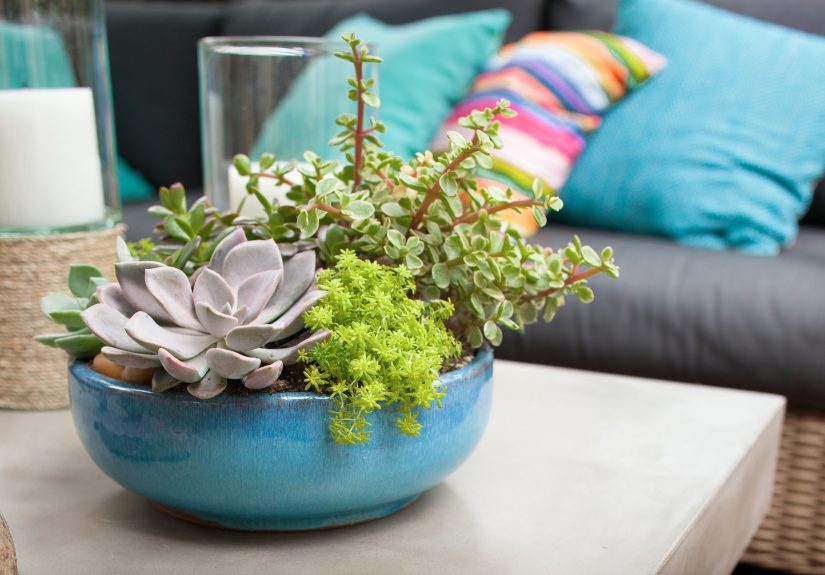
Go for a clean, modern desert look using compact succulents like echeveria, haworthia, gasteria, and a small sedum or two.
Use a gritty, fast-draining succulent mix, top-dress with pebbles, and add one larger rock as a “feature boulder.”
Keep it in bright light and water only when the mix dries out thoroughly. This is the dish garden equivalent of a low-maintenance friend who still looks amazing in photos.
2) The Tropical Getaway Bowl (Lush Leaves, Zero Plane Tickets)
Build a mini jungle with humidity-tolerant houseplants: fittonia (nerve plant), peperomia, small pothos cuttings, and a petite fern.
Use a light potting mix, add a little bark or coco coir for texture, and finish with a moss top-dress for that “rainforest floor” effect.
Place it in bright, indirect light and water when the top layer starts to drytropical plants generally dislike bone-dry drama.
3) The Woodland Moss Scene (Quiet Cabin Energy)
Moss dish gardens feel like a forest walk in miniature. Use sheet moss as your green “carpet,” tuck in small ferns or mini ivy,
and add twigs, pinecones, or a piece of driftwood. Keep it away from harsh direct sun; moss prefers cooler, indirect light.
Mist lightly between deeper waterings so it stays fresh-looking rather than crispy and offended.
4) The Fairy Garden Dish (Whimsical Without Going Full Theme Park)
Start with a low-growing base (moss, baby’s tears, or fittonia), then add a tiny path using sand or small gravel.
Finish with miniature accents like a tiny bench, a pebble “stepping stone” trail, or a small “door” leaning against driftwood.
The trick is restraint: one or two focal miniatures read charmingtwelve reads like your plants joined a cosplay convention.
5) The Herb Window Dish (Kitchen-Garden, But Make It Cute)
Use a shallow container with drainage if possible, because herbs prefer even moisture but hate soggy roots.
Choose compact growers like thyme, oregano, chives, and dwarf basil (or keep mint in its own section because mint loves chaos).
Bright light is essentialideally a sunny windowplus regular pinching and harvesting so it stays bushy. Bonus: it smells incredible and makes you feel like someone who meal preps.
6) The Bonsai-Inspired Zen Bowl (Calm, Collected, Photogenic)
You don’t need a full bonsai commitment to borrow the aesthetic. Use one small woody focal plant (like a dwarf jade trained gently),
surround it with low succulents or moss, and add smooth stones and negative space. Think “tiny landscape painting,” not “plant crowd.”
Water sparingly if your focal plant is succulent-like; if you go with moss, keep the whole setup in softer light and mist more often.
7) The Cactus “Canyon” Dish (Spiky Personalities, Big Style)
Create a miniature canyon using clustered small cacti (choose manageable sizes) and sculpt the soil into gentle slopes.
Add gravel top-dressing and a few taller stones to imply “cliffs.” Cacti want bright light and very infrequent wateringespecially indoors.
Use tongs for placement unless you enjoy learning new swear words. This one brings the outdoors in, but with boundaries.
8) The Carnivorous Bog Dish (A Tiny Swamp With an Attitude)
For a conversation starter, build a bog-style dish garden with carnivorous plants like sundews or small pitcher plants.
They typically prefer mineral-free water (often distilled or rainwater) and a specific, nutrient-poor medium rather than regular potting soil.
Keep the setup consistently moist (bogs are not into “dry between waterings” rules). Place it in bright light and prepare for guests to ask
if it “eats flies.” (It might. Don’t make it weird.)
9) The Seasonal Bulb Dish (Instant “Cozy Season” Décor)
Use a shallow dish with pebbles and moss to nestle in bulbs like paperwhites or small spring bulbs for a temporary indoor display.
Bulb dishes feel festive and freshgreat for entry tables or a dining centerpiece. Keep the medium lightly moist and give it bright light
once growth starts. When the show is over, you can compost the display or transition suitable bulbs outdoors (depending on bulb type and climate).
10) The “Upcycled Bowl” Dish Garden (Thrifted Charm, Modern Plants)
Turn an old casserole dish, vintage tin, or sturdy bowl into a dish garden that looks custom and expensive (without being either).
Line the bottom thoughtfully (especially if it has no drainage), choose plants with matching needs, and top-dress with a clean finishmoss, gravel,
or decorative sand. The container becomes half the design, which is great because containers never outgrow their pots. (Yes, that’s a plant joke.)
Common Mistakes (So You Can Skip the Heartbreak)
- Mixing mismatched plants: A cactus and a fern living together is not “opposites attract.” It’s “someone will suffer.”
- Overwatering no-drain containers: If water can’t escape, your job is to become the escape route (by watering less).
- Choosing containers that are too shallow: Roots need room, and soil depth helps stabilize moisture.
- Ignoring light: Most “mysterious” problems are actually “this plant is starving for light.”
of Real-Life Dish Garden Experiences (What You’ll Notice After the Photos)
The first experience most people have with a dish garden is pure pride. You’ll set it on a table, step back, and think,
“Wow. I am the kind of person who makes tiny landscapes.” Then you’ll take fifteen photos and send at least one to someone
who didn’t ask, because that’s how plant joy spreads.
After the honeymoon phase, you’ll notice the dish garden starts teaching you your own habits. If you’re a chronic over-carer,
you’ll feel an almost physical urge to water “just a little.” Dish gardensespecially those without drainagewill gently train you
out of that. You’ll learn to check the soil, wait, and water slowly. It’s surprisingly calming, like mindfulness, but with dirt.
On the flip side, if you tend to forget plants exist until they look like Victorian fainting patients, a dish garden will help you
build a quick rhythm: a weekly glance, a fingertip soil check, and a small sip of water when needed.
You’ll also experience the “microclimate effect.” Put a dish garden near a sunny window and it can dry faster than you expect.
Place it in low light and it might hold moisture longer, which sounds nice until you realize soggy soil is basically an invitation for root issues.
Many people end up giving their dish garden a “home base” spotbright, indirect lightand then rotating it occasionally so each side gets a fair share.
This is also when you’ll discover that plants lean toward light with the dedication of a dog following a snack.
Another very normal experience: one plant becomes the overachiever. In mixed dish gardens, something will inevitably grow faster,
hog more space, or start shading its neighbors. This isn’t failureit’s gardening reality. The best dish gardeners embrace light editing:
trim back a runner, pinch a stem, or even swap one plant out seasonally. Dish gardens are not tattoos; you’re allowed to change your mind.
Finally, there’s the “guest factor.” Dish gardens get noticed. People will touch the moss. Someone will ask if it’s real. Someone will
tell you about their aunt’s plant that “thrived on neglect,” and you’ll smile politely while your brain whispers, “That’s… not a care method.”
But the nicest experience is that a dish garden makes your space feel alive. It turns a table into a scene, a shelf into a corner of nature,
and an ordinary day into something a little greener. That’s the outdoors coming inand staying for a while.
Conclusion
Dish gardens are small, stylish, and surprisingly teachableperfect for anyone who wants a bite-sized piece of nature indoors.
Pick a theme, match your plants’ needs, water with intention (not enthusiasm), and let your mini garden become the easiest form of home décor
that literally improves itself over time.