Table of Contents >> Show >> Hide
- Where “Polyphonic Perception” Came From
- Polyphony 101: What “Polyphonic” Actually Means
- So… Is Polyphonic Perception Real?
- Why Some People Seem “Better” at It
- Can You Learn “Polyphonic Perception” (Whatever We’re Calling It)?
- How to Tell If You’re Experiencing Something “Special” or Something “Normal-but-Cool”
- Experiences People Report With “Polyphonic Perception” (and What They Might Mean)
- “Songs feel like a 3D object I can walk around.”
- “I can’t not hear the individual parts.”
- “I hear a song once and immediately notice what everyone else misses.”
- “I can follow two things at once… until I try to prove it.”
- “It makes me feel more emotional, like the song is ‘talking’ to me in multiple voices.”
- Conclusion: Real Skill, Fuzzy Label
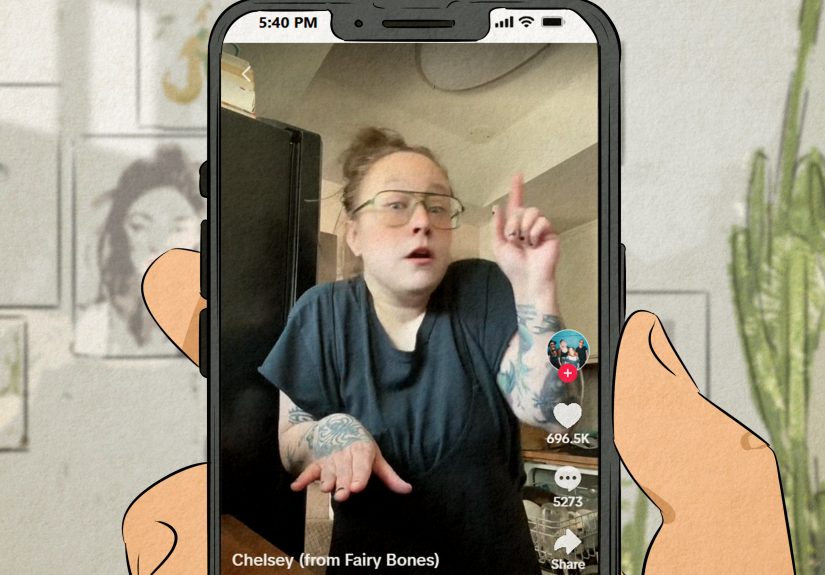
If you’ve been on TikTok any time since mid-2025, you may have seen someone “conducting” invisible instruments in the air and claiming they have a special
ability called polyphonic perception. The comments usually split into three camps:
(1) “Whoa, that’s me,” (2) “That’s literally just… listening to music,” and (3) “Please respect my journey,” typed by someone who is absolutely not respecting anyone else’s journey.
So what’s going on here? Is polyphonic perception a real, rare brain superpoweror a catchy label slapped onto a skill most humans already have, like “breathing perception”?
The satisfying (and slightly annoying) answer is: it’s both. The TikTok term is fuzzy, but the underlying science is very real.
Where “Polyphonic Perception” Came From
“Polyphonic perception” exploded as a viral label after creators posted videos showing how they can “separate” a song into layersvocals, bass, drums, synths, ad-libs, harmonies
and follow more than one at the same time. Some people framed it as connected to ADHD or autism; others treated it as a rare gift; and many treated it as a premium subscription tier of being a music fan.
The internet did what the internet does: it memed the phrase into orbit, then argued about whether the thing being described is special, common, or simply a dramatic way of saying,
“I can hear the beat.”
Polyphony 101: What “Polyphonic” Actually Means
In music, polyphony is a texture where two or more relatively independent melodic lines happen at once. Think of a fugue or a choral piece where multiple voices each carry their own melody.
It’s different from homophony, where one main melody is supported by chordal accompaniment (a lot of pop music lives here).
Here’s the key: music being polyphonic doesn’t automatically mean the listener is doing something mystical. Polyphonic music is designed to be heard as a whole and explored in parts.
Great composers (and great producers) basically leave you an Easter-egg trail through the sound.
Polyphony vs. Polyrhythm (the Mix-Up That Fuels Many Comments)
Some viral “polyphonic perception” demos describe keeping track of multiple rhythms at oncelike tapping one beat with your fingers while your foot marks another.
That’s usually closer to polyrhythm (multiple rhythmic patterns at the same time) than polyphony (multiple melodic lines).
Translation: sometimes people are arguing because they’re talking about two different skillsmelodic layering vs. rhythmic independenceunder one trendy umbrella term.
The umbrella is doing a lot of work. It deserves benefits.
So… Is Polyphonic Perception Real?
As a formal scientific category with a strict definition? Not really. Researchers who study how we separate sound typically use terms like
auditory scene analysis, stream segregation, and selective attention.
As a description of a real abilitybeing able to pick out and track multiple elements in a sound mix? Absolutely. Your brain does this all the time.
It has to. Otherwise, every restaurant would sound like one giant, blended “human smoothie” of forks, voices, and espresso machines.
The Science Under the Hood: Auditory Scene Analysis
Auditory scene analysis is the brain’s way of organizing incoming sound into meaningful “objects” or streamslike separating one voice from another, or one instrument from another.
It uses clues such as pitch range, timbre (tone color), timing, and spatial location. Attention then helps you choose what to focus on (the vocalist) and what to treat as background (the shaker that never takes a day off).
Polyphonic music is a perfect playground for this system because it contains multiple overlapping streams that can be experienced as a blended whole or deliberately separated.
That “I can hear all the parts” feeling is often your attention moving fluidly between streamssometimes rapidlyrather than literally running multiple full spotlight beams at 100% power at the same time.
Divided Attention vs. Rapid Switching: Why It Feels Like You’re Doing Two Things
Scientists debate how listeners handle multiple musical lines: do we truly divide attention across streams, or do we focus on one stream at a time and switch quickly?
Either way, the experience can feel like “simultaneous tracking,” especially if you’ve learned what to listen for.
Why Some People Seem “Better” at It
1) Musical Training (a.k.a. Ear Gym)
Musicians often show stronger auditory stream segregation than non-musicians. This makes sense: if you’ve spent years listening for inner voices, harmonies, and timing details,
your brain becomes more efficient at pulling sound apart and labeling it.
2) Attention, Working Memory, and Prediction
Following multiple layers isn’t just “good ears.” It’s also cognitive horsepower: attention control, working memory, and prediction.
Music is full of patternsyour brain constantly guesses what comes next. The better your brain models the pattern, the easier it is to track a part without losing the thread.
3) Producer Brain: Knowing What “Parts” Exist
People who make musicor even just obsessively watch breakdown videoslearn to recognize common production elements:
sidechain pumping, layered vocals, hi-hat rolls, sub-bass, call-and-response synths, and so on. Once you have a mental checklist, your attention can “snap” to those elements quickly.
That can look like a superpower from the outside, but it’s often a mix of knowledge and practiced listening.
4) Neurodivergence: Real Experiences, Messy Evidence
Online, some people connect “polyphonic perception” to ADHD or autismsometimes as a point of pride, sometimes as an explanation for feeling overwhelmed by sound.
It’s true that many neurodivergent people report different sensory experiences, and auditory processing can vary widely from person to person.
But it’s also important not to turn a viral label into a diagnosis. Differences in attention and sensory processing are real; the TikTok term is not a clinical test.
If your relationship with sound feels intense, it can be worth talking to a qualified professionalespecially if noise is causing stress or interfering with daily life.
Can You Learn “Polyphonic Perception” (Whatever We’re Calling It)?
Yesat least in the practical sense. You can train your ability to notice and follow layers in music. You won’t necessarily become a one-person mixing console overnight,
but you can get noticeably better with consistent practice.
A Simple Training Plan (No Fancy Gear Required)
-
Start with one “anchor.” Pick a song you know well and lock onto a single element (lead vocal, bass line, hi-hat).
Hold it for 20–30 seconds without drifting. - Switch on purpose. Move your attention from vocals → bass → drums. The goal is clean switching, not chaos.
- Find the “quiet hero.” Identify something subtle: a background harmony, a guitar texture, a percussion loop. Once you hear it, you’ll wonder how you ever missed it.
- Try real polyphony. Listen to a fugue, a string quartet, or choral music. Follow one line, then another, then notice how they interlock.
- For rhythm lovers: practice simple polyrhythms (like 2-against-3) by clapping one pattern and tapping the other slowly. Build accuracy before speed.
How to Tell If You’re Experiencing Something “Special” or Something “Normal-but-Cool”
Most people can hear multiple components in music, especially with repetition. The difference is usually degreehow quickly you can isolate parts, how many you can track,
and whether you can keep tracking when the song gets busy.
- Common: You can notice the bass line once you focus, and you can follow harmonies in a chorus.
- More trained: You can quickly jump between layers and describe what each is doing (rhythm, pitch, texture).
- Highly skilled: You can track multiple lines in complex music, keep timing steady, and maintain one part while briefly checking another.
In other words: even if it’s common, it can still be a skill. Walking is common too. People still run marathons. Please do not run a marathon to prove you can hear the snare.
Experiences People Report With “Polyphonic Perception” (and What They Might Mean)
The internet loves a label, but the experiences underneath the label are often genuinely relatable. Below are common patterns people describe when they say they have “polyphonic perception.”
These aren’t diagnosesjust real-world listening experiences that map pretty well onto attention, training, and auditory scene analysis.
“Songs feel like a 3D object I can walk around.”
Some listeners describe music as layered space: the vocal “in front,” drums “beneath,” harmonies “behind,” and a synth line floating somewhere over your left shoulder like a friendly ghost.
This often happens when you’re tuned into timbre and mixing choicesreverb, panning, and stereo width. Once you notice spatial cues, you can almost “navigate” a track.
It’s not paranormal; it’s your brain using the same spatial and grouping tools it uses in everyday listening, just applied to a well-designed recording.
“I can’t not hear the individual parts.”
For some people, the issue isn’t accessing the layersit’s turning them off. They report that music automatically breaks into components: the kick drum becomes a metronome,
the bass line becomes a storyline, and the vocal becomes “just one more instrument.” This can be fun (hello, free remix in your head) but also distracting, especially in public spaces
where music is background noise. That experience lines up with how strongly attention gets captured by salient patternsand how hard it can be to reassign something back to “background.”
“I hear a song once and immediately notice what everyone else misses.”
This is common among musicians, producers, and people who grew up playing in ensembles. If you’ve practiced listening for your part while others play theirs, your brain gets quicker at:
(1) separating streams, (2) labeling what they are, and (3) predicting what they’ll do next. The “magic” often comes from speed: you’re doing normal auditory work, just faster and with better categories.
It’s the same reason an experienced cook can taste a sauce and list ingredients while the rest of us go, “Yes. Sauce. Good sauce.”
“I can follow two things at once… until I try to prove it.”
A lot of “polyphonic perception” collapses the moment you perform it for an audienceespecially when it involves tapping two different beats. That’s not failure; it’s reality.
Coordinating independent rhythms is genuinely hard, and attention has limits. Many people can switch rapidly between beats or lock onto one while being aware of the other,
but doing two fully independent rhythmic streams at performance-level precision is closer to trained musician territory.
“It makes me feel more emotional, like the song is ‘talking’ to me in multiple voices.”
Some listeners say layered perception intensifies emotion: harmonies feel like hidden messages, inner voices feel like a second conversation, and changes in texture feel like plot twists.
That makes sensewhen you notice more structure, you perceive more meaning. A chorus isn’t just “bigger,” it’s a deliberate stacking of rhythm, harmony, and texture designed to hit your brain’s
prediction-and-reward systems. Noticing more can make you feel more. That’s not imaginary; it’s appreciation with extra resolution.
Bottom line: many “polyphonic perception” stories sound like a blend of attention style, sensory sensitivity, and learned listening. The experience can be real and meaningful
even if the viral label is loose.
Conclusion: Real Skill, Fuzzy Label
“Polyphonic perception” isn’t a standardized scientific category, and it’s definitely not a guaranteed sign of being rare or neurodivergent.
But the thing people are pointing atour ability to separate and follow multiple musical elementsis grounded in real perception science.
If you love picking songs apart, congratulations: you’re using auditory scene analysis the way it was meant to be used. If you don’t, congratulations: you can still enjoy music without
mentally soloing the tambourine. Both are valid. The real win is knowing the difference between a viral label and a real, trainable listening skill.