Table of Contents >> Show >> Hide
- What “Drought-Tolerant” Really Means in a Container
- How to Make Any Container Garden More Drought-Resistant
- 11 Drought-Tolerant Container Plants for Your Patio
- 1) Agave (Agave spp.)
- 2) Lavender (Lavandula spp.)
- 3) Rosemary (Salvia rosmarinus, formerly Rosmarinus officinalis)
- 4) Thyme (Thymus spp.)
- 5) Lantana (Lantana camara)
- 6) Verbena (Verbena spp.)
- 7) Salvia (Salvia nemorosa and other ornamental salvias)
- 8) Gaura / Beeblossom (Gaura lindheimeri, often listed as Oenothera lindheimeri)
- 9) Stonecrop / Sedum (Hylotelephium, Sedum spp.; e.g., ‘Autumn Joy’ types)
- 10) Moss Rose / Portulaca (Portulaca grandiflora)
- 11) Blue Fescue (Festuca glauca)
- Four Easy Drought-Smart Patio Container Recipes
- Troubleshooting: When Tough Plants Act… Not Tough
- Patio-Grower Experiences: of Real-World Lessons (and a Little Comedy)
If your patio plants have ever given you that dramatic, fainting-victorian-lady look after a couple hot days, you’re not alone. Containers dry out fast, wind turns pots into little hair dryers, and sometimes life happens (a.k.a. you blink and it’s been four days). The good news: you can absolutely build a gorgeous container garden that doesn’t demand constant babysitting.
This guide walks you through the best drought-tolerant container plants for patios, plus the practical tricks that make “low-water potted plants” actually low-water in real life. We’ll cover 11 patio-friendly, heat-tolerant plants that thrive in containers, look great all season, and won’t punish you for missing a watering here and there.
What “Drought-Tolerant” Really Means in a Container
Drought-tolerant doesn’t mean “never water.” It means a plant can handle dry spells better than thirsty divas like hydrangeas in July. In the ground, roots can travel and find moisture. In a pot, roots are stuck in a tiny apartment with strict rent control. Even tough plants will need some wateringespecially during establishment and extreme heat.
The goal of water-wise container gardening is to pick plants that naturally cope with heat and dry soil and set them up with containers, soil, and placement that reduce water loss. Do that, and you’ll get containers that stay attractive with far fewer “emergency watering sprints.”
How to Make Any Container Garden More Drought-Resistant
1) Choose the right pot (your container is part of the watering system)
- Go bigger than you think. Larger pots dry out more slowly than small ones.
- Pick less-porous materials (glazed ceramic, plastic, metal) to reduce moisture loss through pot walls. Terracotta and fabric look great but can dry out faster.
- Drainage is non-negotiable. Drought-tolerant plants hate wet feet even more than they hate thirst.
2) Use a potting mix that drains well but doesn’t turn into dust
For drought-tolerant patio containers, you want a mix that holds moisture briefly, then drains. A simple approach: start with a quality potting mix, then amend for your plant type.
- For Mediterranean herbs and many perennials: add extra perlite/pumice for drainage.
- For succulents and agave: use cactus/succulent mix or add coarse grit/pumice generously.
- Avoid heavy garden soil in potsit compacts and drains poorly.
3) Water smart during “training camp” (establishment)
Most drought-tolerant plants need consistent watering for the first couple weeks in a container while roots settle in. After that, you can taper down. Think of it like teaching roots to explore the pot instead of waiting for room service.
4) Make tiny microclimate tweaks that save real water
- Mulch the surface (small bark, pebbles, or gravelespecially for succulents) to slow evaporation.
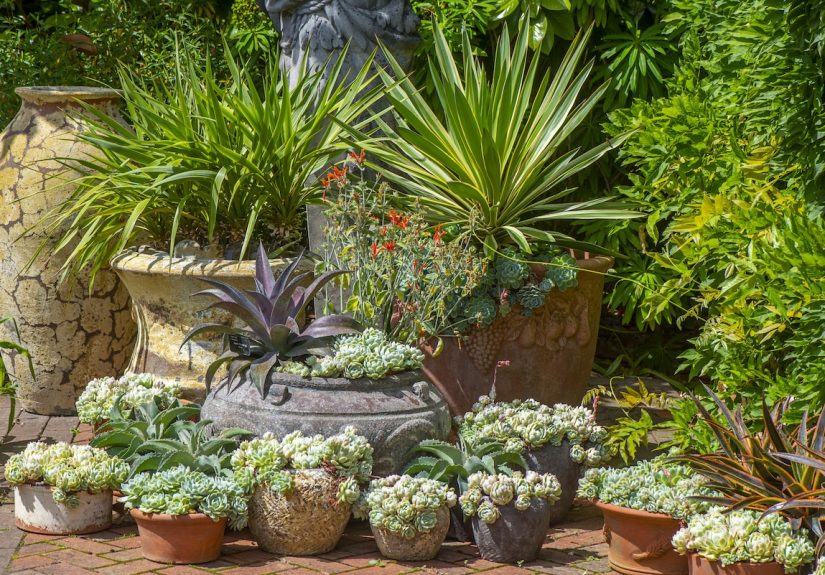
- Group pots together so they shade each other’s soil and reduce wind exposure.
- Water early when possible; less evaporates compared to mid-day watering.
- Consider drip or a simple soaker setup if you travel or forget. “Low-maintenance” loves automation.
11 Drought-Tolerant Container Plants for Your Patio
These picks are popular for a reason: they handle heat, prefer well-drained soil, and keep their looks with less water. Always match your plant choices to your sun exposure (full sun vs. part sun), your USDA zone, and whether you want annual color or perennial structure.
1) Agave (Agave spp.)
If you want a patio plant that looks like modern sculpture and drinks water like a camel, agave is your star. It’s built for bright sun and sharp drainage.
- Best for: full sun patios, minimalist designs, “I want one plant to do the most” containers
- Container tip: use a gritty, fast-draining mix; avoid overwatering (rot is the usual downfall)
- Style note: give it spacethose spines are not friendly to shins or curious toddlers
2) Lavender (Lavandula spp.)
Lavender is the patio plant equivalent of a breezy Mediterranean vacationsunny, dry, and slightly dramatic about drainage. Give it full sun and a potting mix that doesn’t stay wet.
- Best for: sunny patios, fragrant seating areas, pollinator-friendly containers
- Container tip: don’t over-fertilize; prioritize drainage and air circulation
- Easy pairing: lavender + thyme + rosemary = a “Mediterranean patio pot” that smells amazing
3) Rosemary (Salvia rosmarinus, formerly Rosmarinus officinalis)
Rosemary is a drought-tolerant herb that pulls double duty: it’s attractive, aromatic, and turns dinner into a flex. In containers, it prefers sun and excellent drainage.
- Best for: edible patio pots, sunny doorsteps, cooks who want “fresh rosemary” on command
- Container tip: let the top of the soil dry between waterings; avoid soggy mixes
- Cold-climate note: in many regions it’s not fully winter-hardy in potsplan to protect or overwinter
4) Thyme (Thymus spp.)
Thyme is small but mighty: drought-tolerant, sun-loving, and great for spilling over pot edges. It’s also one of the easiest herbs for beginners because it doesn’t demand constant watering.
- Best for: edging and trailing in mixed containers, edible gardens, sunny patios
- Container tip: choose a pot with excellent drainage; avoid rich, wet soil
- Bonus: it plays well with lavender and rosemary in water-wise combos
5) Lantana (Lantana camara)
Lantana is a heat-loving, bloom-machine that’s famously tolerant of dry conditions once established. It’s a go-to for hot patios where other flowers sulk.
- Best for: full sun, long-season color, butterfly-friendly patio containers
- Container tip: don’t overwater or over-fertilizetoo much can reduce flowering
- Design idea: pair with a spiky thriller (like a compact grass) and a trailing plant for a classic “thriller-filler-spiller” look
6) Verbena (Verbena spp.)
Verbena brings vibrant color and a long bloom season, and established plants handle dry spells better than many traditional annuals. In pots, it’s especially great as a trailing or mounding flower.
- Best for: sunny railings, hanging baskets, pollinator pots
- Container tip: weekly deep watering during peak bloom often beats frequent tiny splashes
- Quick fix: if it gets leggy, a midseason trim can help it rebound
7) Salvia (Salvia nemorosa and other ornamental salvias)
Ornamental salvia is a patio powerhouse: upright flower spikes, pollinator appeal, and good tolerance for drier conditionsespecially in well-drained soil and full sun.
- Best for: full sun containers, purple/blue color themes, bee and butterfly gardens
- Container tip: deadheading can encourage repeat blooms; avoid overly rich soil that causes flopping
- Great partners: salvia + gaura + a small grass = airy, drought-smart movement
8) Gaura / Beeblossom (Gaura lindheimeri, often listed as Oenothera lindheimeri)
Gaura looks delicate, but it’s surprisingly toughespecially in heat. Its flowers float on wiry stems like little butterflies hovering above the pot.
- Best for: airy, cottage-style containers; soft texture; long bloom season
- Container tip: it prefers leaner, well-drained soil; rich mixes can make it floppy
- Visual trick: place gaura behind a mounding plant so its stems can “dance” without looking sparse
9) Stonecrop / Sedum (Hylotelephium, Sedum spp.; e.g., ‘Autumn Joy’ types)
Sedums store water in their leaves, which makes them naturally drought tolerant. Many varieties thrive in sunny pots, offering thick foliage, late-season flowers, and an easy-care attitude.
- Best for: full sun containers, modern looks, late-summer and fall interest
- Container tip: prioritize drainage; too much shade or rich soil can lead to weak, floppy growth
- Design idea: mix sedum with low annual color (like portulaca) for a “tough-but-pretty” combo
10) Moss Rose / Portulaca (Portulaca grandiflora)
Portulaca is basically summer color on easy mode: it loves sun, shrugs off heat, and blooms like it’s getting paid per flower. It’s especially useful when you want a bright, trailing spiller that doesn’t guzzle water.
- Best for: full sun pots, hanging baskets, trailing edges, hot patios
- Container tip: overwatering is the enemyuse well-drained soil and water only when needed
- Bonus: excellent for gardeners who prefer “admire” over “hover”
11) Blue Fescue (Festuca glauca)
Want drought tolerance with structure? Blue fescue adds a tidy, blue-toned clump that looks sharp all season and plays nicely with flowering plants. It also helps “anchor” a container design.
- Best for: modern containers, blue/silver palettes, neat edging, sun to light shade
- Container tip: it dislikes wet, poorly drained soilkeep it on the dry side
- Maintenance note: clumps may need refreshing/dividing every couple of years depending on climate
Four Easy Drought-Smart Patio Container Recipes
If designing containers feels like picking paint colors with commitment issues, here are foolproof combos that balance texture, bloom, and drought tolerance.
Mediterranean Snack Pot (Full Sun)
- Lavender (fragrance + pollinators)
- Rosemary (structure + edible)
- Thyme (trailing edible edge)
Butterfly Buffet Pot (Full Sun)
- Lantana (bold bloom clusters)
- Salvia (flower spikes + bees)
- Verbena (long bloom + spill)
Hot-Patio Color Pop (Full Sun, Minimal Fuss)
- Portulaca (continuous color)
- Sedum (succulent foliage + resilience)
- Blue fescue (cool-toned structure)
Modern Desert Bowl (Full Sun, Best Drainage)
- Agave (dramatic centerpiece)
- Sedum (low, textural fill)
- Gravel mulch (reduces evaporation and looks intentional)
Troubleshooting: When Tough Plants Act… Not Tough
“It’s drought-tolerant, so why does it look crispy?”
Common reasons: the pot is too small, the soil is too light/fast-draining for the heat level, wind is blasting the container, or the plant never got established. Size up the pot, add surface mulch, and water deeply (not daily spritzes).
“My plants are floppy and leafy but not blooming.”
Too much fertilizer or too rich a potting mix can push leafy growth instead of flowers for several heat-tough bloomers. Ease up on feeding, increase sun exposure if possible, and consider a light midseason trim for plants like verbena.
“I’m scared of overwatering drought-tolerant plants.”
Good instinct. The trick is deep watering + letting the mix dry slightly, not constant dampness. Always confirm drainage holes are open and the pot isn’t sitting in a saucer of water.
Patio-Grower Experiences: of Real-World Lessons (and a Little Comedy)
After watching enough patio containers go through summer, you start to notice patternskind of like how you learn which friends are “on time” friends and which are “I’m leaving now” friends (they are not leaving now). Drought-tolerant container plants are the “reliable friend” category, but they still have preferences.
The first lesson most people learn is that pot choice changes everything. I’ve seen the same plant look like a thriving superstar in a big glazed container and like a crunchy souvenir in a small terracotta pot two feet away. It’s not magicporous pots and tiny volumes dry out faster, especially when a breeze decides to be your patio’s full-time job. When you switch to a larger, less porous container, watering becomes less of a daily event and more of a calm routine.
The second lesson is that “drought-tolerant” plants still want a thoughtful start. Lavender, rosemary, salviathese aren’t the plants you ignore on day one and then act shocked when they sulk. Give them consistent watering for a couple of weeks so roots settle in, and then slowly reduce frequency. Once established, they get that tougher, self-sufficient vibe. Skip this step and they’ll stay needy, like a plant version of a group chat that won’t stop buzzing.
Another surprisingly common experience: over-care is a bigger problem than under-care. Many drought-tolerant patio plants hate soggy soil more than dry soil. Portulaca is the poster child for this. People see the flowers, fall in love, and then water it like it’s a fern. Next thing you know, it’s collapsing in dramatic silence. The fix is simple: fast drainage, full sun, and watering only when the mix is actually dry. For succulents like sedum and structural plants like agave, “less but deeper” is usually the winning approach.
And then there’s design reality: even tough plants can look awkward if you don’t give them partners. Gaura is a great exampleits airy stems are gorgeous, but in a pot by itself it can look like it’s waiting for the rest of the band to show up. Pair it with a mounding plant (like lantana or a compact salvia) and suddenly it’s movement, not emptiness. Blue fescue does this too: it quietly makes a container look intentional, like you hired someone who says things like “texture balance.”
Finally, the most helpful patio habit is the simplest: do quick daily check-ins during peak heat. Not a full watering tourjust a “poke the soil” moment. If the top couple inches are bone dry and the plant is new or flowering hard, it gets a deep drink. If not, you move on with your life, victorious. That tiny routine keeps drought-tolerant container plants looking great without turning you into the unofficial employee of your patio.