Table of Contents >> Show >> Hide
- What Claustrophobia Really Is (And Why It Feels Like You Can’t Breathe)
- 1) The 41-Hour Elevator Weekend
- 2) The MRI Tunnel That Turned Into a Panic Trap
- 3) The Cave Turn That Wasn’t a Turn (Nutty Putty Cave)
- 4) Eighteen Days Underground, Then a Swim Through Darkness (Thai Cave Rescue)
- 5) The Mine Filled With Water (Quecreek, Pennsylvania)
- 6) A Modern Mine Flooding Rescue Mission (West Virginia)
- 7) “We Are Well in the Shelter”: The 33 Miners and the Underground Refuge
- 8) The Toddler in the Pipe (Kansas)
- 9) The Teen Who Slid Into an 11-Inch Drain Pipe
- 10) The Manhole “Rescue” That Became Two Victims
- 11) The Sewer Manhole That Overcame a Firefighter
- 12) The Bus Ride That Felt Like a Box (Greyhound Claustrophobia)
- What These Stories Teach Us (Besides “No Thanks”)
- Bonus: What Claustrophobia Feels Like (And Why Your Chest Tightens) of Lived-Experience Patterns
If you’ve ever stepped into an elevator, watched the doors slide shut, and instantly thought,
“Cool cool cool… what if I simply evaporate?”congrats. Your brain just ran a tiny
claustrophobia simulation. For some people, that simulation isn’t “tiny.” It’s a full-body alarm:
tight chest, shaky hands, racing heart, the urgent need to escapeeven when there’s no real danger.
Claustrophobia (the fear of confined spaces) is usually categorized as a specific phobia.
The key isn’t whether small spaces are objectively uncomfortable (they often are). It’s that the fear
response can be disproportionate, automatic, and stickyturning ordinary moments into mini survival movies.
Below are 12 true, real-world storiesfrom famous rescues to everyday medical appointmentsthat capture
why claustrophobia feels so personal, so physical, and so hard to talk yourself out of.
What Claustrophobia Really Is (And Why It Feels Like You Can’t Breathe)
Claustrophobia isn’t “being dramatic.” It’s your nervous system treating a space as a threatoften because
it predicts you’ll be trapped, lose control, or run out of air (even when you won’t). That prediction flips
on the fight-or-flight response: faster breathing, higher heart rate, sweaty palms, dizziness, and a mental
soundtrack that yells, “Get out. Now.”
One frustrating twist: the physical sensations (like chest tightness) can convince you the danger is real,
which intensifies the panic, which intensifies the sensations… and suddenly you’re stuck in a loop that feels
impossible to interrupt. Keep that loop in mind while reading these storiesbecause you’ll see it play out
again and again, in very different settings.
1) The 41-Hour Elevator Weekend
A man in New York City stepped into an office elevator and ended up stuck between floors for roughly two days.
The building emptied. The hours stretched. He tried the alarm. He tried to pry doors. Eventually, he paced,
sat, stood, paced againdoing that panicky math where you count supplies (cigarettes, antacids) and wonder
whether using them will make things worse. The most claustrophobic detail isn’t even the spaceit’s the time:
the slow realization that “a few minutes” has turned into a whole weekend.
Why it tightens your chest: confinement + uncertainty + silence = the perfect recipe for your brain to shout, “No exits!”
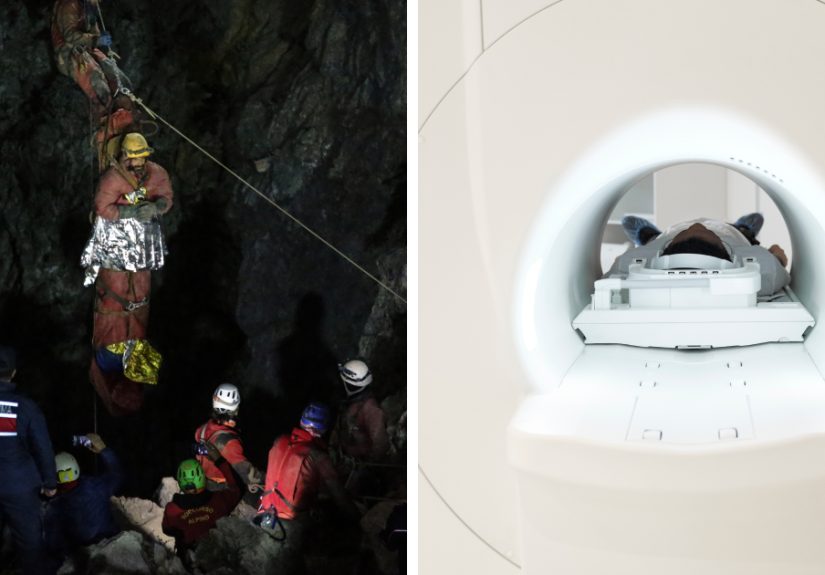
2) The MRI Tunnel That Turned Into a Panic Trap
MRIs are medically routine, but psychologically spicy. You lie still. The machine is loud. The space is narrow.
For people prone to claustrophobia, the problem isn’t painit’s the sensation of being “locked in place.”
Many patients report that the moment the table slides in, their body reacts before their thoughts can catch up.
Some ask to stop immediately; others grit through it by focusing on breathing, counting, or imagining open air.
Modern imaging centers often plan for this: brighter tunnels, better airflow, open MRI options, and (when appropriate)
mild sedation arranged ahead of time. But the fear can still hit hard, because the rule of an MRI is the rule
claustrophobia hates most: don’t move.
3) The Cave Turn That Wasn’t a Turn (Nutty Putty Cave)
In Utah’s Nutty Putty Cave, an experienced caver entered a narrow passage he believed led to a familiar route.
It didn’t. The space tightened and angled, and he became stuck upside down in an extremely narrow crevice. A large rescue
effort worked for hours, using ropes and pulleys in a cramped environment where every movement was limited by rock.
The most haunting claustrophobia element is how the cave becomes a physical “no”: no turning around, no standing up,
no stretching your lungs the way your body begs you to.
Why it tightens your chest: it’s the ultimate “stuck” scenarioconfined space, restricted breathing, and no quick exit.
4) Eighteen Days Underground, Then a Swim Through Darkness (Thai Cave Rescue)
In 2018, a youth soccer team and their coach were trapped deep inside Thailand’s Tham Luang cave system after flooding.
The rescue plan was almost unthinkable: guide them through submerged, narrow passagessome so tight that even expert divers
had to navigate carefully. The world watched because the setting is claustrophobia concentrated: darkness, tight rock corridors,
rising water, and the psychological stress of waiting while time and weather keep moving.
Even reading the accounts can trigger that “chest clamp” feeling, because your brain tries to inhabit the space:
the squeeze of the tunnel, the muffled sound, the knowledge that panic itself could become dangerous.
5) The Mine Filled With Water (Quecreek, Pennsylvania)
In 2002, nine coal miners in Pennsylvania were trapped underground after their mine accidentally breached an adjacent flooded area.
Water rushed infast. The men ended up in a pocket where they could survive while rescuers drilled down from above.
They waited for more than three days. Picture the sensory cocktail: darkness, damp air, cold water, uncertainty,
and the knowledge that the same space keeping you alive is also the space you can’t leave.
Why it tightens your chest: claustrophobia is fear of confinement; flooding adds fear of suffocation and rising limits.
6) A Modern Mine Flooding Rescue Mission (West Virginia)
Confined spaces aren’t historical triviathey’re a current reality. In a recent West Virginia mine flooding incident,
crews pumped water for days while officials described the effort as a rescue operation. Even if you don’t know every detail,
the claustrophobic core is familiar: a maze of tunnels, water where air should be, and the agonizing gap between “trapped”
and “reached.” It’s the kind of situation where every update feels like a breath you didn’t realize you were holding.
7) “We Are Well in the Shelter”: The 33 Miners and the Underground Refuge
In 2010, miners trapped in Chile survived deep underground in a refuge while rescue teams worked for weeks.
The story became iconic partly because of that first note confirming they were alive. But the claustrophobia angle is
less about hero headlines and more about daily reality: a confined shelter, limited privacy, limited space to move,
and the psychological task of keeping panic from becoming a second emergency.
Even for people without claustrophobia, the idea of living inside a small chamber with no horizon for days can trigger
a visceral reactionlike your lungs are trying to negotiate for more room.
8) The Toddler in the Pipe (Kansas)
Rescue crews in Kansas responded when a toddler fell into a narrow underground pipe and became stuck more than ten feet down.
Reports described the child as terrified and screamingexactly what you’d expect when the world suddenly becomes a vertical tube.
First responders improvised tools and techniques to get him out safely. It’s a short story, but it hits hard because it’s pure
claustrophobia: small space, no self-rescue, and the primal fear of being wedged where you can’t understand why you can’t just stand up.
9) The Teen Who Slid Into an 11-Inch Drain Pipe
In another Kansas rescue, a 15-year-old ended up trapped in a drain pipe while sledding at a golf course.
Only fingertips were visible at the surface. Firefighters pulled him out by hand. The detail that makes your chest tighten is the measurement:
the pipe’s interior was reported at around 11 inches. That’s not a “tight squeeze.” That’s a “how is there even room for breath?” moment.
Why it tightens your chest: the brain hates being compressedespecially when you can’t change your position to calm down.
10) The Manhole “Rescue” That Became Two Victims
Some of the most tragic confined-space stories involve a pattern: one person collapses, and a second person goes in to helpwithout protection.
In a NIOSH case report, a worker entered a sewer manhole and collapsed; a co-worker entered to rescue him and also collapsed. Both died.
It’s not a thriller plot twist. It’s chemistry and oxygen and how quickly a small space can become an invisible trap.
Claustrophobia isn’t the same thing as a toxic atmospherebut the fear of being unable to escape is shared.
The emotional punch comes from that split-second decision: “I have to go in,” and the space refusing to let anyone back out.
11) The Sewer Manhole That Overcame a Firefighter
In another confined-space incident, a utility worker entered a sewer manhole to investigate a problem, and a volunteer firefighter attempted a rescue.
Low oxygen and sewer gases overcame him. These reports read like warnings written in reality’s handwriting:
small spaces don’t just feel tightthey can remove your ability to think clearly and act quickly.
For people with claustrophobia, stories like this can “teach” the brain the wrong lesson:
See? Confined spaces really are deadly. That’s why treatment focuses on separating the feeling of danger from the actual risk in everyday situations.
12) The Bus Ride That Felt Like a Box (Greyhound Claustrophobia)
Not every claustrophobia story involves rocks or rescue teams. Sometimes it’s a long-distance bus: cramped seats, strangers’ elbows,
stale air, and the creeping thought that you can’t get off whenever you want. In one well-known radio narrative,
a seasoned bus traveler admits that even he can feel the ride “getting to him”the claustrophobia of being stuck in a moving capsule
with no control over when it stops, who sits beside you, or how long the next stretch will feel.
Why it tightens your chest: it’s confinement plus social pressurebecause “panic” feels embarrassing when you’re wedged between strangers.
What These Stories Teach Us (Besides “No Thanks”)
Claustrophobia isn’t one fear; it’s a bundle of fears wearing the same hoodie: being trapped, suffocating, losing control,
not being able to get help, or panicking in a way that feels humiliating. The settings vary (elevators, MRIs, mines),
but the trigger is often the same: restricted movement + uncertain exit.
The good news: claustrophobia is treatable. Cognitive behavioral therapy (CBT) and exposure-based approaches are commonly used to reduce avoidance and
retrain the brain’s alarm system. For predictable triggers like MRIs, practical supportsclear communication, comfort measures, or pre-planned medication
in appropriate casescan help people get through necessary procedures without white-knuckling the whole experience.
Bonus: What Claustrophobia Feels Like (And Why Your Chest Tightens) of Lived-Experience Patterns
People often describe claustrophobia as “I can’t breathe,” even when oxygen is perfectly available. That’s because the sensation isn’t always a literal
breathing problemit’s the body preparing for one. When the brain flags a space as “no escape,” it can tighten muscles around the chest, speed up breathing,
and create a sense of air hunger. Ironically, rapid shallow breaths can make you feel even more lightheaded, which your brain may interpret as proof that
something is wrong. That’s the loop: fear → sensations → more fear.
Another common pattern is the “exit scan.” The moment someone enters a tight space, their eyes start hunting for the fastest way out. In a movie,
this looks like a character glancing at a door. In real life, it can be relentless: checking the elevator panel, watching the MRI tech, tracking how
far you are from the aisle seat, or calculating whether you could push past people if you had to. If the brain can’t find an exit it trusts, the panic
ramps upsometimes within seconds.
Many people also report a sudden “I must move” urge. That’s your nervous system trying to restore agency. Confined spaces often demand the opposite:
hold still (MRI), wait (elevator), stay in line (airplane), remain seated (bus). The mismatch between what your body wants and what the situation requires
can feel like being trapped inside your own skin. And because humans are social creatures, there’s another pressure layered on top:
Don’t make a scene. That social friction can intensify symptoms, because the fear becomes both physical (“I’m trapped”) and interpersonal
(“Everyone will notice”).
The experience can show up as anger, toonot just fear. Some people feel sudden irritability or a sharp “get away from me” reaction, especially in crowded
elevators or packed trains. That’s not a personality flaw; it’s a stress response trying to carve out space. Others dissociate slightlyfeeling foggy or unreal
because the brain is attempting to dampen overwhelm. In both cases, the goal is the same: reduce threat.
What helps in the moment tends to fall into two buckets: body anchors and mind anchors. Body anchors include slow,
deliberate breathing (especially longer exhales), relaxing the shoulders, and unclenching the jawtiny signals to the nervous system that you’re not
actually fighting for survival. Mind anchors include counting, naming objects you can see, repeating a phrase (“this will pass”), or focusing on a specific
sensory detail (cool air on your nose, the feel of the seat). For predictable triggers, planning matters: choosing an aisle seat, telling a technician you’re
anxious, or arranging appropriate support ahead of time.
The neat conclusion is this: claustrophobia is loud, but it’s not permanent. The same brain that learned to panic in tight spaces can learngradually,
safely, and with supportto stop treating every closed door like a life-or-death event. And if your chest tightens just reading these stories, you’re not
“weak.” You’re human. Your alarm system is just a little overenthusiastic about its job.