Table of Contents >> Show >> Hide
- What “Olive Green” Really Means (and Why It’s Tricky)
- How Pros Choose the Right Olive Green
- The 14 Olive Green Paint Colors Pros Love
- 1) Behr Oregano Spice (PPU9-23)
- 2) Benjamin Moore Dark Olive (2140-30)
- 3) Glidden Cavern Moss (PPG1124-5)
- 4) Valspar Olive Smudge (6001-2C)
- 5) Behr Amazon Jungle (PPU9-24)
- 6) Dutch Boy New Crop (324-3DB)
- 7) Dutch Boy Ironside (422-7DB)
- 8) Sherwin-Williams Basque Green (SW 6426)
- 9) Sherwin-Williams Palm Leaf (SW 7735)
- 10) Farrow & Ball Bancha (No. 298)
- 11) Farrow & Ball Sap Green (No. 199)
- 12) Valspar Ancient Olive (6001-3A)
- 13) Glidden Olive Sprig (PPG1125-4)
- 14) Benjamin Moore Nicolson Green (CW-500)
- Quick Pairing Guide: What Goes With Olive Green Paint?
- Testing Olive Green Like a Pro (So You Don’t End Up With “Swamp Surprise”)
- Conclusion: The Olive Green Shortcut to a More “Designed” Home
- Extra: Real-World “Olive Green” Experiences (The Kind You Only Learn by Testing)
Olive green is the design world’s ultimate “cool friend who also owns a label maker.” It’s earthy without being boring,
cozy without going full cabin-core, and it can read classic, modern, vintage, or quietly expensive depending on what you
pair it with. It’s also one of the few colors that can pull off being both a statement and a neutrallike a blazer that
somehow works at brunch and a job interview.
If you’ve ever stood in the paint aisle whispering, “Why do all greens look different at home?”you’re not alone.
Olive green paint colors are especially sensitive to lighting because they often include a mix of yellow, brown,
gray, and sometimes even a hint of blue. That complexity is exactly why pros love them… and why your sample board
might look like you’re running a tiny museum of questionable decisions.
What “Olive Green” Really Means (and Why It’s Tricky)
Olive green sits in the warm-green family. Think: foliage, herbs, mossy stone walls, and yes, martinis.
The best olive greens usually have one or more of these traits:
- Warm undertones (yellow or brown) that feel grounded and natural
- Muted saturation so the color doesn’t scream “sports team locker room”
- A flexible depth that can go from soft and airy to dramatic and moody
Here’s the catch: change the light bulb, and olive can shift. Morning sun might pull out yellow warmth. Evening lamps
can make it look deeper and smokier. Cool north light can reveal gray or blue. This is why designers test, retest,
and then test againusually while squinting like they’re decoding ancient runes.
How Pros Choose the Right Olive Green
1) Start with the room’s “permanent roommates”
Flooring, countertops, tile, and big upholstered pieces aren’t moving (or at least they shouldn’t). Olive green looks
incredible with warm woods (oak, walnut), natural stone, and creamy whites. If your room leans cool (gray tile, bluish
stone), pick an olive with a slightly cooler or smoky base so it doesn’t clash.
2) Decide if you want “olive as a neutral” or “olive as the moment”
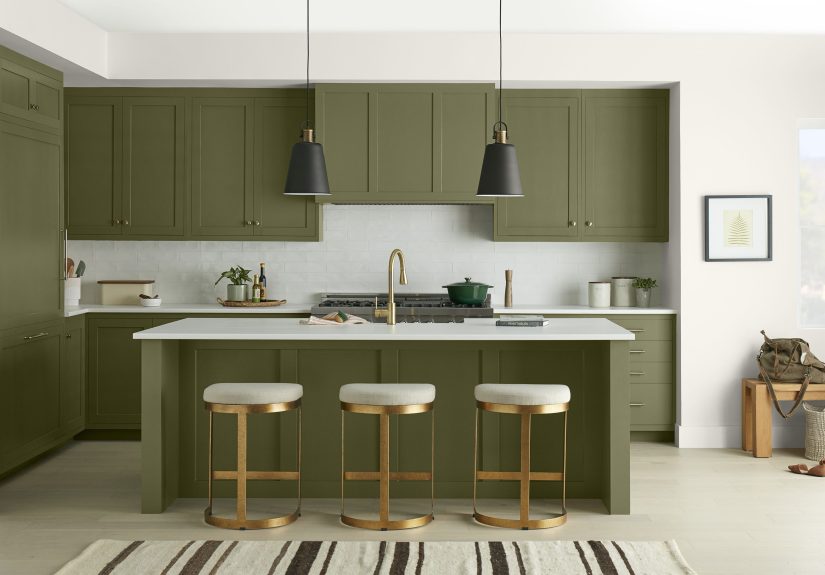
A midtone olive can act like a new-age beige. A deep olive can become the starespecially on cabinets, doors, or
color-drenched walls.
3) Match the sheen to the job
- Matte/flat: best for walls, hides imperfections, looks velvety
- Eggshell/satin: great for living spaces and kitchens (more wipeable)
- Semigloss: trim, doors, cabinets (durable and crisp)
The 14 Olive Green Paint Colors Pros Love
Below are standout olive greens across popular brandsranging from light “olive-adjacent neutrals” to deep,
dramatic greens that make a room feel like it has its own private jazz playlist.
1) Behr Oregano Spice (PPU9-23)
A midtone olive with brown nuancelike dried herbs in a wooden bowl. It’s a strong pick for offices, libraries,
and accent walls where you want warmth without going too dark.
- Best for: cozy living rooms, study nooks, accent walls
- Try pairing with: creamy whites, caramel leather, aged brass
- Pro tip: add texture (linen curtains, woven shades) to keep it soft and relaxed
2) Benjamin Moore Dark Olive (2140-30)
Deep, muted, and elegantthis one reads rich without feeling heavy when balanced with warm neutrals.
If you want “moody” but still welcoming, Dark Olive is the move.
- Best for: dining rooms, powder rooms, built-ins
- Try pairing with: warm whites, walnut, terracotta accents
- Pro tip: use it behind artframes and canvases pop beautifully against it
3) Glidden Cavern Moss (PPG1124-5)
Earthy and grounded, with that “outdoorsy but still polished” vibe. It’s a great choice when you want green
to feel naturallike it belongs with stone, wood, and plants.
- Best for: accent walls, basements that need warmth, dens
- Try pairing with: off-white trim, cognac tones, natural fiber rugs
- Pro tip: great for creating contrast with lighter upper cabinets and open shelving
4) Valspar Olive Smudge (6001-2C)
Dark and dramatic with a cool-leaning personality. Think charcoal with a green whisperperfect when you want
olive to feel modern and architectural.
- Best for: doors, kitchen islands, dramatic accent walls
- Try pairing with: crisp white, matte black hardware, light oak
- Pro tip: in small spaces, go boldthis kind of depth can feel intentional and luxe
5) Behr Amazon Jungle (PPU9-24)
A deep, shaded green that leans bold and immersive. If you want a room to feel like a calm retreat (or a
“please do not bother me” sanctuary), Amazon Jungle brings the dramain a good way.
- Best for: bedrooms, media rooms, statement cabinetry
- Try pairing with: creamy whites, warm wood, layered textiles
- Pro tip: add one warm element (brass, wood, tan leather) so it doesn’t feel too cool
6) Dutch Boy New Crop (324-3DB)
Light-to-midtone olive that feels calm and sunny, without going pastel. It’s a great gateway olive if you’re nervous
about going too dark.
- Best for: kitchens, hallways, laundry rooms, kids’ spaces
- Try pairing with: warm white cabinetry, pale wood, woven baskets
- Pro tip: this shade loves natural lightuse it where you get daytime glow
7) Dutch Boy Ironside (422-7DB)
Deep olive with serious presence. It feels sophisticated, a little rugged, and very “designer-approved.”
Use it when you want a grounded room with cozy depth.
- Best for: built-ins, accent walls, dining rooms, doors
- Try pairing with: warm whites, bronze hardware, stone countertops
- Pro tip: if you’re painting cabinets, test it in the exact sheen you’ll use
8) Sherwin-Williams Basque Green (SW 6426)
A lively earthy green that still reads grounded. Basque Green is great when you want olive energy but with enough
brightness to keep things feeling fresh.
- Best for: kitchens, breakfast nooks, mudrooms, accent furniture
- Try pairing with: warm whites, natural oak, patterned tile
- Pro tip: use on lower cabinets with light uppers for a timeless two-tone look
9) Sherwin-Williams Palm Leaf (SW 7735)
Vintage and earth-toned with a subtle “mid-century green” vibe. Palm Leaf feels collectedlike you own at least one
piece of furniture with tapered legs.
- Best for: dining rooms, bathrooms, cozy kitchen corners
- Try pairing with: creamy trim, warm woods, soft pinks or clay tones
- Pro tip: looks especially good with brass lighting and warm white bulbs
10) Farrow & Ball Bancha (No. 298)
A protective, olive-leaning green with a calm, modern feel. It’s bold, but it doesn’t shout.
Bancha is excellent when you want a stronger color that still feels serene.
- Best for: color-drenched rooms, kitchens, statement walls
- Try pairing with: soft whites, blush accents, warm browns
- Pro tip: if you’re nervous, start with a single wallBancha makes a gorgeous focal point
11) Farrow & Ball Sap Green (No. 199)
An olive shade that feels intense and nature-forward. Sap Green can read wonderfully deep in smaller rooms,
giving you that “jewel box” effect without going black.
- Best for: powder rooms, entryways, intimate dining spaces
- Try pairing with: creamy whites, antique frames, warm metals
- Pro tip: lean into contrastlight trim and warm lighting keep it inviting
12) Valspar Ancient Olive (6001-3A)
Soft and light, with gentle green undertones that make it a sneaky-good “neutral with personality.”
Ancient Olive works when you want an olive vibe that won’t dominate the room.
- Best for: open-plan spaces, bedrooms, hallways
- Try pairing with: warm whites, natural textures, muted blues
- Pro tip: if you love greige but want more life, this is a friendly upgrade
13) Glidden Olive Sprig (PPG1125-4)
A midtone green that sits comfortably in the olive-sage zone. It’s versatile and livablegreat for kitchens and
dining rooms where you want color that still feels relaxed.
- Best for: kitchens, dining areas, studios, creative spaces
- Try pairing with: creamy whites, black accents, light woods
- Pro tip: looks sharp with high-contrast details like black-and-white art
14) Benjamin Moore Nicolson Green (CW-500)
Deep and velvety with an old-world confidence. Nicolson Green reads classic and tailoredlike a heritage library,
but make it modern.
- Best for: studies, built-ins, dramatic dining rooms, front doors
- Try pairing with: warm white trim, dark wood, brass or bronze accents
- Pro tip: gorgeous on cabinetry when you want an elevated “custom” look
Quick Pairing Guide: What Goes With Olive Green Paint?
Olive green is friendly, but it has standards. Here are combinations designers lean on:
- Warm whites: creamy, soft whites keep olive from feeling flat
- Wood tones: oak, walnut, and even bamboo bring out olive’s natural side
- Metals: brass and bronze warm it up; matte black modernizes it
- Earth accents: terracotta, camel, tan, clay pink, and rust feel effortless
- Stone and tile: travertine, warm marble, and handmade tile look especially high-end
Testing Olive Green Like a Pro (So You Don’t End Up With “Swamp Surprise”)
- Sample big: use a large sample board or paint a 2′ x 2′ square
- Move it around: check it in the darkest corner and the brightest wall
- Compare to white paper: it helps you spot undertones (yellow, gray, brown)
- Check day-to-night: olive changesdon’t judge it at 2 p.m. only
- Match your bulbs: warm bulbs make warm olives glow; cool bulbs can pull out gray tones
Conclusion: The Olive Green Shortcut to a More “Designed” Home
Olive green paint colors hit that rare sweet spot: they feel stylish without being fussy, bold without being loud,
and cozy without turning your home into a log cabin cosplay. Whether you choose a soft, neutral olive like Valspar
Ancient Olive or go dramatic with Benjamin Moore Dark Olive or Dutch Boy Ironside, the key is pairing it with warm
neutrals, natural textures, and the right lighting.
Start with one small winan entryway, an accent wall, a kitchen island, or even a front door. Once you see olive green
working in your space, you might suddenly want to paint everything. This is normal. Welcome to the club.
Extra: Real-World “Olive Green” Experiences (The Kind You Only Learn by Testing)
Let’s talk about the part of painting that doesn’t show up in dreamy before-and-after photos: the trial phase.
If you’ve never tested olive green before, here are some extremely common experiences people haveso you can feel
both prepared and less personally attacked by your walls.
Experience #1: The Great Undertone Plot Twist. You pick a gorgeous olive green paint swatch that looks
like “soft Mediterranean hillside.” You bring it home, paint a sample, and suddenly it’s giving “avocado toast… but
with a side of mystery mustard.” This is usually lighting talking. Morning sun can pull yellow forward. Cool overhead
LEDs can make the same color look dingier. The fix is rarely panic (though panic is understandable). The fix is
comparing it next to a warmer white, trying a different bulb temperature, and checking it in multiple spots. Olive
green is basically a mood ring with rent.
Experience #2: The Room That Magically Feels More Expensive. One of the biggest “aha” moments with olive
green is how it makes everyday materials look upgraded. Painted cabinetry in an olive like Sherwin-Williams Basque Green
or a deeper shade like Dutch Boy Ironside can make basic hardware look intentional. Even budget-friendly brushed brass
feels more “designer” when it’s set against a rich green backdrop. It’s like the color is doing quiet PR for your kitchen.
Experience #3: The “I Didn’t Know I Was a Texture Person” Revelation. Olive green loves texture.
The moment you put it on a wall, you start noticing how much your space needs softness: linen curtains, woven baskets,
wool rugs, matte ceramics, aged wood. The color makes flat, shiny rooms feel a little unfinishedlike they forgot their
accessories. This is why olive looks so good in designer spaces: it’s usually surrounded by natural materials that echo
its outdoorsy vibe.
Experience #4: The Confidence Boost of a Single Bold Choice. People often think they need to paint an entire
room to “commit” to olive. Not true. A front door in Benjamin Moore Nicolson Green, a kitchen island in Valspar Olive Smudge,
or built-ins in Benjamin Moore Dark Olive can be enough to transform the vibe. There’s a sweet satisfaction in choosing one
high-impact area and watching it anchor the whole design. It’s the decorating version of finally buying a grown-up coat.
Experience #5: The Sheen Surprise (AKA: Why Cabinets Look Different Than Walls). Olive green can look totally
different depending on sheen. Matte walls make olive feel soft and cozy. Satin cabinets can make it look cleaner and more
modern. Semigloss on a door can deepen the shade and highlight undertones. This is why experienced painters test the color
in the sheen they’ll actually usebecause “the same color” can feel like three different personalities depending on finish.
Experience #6: The Unexpected Compliment Magnet. Olive green gets reactions. Guests notice it, but not in a
“wow that’s loud” waymore like, “Wait… why does your room feel so calm?” That’s the olive effect: grounded, warm, and
slightly mysterious. It’s especially true in transitional spaces like entryways or powder rooms where a saturated olive
(hello, Farrow & Ball Sap Green) can turn a tiny area into a design moment.
The big takeaway from all these experiences is simple: olive green rewards patience. Test it. Watch it.
Pair it with warm whites and natural textures. And when you find the right one, you’ll understand why pros keep coming back
to olivebecause it’s not just a color, it’s a whole vibe (and an extremely forgiving backdrop for life’s clutter).