Table of Contents >> Show >> Hide
- Before You Slather Anything on Your Head
- 15 Best DIY Hair Masks for Softer, Shinier, Happier Hair
- 1. Avocado and Honey Hair Mask
- 2. Coconut Oil and Honey Hair Mask
- 3. Banana and Olive Oil Hair Mask
- 4. Greek Yogurt and Honey Hair Mask
- 5. Egg Yolk and Olive Oil Hair Mask
- 6. Avocado, Banana, and Honey Hair Mask
- 7. Coconut Milk and Honey Hair Mask
- 8. Aloe Vera and Jojoba Oil Hair Mask
- 9. Mayonnaise and Coconut Oil Hair Mask
- 10. Avocado, Egg, and Olive Oil Hair Mask
- 11. Brown Sugar, Coconut Oil, and Conditioner Scalp Mask
- 12. Shea Butter and Avocado Oil Hair Mask
- 13. Rosemary and Castor Oil Scalp Treatment Mask
- 14. Yogurt, Egg, and Honey Hair Mask
- 15. Yogurt, Honey, and Tea Tree Scalp Mask
- How to Choose the Right Homemade Hair Mask
- Mistakes to Avoid with DIY Hair Masks
- What the DIY Hair Mask Experience Is Really Like
- Final Thoughts
If your hair has been acting like it just lost a custody battle with your flat iron, welcome. A good DIY hair mask can help dry, dull, frizzy, or overworked strands feel softer and look shinier without sending your wallet into emotional distress. The trick is choosing the right homemade hair mask for your hair type instead of dumping half the kitchen on your head and hoping for a miracle.
These DIY hair masks are designed for real-life problems: dryness, breakage, limp-looking ends, flaky scalps, and curls that have decided to become a mystery shape. They are simple, practical, and easy to customize. Even better, they use ingredients many people already have at home. That said, “natural” does not automatically mean “better.” Hair masks can condition hair, smooth the cuticle, and improve softness, but they are not magic potions for instant growth or permanent repair.
Before You Slather Anything on Your Head
Start with a patch test, especially if you have sensitive skin, eczema, allergies, or a dramatic history with essential oils. Apply a small amount behind your ear or on your inner arm and wait 24 hours. Use masks mostly on the mid-lengths and ends unless the recipe is meant for the scalp. If you are acne-prone, keep rich oils away from your hairline. And if a mask contains egg, rinse with cool or lukewarm water unless you want accidental breakfast in your shower drain.
In general, leave most masks on for 15 to 30 minutes, then shampoo and condition as needed. Once a week is plenty for most people. If your hair is fine, keep the formulas lighter. If your hair is thick, curly, coily, or very dry, richer oils and butters usually make more sense.
15 Best DIY Hair Masks for Softer, Shinier, Happier Hair
1. Avocado and Honey Hair Mask
Best for: Dry, thirsty, frizzy hair
Mix: 1 ripe avocado + 1 to 2 tablespoons honey
This is the classic DIY hair mask for dry hair, and for good reason. Avocado brings rich fatty acids and a creamy texture, while honey helps attract and hold moisture. Mash until completely smooth, apply from mid-length to ends, leave on for 20 minutes, then rinse well. If you do not blend it properly, be prepared to find tiny green bits later and wonder where your dignity went.
2. Coconut Oil and Honey Hair Mask
Best for: Rough ends and frizz
Mix: 2 tablespoons melted coconut oil + 1 tablespoon honey
This homemade hair mask works nicely as a quick moisture treatment. Coconut oil can help soften coarse, dry strands, while honey gives the formula a little humectant power. Focus on the lower half of your hair, not your scalp, especially if you get oily roots fast. Leave it on for 15 to 20 minutes, then shampoo thoroughly. A little goes a long way here; this is hair care, not a deep fryer.
3. Banana and Olive Oil Hair Mask
Best for: Dull hair that needs softness
Mix: 1 ripe banana + 1 tablespoon olive oil
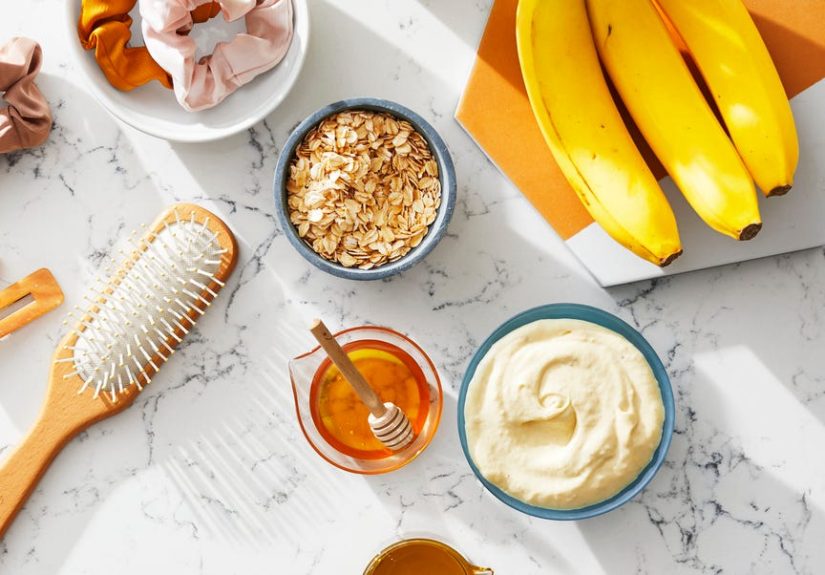
Banana-based masks are popular because they leave hair feeling smoother when blended well, and olive oil adds slip and shine. The secret word is blended. If you just mash with a fork and call it a day, your comb may file a complaint. Blend until silky, apply to damp hair, wait 15 to 20 minutes, then rinse and shampoo. This one is a nice option when your hair feels dry but not severely damaged.
4. Greek Yogurt and Honey Hair Mask
Best for: Hair that feels dry but still needs body
Mix: 1/2 cup plain Greek yogurt + 1 tablespoon honey
Greek yogurt gives a creamy texture and a light protein feel, while honey helps boost softness. This DIY hair treatment is especially good when hair feels limp, overwashed, or mildly frazzled. Spread it through damp hair, leave it on for 15 minutes, and rinse thoroughly before shampooing. Use plain, unsweetened yogurt only unless you want your scalp smelling like fruit-on-the-bottom regret.
5. Egg Yolk and Olive Oil Hair Mask
Best for: Very dry, brittle hair
Mix: 1 egg yolk + 1 to 2 tablespoons olive oil
This is one of the oldest DIY hair masks around, and it still earns a spot on the list. Egg yolk adds richness, and olive oil coats dry strands beautifully. Apply mainly to the ends, leave on for 15 minutes, then rinse with cool or lukewarm water before shampooing. Skip this mask if you have an egg allergy or a sensitive scalp that dislikes protein-heavy treatments.
6. Avocado, Banana, and Honey Hair Mask
Best for: Thick, coarse, or curly hair
Mix: 1/2 avocado + 1/2 banana + 1 tablespoon honey
If your hair drinks up conditioner like it has been wandering the desert, this richer blend may be your best friend. Avocado and banana create a dense, creamy base, while honey helps keep the mix from feeling flat or waxy. Blend until smooth, apply generously, and let it sit for 20 to 30 minutes. Curly and coily hair types often love this one because it helps improve softness and definition.
7. Coconut Milk and Honey Hair Mask
Best for: Dehydrated hair that still wants bounce
Mix: 1/4 cup full-fat coconut milk + 1 tablespoon honey
This lighter DIY hair mask can feel less greasy than straight oil while still delivering softness. Coconut milk gives the formula a silky texture, and honey adds shine-supporting moisture. Apply from roots to ends only if your scalp tolerates richer products well; otherwise keep it to the lengths. Leave on 20 minutes and rinse thoroughly. This one feels a bit like your hair went to a spa instead of a group project gone wrong.
8. Aloe Vera and Jojoba Oil Hair Mask
Best for: Frizz and a dry-feeling scalp
Mix: 2 tablespoons aloe vera gel + 1 teaspoon jojoba oil
Aloe vera helps give slip and a soothing feel, while jojoba oil keeps the formula from becoming sticky or stiff. This is a good homemade hair mask when you want moisture without a heavy, greasy finish. Use a small amount on the scalp and a bit more through the lengths. Leave on 15 to 20 minutes. If your scalp is irritated, patch test first and keep expectations realistic: soothing is not the same as curing a scalp condition.
9. Mayonnaise and Coconut Oil Hair Mask
Best for: Overprocessed or heat-styled hair
Mix: 2 tablespoons mayonnaise + 1 tablespoon coconut oil
Yes, mayonnaise. No, your fridge is not judging you. Mayo masks have been popular for years because they create a rich, coating treatment that can leave damaged hair feeling smoother. Coconut oil adds even more softness. Work it through the mid-lengths and ends, leave on for 15 minutes, and shampoo thoroughly. This is not the everyday answer for fine hair, but on fried ends it can be surprisingly helpful.
10. Avocado, Egg, and Olive Oil Hair Mask
Best for: Hair that feels both dry and weak
Mix: 1/2 avocado + 1 egg + 1 tablespoon olive oil
This mask is richer and a little more serious. Avocado and olive oil bring moisture, while the egg gives the mixture structure and a strengthening feel. Blend until completely smooth and apply to damp hair for 15 to 20 minutes. Rinse with cool water first, then shampoo. Use this when your hair feels like it has survived bleach, heat, wind, drama, and three bad decisions in one month.
11. Brown Sugar, Coconut Oil, and Conditioner Scalp Mask
Best for: Product buildup and flaky-looking roots
Mix: 1 tablespoon brown sugar + 1 tablespoon coconut oil + 2 tablespoons conditioner
This is part mask, part gentle scalp exfoliator. Brown sugar helps loosen buildup, coconut oil adds slip, and conditioner softens the whole thing so it does not feel too aggressive. Massage very gently into the scalp for a minute or two, then pull the rest through your lengths and leave it on for 10 minutes. Do not scrub like you are sanding furniture. If your scalp is inflamed, cracked, or very sensitive, skip this one.
12. Shea Butter and Avocado Oil Hair Mask
Best for: Thick curls, coils, and chronically dry hair
Mix: 1 tablespoon softened shea butter + 1 tablespoon avocado oil
This rich DIY hair mask is ideal when light treatments make your hair laugh and evaporate. Shea butter helps seal in softness, and avocado oil adds slip and shine. Warm the mixture between your palms and smooth it over the ends and driest sections. Leave it on for 20 to 30 minutes, then shampoo thoroughly. If your hair is fine, use a tiny amount or just keep reading and pretend this section never happened.
13. Rosemary and Castor Oil Scalp Treatment Mask
Best for: A scalp massage ritual and fuller-looking roots
Mix: 1 tablespoon castor oil + 1 tablespoon lightweight carrier oil + 1 to 2 drops rosemary essential oil
This one is better described as a scalp treatment than a classic creamy mask, but it has become wildly popular for a reason. The massage itself can feel relaxing, and the oil blend can make the scalp feel nourished. Keep the rosemary essential oil very diluted and patch test first. Leave it on for 15 minutes before shampooing. Think of this as scalp care with modest expectations, not overnight wizardry.
14. Yogurt, Egg, and Honey Hair Mask
Best for: Hair that needs softness and shine
Mix: 1/4 cup plain yogurt + 1 egg + 1 teaspoon honey
This mask lands in a nice middle ground: creamy, nourishing, and not too oily. The yogurt helps the texture spread easily, the egg adds richness, and the honey gives it a smoother finish. Apply to damp hair, leave on for 15 minutes, and rinse with cool water before shampooing. It is a good weekend mask when you want your hair to look more polished without feeling coated down.
15. Yogurt, Honey, and Tea Tree Scalp Mask
Best for: Mild scalp oiliness and itchiness
Mix: 1/4 cup plain yogurt + 1 teaspoon honey + 1 to 2 drops tea tree oil
This scalp-focused DIY hair mask feels refreshing, but you need to keep the tea tree oil heavily diluted. More is not better. Apply mainly to the scalp, leave on for 10 to 15 minutes, and rinse thoroughly. If your scalp burns, gets red, or is already angry, wash it out immediately. For stubborn dandruff, heavy flaking, or recurring scalp irritation, skip DIY experiments and use targeted treatment or see a dermatologist.
How to Choose the Right Homemade Hair Mask
If your hair is dry, start with avocado, honey, coconut oil, or shea butter. If it is fine and flat, try lighter options like yogurt, aloe vera, or coconut milk. If your hair is curly or coily, richer masks usually perform better on the ends. If you are dealing with scalp buildup, go for a gentle scalp mask instead of loading heavy oils directly onto the roots.
The best DIY hair mask is the one your hair actually likes. Translation: do not force a banana mask onto fine hair that hates heavy products just because the internet told you to. Hair is annoyingly specific.
Mistakes to Avoid with DIY Hair Masks
First, do not leave rich oil masks on forever just because longer sounds more impressive. Second, do not use harsh ingredients like straight lemon juice, undiluted essential oils, or rough scrubs on an irritated scalp. Third, do not use giant amounts of protein-heavy ingredients every few days unless your hair genuinely benefits from them. And finally, rinse thoroughly. Half of the “this mask ruined my life” stories are really “I left avocado chunks in my hair and then panicked.”
What the DIY Hair Mask Experience Is Really Like
Trying DIY hair masks sounds charming in theory. You imagine candlelight, spa music, and hair so glossy it gets its own zip code. In reality, the first experience is usually less “luxury salon” and more “why is there banana on the bathroom door?” Still, that is part of the fun. People keep coming back to homemade hair masks because, when they are done well, they can make hair feel noticeably softer, smoother, and less dramatic.
One common experience is surprise at how different hair reacts to the same recipe. A coconut oil mask may be a dream for thick, coarse hair, but too heavy for fine strands. A yogurt-and-honey mask may leave one person’s hair bouncy and glossy while another person decides it was merely a dairy-based inconvenience. That learning curve is normal. DIY hair care is rarely one-size-fits-all. It is more like speed dating for ingredients.
Another thing people notice is that application matters almost as much as the recipe. Masks tend to work better on damp, detangled hair because the product spreads more evenly. People who section their hair usually get better results than people who slap a mixture on the outer layer and hope the rest figures itself out. Glamorous? No. Effective? Absolutely.
Texture is also a huge part of the experience. Blended masks feel far more luxurious than chunky ones. That is why banana and avocado recipes have passionate fans and equally passionate enemies. Blend thoroughly, strain if needed, and your shower will thank you. Ignore this advice, and you may spend the next twenty minutes negotiating with your drain.
Then there is the rinse-out moment, when expectations become reality. A good DIY hair mask usually does not create instant movie-star hair, but it often makes hair feel softer, easier to detangle, and less frizzy. Ends may look smoother. Curls may clump better. Dry hair may feel less straw-like. Those are solid wins. The biggest disappointment comes when people expect one treatment to undo months of bleach, heat styling, or rough handling. Homemade masks can help with conditioning and appearance, but they cannot completely reverse damage.
Many people also find that DIY hair masks become less about chasing perfect hair and more about building a routine. A once-a-week mask can turn into a small ritual: wash day, detangling, a little scalp massage, maybe a shower cap, maybe a podcast, definitely a snack that is not also one of the ingredients. That consistency is often what makes the biggest difference over time.
Perhaps the most useful experience of all is learning what your hair does not like. Some people discover that heavy oils trigger limp roots. Others realize their scalp hates essential oils, or that protein-rich masks leave their hair feeling stiff. That is not failure. That is information. And in hair care, information is gold because your best routine is usually built through observation, not hype.
So yes, DIY hair masks can be messy, weirdly sticky, and occasionally humbling. But they can also be inexpensive, effective, and oddly satisfying. Once you find the right formula, your hair may not write you a thank-you note, but it will probably behave a little better. Honestly, that is enough of a love story.
Final Thoughts
The best DIY hair masks are the ones that match your actual hair needs, not the ones with the flashiest ingredient list. Start simple, patch test first, keep the formulas smooth, and pay attention to how your hair responds. Whether you need a hair mask for damaged hair, a homemade hair mask for dry hair, or a lighter DIY hair treatment for shine, a smart pantry recipe can absolutely earn a place in your routine.
And if your scalp is persistently irritated, your hair is shedding heavily, or your dandruff seems to have a personal vendetta, do not keep adding more avocado and hoping for enlightenment. That is your sign to talk to a pro.