Table of Contents >> Show >> Hide
- Shiplap 101: What It Is (and Why It Looks So Good)
- The Remodelista Roll Call: 15 Examples Worth Stealing
- 1) The Provincetown Tiny Kitchen That Goes All-In (Including Under the Counter)
- 2) Coastal Maine, Where Shiplap Plays the Ultimate Supporting Role
- 3) A Tiny Bath in Portlandia That Proves Shiplap Can Be Bathroom-Friendly
- 4) A Lofty Bedroom on a Norwegian Island Retreat (Walls and Ceiling)
- 5) Cape Cod Shiplap as a “Headboard of Sorts” at a Classic Inn
- 6) Manhattan Wine Bar Ceiling: The Shiplap That Stayed
- 7) The Under-$3,000 Kitchen Upgrade: Shiplap Beats Tile Backsplash Drama
- 8) Austin’s Josephine House: Shiplap Adds Texture Behind Open Shelves
- 9) Coastal Maine Bathroom: Painted Shiplap Surround for Beachy Calm
- 10) A Vintage Hawaiian Cottage: Low-Key Bedroom Warmth
- 11) London Restaurant with California Beach-Cafe Energy
- 12) A Shepherd’s Hut Kitchen: Shiplap That Makes a Tiny Space Feel “Built”
- 13) The Hamptons House That Goes Full Shiplap (and Flirts with Blue)
- 14) A London Pantry Where Shiplap Adds Charm Without Stealing the Scene
- 15) Brooklyn Attic Bedroom with a Whitewashed Shiplap Ceiling
- How to Copy the Look Without Copying the Problems
- Conclusion: Shiplap’s Secret Isn’t the PlankIt’s the Purpose
- Real-World Shiplap Experiences: What Homeowners Wish They’d Known
Shiplap is the design equivalent of a good denim jacket: it’s casual, it goes with almost everything,
and people keep declaring it “over” right before they wear it again. If you’ve been tempted by those crisp,
shadow-lined planks (or you’re trying to love the ones already in your house), this is your sign.
Below, we’re raiding the Remodelista archives for 15 favorite examples of charming shiplap cladding
from tiny kitchens to cozy bedrooms to restaurant ceilings that quietly do all the heavy lifting. Then we’ll unpack
how to steal the look like a grown-up: choosing the right materials, respecting moisture, and avoiding the dreaded
“I installed shiplap on every vertical surface including the dog” effect.
Shiplap 101: What It Is (and Why It Looks So Good)
True shiplap is a series of boards with overlapping edges that create a neat, consistent revealthose slender lines
that make a wall feel textured without turning it into a log cabin cosplay. Historically, the overlap helped block wind
and weather. Now? It mostly blocks boring drywall.
The quick, non-boring definition
- Shiplap cladding: Overlapping boards that create a subtle “shadow gap” between courses.
- Nickel gap: Similar vibe, but with a more squared, consistent space between boards.
- Tongue-and-groove: Boards lock together more tightly, with less visible gap.
In pulling this guide together, we synthesized practical and design notes from a stack of reputable U.S. home
resourcesthink This Old House, Bob Vila, HGTV, Better Homes & Gardens, The Spruce,
House Beautiful, Architectural Digest, Southern Living, Houzz, and Fine Homebuilding, among others.
Translation: the inspiration is pretty, but the advice also knows what a stud finder is.
The Remodelista Roll Call: 15 Examples Worth Stealing
These are not “copy-paste” projects; they’re design moves. Each example highlights one smart decision
scale, placement, color, contrastso you can borrow the idea without needing the exact same coastal breeze (or London postcode).
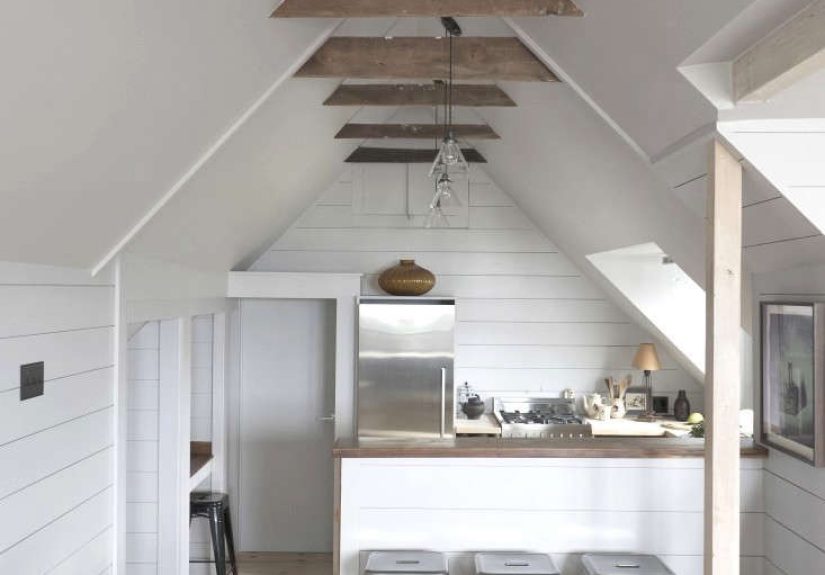
1) The Provincetown Tiny Kitchen That Goes All-In (Including Under the Counter)
In this petite kitchen, shiplap cladding doesn’t just climb the wallsit wraps under the counter, too. The result is
a unified envelope that makes a small space feel intentional rather than cramped. The takeaway: when a room is tiny,
repeating one material can look calmer than mixing five “fun” finishes. Shiplap becomes the visual baseline, letting
hardware, lighting, and one great paint color do the talking.
2) Coastal Maine, Where Shiplap Plays the Ultimate Supporting Role
Here’s shiplap at its most charming: not screaming for attention, just quietly adding depth behind furniture and
natural textures. Think of it as the backdrop that makes everything else look more expensive. The trick is restraint
consistent board spacing, a soft finish, and styling that leans airy rather than “theme-y.” If your dream is “coastal”
but your fear is “gift shop,” take notes.
3) A Tiny Bath in Portlandia That Proves Shiplap Can Be Bathroom-Friendly
A small bathroom gets a warmth upgrade with shiplap, bringing texture where tile might feel too cold or too busy.
The practical lesson: bathrooms need smart material choicessealed wood, moisture-resistant paint, good ventilation,
and detailing that keeps water from lingering. The aesthetic lesson: in a tiny room, a simple cladding pattern can feel
like “designed” without adding clutter.
4) A Lofty Bedroom on a Norwegian Island Retreat (Walls and Ceiling)
Shiplap on both walls and ceiling sounds like a lotuntil you see it done right. When the boards are aligned and the
finish is calm, the cladding turns into architecture: it wraps the space like a cozy shell and emphasizes the room’s
shape. Want this effect at home? Keep your palette tight, avoid heavy contrast, and let the lines guide the eye upward.
5) Cape Cod Shiplap as a “Headboard of Sorts” at a Classic Inn
This one is pure “right place, right material.” Shiplap sits behind the bed like a built-in headboard, adding character
without swallowing the room. It’s especially smart in hospitality spaces: durable, easy to refresh, and instantly
familiar. Copy the move by installing a shiplap accent only where it behaves like millworkbehind a bed, in a nook,
or as a framed panel.
6) Manhattan Wine Bar Ceiling: The Shiplap That Stayed
In a tiny wine bar, the shiplap ceiling was preserved from prior tenants and paired with glossy, floor-to-ceiling tile
walls. That contrast is the magic: matte, linear wood overhead; reflective, slick surfaces below. It feels layered,
not farmhouse. Design lesson: shiplap isn’t married to rustic decor. It can be the “quiet texture” that balances
bolder materials like tile, stone, or stainless.
7) The Under-$3,000 Kitchen Upgrade: Shiplap Beats Tile Backsplash Drama
A dated kitchen got a surprisingly impactful refresh by swapping tile for shiplap on the backsplash area. It’s not the
default choice, which is why it worksit reads as tailored, especially when painted cleanly. If you copy this, be
thoughtful: protect it near heavy splash zones, use a durable finish, and consider pairing it with easy-to-wipe surfaces
where water truly flies (around the sink, behind the range).
8) Austin’s Josephine House: Shiplap Adds Texture Behind Open Shelves
Open shelving is adorable until it looks like a kitchen yard sale. Shiplap behind the shelves brings order: the lines
create structure, and the texture makes dishes and glassware pop. This is a great trick for anyone who wants open shelves
but also wants their wall to do some visual organizing. Bonus points if your shelf styling is… “aspirational.”
9) Coastal Maine Bathroom: Painted Shiplap Surround for Beachy Calm
A painted shiplap surround in the bath brings a soft, beachy vibe without leaning on seashell motifs (thank you).
Painted boards also tame wood grain for a cleaner look. The stealthy move here is color: a gentle tone keeps the cladding
from feeling busy, and the visible seams add interest even when the palette stays quiet.
10) A Vintage Hawaiian Cottage: Low-Key Bedroom Warmth
In this bedroom, shiplap gives that relaxed, breezy feel you want from a cottagewithout demanding that you also buy a
ukulele and start saying “aloha” to your toaster. The lesson: shiplap shines when you let it be slightly imperfect.
Natural light, simple linens, and a finish that doesn’t look overly polished keep the vibe authentic.
11) London Restaurant with California Beach-Cafe Energy
Shiplap shows up in a London restaurant borrowing the sunny, casual cues of West Coast beach cafes. It’s a reminder that
“coastal” is more about lightness and texture than literal location. For a modern take, pair shiplap cladding with
clean-lined furniture, minimal decor, and a color palette that feels fresh (think warm whites, sand, soft blues, or even
a moody olive).
12) A Shepherd’s Hut Kitchen: Shiplap That Makes a Tiny Space Feel “Built”
A tiny British Standard kitchen uses shiplap on the walls and even a blue-painted shiplap ceilingproof that color and
cladding can be best friends. In compact rooms, a ceiling treatment can add personality without stealing floor space.
If you want to try it, keep your boards straight, your sheen practical (especially over cooking areas), and your lighting
warm enough to flatter all that gorgeous texture.
13) The Hamptons House That Goes Full Shiplap (and Flirts with Blue)
Nearly the whole house is wrapped in shiplap, layered with shades of blue. That could have gone “nautical costume,” but
it lands as cohesive and collectedlike someone actually lives there and doesn’t just host photoshoots. The design trick:
commit to a palette family, vary the tones, and keep the styling unfussy. Shiplap loves simple shapes and real-life clutter
kept politely in baskets.
14) A London Pantry Where Shiplap Adds Charm Without Stealing the Scene
Pantry shiplap is the underrated hero of this list. Because pantries are often small and functional, cladding adds “I
thought about this” energy without requiring fancy finishes. Shiplap also plays nicely with hooks, shelves, and utility
storage. If your pantry is basically a closet that eats snacks, shiplap can make it feel like a real room.
15) Brooklyn Attic Bedroom with a Whitewashed Shiplap Ceiling
A whitewashed shiplap ceiling in an attic bedroom is a masterclass in brightening a space without losing character.
Whitewash keeps the grain whispering in the background while the seams add rhythm overhead. This is a great approach if
you’re nervous about “too rustic”: keep it light, let the texture do the work, and pair it with clean-lined furniture
for an airy, modern finish.
How to Copy the Look Without Copying the Problems
Choose the right material for your room (and your patience level)
Solid wood is the classic choice, but it’s not the only one. Plywood strips can create a shiplap look on a budget.
MDF paints beautifully but dislikes moisture. PVC/vinyl can be a smart option in damp zones if you want low maintenance.
Your decision should be based on where the shiplap is going, how much humidity it will face, and whether you enjoy
repainting as a hobby or consider it a cry for help.
Mind the gap (yes, it matters)
The shadow line is the whole pointso measure carefully, keep your spacing consistent, and allow for movement around the
perimeter. If your walls are less-than-perfect, furring strips can help create a flatter install surface. And remember:
those charming grooves can also collect dust. Shiplap is beautiful, but it’s not self-cleaning (yet).
Paint like a professional: don’t clog the seams
Painted shiplap is timeless when done right and tragic when the paint fills the reveals. Use the right roller/brush,
avoid globbing paint into the gaps, and choose a finish that suits the room. High-touch areas do well with a durable
sheen that can handle cleaning. If you want depth, consider warm whites, earthy neutrals, muted greens, or soft blues
instead of the stark “brand-new refrigerator” white.
Bathrooms and kitchens: treat moisture like a real villain
Shiplap can work in bathrooms and kitchens, but you need to respect water. Prioritize good ventilation, use moisture-resistant
products where appropriate, and seal or paint properly. In heavy splash zones, consider pairing shiplap with tile or another
wipeable surface so you get the charm without the constant anxiety.
Keep it current: fewer acres, more intention
Many designers agree shiplap is best when it feels authentic to the home’s charactercoastal, cabin, farmhouse, lake house,
or any space that benefits from a relaxed, architectural texture. If you’re worried about it looking dated, use it in
smaller doses (a ceiling, a nook, a pantry) or pair it with modern materials so it reads as deliberate, not trend-chasing.
Conclusion: Shiplap’s Secret Isn’t the PlankIt’s the Purpose
The best shiplap cladding doesn’t shout “trend.” It quietly improves a space: makes a small kitchen feel cohesive, gives a
ceiling dimension, adds warmth to a bath, or brings order behind open shelves. Remodelista’s archive proves the point across
wildly different rooms and locations: when shiplap has a job to dotexture, calm, structureit earns its keep.
If you’re planning your own shiplap moment, steal the spirit of these examples: choose the right material, keep the details
crisp, and use it where it adds architecturenot where it just adds… more.
Real-World Shiplap Experiences: What Homeowners Wish They’d Known
Let’s talk about the stuff you only learn after the first board goes up (or after you’ve said “It’s fine” in the strained
voice that means it is absolutely not fine). Shiplap is wonderfully forgiving in vibe, but it’s picky about details.
People who end up happiest with shiplap tend to share a few patterns.
First: walls are rarely as straight as you assume. The internet makes shiplap installs look like you’re
applying stickers to a robot. Real walls have gentle waves, corners that lean, and ceilings that behave like they were
drawn by a toddler with a crayon. Homeowners often report that using furring strips (or at least checking level early and
often) is the difference between “custom millwork feel” and “why do the lines look like they’re fleeing the room?”
Second: the “gap” is both the magic and the menace. It’s what makes shiplap look tailoredbut it’s also
what catches dust, pet hair, and the occasional mysterious crumb that appears even if you swear you never eat in that room.
People who love their shiplap long-term usually keep a soft duster or vacuum brush handy and accept that a quick wipe-down
is part of the relationship. (Like owning a white sofa, but less emotionally reckless.)
Third: paint changes everything. A lot of homeowners are surprised by how much the finish matters.
Flat paint can look dreamy in photos but may scuff easily in high-traffic spaces. Higher sheens clean better but can
highlight imperfections. The happiest campers tend to choose a durable, wipeable finish for mudrooms, hallways, and kids’
zonesand save the ultra-matte romance for calmer walls that aren’t getting shoulder-checked by backpacks twice a day.
Fourth: moisture isn’t a “maybe” problem. Bathrooms and kitchens can absolutely wear shiplap well, but
only when you treat humidity like physics, not a vibe. Homeowners who skip proper sealing or ventilation often end up
annoyedat best, by grime; at worst, by swelling or paint failure. The best real-life solutions tend to be hybrid:
shiplap where it’s mostly visual, tile or a truly waterproof surface where water actually splashes, and a fan that gets
used like it’s part of the rent.
Fifth (and this one is a little emotional): shiplap looks best when it’s not trying too hard. Many
homeowners say they love it most when they stop styling it like a set and start living in itbooks on a shelf, a coat on a
hook, sunlight changing the shadows through the day. In other words, the cladding becomes “architecture” instead of “decor.”
That’s when shiplap stops feeling like a trend and starts feeling like the room’s natural bones.
If you’re on the fence, start small. A pantry. A headboard wall. A ceiling. One well-placed, beautifully finished
shiplap moment can feel charming for yearswithout requiring you to explain to every guest that “it’s a design choice.”